The history of cinema is written not only in the polished triumphs that grace theatre screens worldwide, but equally in the chaotic, often catastrophic wrecks of productions that strained budgets, sanity, and artistic limits. Behind many great films—and many more that never saw the light of day—lies an equally compelling documentary chronicling the disaster. These "making-of" features transform cinematic failure and on-set turmoil into high art, offering viewers a rare glimpse into the fragile ecosystem of commercial filmmaking. From ambitious studio overreaches to grassroots DIY triumphs, the 20 greatest behind-the-scenes documentaries explore the psychological toll, logistical nightmares, and sheer creative madness required to bring moving images to life.
The Anatomy of Cinematic Chaos: An Overview
At their core, documentaries about troubled film productions serve as case studies in human resilience and organizational failure. When a production encounters natural disasters, financial collapse, or towering egos, the resulting tension often eclipses the narrative of the film itself. Industry analysts and film historians note that these documentaries have evolved from promotional studio featurettes into critical, autonomous works of art. They dissect the friction between artistic vision and corporate accountability, providing invaluable archival records of eras when cinematic risks were immense.
Examining the chronology of these projects reveals a recurring theme: ambition frequently outpaces resources. Whether it is George Romero carving out zombie satire in a deserted shopping mall or Francis Ford Coppola descending into psychological hell in the Philippine jungles, the trajectory from preproduction to distribution is fraught with peril.
1. Hearts of Darkness: A Filmmaker’s Apocalypse (1991)
At the apex of production-disaster documentaries sits Hearts of Darkness: A Filmmaker’s Apocalypse, co-directed by Eleanor Coppola, Fax Bahr, and George Hickenlooper. Drawing on 60 hours of footage and 40 hours of audio recordings captured by Eleanor during the turbulent 238-day shoot of Apocalypse Now, the film offers an intimate portrait of a director on the brink of collapse.
Francis Ford Coppola financed much of the $31 million epic himself, pushing his financial security and mental health to the absolute limit. The production faced a relentless barrage of catastrophes: a tropical storm destroyed principal sets in the Philippines, lead actor Martin Sheen suffered a near-fatal heart attack, and Marlon Brando arrived on set severely overweight and entirely unprepared, having neglected to read Joseph Conrad’s source material or learn his lines.
The documentary famously captures Coppola’s internal unraveling, including his chilling confession: "I’m thinking of shooting myself. This is one crisis I can’t pull myself out of." The resulting analysis underscores how sheer stubbornness and artistic obsession can forge a cinematic masterpiece out of absolute chaos.
2. American Movie (1999)
Shifting from studio-backed megalomania to grassroots perseverance, Chris Smith’s American Movie captures the gritty, unglamorous reality of independent filmmaking in America. The film follows Mark Borchardt, a passionate Milwaukee native determined to finish his horror short, Coven, despite a total lack of funding, technical expertise, and basic equipment.
Borchardt’s relentless optimism is infectious, buoyed by a colorful supporting cast that includes his reluctant mother, his acid-head friend Mike, and his trailer-dwelling Uncle Bill, who famously requires 30 takes to deliver four lines of dialogue. Smith’s documentary avoids mockery, instead celebrating Borchardt as an inspiring hero of DIY cinema. The film serves as a vital economic and cultural study of the Midwestern indie scene at the turn of the millennium, highlighting the immense psychological gap between Hollywood budgets and regional aspirations.
3. Burden of Dreams (1982)
Les Blank’s masterpiece Burden of Dreams chronicles the grueling, jungle-bound production of Werner Herzog’s Fitzcarraldo in the Peruvian Amazon. Herzog’s obsessive quest to build an opera house in the rainforest—which famously involved hauling a 320-ton steamship over a steep hill—mirrored the madness of his fictional protagonist.

The production faced compounding crises from day one: original lead Jason Robards fell severely ill with amoebic dysentery, forcing a costly recast with Klaus Kinski, while co-star Mick Jagger had to depart for a world tour. Furthermore, a regional border war forced the entire production to relocate more than 1,000 miles. Blank’s documentary brilliantly deconstructs the fine line between visionary artistry and clinical insanity, demonstrating how environmental and human variables can push a crew to the absolute breaking point.
4. Henri-Georges Clouzot’s Inferno (2009)
The subgenre of documentaries investigating unfinished films achieved a high-water mark with Ruxandra Medrea and Serge Bromberg’s Henri-Georges Clouzot’s Inferno. The film explores the French director’s lavishly funded, psychologically complex 1964 drama starring Romy Schneider.
Backed by Columbia Pictures, Clouzot pursued an impossibly ambitious aesthetic, employing three separate camera crews and pioneering in-camera optical effects to simulate psychological disintegration. However, the director’s relentless obsession with test footage ground the schedule to a halt. Three weeks into an 18-week shoot, Clouzot suffered a heart attack. The surviving 15 hours of unseen, intoxicating footage—featuring Schneider covered in glitter, cellophane, and olive oil—stand as a monument to unrealized cinematic genius.
5. Lost in La Mancha (2002)
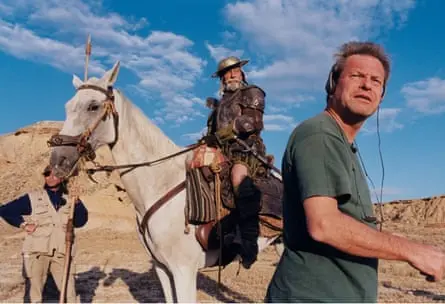
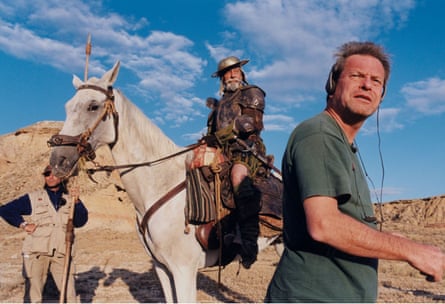
Keith Fulton and Louis Pepe captured the definitive modern cinematic collapse in Lost in La Mancha, chronicling Terry Gilliam’s doomed 2000 attempt to film The Man Who Killed Don Quixote in Spain. Buoyed by the goodwill earned from their previous collaboration on 12 Monkeys, the documentary team had unrestricted access as the production disintegrated over six days of shooting.
The project was battered by an unrelenting series of blows: the deafening roar of F16 fighter jets from a nearby NATO base rendered dialogue tracks entirely unusable, co-lead Jean Rochefort fell agonizingly ill with a severe back infection, and a flash flood destroyed expensive equipment. Gilliam’s ubiquitous on-set declaration—"We’re fucked!"—became the defining mantra of the enterprise. The film offers a stark lesson in insurance liability, weather unpredictability, and the fragility of pre-digital production models.
6. The Peddler (2010)
Providing a poignant counterpoint to multimillion-dollar studio implosions, The Peddler profiles 67-year-old grassroots auteur Daniel Burmeister. Traveling to a remote Argentinian village, Burmeister offers his services as a filmmaker in exchange for a month of food and shelter, uniting the local community to shoot an original script.
Operating with a zero-dollar budget, Burmeister demonstrates limitless resourcefulness—such as sitting on a blanket and holding a camera while being dragged across the floor to simulate a tracking shot. Director-driven and deeply humanistic, the documentary highlights the pure, unadulterated joy of communal storytelling, proving that compelling cinema requires imagination far more than capital.
7. Shirkers (2018)
Sandi Tan’s personal and sobering 2018 documentary Shirkers investigates an extraordinary act of cinematic betrayal. In 1992, as a teenager in Singapore, Tan shot an ambitious indie road movie under the guidance of the enigmatic American expatriate Georges Cardona.
After consuming $10,000 of Tan’s savings, Cardona vanished with all 70 reels of unprocessed film. Decades later, Cardona’s widow returned the lost footage to Tan. Shirkers pieces together the fragments of the lost film while analyzing the charismatic con artist who hijacked her youth, serving as a cautionary tale about creative exploitation and trust in early artistic collaborations.
8. Poultry in Motion: Truth Is Stranger Than Chicken (2008)
Delving into the notoriously chaotic world of exploitation cinema, this documentary captures the making of Troma Entertainment’s Poultrygeist: Night of the Chicken Dead. Roughly 70 unpaid fans lived communally in a deserted Buffalo church—sharing a single cold shower—while working on the chicken-themed zombie horror flick.

The production was a relentless gauntlet of on-set injuries, hourly screaming matches, and performer walkouts. Co-directed by the notoriously erratic Troma boss Lloyd Kaufman, whose management style oscillated between lackadaisical and tyrannical, the documentary is a masterclass in low-budget endurance and industrial counter-culture filmmaking.
9. From Darkness to Light (2024)
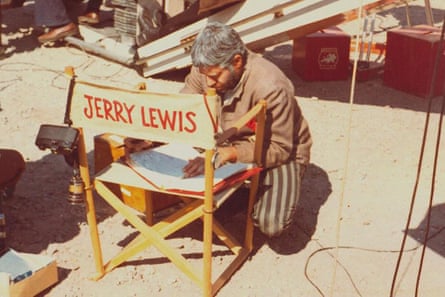
Few unmade films carry the historical baggage and moral complexity of Jerry Lewis’s abandoned 1972 Holocaust drama, The Day The Clown Cried. Directing himself as a disgraced former clown entertaining children in a Nazi concentration camp, Lewis sought a definitive transition into serious dramatic acting.
From Darkness to Light explores the catastrophic misjudgment behind the production. Aside from the profoundly dubious artistic premise, Lewis failed to secure the rights to the script, rendering the entire production legally void. Furthermore, Lewis made the controversial decision to hire a repentant former concentration camp guard as a crew member. Lewis’s own retrospective defense—"He was a human being!"—highlights the profound ethical and legal minefields that can permanently bury a project.
10. The Sweatbox (2002)
Walt Disney Animation Studios’ ambitious Inca-set musical Kingdom of the Sun was intended to be the next major animated classic, complete with original songs by Sting. However, following a disastrous early rough-cut screening, studio executives panicked.
Co-director Roger Allers and songwriter Sting were abruptly removed, and the project was heavily retooled into the lighter comedy The Emperor’s New Groove. Sting’s wife, Trudie Styler, documented every disastrous executive intervention in The Sweatbox. The resulting documentary provides a rare, unvarnished look at corporate interference and creative compromise within the world’s most powerful animation house—prompting Disney to suppress its distribution for years.
11. No Frank in Lumberton (1988) / Blue Velvet Revisited (2016)
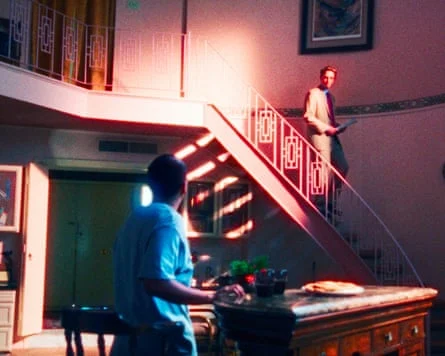
Documentarian Peter Braatz was still a film student when David Lynch invited him to Wilmington, North Carolina, in 1985 to document the creation of Blue Velvet. Utilizing Super-8 footage, photographs, and ambient soundscapes, Braatz captured the eerie, hermetic atmosphere of Lynch’s set.
Initially released as a 58-minute experimental piece in 1988, Braatz reassembled the materials into an 86-minute ambient head-trip in 2016. Blending flickering footage with new interviews featuring Lynch and Dennis Hopper, the documentary functions as an ethereal audiovisual collage that mirrors the dreamlike texture of Lynch’s finished work.
12. Lost Soul: The Doomed Journey of Richard Stanley’s Island of Dr Moreau (2014)
When New Line Cinema attempted to remove South African director Richard Stanley from his adaptation of H.G. Wells’ The Island of Dr. Moreau, Stanley infamously turned to a warlock for supernatural assistance. While cosmic intervention temporarily restored him, black magic proved no match for actor Val Kilmer, who demanded a 40% reduction in his shooting days and engaged in constant power games on set.
Nature proved equally hostile: a wild puma urinated on Stanley’s tailored suit, and a tropical hurricane devastated the Queensland location. Eventually replaced by veteran director John Frankenheimer, Stanley refused to leave Australia, descending into a surreal, jungle-bound exile. The documentary stands as a testament to studio panic and ego-driven creative collapse.
13. Jodorowsky’s Dune (2013)
Long before David Lynch or Denis Villeneuve brought Frank Herbert’s sci-fi epic to the screen, avant-garde filmmaker Alejandro Jodorowsky attempted to mount a cinematic adaptation intended to produce "LSD hallucinations without taking LSD." Frank Pavich’s documentary chronicles this legendary preproduction collapse.
Jodorowsky assembled a dream team of creative visionaries, including artist H.R. Giger (who later designed Ridley Scott’s Alien), conceptual artist Moebius, and a cast featuring Salvador Dalí, Mick Jagger, and Orson Welles. While the film ultimately collapsed due to prohibitive financing demands, its conceptual footprint permanently altered the trajectory of modern science fiction cinema.
14. Doomed! The Untold Story of Roger Corman’s The Fantastic Four (2015)
Filmed inside a rat-infested studio on sets recycled from a Jurassic Park rip-off, Roger Corman’s ultra-low-budget adaptation of The Fantastic Four was produced in a frantic rush solely to prevent the cinematic rights from reverting from producer Bernd Eichinger back to Marvel.
As Stan Lee famously remarked, "That movie was never supposed to be shown to anybody." Yet, this documentary highlights the resilience of the crestfallen cast and crew who believed in their work despite corporate exploitation. The film’s themes resonate strongly in an era where major studios routinely shelve completed films for tax write-offs, such as Warner Bros.’ handling of Batgirl and Coyote vs. Acme.
15. Boorman and the Devil (2025)
After declining the original Exorcist, director John Boorman accepted the poisoned chalice of helming Exorcist II: The Heretic, a sequel widely derided as one of the worst major studio movies ever made.
In this candid documentary, Boorman recounts the surreal production ordeal—featuring sand-related illnesses, an intoxicated Richard Burton, swarming plagues of locusts, and unexpected tap-dancing sequences. Boorman’s self-effacing humor underscores the psychological toll of following up a cultural phenomenon with a critical catastrophe.
16. Filmmaker: A Diary by George Lucas (1968)
A fascinating historical artifact, this 30-minute short film captures a young George Lucas observing his friend and collaborator Francis Ford Coppola during the production of The Rain People.
Offering an intimate glimpse into the New Hollywood movement, the documentary features a memorable detail: the entire male crew shaved their beards prior to driving across America to avoid harassment from anti-hippie local officials along their route.
17. They’ll Love Me When I’m Dead (2018)
Orson Welles spent five years shooting his final, experimental film, The Other Side of the Wind. Following decades of legal battles, financing droughts, and political complications involving the Iranian revolutionary government, the footage was finally rescued and completed for a 2018 Netflix release.
Accompanied by Alan Cumming’s energetic narration, this documentary strings together lost archive footage, fresh interviews, and classic anecdotes of Welles’ on-set tomfoolery and creative procrastination.
18. Becoming Bulletproof (2014)
Focusing on the inclusive arts project Zeno Mountain Farm, this affectionate documentary tracks a group of actors with disabilities as they cast and shoot a short western titled Bulletproof in the California desert.
Rather than focusing on disability as a narrative crutch, the film highlights the critical lack of authentic on-screen representation in mainstream cinema, documenting the production from early table reads to its triumphant red-carpet premiere.
19. The Death of “Superman Lives”: What Happened? (2015)
Director Jon Schnepp explores Tim Burton’s canceled 1990s superhero epic Superman Lives, which was slated to star Nicolas Cage as the Man of Steel.
The documentary features fascinating test footage of Cage in his futuristic costume alongside interviews with Burton, screenwriter Kevin Smith, and producer Jon Peters—who famously insisted that Superman must battle giant spiders and polar bears. It remains a definitive text on unmade blockbusters.
20. Document of the Dead (1985)
Rounding out the list, this aficionado-focused documentary provides extensive behind-the-scenes footage from George A. Romero’s 1979 satirical zombie masterpiece, Dawn of the Dead.
Captured entirely inside the deserted Monroeville Mall that served as the film’s incongruous primary location, director Romero, makeup effects wizard Tom Savini, and the supporting zombie cast candidly discuss the logistics of indie horror filmmaking, distribution hurdles, and the socio-political commentary embedded within consumerist nightmares.
Conclusion: The Enduring Value of Cinematic Post-Mortems
Ultimately, these twenty documentaries demonstrate that the journey of making a film is often far more dramatic, unpredictable, and illuminating than the final product shown in cinemas. By capturing the friction between artistic ambition and stark economic reality, these works ensure that the blood, sweat, and tears of cinematic history are never truly forgotten.