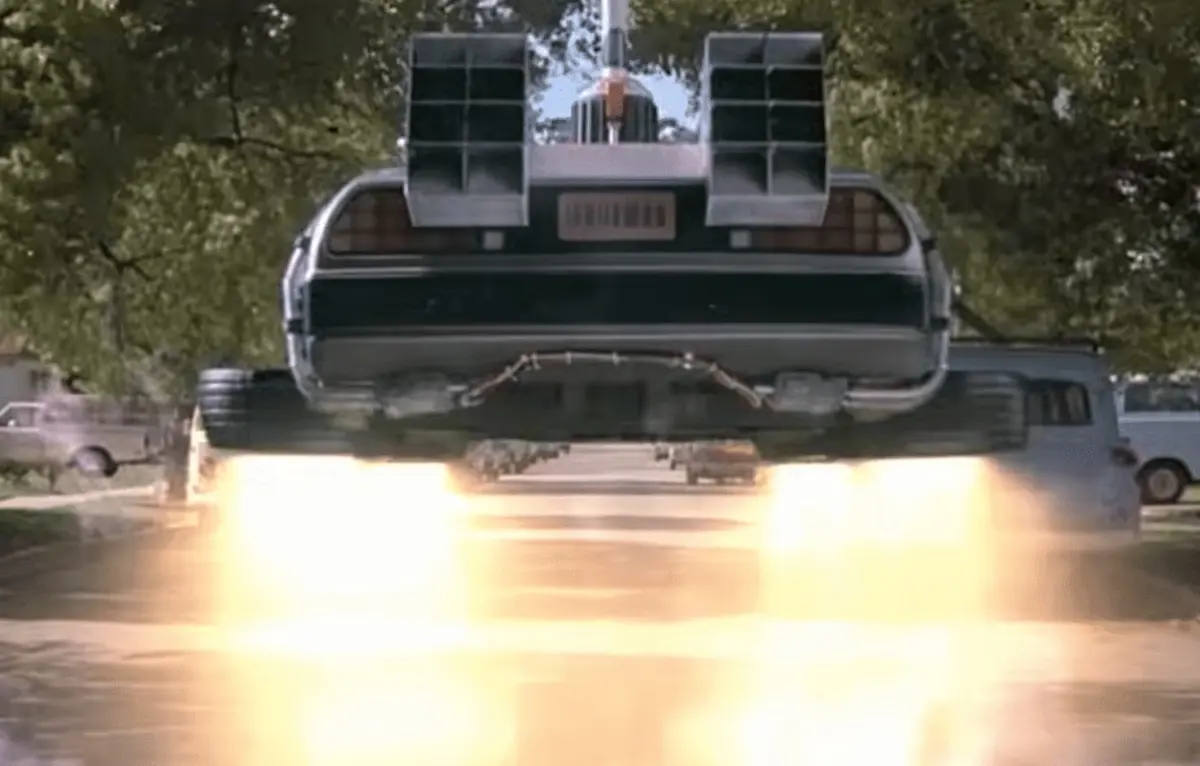
The persistent cultural fascination with the flying car reveals a deep-seated human desire for unbridled personal mobility and undeniable markers of technological evolution. Despite decades of practical challenges, regulatory hurdles, and economic impracticality, the concept of the roadable aircraft continues to captivate the public imagination, dominating science fiction and periodically generating intense market excitement whenever a new prototype is unveiled.
From early satirical illustrations of the late 19th century to modern-day venture-backed startups, the flying car has transcended its origins as a speculative fiction trope to become a powerful psychological benchmark for societal progress. This comprehensive examination explores the chronology, technological hurdles, cultural drivers, and broader implications of humanity’s unrelenting quest to take personal transportation into the skies.
Main Facts and Current Landscape
In recent years, the mobility sector has witnessed a resurgence of interest in vertical takeoff and landing (VTOL) vehicles and personal flying machines. Silicon Valley startups, legacy aerospace firms, and high-profile automotive manufacturers have funneled billions of dollars into research and development. Public demonstrations—ranging from propulsion-assisted concept vehicles to autonomous electric air taxis—frequently command global headlines and spark enthusiastic public reactions.
However, a stark disconnect persists between promotional spectacle and infrastructural reality. While engineers have successfully designed functional prototypes capable of short flights or dual-mode operation, the industry has consistently failed to address fundamental logistical questions: How will millions of private aircraft integrate safely into crowded urban airspaces? What regulatory frameworks will govern aerial traffic management? How will noise pollution, energy consumption, and public safety be maintained at scale?
Despite these unresolved obstacles, public enthusiasm remains undiminished. Analysts note that the appeal of the flying car is rooted less in its practical utility than in its symbolic value. It serves as a tangible manifestation of a future promised by mid-century optimists—a shorthand signifier that society has achieved a higher tier of technological sophistication.
Chronological Evolution of the Flying Car Concept
The aspiration to combine the freedom of the open road with the boundlessness of the sky predates the invention of the automobile itself.
In 1883, French author Albert Robida published Le Vingtième Siècle, a satirical science fiction work that depicted flying carriages seamlessly integrated into urban society. This vision was remarkable given that it preceded the commercial patenting of the first gas-powered automobile. Concurrently, literary pioneers like Jules Verne and H.G. Wells popularized the notion that accessible air travel was the inevitable trajectory of an advanced civilization.
Real-world manufacturers quickly adopted these fictional benchmarks. In 1917, aviation pioneer Glenn Curtiss unveiled the Curtiss Autoplane, a "roadable aircraft" designed to transition between driving and flying. While the vehicle could navigate roads, its aerodynamic capabilities were limited to brief hops, establishing a recurring pattern of ambition outpacing engineering reality.
The 1930s marked a golden era for the concept. The 1930 film Just Imagine featured dense skies filled with personal aircraft, while inventor James G. Ray drove a road-friendly autogyro directly to the Commerce Building in Washington, D.C., in 1936. Three years later, General Motors’ iconic Futurama exhibit at the New York World’s Fair showcased futuristic cities purposefully engineered to accommodate personal flying vehicles.
By the mid-20th century, cultural icons like Henry Ford and media creators across industries cemented the belief that the flying car was the inevitable next step in automotive evolution. This momentum culminated in 1962 with the premiere of the ABC primetime animated series The Jetsons, which permanently fused the concept of the flying car with the American dream of suburban domesticity.
Supporting Data and Technological Realities
The persistence of the flying car dream stands in stark contrast to the fate of other mid-century technological predictions, such as personal jetpacks, moving sidewalks, and atomic-powered household appliances, which were largely abandoned due to impracticality.
Industry data highlights the immense economic and engineering barriers facing modern electric VTOL (eVTOL) developers. Energy density constraints in battery technology mean that vertical flight consumes significantly more power than terrestrial driving, severely limiting range. Furthermore, commercial aviation data underscores the vulnerability of complex air traffic management systems. Recent ground stops and technological outages overseen by federal regulatory bodies illustrate the severe logistical vulnerabilities of managing thousands of commercial flights daily—a vulnerability that would multiply exponentially if private citizens operated personal aircraft without professional pilot training.
Official Responses and Industry Perspectives
Venture capitalists and technology executives have long recognized the potent symbolism of the flying car. Peter Thiel, co-founder of Founders Fund, famously remarked, "We wanted flying cars, instead we got 140 characters," highlighting a widespread cultural disillusionment with incremental digital advancements over physical, transformative engineering breakthroughs. When later expanding on these remarks, Thiel emphasized that humanity craves visible, undeniable proof of technological progress—a psychological need that digital software struggles to fulfill.
Conversely, urban planners and transportation experts offer a more cautionary perspective. Municipal authorities point out that replacing terrestrial traffic jams with airborne congestion does not solve the underlying inefficiencies of private vehicle dependency. Without robust public transportation infrastructure, centralized traffic oversight, and highly automated safety systems, mass-market flying cars present severe physical and financial hazards.
Broader Impact and Implications
The enduring allure of the flying car carries significant implications for how society evaluates innovation. Critics argue that prioritizing symbolic, consumer-facing toys over foundational infrastructure—such as sustainable public transit, renewable energy grids, and modernized air traffic control—reflects a misplaced set of cultural priorities.
While targeted, niche applications of roadable aircraft hold genuine promise for emergency medical response, search and rescue operations, and remote infrastructure maintenance, the fantasy of mass-market adoption remains economically and logistically unviable.
Ultimately, the flying car endures as a mirror of human psychology. It reflects a primal yearning for autonomy and an impatience with the physical and administrative constraints of modern life. As long as society measures progress through spectacular symbols rather than practical systemic improvements, the dream of the flying car will retain its powerful grip on the cultural imagination, reminding innovators of the gap between what society desires and what reality permits.