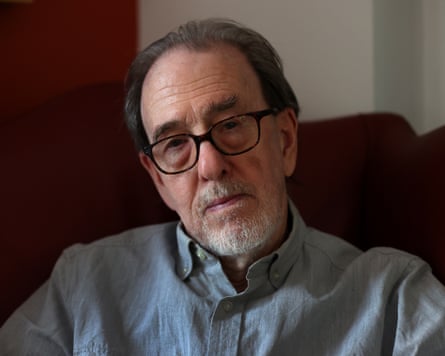
Documentary filmmaking has long grappled with the fine line between capturing reality and exploiting it, but few directors have turned that lens inward quite as intimately or painfully as Ross McElwee. For decades, the acclaimed American filmmaker built a distinct cinematic style by weaving his own life, relationships, and family milestones into art. His most personal subject was his son, Adrian, whom McElwee filmed growing up from infancy to adulthood. However, the tragic trajectory of Adrian’s life—culminating in his death from a fentanyl overdose at the age of 27 in the bathroom of his father’s Boston home—has fundamentally recast the legacy of McElwee’s filmography.
In his latest documentary, Remake, McElwee confronts the complex ethical responsibilities of documentarians who use their own families as subjects. The project serves as both a deeply personal reckoning and a profound exploration of the intersection between artistic preservation and real-world trauma.
From a Hollywood Adaptation to a Personal Reckoning
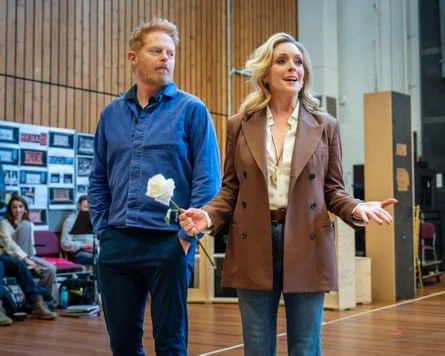
The genesis of Remake was originally intended to be lighthearted and self-reflexive. A Hollywood producer approached McElwee with the prospect of shooting a fictionalized adaptation of his seminal 1986 documentary, Sherman’s March. Intrigued by the meta-narrative potential, McElwee decided to document the adaptation process itself, treating the endeavor as a behind-the-scenes look at translating an arthouse documentary into commercial cinema.

However, external realities quickly dismantled the original premise. During production, Adrian’s mental health began a severe downward spiral, exacerbated by an opioid addiction. When Adrian died at 27, production ground to an immediate halt. Faced with unimaginable grief, McElwee initially abandoned the film, viewing the enterprise as frivolous compared to the loss of his son.
Yet, after taking a year to regroup, McElwee made the bold decision to retain the original Hollywood adaptation footage within the new documentary. In Remake, the clips of the fictionalized Sherman’s March act as a stark, surreal counterpoint to the genuine anguish of Adrian’s death. Rather than discarding his initial work, McElwee uses the framework to rebuild his narrative of fatherhood, filtering the archival fragments through the lens of hindsight.
Chronology of a Filmmaker’s Archive
To understand the weight of Remake, one must examine McElwee’s extensive cinematic archive. His career has consistently blurred the boundaries between autobiography and non-fiction cinema:
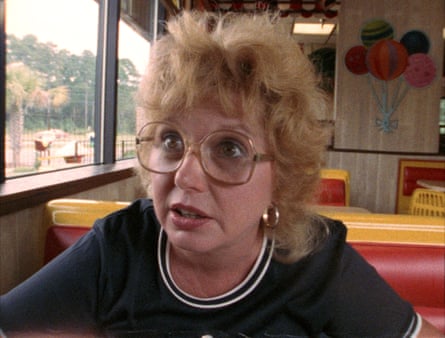
- 1986: McElwee releases Sherman’s March, a critically acclaimed and idiosyncratic documentary ostensibly about General William Tecumseh Sherman’s Civil War march, which instead evolved into a picaresque journey through the American South, romance, and introspection. Charleen Swansea, McElwee’s former English teacher and a prominent figure in the film, achieves cult status as a documentary subject.
- 2011: McElwee releases Photographic Memory, which portrays Adrian as a complex but resilient adolescent. The father-son duo travel to the Venice Film Festival to promote the picture, an experience marked by public visibility, international travel, and celebration.
- Post-2011 to Mid-2020s: Adrian struggles increasingly with mental health challenges and opioid dependency. Despite early signs of resilience, the underlying vulnerabilities deepen.
- The 2020s: Adrian dies from a fentanyl overdose at age 27 in his father’s Boston home, prompting a complete reassessment of McElwee’s life’s work.
- 2025: McElwee completes and releases Remake, blending the aborted Hollywood adaptation footage, archival footage of Adrian spanning decades, and contemporary reflections on grief, consent, and memory.
Ethical Implications: The Burden of the Camera
Remake forces viewers and critics to confront the ethical dimensions of diary filmmaking. When a parent picks up a camera to record their child, issues of consent become inherently murky. Children cannot grant true, fully informed legal and psychological consent to having their formative years permanently recorded and broadcasted to the public.
In Remake, McElwee grapples with whether the attention generated by his films—particularly their trip to the Venice Film Festival for Photographic Memory—contributed to Adrian’s struggles. Reflecting on whether the public exposure fostered a sense of invincibility or exacerbated underlying pressures, McElwee admits the possibility that he was in denial about the corrosive effects of his artistic pursuits.
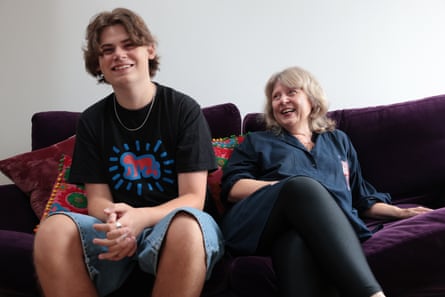
This dilemma resonates with other practitioners of autobiographical non-fiction. British filmmaker Victoria Mapplebeck, who documented two decades of single motherhood alongside her son Jim in the 2024 documentary Motherboard, notes the complex duality of familial consent. In conversations surrounding Remake, Mapplebeck observed that subjects often grant consent because they recognize what the art means to the parent, highlighting a distinct power imbalance inherent in the documentary medium.
The Broader Context of Fentanyl and Mental Health
Adrian McElwee’s death is part of a broader, devastating public health crisis that has profoundly impacted families across the United States. The opioid epidemic, driven heavily by synthetic opioids like fentanyl, has disproportionately affected young adults, cutting across socio-economic lines. According to public health data from the Centers for Disease Control and Prevention (CDC), drug overdose deaths involving synthetic opioids remain a leading cause of mortality among Americans aged 18 to 45.
While Remake is intensely personal, it inadvertently captures the helplessness shared by countless families navigating the intersection of severe mental health distress and substance use disorders. McElwee’s transparent admission of his inability to recognize the depth of his son’s suffering highlights the insidious nature of addiction, where outward success and creative celebration can mask internal devastation.
Reflections on Art, Life, and Letting Go
Throughout Remake, McElwee explores the concept of the unfinishable film. The aborted Hollywood remake of Sherman’s March undergoes multiple iterations within the documentary—transitioning from a studio comedy feature to a dramatic miniseries, a television sitcom, and finally a verbatim live opera. This shifting structure serves as a metaphor for the fluidity of memory and the ways in which human experiences are continually reframed by time.
At 79 years old, McElwee finds himself at a professional crossroads. While he expresses a desire to create one final, lighthearted project, the compulsive drive to document the world around him has waned. Reflecting on family gatherings and milestones where he previously would have instinctively reached for a camera, he recognizes a shift in perspective.
He recalls a piece of advice given decades earlier by Charleen Swansea during the production of Sherman’s March, when she demanded he turn off his camera during a pivotal moment, shouting, “This isn’t art, this is life!”
After four decades of recording reality, McElwee is finally learning to step back, acknowledging that some moments are meant simply to be lived rather than captured on film. Remake stands not only as an elegy to his son Adrian, but as a sobering, courageous masterclass on the limits of cinema and the heavy price of turning private life into public art.