As the United States approaches its semiquincentennial in 2026, the resonance of Thomas Paine’s 1776 call to action in Common Sense—the assertion that "we have it in our power to begin the world over again"—is experiencing a modern revival. Two and a half centuries after the nation’s founding, the intersection of rapid technological advancement and a deep-seated human need for historical context has created a unique cultural moment. Media executives and historians alike observe that while the methods of delivery have transitioned from printed pamphlets to digital algorithms, the fundamental drive to understand the present through the lens of the past remains a cornerstone of the American identity.
The Intersection of Modern Media and Historical Consumption
The current media landscape has facilitated an unprecedented accessibility to historical narratives. This summer, the proliferation of history-based content across diverse platforms—including high-production documentaries, feature films, museum exhibitions, scholarly books, podcasts, and short-form social media videos—indicates a significant shift in how the public engages with heritage. This "democratization of history" allows for a broader spectrum of stories to reach the public, moving beyond traditional "great man" theories to include the lived experiences of marginalized groups and everyday citizens.
Technological acceleration has acted as a primary catalyst for this shift. Digital platforms have not only expanded the reach of historical storytelling but have also altered the format. Where history was once confined to academic journals or linear television programming, it is now consumed in modular, interactive, and highly personalized formats. This evolution has fostered a new generation of history enthusiasts who utilize digital tools to rediscover and disseminate accounts of people and events that were previously omitted from the standard national narrative.
A Chronology of American Historical Storytelling
The methodology of sharing the American story has undergone several distinct transformations, each coinciding with major technological shifts and national crises.
- The Revolutionary Era (1770s–1790s): The birth of the nation was fueled by the printing press. Figures like Benjamin Franklin and Thomas Paine utilized mass-produced pamphlets to circulate radical ideas. Paine’s Common Sense served as a precursor to modern mass media, designed to be inexpensive and written in a vernacular that was accessible to the general public. It was frequently read aloud in public squares and military camps, ensuring the message reached even the illiterate.
- The Golden Age of Radio (1930s–1940s): During the Great Depression and World War II, President Franklin D. Roosevelt’s "Fireside Chats" revolutionized political and historical communication. By speaking directly into the homes of millions, Roosevelt utilized the intimacy of radio to provide real-time context to a nation in turmoil, effectively making the public feel like participants in the unfolding history of the era.
- The Television and Broadcast Era (1950s–1990s): The introduction of visual immediacy changed the emotional weight of history. Landmark broadcasts, such as the 1969 moon landing and Walter Cronkite’s coverage of the Vietnam War, transformed history from a reported event into a shared national experience. This era established the "living room" as the primary site for historical witness.
- The Digital and Social Media Era (2000s–Present): The advent of smartphones and personal computing shifted the power of narrative from centralized networks to the individual. Today, platforms like YouTube and TikTok, alongside specialized podcast networks, allow for niche historical exploration. This era is characterized by "bottom-up" history, where archival footage and personal stories are surfaced by independent creators, often challenging established perspectives.
Case Study in Personal Narrative: The Story of George Olson
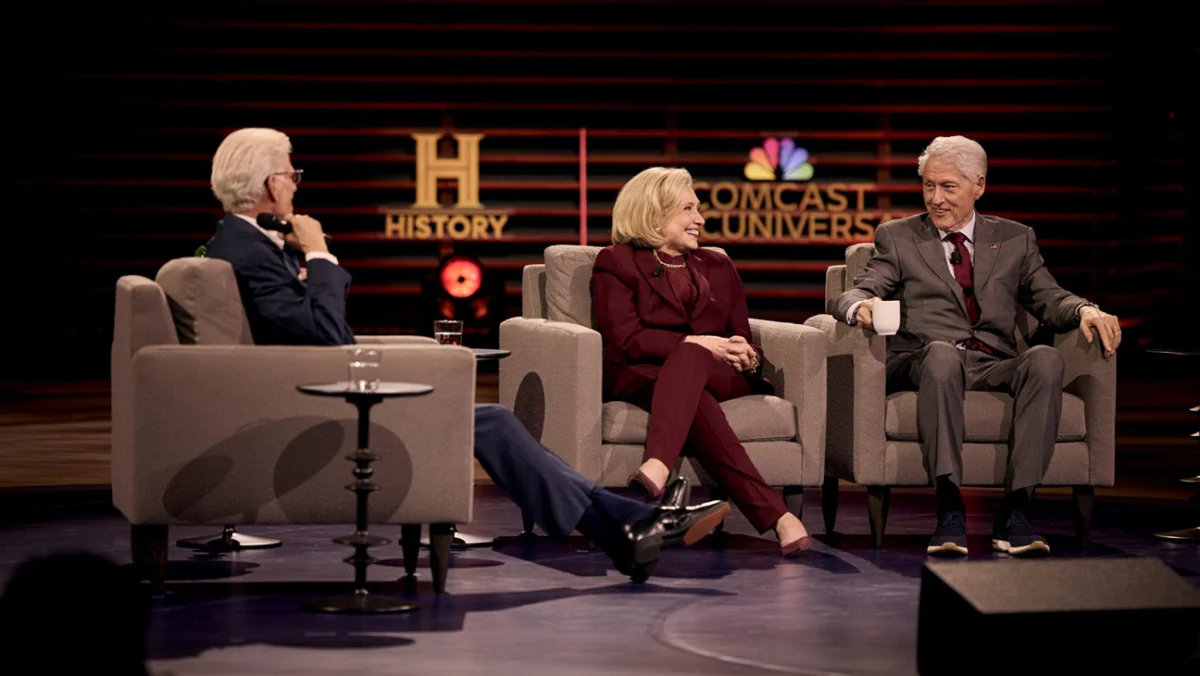
The power of historical storytelling is often most potent when it bridges the gap between grand geopolitical events and individual human experience. A recent example occurred in Philadelphia during a "HistoryTalks" event commemorating the upcoming 250th anniversary of the United States. The event featured George Olson, a 99-year-old veteran of the U.S. Navy.
At the age of 18, Olson served during the Battle of Okinawa, one of the most brutal campaigns of World War II. The battle, which lasted from April to June 1945, resulted in over 12,000 American deaths and more than 100,000 Japanese casualties. Olson survived a devastating kamikaze attack on his vessel, and he is believed to be the last survivor to have escaped the ship before it was lost.
During the Philadelphia event, Olson addressed an audience of over 1,500 people, reflecting on the psychological burden of survival and the memory of fallen comrades. Analysts suggest that the visceral reaction of the audience—spanning multiple generations—underscores a "quiet truth" in modern historiography: the public gravitates toward personal windows into the past. These moments of human connection serve to ground abstract historical data in emotional reality, reinforcing the idea that history is a product of individual choices rather than just institutional movements.
Supporting Data on History Consumption and Public Interest
Market research and cultural trends indicate a robust appetite for historical content in the 21st century. According to industry data:
- Podcast Growth: History consistently ranks among the top three most-listened-to genres in the podcasting industry. Shows like "The Rest is History" and "Hardcore History" garner millions of downloads per episode, indicating a preference for long-form, deep-dive narratives.
- Documentary Success: Streaming services like Netflix, Hulu, and Disney+ have reported that historical documentaries and "docuseries" are among their highest-performing non-fiction categories.
- Museum Engagement: Despite the rise of digital media, physical attendance at historical sites remains significant. The Smithsonian Institution, for instance, continues to see millions of visitors annually, with a notable increase in interest regarding exhibits that feature inclusive and diverse American narratives.
- Educational Shifts: There is a growing trend in higher education and secondary schools toward "public history," which focuses on making historical research accessible to the general public through digital archives and community engagement.
Official Responses and the Semiquincentennial Framework
The U.S. Semiquincentennial Commission, established by Congress in 2016, is tasked with planning the 250th anniversary celebrations. The commission, known as America250, has emphasized that the commemoration will not merely be a look back at 1776, but an inclusive examination of the 250 years that followed.
In official statements, commission representatives have noted that the goal is to create "the most inclusive commemoration in U.S. history." This involves leveraging technology to allow citizens from all 50 states and territories to contribute their own family histories to a national digital archive. This initiative reflects a broader institutional recognition that the "official" history of the United States is an evolving document that must incorporate the voices of all its citizens to remain relevant.
Industry leaders, including Paul Buccieri, President and Chairman of A+E Global Media, have argued that the media’s role in this celebration is to act as a bridge. By utilizing the History Channel and other platforms, media companies aim to provide the "right storytellers at the right moment" to meet a public that is increasingly hungry for perspective in an era of perceived instability.
Broader Impact and Future Implications
The resurgence of interest in history comes at a time of significant global and domestic uncertainty. Rapid advancements in artificial intelligence, shifting political landscapes, and economic disruptions have led many to feel they are living through an unprecedented era of chaos.
However, a factual analysis of history suggests that the feeling of "overwhelming change" is a recurring theme in human society. Every generation has faced moments that felt like an inflection point. By looking backward, modern society gains a "corrective" perspective. History demonstrates that progress is rarely a straight line; it is characterized by cycles of crisis and resilience.
The implications of this historical engagement are twofold:
- Social Cohesion: Shared history, even when it involves grappling with difficult or divisive pasts, provides a common language for a society. It anchors individuals to a narrative larger than their immediate circumstances.
- Informed Citizenship: As the democratization of storytelling continues, the public is better equipped to recognize patterns in governance, technology, and social movements. This leads to a more informed electorate capable of navigating the complexities of the 21st century.
As the countdown to July 4, 2026, continues, the focus remains on how the American story is told. The evolution from Thomas Paine’s hand-pressed pamphlets to the sophisticated digital ecosystems of today ensures that while the medium changes, the mission of history—to illuminate the present and point toward the future—remains constant. The resilience of the human spirit, as evidenced by figures like George Olson, continues to be the central thread that connects the past to an unimaginable future.