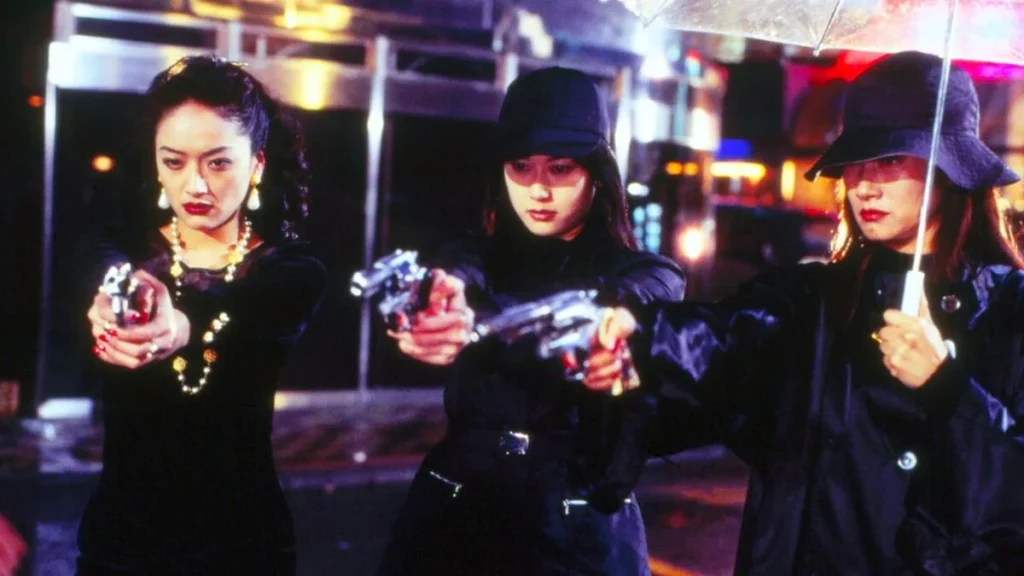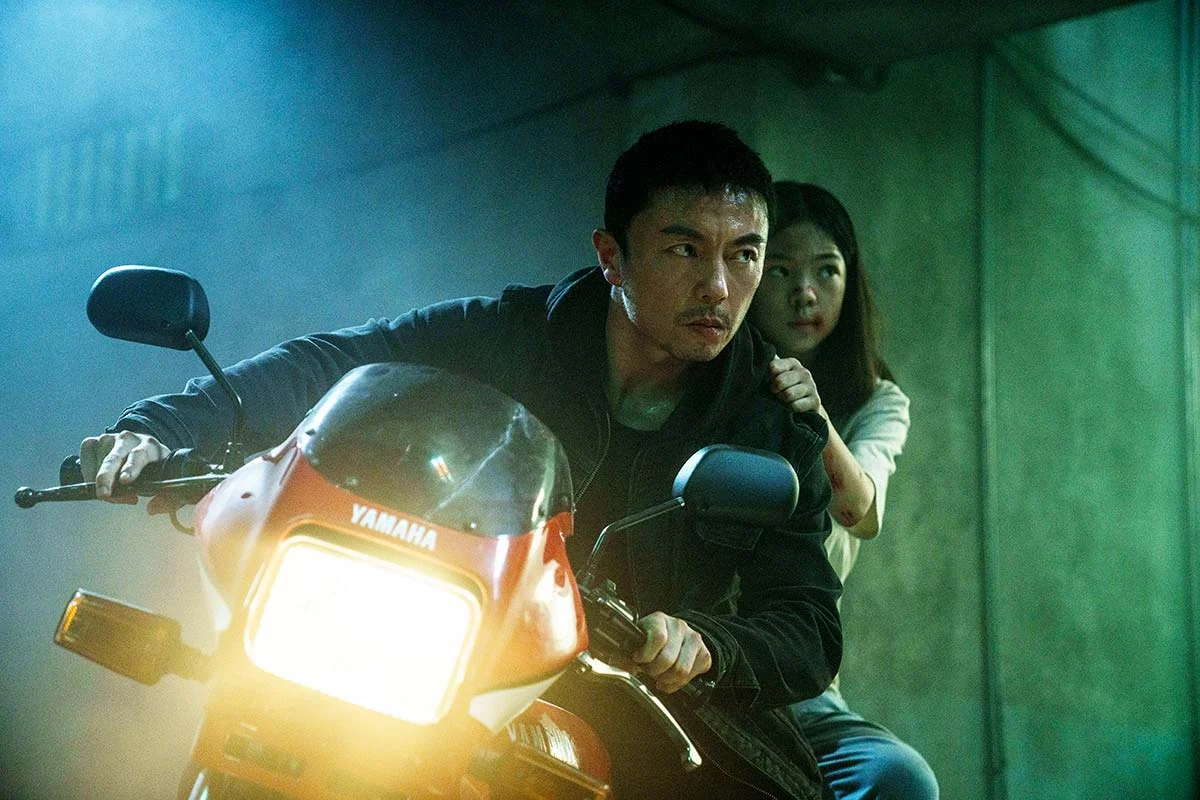
"The Furious," the highly anticipated directorial debut from acclaimed action choreographer Kenji Tanigaki, is set to electrify US theaters starting May 29, marking a significant moment in the ongoing resurgence of practical action cinema. The film, which has already garnered rave reviews from critics and audiences globally, positions Tanigaki, a veteran known for his work on blockbusters like "Rurouni Kenshin," "Raging Fire," and "Twilight of the Warriors: Walled In," as a formidable new voice in the genre. It promises to deliver a visceral, character-driven experience that champions meticulous choreography and practical effects over computer-generated spectacle, echoing a growing demand for authenticity in action filmmaking.
The Resurgence of Practical Action Cinema: A Global Shift
The action genre has undergone a profound transformation in recent years, largely catalyzed by films that prioritize tangible stunts and intricate combat sequences. This movement gained significant momentum with the release of Gareth Evans’ "The Raid" (2011) and its sequel "The Raid 2" (2014), which captivated international audiences with their relentless, bone-crunching martial arts and innovative camerawork. These Indonesian productions not only showcased a new breed of action stars like Iko Uwais and Joe Taslim but also inspired a shift away from the often criticized over-reliance on CGI in mainstream Hollywood blockbusters. The impact of "The Raid" series can be directly observed in the evolution of other successful franchises, most notably the "John Wick" series, which, much like Tanigaki’s work, emphasizes a "gun-fu" style meticulously crafted by stunt teams, including those with direct ties to "The Raid" alumni.
This current wave of practical action cinema also draws parallels to the golden age of Hong Kong action films in the 1980s and 90s, where directors like John Woo redefined cinematic violence with their balletic gunfights and groundbreaking stunt work. Woo’s influence, particularly on films like "A Better Tomorrow" and "The Killer," resonated globally, shaping action filmmaking for decades. Today, a similar sentiment prevails: a yearning for the visceral, the immediate, and the physically demanding performances that CGI, despite its capabilities, often struggles to replicate. Audiences are increasingly fatigued by green-screen heavy productions, seeking instead the raw energy and genuine risk conveyed by practical stunts. This appetite has fueled the success of films like "Mission: Impossible – Fallout," where Tom Cruise’s commitment to performing death-defying stunts became a central selling point, and the recent hit "Nobody," starring Bob Odenkirk, which presented a grounded, brutal take on the action thriller.
Kenji Tanigaki: A Master Choreographer Steps Behind the Camera
At the forefront of this practical action renaissance stands Kenji Tanigaki. For years, he has been one of the industry’s most respected action directors and choreographers, a craftsman whose expertise has elevated numerous projects to critical and commercial success. His career trajectory showcases a deep understanding of martial arts and cinematic storytelling.
Tanigaki’s work on the "Rurouni Kenshin" live-action film series (2012-2021) is particularly noteworthy. These adaptations of the popular manga were lauded for their breathtaking sword fights, which blended traditional Japanese martial arts with dynamic camera movements, establishing a new benchmark for historical action films. His collaboration with director Keishi Otomo on these films demonstrated his ability to translate complex comic book action into believable, impactful on-screen combat. Similarly, his contributions to Benny Chan’s "Raging Fire" (2021), starring Donnie Yen, provided some of the most memorable and hard-hitting sequences in recent Hong Kong cinema, cementing the film’s status as a modern classic and a fitting swansong for director Chan. Most recently, "Twilight of the Warriors: Walled In" (2024), another Hong Kong production, benefited immensely from Tanigaki’s expertise, receiving widespread acclaim for its intense and expertly staged fight scenes, further solidifying the demand for his distinct brand of action.
The news of Tanigaki taking the directorial reins for "The Furious" was met with considerable anticipation among action aficionados. This transition from choreographer to director is a natural progression for many in the genre, allowing them to fully realize their vision for action storytelling from concept to execution. Tanigaki has frequently expressed his philosophy that action should not merely be spectacle but an integral part of character development and narrative progression. His directorial debut is seen as an opportunity to fully articulate this vision, combining his unparalleled skill in crafting combat with a holistic approach to filmmaking.
"The Furious" – A Narrative Built for Impact
While "The Furious" may embrace a narrative structure that action film enthusiasts will find familiar, its strength lies in how it leverages this framework to deliver impactful character arcs and relentless action. The film centers on Wang Wei (Xie Miao), a mute handyman who sought refuge from a troubled past in China, hoping to forge a quiet, unnoticed life abroad. His deliberate avoidance of conflict, however, creates a rift with his spirited teenage daughter, Yang Enyou, who struggles to understand her father’s passive demeanor. This domestic tension forms the emotional core of the film, setting the stage for a dramatic transformation.
The catalyst for Wang Wei’s reawakening is the brutal kidnapping of his daughter by a ruthless human trafficking syndicate. Forced to abandon his carefully constructed anonymity, Wang Wei realizes that he must tap into the dormant skills of his past to rescue her, embodying the classic "reluctant hero" archetype. His desperate search leads him to cross paths with Navin (Joe Taslim), an investigator on a parallel quest to dismantle the same criminal organization and locate his own missing wife. The convergence of their individual tragedies and shared enemy forms a powerful alliance.
The criminal syndicate at the heart of "The Furious" is depicted as a formidable force, controlling vast swathes of the underworld through corruption and intimidation. They operate with impunity, bribing police officials to turn a blind eye to their heinous crimes. The syndicate’s power is further amplified by its cadre of highly trained enforcers and assassins, including formidable figures played by action veterans Yayan Ruhian and Brian Le. These antagonists are not merely obstacles; they represent the systemic evil that Wang Wei and Navin must confront, their individual battles against these enforcers serving as crucial benchmarks of their personal and collective resolve. The narrative, while straightforward, provides a robust emotional foundation, allowing the action sequences to resonate with genuine stakes and consequences.
Crafting Combat: Choreography, Performance, and Cinematography
"The Furious" masterfully blends traditional action film tropes with modern cinematic sensibilities, creating a viewing experience that feels both nostalgic and refreshingly new. Tanigaki’s approach to action choreography is a testament to his belief in storytelling through movement. He meticulously designs each fight sequence not just for aesthetic appeal but to convey character development, emotional states, and narrative progression.
The film brilliantly utilizes the distinct fighting styles of its two lead actors. Xie Miao, a prodigious wushu master from a young age, brings a traditional, precise, and almost artistic elegance to Wang Wei’s combat. His movements, while devastatingly effective, also subtly reflect his character’s internal struggle—his initial reluctance, his growing desperation, and his profound emotional bond with his daughter. Every strike and block from Wang Wei carries the weight of a father’s love and an increasing frustration against the clock. In stark contrast, Joe Taslim’s Navin, drawing on his background in Judo and Pencak Silat (the Indonesian martial art popularized by "The Raid"), employs a style that is raw, direct, and brutally efficient. His confrontations are characterized by a visceral, no-holds-barred physicality that provides a powerful counterpoint to Xie Miao’s more refined technique. The climactic encounter between Taslim’s Navin and Yayan Ruhian’s character is already being singled out by critics as a tour-de-force, a showcase of intense, unyielding combat that pushes both actors to their physical limits.
Tanigaki’s elegance extends beyond just choreography; it encompasses a clever use of camera movement and editing. Unlike many contemporary action films that rely on rapid cuts and shaky cam to obscure less-than-perfect stunt work, "The Furious" embraces long takes and fluid camera work that allow audiences to fully appreciate the intricacies of the fight choreography. This transparency not only enhances the impact of each sequence but also allows viewers to grasp the sheer physical and emotional strain experienced by the characters. The strategic placement of the camera, often at eye level or dynamically tracking the combatants, immerses the audience directly into the heart of the action, making every blow, every dodge, and every grapple feel intensely real.
One particular sequence, set in a cold storage facility, has been highlighted as an early masterclass in Tanigaki’s directorial prowess. This scene serves as an excellent example of how the elements of choreography, camera work, and emotional storytelling coalesce. Beyond its technical brilliance, it also pays direct homage to iconic moments in martial arts cinema, notably Bruce Lee’s legendary fight in "The Big Boss." Indeed, "The Furious" is replete with subtle and overt references to Lee’s filmography and the broader traditions of East Asian martial arts cinema, demonstrating Tanigaki’s deep respect for his cinematic roots. This awareness, combined with an unwavering commitment to practical action over CGI spectacle, solidifies "The Furious" as an intense, highly entertaining genre film that delivers on its promise of grounded yet thrilling action.
The Cast: A Symphony of Martial Arts Talent
The success of "The Furious" is inextricably linked to the caliber of its cast, a roster of actors deeply rooted in martial arts and action cinema.
Xie Miao (Wang Wei): A true martial arts prodigy, Xie Miao first gained fame as a child actor in the 1990s, often playing the son of action legends like Jet Li in films like "My Father Is a Hero" (also known as "The Enforcer"). Trained in wushu from a very young age, Miao brings not only incredible physical precision to his role but also a nuanced dramatic capability honed over decades in the industry. His portrayal of Wang Wei is a return to form for the actor, showcasing his ability to convey deep emotion through subtle expressions and powerful physical performance, making his character’s journey from quiet handyman to furious father utterly compelling.
Joe Taslim (Navin): An Indonesian action star with a formidable background, Joe Taslim is a former Judo athlete who competed at the national level and was part of the Indonesian national Judo team. His transition to acting saw him rise to international prominence with his role as Jaka in "The Raid," where his intense, no-nonsense fighting style left a lasting impression. Since then, Taslim has featured in major Hollywood productions like "Fast & Furious 6" and "Star Trek Beyond," as well as the critically acclaimed "The Night Comes for Us." His raw physicality and intense screen presence make him the perfect foil and ally to Xie Miao’s character, providing a powerful, direct style of combat that is both captivating and brutal.
Yayan Ruhian (Enforcer): Another breakout star from "The Raid" and its sequel, Yayan Ruhian is a master of Pencak Silat, the Indonesian martial art. Known for his distinctive and intimidating on-screen presence, Ruhian has become a go-to villain and action performer, appearing in "Star Wars: The Force Awakens," "John Wick: Chapter 3 – Parabellum," and "Beyond Skyline." His involvement guarantees intricate, high-stakes fight choreography, and his confrontation with Joe Taslim is anticipated to be one of the film’s standout sequences, a clash of titans with genuine martial arts pedigree.
Brian Le (Enforcer): A talented stunt performer and martial artist, Brian Le has been making a name for himself in the action world, particularly known for his work in independent action films and as a stuntman in various Hollywood productions. His inclusion alongside Ruhian promises a formidable and credible threat, ensuring that every antagonist presents a genuine physical challenge to the protagonists.
The synergy among these performers, guided by Tanigaki’s directorial vision, creates an ensemble that elevates "The Furious" beyond a simple action vehicle into a showcase of contemporary martial arts talent.
Critical Acclaim and Industry Reception
The early buzz surrounding "The Furious" has been overwhelmingly positive, with critics worldwide praising its uncompromising action and compelling performances. Reviewers have lauded Tanigaki’s directorial confidence, noting how he manages to craft a lean, effective narrative that serves as a perfect vehicle for the spectacular fight sequences. Many have highlighted the film’s relentless pacing, inventive choreography, and the tangible impact of its practical effects, which deliver a visceral experience often missing in CGI-heavy blockbusters. The emotional depth conveyed by Xie Miao, particularly in his scenes with his on-screen daughter, has also received significant praise, grounding the high-octane action in relatable human stakes.
Industry analysts suggest that the enthusiastic reception for "The Furious" further solidifies the market demand for this specific brand of action cinema. It sends a clear message to studios that audiences are willing to embrace films that prioritize authentic physical performances and ingenious stunt work. This success could potentially influence future production strategies, encouraging more investment in films that emphasize practical effects and highly skilled martial artists, rather than solely relying on digital enhancements. For Tanigaki, this directorial debut is not just a personal achievement but a significant milestone that could propel him to the forefront of international action filmmaking.
Broader Impact: Redefining Modern Action Cinema
"The Furious" is more than just an entertaining action film; it represents a significant contribution to the evolving landscape of global cinema. It serves as a powerful statement that modern action filmmaking can achieve extraordinary levels of intensity and emotional resonance without sacrificing authenticity for spectacle. By leaning into the rich traditions of East Asian martial arts cinema while employing contemporary filmmaking techniques, Kenji Tanigaki has created a blueprint for future filmmakers.
The film’s success reinforces the idea that character-driven narratives, even simple ones, can be profoundly amplified when integrated with meticulously crafted action sequences. It challenges the notion that action is merely an interlude between plot points, demonstrating instead that it can be a primary vehicle for storytelling and emotional expression. As the film rolls out across US theaters, its impact is expected to extend beyond box office numbers, influencing creative decisions and potentially inspiring a new generation of filmmakers to explore the artistry of practical action. "The Furious" stands as a testament to Kenji Tanigaki’s remarkable understanding of the genre and his ability to deliver a deeply satisfying, thrilling, and respectful ode to the enduring power of martial arts cinema.