The entertainment industry is replete with performers who manage to carve out respectable careers, yet only a select few achieve the chameleon-like versatility that defines the trajectory of British actress Miranda Richardson. Spanning over four decades of critically acclaimed work across theatre, television, and film, Richardson has consistently challenged typecasting. From the harrowing depths of psychological dramas to the brightly colored absurdity of historical satire, her body of work is a masterclass in theatrical transformation. As she prepares to sit down for an exclusive Guardian reader interview, a retrospective of her extensive filmography reveals an artist who has continually redefined the parameters of character acting.
Main Facts and Critical Acclaim
Richardson’s cultural footprint is heavily anchored by an enviable collection of industry accolades and peer recognition. Her trophy cabinet includes a British Academy Film Award (BAFTA) for her gripping performance in Louis Malle’s 1992 psychological drama Damage, where she starred opposite Jeremy Irons. Her cinematic prowess has likewise crossed the Atlantic, highlighted by Golden Globe wins for Mike Newell’s 1991 historical comedy-drama Enchanted April and David Drury’s 1994 Nazi-era thriller Fatherland. Furthermore, her riveting performances in Damage and the 1994 biographical drama Tom & Viv earned her Academy Award nominations, cementing her status as a formidable presence in global cinema.
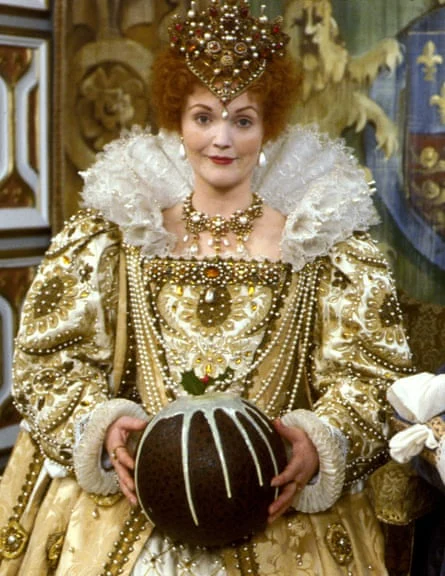
Beyond the prestige of arthouse and historical dramas, Richardson has demonstrated an exceptional aptitude for commercial blockbusters and sharp comedy. Global audiences recognize her instantly as the acid-tongued, quill-wielding journalist Rita Skeeter in Harry Potter and the Goblet of Fire, the delightfully menacing chicken-farm owner Mrs. Tweedy in the stop-motion animated hit Chicken Run, and the unhinged, tyrannical Queenie in the beloved BBC sitcom Blackadder II. Her famous delivery—characterized by a piercing, high-pitched schoolgirl cadence—remains a staple of British television comedy.
A Chronological Journey: From Veterinary Aspirations to West End Stardom
Long before she was ordering fictional executions or reporting on the wizarding world, Richardson’s early ambitions lay far away from the footlights. Initially, she considered a career in veterinary medicine, driven by a lifelong fascination with animals—an interest that would later manifest in her rescue of a dazed kestrel during her youth and her subsequent narration of documentaries such as Operation Orangutan.
However, the trajectory of her professional life shifted decisively toward the dramatic arts. She enrolled at the prestigious Bristol Old Vic Theatre School, graduating in 1979 as part of a remarkably talented cohort that also featured future Oscar winner Daniel Day-Lewis.
Her professional transition into the industry followed a traditional and rigorous British theatrical path. After cutting her teeth in regional repertory theatre, Richardson made her West End debut in 1981. It did not take long for casting directors to notice her unique intensity. Her major film breakthrough arrived in 1985 when she was cast as Ruth Ellis, the last woman to be hanged in Britain, in Mike Newell’s Dance with a Stranger.
According to behind-the-scenes accounts from the production, Richardson possessed an uncanny ability to drop out of the tragic, heavy headspace required for the role by slipping into a screechy, childlike voice to entertain the crew. Fatefully, that exact vocal exercise would soon find a permanent home in comedy history. Just a year later—having notably turned down the role in Fatal Attraction that eventually went to Glenn Close—Richardson brought that same comedic voice to the set of Blackadder, weaponizing it to torment Rowan Atkinson’s titular character while bickering with Nursie and flirting with Lord Flashheart.

Sustained Longevity Across Television and Film
Rather than resting on the laurels of her 1980s and 1990s successes, Richardson maintained a relentless and diverse working schedule into the 21st century. Her historical and political portraiture expanded to include notable figures such as British cabinet minister Barbara Castle in Made in Dagenham and Clementine Churchill in Churchill.
Her range in fantasy and television is equally expansive. She portrayed Madame Tracy and Shax in the fantasy series Good Omens and appeared as Emily in the BBC adaptation of Agatha Christie’s And Then There Were None. Her royal lineage on screen continued when she earned BAFTA and Golden Globe nominations for playing Queen Mary in The Lost Prince (2003), followed by a turn as the mother of Queen Victoria in The Young Victoria (2009), starring alongside Emily Blunt.
Demonstrating her commitment to revisiting past triumphs, Richardson reprised her iconic role as the villainous Mrs. Tweedy in the 2023 sequel Chicken Run: Dawn of the Nugget. Most recently, she stepped into the biographical arena once more with The Yellow Tie, portraying Ioana, the wife of renowned Romanian conductor Sergiu Celibidache, alongside John Malkovich, who plays the older maestro.
Supporting Data and Industry Analysis
Industry analysts often point to Richardson’s career as a prime example of sustainable longevity in an industry frequently criticized for ageism and limited casting parameters for women over forty. By balancing high-profile studio franchises—such as the Harry Potter and Chicken Run universes—with demanding indie films and prestige television, she has insulated herself against the volatility of box-office trends.
Data from film databases indicate that Richardson has amassed over one hundred screen credits, an exceptionally high volume for an actor who consistently prioritizes character-driven narratives over straightforward commercial vehicles. Her ability to transition fluidly between mediums—seamlessly moving from Shakespearean adaptations and gritty historical tragedies to broad television sitcoms—underscores a rare technical flexibility that casting directors value for ensemble-heavy productions.
Broader Impact and Implications for the Performing Arts
Richardson’s enduring career offers a valuable case study in the modern landscape of British acting. By refusing to be pigeonholed into a single genre, she has paved a pathway for character actors who resist traditional leading-lady constraints. Her trajectory highlights the enduring value of foundational training at institutions like the Bristol Old Vic, where classical rigor underpins even the most eccentric comedic performances.
As cultural institutions and media outlets increasingly look back to honor foundational figures of late 20th-century television and cinema, artists like Richardson represent a bridge between traditional repertory performance and the demands of modern global franchises. Her forthcoming interaction with Guardian readers promises to shed further light on a life dedicated to meticulous character study, unexpected personal pursuits—such as taking up the cello in her fifties—and an enduring passion for the dramatic arts.