The recent reveal of the first trailer for The Mandalorian and Grogu sent ripples of surprise through the entertainment industry, not just for the continuation of a beloved Star Wars narrative, but for the unexpected appearance of a cinematic titan: Martin Scorsese. The legendary director’s presence in the trailer, playing a character identified as Hugo Durant, marks a significant moment, prompting a re-examination of his ventures beyond the director’s chair and into the realm of acting. While his directorial oeuvre is vast and critically acclaimed, Scorsese’s forays into acting roles, though less frequent, have often been noteworthy, offering glimpses into his multifaceted talent. This exploration delves into these roles, contextualizing them within his directorial career and the broader landscape of filmmaking.
The Emergence of a Director as Actor
Martin Scorsese’s career has been defined by his distinctive directorial vision, characterized by gritty realism, complex characters, and a deep exploration of themes such as faith, guilt, redemption, and the darker aspects of the American psyche. Films like Taxi Driver (1976), Raging Bull (1980), Goodfellas (1990), and The Departed (2006) have cemented his status as one of cinema’s most influential filmmakers. His work often features intense performances from his chosen actors, meticulously crafted narratives, and a signature visual style.

The decision to cast Scorsese himself in a significant role within the Star Wars universe is a testament to the evolving nature of cinematic collaborations and the increasing willingness of major studios to leverage the star power and gravitas of iconic figures. This move can be seen as a strategic decision by Lucasfilm and The Walt Disney Studios, aiming to generate buzz and lend an air of prestige to the new installment. For audiences familiar with Scorsese’s directorial work, his appearance as Hugo Durant is an intriguing meta-commentary, blending the worlds of auteur filmmaking and blockbuster franchise entertainment.
A Thematic Thread: Truth, Lies, and the Act of Speaking
Across his diverse acting roles, a recurring thematic element emerges: the tension between truth and deception, and the consequences of an individual’s decision to speak or remain silent. Many of Scorsese’s characters, whether brief cameos or more developed roles, find themselves at a crossroads where revealing information could lead to personal danger or societal condemnation, yet withholding it might allow injustice to prevail. This plays into the inherent meta-fictional weight of Scorsese’s presence; directors often imbue their performances with the subtext of their own cinematic preoccupations. This characteristic lends a layer of depth to even his smaller appearances, suggesting that directors cast in these roles are often chosen for the gravitas and thematic resonance they can bring.
Ranking Martin Scorsese’s Acting Roles
While every performance by a filmmaker of Scorsese’s caliber carries a certain weight, a comparative analysis can illuminate the nuances of his acting contributions. This ranking focuses on roles where he embodies a distinct character, excluding self-referential cameos that primarily serve as commentary on his own filmmaking career, though such instances are often noteworthy in their own right.

The Accountant – Search and Destroy (1994)
Scorsese’s appearance in this independent film is a fleeting but memorable one. Playing a frustrated IRS agent, his presence in a single scene injects a dose of weary authenticity into the narrative. Search and Destroy, characteristic of the independent cinema of the late 80s and early 90s, often featured ensemble casts grappling with unconventional narratives. While the film itself may not have achieved widespread critical acclaim, Scorsese’s brief turn as a bureaucratic figure highlights his ability to embody even the most mundane characters with a distinct energy. The role serves as an early example of him stepping outside his directorial comfort zone into a character-driven performance.
Goodley – ‘Round Midnight (1986)
In Bernard Tavernier’s poignant drama about a troubled jazz saxophonist, Martin Scorsese portrays Goodley, a club owner and booker. The film navigates the complex relationships surrounding the protagonist, Dale Turner (Dexter Gordon), as various individuals attempt to steer him away from self-destruction and towards his musical genius. Scorsese’s character, Goodley, occupies a morally ambiguous space. He is clearly exploiting Turner’s talent for his own financial gain, booking him into a seedy hotel where old habits—and drug dealers—lurk. His character also exhibits a degree of antagonism towards Francis, Turner’s supportive friend.
A standout moment for Scorsese in ‘Round Midnight is a rapid-fire monologue delivered during a cab ride over the Brooklyn Bridge. His character passionately argues for the superiority of New York over Paris, showcasing his signature rapid-fire delivery and New York cadence. This scene, while brief, offers a substantial opportunity for Scorsese to inhabit a character with a distinct voice and perspective. The film itself is celebrated for its authentic portrayal of the jazz scene and earned Herbie Hancock an Academy Award for Best Original Score, further underscoring the quality of the production. The presence of real-life blacklisted director John Berry as a Parisian club owner adds another layer of historical context to the film.

Martin Scorsese – The Studio (2024)
While this role is technically a version of himself, its inclusion warrants discussion due to its exceptional comedic execution and meta-commentary on the filmmaking process. In the pilot episode of Seth Rogen’s Apple TV+ series The Studio, a spiritual successor to The Player, Scorsese delivers a hilariously frantic explanation of his imagined Jim Jones cult film. His subsequent tearful breakdown when his project is canceled by Rogen’s character, Matt Remick, is equally memorable. This performance is a masterful self-parody, leveraging Scorsese’s public persona and reputation for intense artistic dedication to generate significant comedic effect. The decision to include this role, despite its self-referential nature, speaks to the performer’s willingness to engage in lighthearted critique of his own industry.
Sykes – Shark Tale (2004)
Scorsese’s voice performance as Sykes, a pufferfish running a whale wash (a car wash for whales) in the animated film Shark Tale, presents a curious case. The film itself, with its anthropomorphic marine life and intertwined criminal underworld, operates on a unique, almost inexplicable premise. Sykes is entangled with Don Lino, the shark mafia boss voiced by Robert De Niro, a familiar pairing for fans of Scorsese’s crime dramas. The dynamic between Scorsese and De Niro in their vocal performances provides some of the film’s most engaging moments.
Sykes’s character is somewhat muddled. He employs Rastafarian jellyfish henchmen for what appears to be torture in a children’s film, yet is simultaneously tormented by baby fish. Later, he transforms into a dorky manager for Oscar, the protagonist voiced by Will Smith, a shift that adds to the film’s bewildering narrative arc. Despite the film’s eccentricities, Scorsese imbues Sykes with a palpable sense of panic and anxiety, particularly during his fish-mafia-related meltdowns. His rendition of "Mack the Knife" with adapted lyrics further showcases his commitment to the role, even within such an unconventional project. The film’s audacious blend of mob tropes and children’s animation makes it a standout, if baffling, entry in Scorsese’s acting credits.

Hugo Durant – The Mandalorian and Grogu (2025)
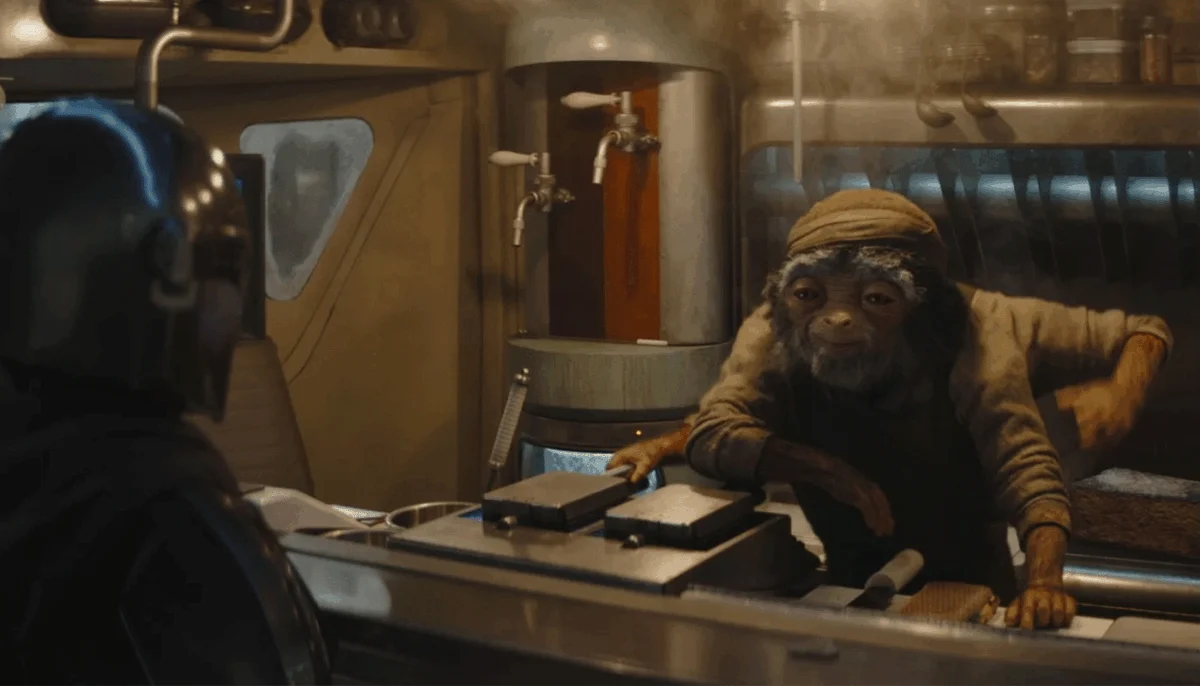
The most recent addition to Scorsese’s acting portfolio is his role as Hugo Durant in The Mandalorian and Grogu. This appearance marks a significant crossover between the world of auteur cinema and the expansive Star Wars universe. Durant is depicted as a four-armed Ardennian operating a food truck resembling an intergalactic Airstream trailer. The character’s portrayal cleverly riffs on Scorsese’s established on-screen persona: a small-time figure navigating a larger, potentially dangerous environment, entangled with organized crime (represented by protection money paid to Janu Coin).
Crucially, Durant embodies the thematic tension between speaking and silence that often defines Scorsese’s characters. He is desperate to avoid implicating himself, yet his signature rapid-fire, Lower East Side dialogue spills out, simultaneously revealing too much and nothing at all. Scorsese injects a vibrant energy into this character, elevating what could have been a one-dimensional role. The brevity of his appearance, confined to two scenes, leaves audiences wishing for a more extensive exploration of the character, hinting at the potential for future collaborations within the Star Wars franchise or elsewhere.
Vincent Van Gogh – "Crows," Akira Kurosawa’s Dreams (1990)
Martin Scorsese’s portrayal of Vincent Van Gogh in Akira Kurosawa’s Dreams is a masterclass in thematic resonance and casting intuition. Kurosawa famously believed that only Scorsese could capture the volatile intensity and artistic drive of Van Gogh for his film, which consists of vignettes based on the director’s actual dreams. In the segment titled "Crows," a Japanese painter visits a Van Gogh exhibition, finds himself transported into the paintings, and ultimately encounters the artist himself.

Scorsese’s Van Gogh is not a gentle, romanticized figure. Instead, he embodies a raw, almost frantic energy. When approached with reverence by the painter, Van Gogh dismisses him with a curt, "Why aren’t you painting?" This exchange encapsulates the core of Scorsese’s performance: an artist consumed by the urgent, life-or-death necessity of capturing light and life on canvas, regardless of external validation or understanding. The performance is startling in its authenticity, channeling Scorsese’s own directorial fervor into the persona of a legendary artist.
Behind-the-scenes footage reveals the fittingly chaotic circumstances of Scorsese’s preparation for the role. He reportedly memorized his lines while rushing to complete Goodfellas, a testament to his dedication and the demanding nature of filmmaking. This period also saw him reading Shūsaku Endō’s Silence on a bullet train, a novel that would later become a passion project for Scorsese, illustrating how even seemingly disparate experiences can inform and enrich his creative endeavors. The "Crows" segment stands as a profound artistic intersection, where two giants of cinema converged to illuminate the burning spirit of another.
Joe Lesser – Guilty by Suspicion (1991)
Guilty by Suspicion directly addresses the corrosive impact of the House Un-American Activities Committee (HUAC) during the McCarthy era. Scorsese’s portrayal of Joe Lesser, a Golden Age director facing the blacklist, is one of his most assured and naturalistic performances. The film skillfully navigates the complex moral landscape of the era, exploring the different paths individuals took when confronted with political persecution: becoming informers, enduring hardship, succumbing to despair, or seeking exile.

Scorsese’s character, Joe Lesser, embodies the latter path. In his one extended scene, he is already evading a subpoena and preparing to depart for London within hours. The performance is remarkably devoid of the "schtick" sometimes associated with his other acting roles. Instead, he delivers a performance that is almost ebullient, a breezy facade that clearly masks a deep well of anger and frustration. His defiant declaration to his editor, "Mike, I’m a Communist! I was a Communist 20 years ago and I’m a Communist now!" followed by a bark-laugh, is a powerful assertion of principle in the face of societal pressure. When his producer attempts to dismiss his statement, Joe’s unwavering reply, "Well you’ve heard it!" underscores his commitment. Later, his response to David Merrill’s (Robert De Niro) plea to stay in the U.S. – "I’d have to stay out of rooms with mirrors for the rest of my life – but I like looking at myself too much" – is a pithy, yet telling, encapsulation of his refusal to compromise his integrity. This role is a significant highlight, demonstrating Scorsese’s capacity for nuanced character portrayal rooted in historical context.
Martin Rittenhome – Quiz Show (1994)
In Robert Redford’s Quiz Show, Scorsese plays Martin Rittenhome, an executive at Geritol, a sponsor of the popular quiz show Twenty-One. The film masterfully dissects mid-20th century corruption, classism, and antisemitism, with a subtle nod to the lingering anxieties of the HUAC hearings through its narrative integration of On the Waterfront. Rittenhome’s character serves as a stark reminder of how corruption can permeate institutions.
Called to testify, Rittenhome is expected to uphold a sense of honor and speak the truth. However, in a private meeting with Richard Goodwin (Rob Morrow), he cheerfully admits that Americans were primarily interested in the spectacle of the quiz show and the money involved, rather than any intellectual engagement. This stark admission highlights the superficiality and commercialism that can undermine genuine pursuit of knowledge. Scorsese’s performance here is particularly impactful because he loses himself in the character, shedding the more performative aspects of his acting style. He embodies a terrifying pragmatism, a businessman who recognizes the absence of consequences for his actions. The rapid shift in public opinion, as depicted in the film, underscores the fragility of societal values and the power of media manipulation.

Broader Impact and Implications
Martin Scorsese’s consistent presence in acting roles, from brief cameos to more substantial character portrayals, offers a unique perspective on his relationship with the cinematic arts. These performances are not merely diversions from his directorial work; they are extensions of his deep understanding of character, narrative, and thematic exploration. His willingness to inhabit diverse roles, whether as a weary accountant, a morally ambiguous club owner, a frantic artist, or a pragmatic executive, demonstrates a profound respect for the craft of acting.
The casting of Scorsese in The Mandalorian and Grogu signifies a new chapter in his career, one where his directorial legacy is complemented by his presence as a performer in a globally recognized franchise. This move not only generates significant excitement among fans of both Star Wars and Scorsese’s work but also blurs the lines between auteur filmmaking and blockbuster entertainment. It suggests a future where such collaborations could become more common, allowing established directors to explore new creative avenues and bring their unique gravitas to a wider range of projects. As audiences anticipate his role as Hugo Durant, the impact of Scorsese’s acting career continues to unfold, adding another rich layer to an already legendary cinematic journey.