Peter Berg’s cinematic exploration of high-stakes athletics and the brutal realities of armed conflict reaches a new milestone with The Mosquito Bowl. Adapted from Buzz Bissinger’s acclaimed non-fiction historical book of the same name, the 127-minute feature film brings together two thematic elements that have defined significant portions of Berg’s directing career: organized sports, seen in his work on Friday Night Lights, and intense combat logistics, explored in Lone Survivor.
The film centers on a group of elite collegiate football players who willingly set aside their athletic stardom and civilian comforts following the December 7, 1941, attack on Pearl Harbor. Enlisting en masse in the United States Marine Corps, these young men transition from the adoration of cheering stadiums to the unforgiving training grounds of military boot camps, ultimately finding themselves thrust into the Pacific Theater during one of the most pivotal and harrowing chapters of World War II.
The narrative features an ensemble cast including Nicholas Galitzine as John McLaughry, Bill Skarsgård as Bob Bauman, Ray Nicholson as Tony Butkovich, and Tom Francis as David Schreiner. They are joined by Brent Comer, Jack Ingram, Dominic Bogart, and media personality Pat McAfee, who appears briefly as a military drill instructor. Directed by Berg from a screenplay co-written by Berg and Mark L. Smith, the production places its primary focus on the human cost of war, contrasting youthful invincibility against the indiscriminate destruction of modern combat.
Historical Context and the Road to Okinawa
The historical events underpinning The Mosquito Bowl document a unique convergence of sports culture and wartime mobilization. Following the United States’ entry into World War II, athletic departments across American universities were rapidly depleted as student-athletes and coaching staffs enlisted in various branches of the armed forces. Among these volunteers were numerous All-American and standout collegiate players who had previously enjoyed celebrity status on local and national stages.
The central narrative tracks the transition of these athletes from the gridiron to the Pacific Theater as they prepared for the amphibious invasion of Okinawa, formally known as Operation Icehouse. Fought from April to June 1945, the Battle of Okinawa stands as one of the bloodiest campaigns in the Pacific War, characterized by fierce resistance from the Imperial Japanese Army and staggering casualties on both sides.
Amid the intense preparation for this catastrophic engagement, members of the 6th Marine Division—which included many former collegiate and professional football players—organized a full-contact football game on Christmas Eve in 1944 on Guadalcanal. Conceived as a morale-boosting exercise, the game came to be known historically as the "Mosquito Bowl," named after the swarms of insects infesting the area. For many of the participants, including several key figures depicted in the film, this impromptu match would be the final athletic competition of their lives, as a significant number of the players were subsequently killed in action during the assault on Okinawa.
Narrative Structure and Cinematography
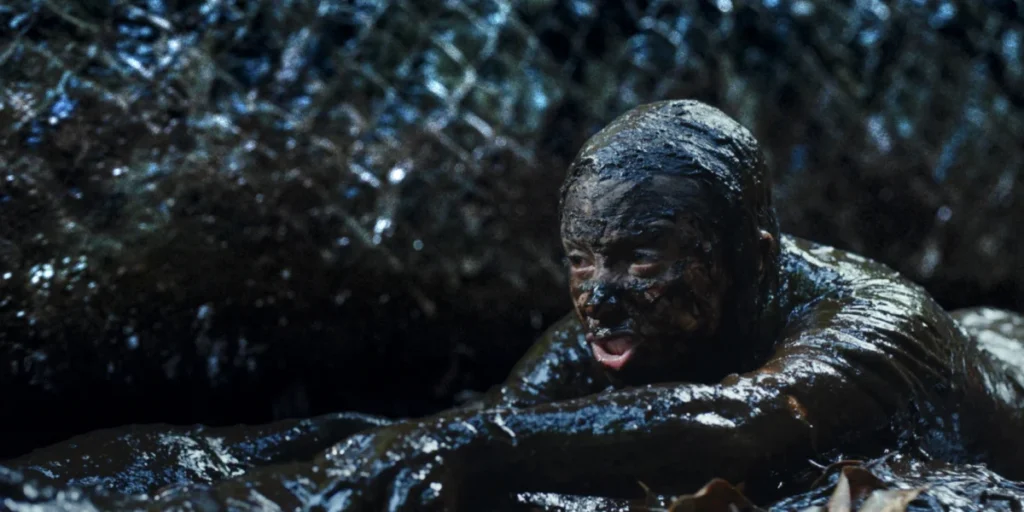
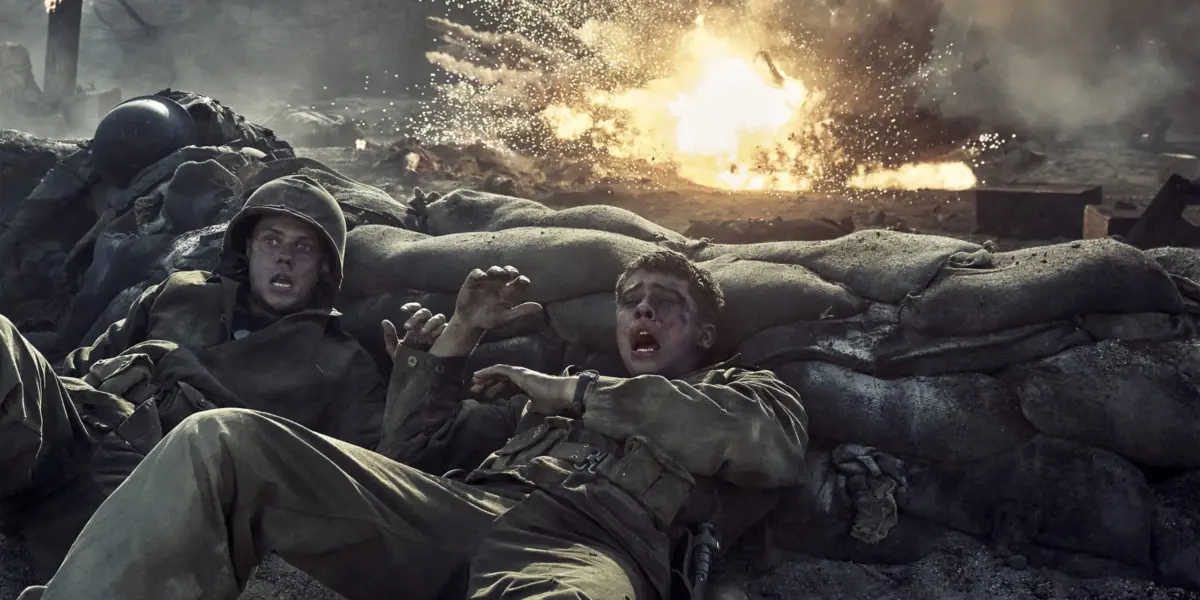
In translating Bissinger’s historical account to the screen, Berg adopts a dual-toned aesthetic that juxtaposes the stark, unrelenting violence of combat with the structured, familiar camaraderie of the football field. The film’s visual style relies heavily on desaturated, nearly monochrome cinematography to reinforce the psychological weight borne by the service members.
Sound design plays a critical role in the film’s tactical sequences. Berg and his audio production teams utilize variable sound mixing—frequently shifting volume levels during slow-motion sequences—to replicate the sensory overload and disorientation experienced by soldiers under fire. The resulting auditory landscape captures the chaotic whiz of incoming rounds, the concussive force of artillery explosions, and the harrowing acoustic impact of close-quarters engagements.
Critics and military historians have noted that the film adheres closely to established conventions of modern war dramas, prioritizing sensory immersion over extensive character exploration. While the ensemble performances delivered by Skarsgård, Nicholson, and Francis provide emotional anchors for the narrative, the script moves rapidly through the initial character introductions once the protagonists deploy overseas, focusing instead on the escalating scale of the Pacific campaign.
Production and Casting Choices
The casting of The Mosquito Bowl blends established dramatic actors with high-profile public figures. Nicholas Galitzine leads the ensemble as John McLaughry, portraying a soldier whose primary narrative drive centers on maintaining a connection with civilian life and his romantic partner back home. Bill Skarsgård, Ray Nicholson, and Tom Francis round out the core group of athletes, each representing differing motivations for enlistment, ranging from strict patriotic duty to the misplaced belief that athletic prowess could translate into battlefield survival.
The inclusion of sports media personality Pat McAfee in the role of a military drill instructor generated considerable pre-release discussion. McAfee’s brief appearance is designed to inject raw intensity into the boot camp sequences, though analytical reviews have categorized the casting choice as a strategic draw for sports and entertainment audiences. Despite the high-energy performance, the character’s primary function remains tied to the traditional cinematic trope of transforming civilian recruits into hardened combatants.
The titular football game serves as the film’s structural and emotional pivot point. Unlike the relentlessly grim combat sequences that dominate the running time, the football match is shot in warmer, more vibrant tones. This stylistic shift emphasizes the temporary restoration of rules, sportsmanship, and mutual respect among competitors—elements systematically dismantled by the surrounding war.
Critical Reception and Fact-Based Analysis
Upon its release, The Mosquito Bowl received a mixed critical reception, drawing comparisons to Berg’s 2013 war drama Lone Survivor. Reviewers have praised the film’s technical proficiency, particularly its visceral action choreography and immersive sound engineering, while noting narrative limitations in character depth outside of the combat environments.
Military analysts and historians have evaluated the film’s depiction of the Pacific War as an accurate reflection of the tactical doctrine and psychological strain experienced by Marines in 1945. The fanatical resistance encountered by U.S. forces, driven by Imperial Japan’s military code and refusal to surrender, is portrayed with stark realism. This dynamic serves to strip away the initial bravado of the protagonists, illustrating the harsh reality that physical conditioning and athletic grit offer no protection against the statistical randomness of artillery and gunfire.
From an industry perspective, the film highlights Hollywood’s ongoing interest in adapting historical non-fiction that bridges popular culture with major geopolitical milestones. By focusing on the personal stakes of individuals who gave up recognized positions of privilege to serve, The Mosquito Bowl contributes to the broader cinematic record of the Greatest Generation, commemorating a generation of athletes whose lives were permanently altered by global conflict.