The cinematic tradition of utilizing serpents to signify primordial danger, existential dread, and moral temptation has long been a staple of the thriller genre, tracing its lineage from biblical iconography to pulp adventure serials and modern creature features. In the new feature film Beware Boina, directed by Mike P. Nelson and written by Alan B. McElroy, this legacy is revitalized through the lens of Amazonian folklore. Distributed with a runtime of 104 minutes, the movie stars a recognizable ensemble cast featuring Kiana Madeira, Jessica Rothe, Logan Marshall-Green, and Juan Pablo Shuk. However, despite its ambitious premise rooted in indigenous mythology and a gritty survivalist aesthetic, the production grapples with pacing issues, uneven tension, and a prolonged introductory narrative arc that defers the introduction of its titular antagonist.
Chronology and Narrative Structure
The narrative of Beware Boina unfolds across a carefully orchestrated sequence of events that initially mask the impending ecological threat behind a veneer of geopolitical and humanitarian tension. The film’s timeline establishes its premise through a deliberate, slow-burn approach, dedicating the majority of its first hour to character exposition and interpersonal conflict rather than direct creature-based encounters.
The story commences with the arrival of a young, idealistic coalition of medical professionals embarking on a humanitarian mission deep into the Amazon rainforest. Led by Dr. Miguel, played by Juan Pablo Shuk, the expedition includes American volunteers Alli, portrayed by Jessica Rothe, and Callum, played by Will Close. Accompanying them is Lena, a hardened boat mechanic portrayed by Kiana Madeira, who harbors undisclosed personal motivations for joining the journey.
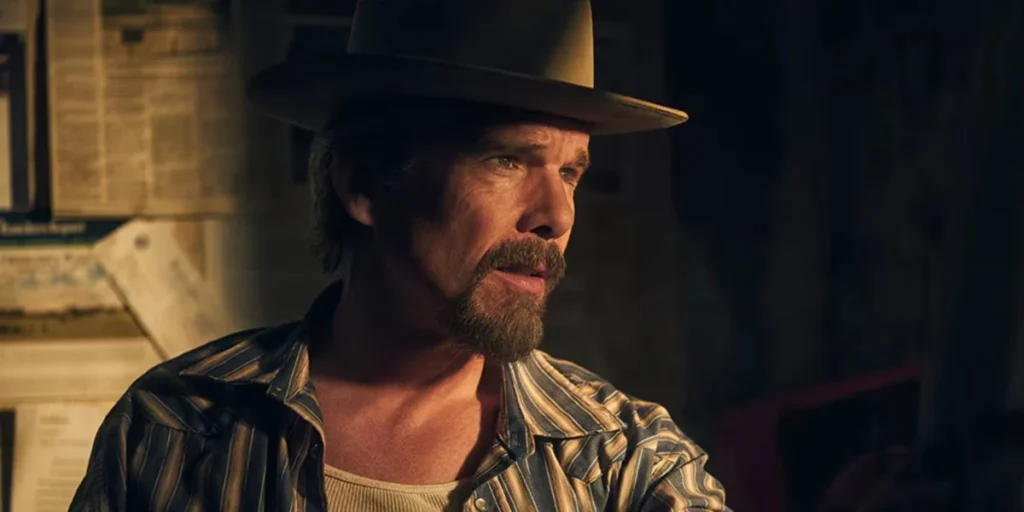
Rather than immediately introducing the mythical predator, the screenplay establishes friction among the travelers and the local inhabitants, who react with hostility to the outsiders’ intrusion. This fragile socio-environmental balance is shattered when the humanitarian party crosses paths with Brennan, played by Logan Marshall-Green, and Shawn, portrayed by Jackson Bews, a pair of brothers engaged in illicit and predatory activities within the jungle. A sudden, violent confrontation erupts between the two factions, forcing Alli, Lena, and Callum to abandon the riverboat and flee deeper into the dense, uncharted brush of the rainforest—unwittingly trespassing into the territorial domain of the Boiúna.
Data and Production Metrics
From a technical and production standpoint, Beware Boina operates on parameters typical of mid-tier genre filmmaking, balancing atmospheric ambition with the logistical constraints of creature feature production.
- Running Time: 104 minutes
- Principal Cast: Kiana Madeira, Jessica Rothe, Logan Marshall-Green, Juan Pablo Shuk, Jackson Bews, Will Close
- Director: Mike P. Nelson
- Writer: Alan B. McElroy
- Primary Setting: Amazon rainforest (simulated via location and composite visual effects)
- Antagonist Entity: The Boiúna (mythological giant serpent)
The film’s structural rhythm relies heavily on a strategic withholding of its primary antagonist, a structural choice directly reminiscent of Steven Spielberg’s 1975 classic, Jaws. In Jaws, the prolonged concealment of the great white shark heightens audience anxiety through suspenseful set pieces and psychological dread. In Beware Boina, however, this technique yields mixed results. Because contemporary marketing campaigns, opening scenes, and anticipatory dialogue heavily signal the presence of a giant serpent, the audience is well aware of the impending threat long before the characters encounter it. Consequently, the first hour relies entirely on human drama—the friction between the do-gooder medics and the morally compromised brothers—which fails to generate the sustained momentum required to sustain interest in the absence of genre thrills.
The Mythology of the Boiúna
To understand the cultural framework of the film, it is necessary to examine the origins of the antagonist. In Amazonian folklore, the Boiúna—often referred to as the black boa or a mythical water snake of monstrous proportions—is a legendary creature believed to inhabit the deep rivers, flooded forests, and subterranean caves of the Amazon basin. According to regional oral traditions, the Boiúna is a territorial guardian capable of capsizing boats, hypnotizing travelers, and shaping the geography of the riverbanks.
In translating this folklore to the screen, director Mike P. Nelson frames the creature not as a conventional villain driven by malice, but as an apex predator reacting defensively to human encroachment. This thematic choice aligns with contemporary monster movie tropes, wherein nature retaliates against industrial or human exploitation. Yet, the execution of the Boiúna introduces distinct visual challenges. The creature is rendered primarily through computer-generated imagery (CGI) with minimal practical effects. While the compositing team successfully integrates the digital serpent into real-world environments—utilizing shaking foliage, displaced water, and visceral actor reactions to sell its physical presence—the lack of tactile, practical creature elements occasionally detracts from the visceral realism of the encounters.
Character Performances and Standout Sequences
Despite the narrative friction in the first act, the performances of the lead actresses provide a vital anchor for the film’s emotional stakes. Kiana Madeira delivers a compelling portrayal of Lena, imbuing the character with a flinty resilience and guarded vulnerability that keeps her sympathetic despite her abrasive tendencies. Jessica Rothe, building upon her established reputation in the horror genre—most notably through the Happy Death Day franchise—excels in conveying palpable, grounded panic as Alli.
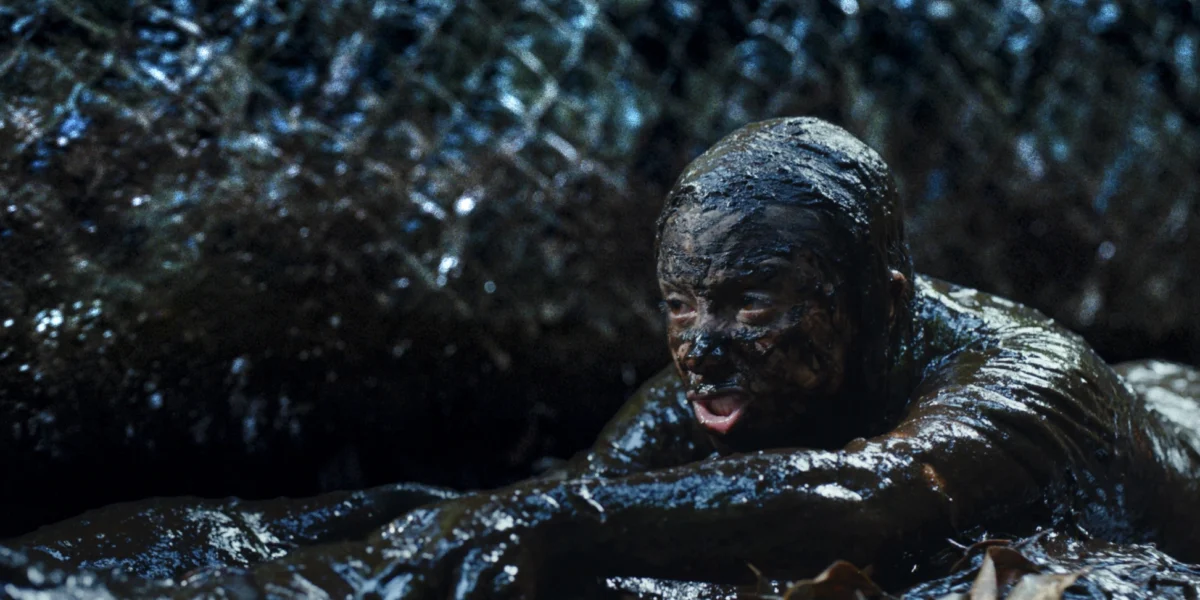
The film’s structural turning point occurs when the narrative finally shifts focus to survival horror. Once the Boiúna enters the fray, the pacing accelerates, offering viewers a series of fast, vicious attacks. Among these, a standout sequence involves Lena trapped in a deep mud pit, compelled to remain entirely motionless and regulate her breathing while the massive serpent slowly constricts around her. By maintaining a tight focus on Madeira’s expressive face, the scene successfully manufactures genuine tension, bolstered by its daytime setting, which contrasts sharply with the film’s occasionally murky and difficult-to-discern nocturnal sequences.
Notably, Nelson’s direction in Beware Boina departs from the dark, sardonic humor that characterized his previous feature, a reimagining of Silent Night, Deadly Night released the prior year. Choosing instead to treat the inherently absurd premise with absolute sincerity, the film misses an opportunity to inject the sardonic levity that might have elevated its camp value and bridged the gap between its slow-burning human drama and its high-concept monster-movie thrills.
Critical Analysis and Broader Implications
The release of Beware Boina highlights ongoing trends in contemporary horror and thriller distribution, where mythological and regional folklore are increasingly mined to refresh exhausted cinematic tropes. By shifting the geographical focus from urban or suburban American settings to the remote, ecologically complex Amazon rainforest, the production attempts to marry environmental themes with traditional monster-movie suspense.
However, industry analysts note that films of this scale often struggle to achieve cultural permanence unless they establish a distinct identity that balances high-concept spectacle with narrative discipline. While Beware Boina positions itself as a gritty, 1970s-style survival thriller, it ultimately lacks the relentless pacing and thematic grit required to fully realize that comparison. The human conflicts set up in the opening acts fail to carry the thematic weight of classic survival dramas, while the creature feature elements arrive too late to entirely rescue the first half from sluggishness.
Ultimately, Beware Boina functions as a competent yet uneven addition to the creature-feature subgenre. It offers strong central performances from Kiana Madeira and Jessica Rothe, alongside a few genuinely tense set pieces anchored by a formidable mythological premise. Yet, by relying too heavily on extended exposition and conventional human squabbling before unleashing its scaly antagonist, the film struggles to bite deeply enough to leave a lasting mark on the cinematic landscape.