The annual spectacle of the Academy Awards presents its own set of production and narrative challenges, but the Primetime Emmy Awards, with its vast scope and ever-evolving rules, stands as an even more complex undertaking for the Television Academy. On September 14, a crucial 23 awards will be distributed during the main Primetime ceremony, recognizing excellence across the comedy, drama, and limited series categories, alongside variety and reality competition programming. This is merely the tip of the iceberg, as approximately 100 additional Emmys are bestowed in craft-focused disciplines and, somewhat uniquely, guest acting roles, during two Creative Arts Emmy ceremonies held in the week leading up to the main event. Amidst this extensive recognition, the Television Academy’s persistent refinement of its rules and regulations means that award categories are in a perpetual state of flux, often leading to significant shifts in competitive landscapes.
Navigating the Academy’s Evolving Rulebook
A prime example of these dynamic rule adjustments surfaced this year with a new stipulation preventing a performer from receiving a guest actor nomination for a role in which they have previously been nominated as a lead or supporting actor. This change directly addresses scenarios like Claire Foy’s 2021 Emmy win for her brief yet impactful appearance as a young Queen Elizabeth in the fourth season of The Crown, a role for which she had already secured an Emmy for Best Actress in a Drama in 2018. The immediate impact of this revised policy was seen when Jon Hamm was controversially disqualified from a guest actor nomination for his appearance on Apple’s The Morning Show. The streaming giant had erroneously submitted him in the guest category, despite his prior 2024 supporting actor nomination for the identical role. While this specific submission was rejected, Hamm’s overall Emmy prospects remain robust, as he maintains eligibility for two other nominations this year, underscoring the intricate nature of the Academy’s submission protocols. Such rules, while seemingly granular, are designed to ensure fairness and prevent what some critics term "category shopping," where actors might seek nominations in less competitive fields for roles that arguably belong in more prominent categories.
The Reunited Variety Series Category: A Battle of Titans
Beyond these specific performer-focused adjustments, a more profound category change has reverberated through the variety series landscape, setting the stage for an unprecedented and highly anticipated showdown. This year, the category will witness a direct clash between established late-night stalwarts—Stephen Colbert, Jimmy Kimmel, and John Oliver—and NBC’s venerable sketch comedy institution, Saturday Night Live. This merger marks a significant departure from recent Emmy history and promises to reignite a long-standing debate about how best to categorize and judge diverse forms of television variety programming.
The variety series category has undergone a fascinating evolution since its inception in 1951, reflecting changes in television programming itself. Briefly, in the early 1970s, the Academy recognized the inherent differences between talk-centric programs and sketch/musical revues, splitting the category into two subcategories. This allowed shows like The Tonight Show with Johnny Carson and The Dick Cavett Show to compete separately from musical and sketch series such as Rowan & Martin’s Laugh-In and The Carol Burnett Show. The rationale was clear: judging a late-night monologue against an elaborate musical number or a comedic sketch required different criteria.
However, from the mid-1970s through 2014, the category was consolidated into a single entity, often leading to a lineup of seemingly mismatched competitors. The 1990s, in particular, presented some "bizarre outcomes," as the original article notes, with talk shows frequently triumphing over more experimental or performance-driven programs. Memorable instances include Jay Leno’s The Tonight Show besting MTV Unplugged in 1995, and Politically Incorrect facing off against Muppets Tonight—both of which ultimately lost to Dennis Miller Live. By the mid-2000s, the category had largely become a battleground for late-night talk shows, with hosts like Stephen Colbert, Jimmy Fallon, Jimmy Kimmel, Bill Maher, Conan O’Brien, and Jon Stewart dominating the nominations. While Saturday Night Live received occasional nods, the male-dominated world of late-night talk reigned supreme, exemplified by Jon Stewart’s The Daily Show setting a remarkable record with 10 consecutive wins.
In 2015, the Academy once again acknowledged the distinct forms within variety programming and split the category into Variety Talk Series and Variety Sketch Series. The initial winners in the latter category, Inside Amy Schumer and Key & Peele, represented the cutting edge of sketch comedy before Saturday Night Live commenced an impressive six-year winning streak that lasted until 2023. This period of separation provided clearer recognition for both formats. Yet, the Academy’s quest for optimal categorization continued. In a subsequent move, HBO’s Last Week Tonight with John Oliver—a program that had itself secured seven consecutive Emmys for Variety Talk Series—was shifted into the scripted variety series category, where it proceeded to earn three additional Emmys. This strategic move, while allowing other talk shows a clearer path in the Variety Talk category, effectively elevated Last Week Tonight to a different competitive tier.
Now, for 2026, the two categories have been controversially merged once more. This decision means the seemingly unbeatable Last Week Tonight with John Oliver will again directly compete against the traditional network late-night shows and, significantly, Saturday Night Live. This recombination is viewed by many as an attempt by the Academy to streamline categories and perhaps to inject renewed excitement into a field that had become somewhat predictable. However, it also raises questions about whether a single category can truly encompass the diverse stylistic and structural elements of these different programs.
The Political Undercurrents: Late Night in the Crosshairs
The timing of this category reunion is particularly intriguing, given the intense political climate and the recent experiences of several prominent late-night hosts. The Trump administration has historically targeted late-night shows, especially those helmed by Stephen Colbert and Jimmy Kimmel, viewing their often-sharp political satire as hostile. This adversarial relationship has added an unprecedented layer of external pressure to the traditionally comedic realm of late-night television.
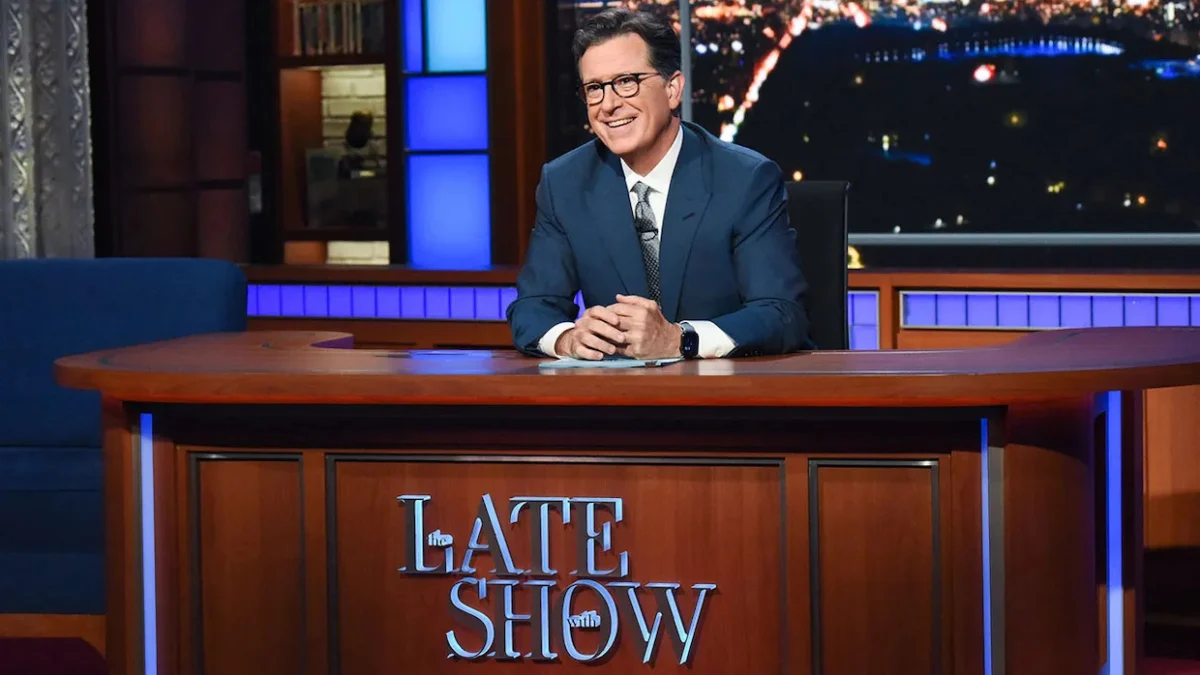
Stephen Colbert’s The Late Show, which he began hosting in 2015 after David Letterman’s storied departure, recently concluded its 11-season run on May 21. The cancellation by CBS, ending a franchise that had been a network staple for 33 years, followed parent company Paramount’s sale to Skydance Media, led by David Ellison. The official explanation from the company cited substantial financial losses, claiming the long-running show was losing $40 million annually. However, this corporate line was met with considerable skepticism from industry observers and critics. Many suggested that the decision was less about raw economics and more about Colbert’s consistent and often biting criticism of the Trump administration over the years, combined with the publicly known friendly relationship between the Ellison family and the current administration.
Colbert, an 11-time Emmy-winning host (including for his previous show, The Colbert Report), found himself abruptly out of a job. Yet, his final season proved to be a remarkable "swan song." Ahead of the cancellation announcement, the show delivered a triumphant run, culminating in The Late Show winning its first Emmy for Variety Talk Series last September. The emotional weight of this victory, coupled with the outpouring of support from guests and the industry—Colbert himself received a standing ovation early in the ceremony as a presenter—underscored the significance of his tenure and the perceived injustice of the show’s abrupt termination. The finale itself was a poignant reflection on his legacy, drawing immense viewership and critical acclaim.
Hard on the heels of Colbert’s controversial cancellation came another late-night fiasco, this time involving Jimmy Kimmel. Jimmy Kimmel Live! was pulled from the air on September 17, following significant pressure from the Trump administration and FCC Chairman Brendan Carr. The immediate catalyst was a comment Kimmel made in an opening monologue regarding Charlie Kirk’s assassination. While the comment was clearly satirical and part of a broader comedic routine, it quickly became a flashpoint. Nexstar Media Group and Sinclair Broadcast Group, powerful media conglomerates that own numerous ABC affiliates, threatened to pull Jimmy Kimmel Live! from their broadcast schedules, creating momentary uncertainty about Kimmel’s future on network television.
However, the rapid and overwhelming public backlash, characterized by widespread social media condemnation of the censorship attempts and threats of audience boycotts, quickly reversed the situation. Within a week, Kimmel was back on the air. His return episode on September 23 garnered a series-record 6.26 million viewers, and his subsequent monologue amassed an astonishing 26 million views across various social media platforms. This incident not only demonstrated the power of public opinion in protecting free speech in entertainment but also cemented Kimmel’s role as a resilient voice in the late-night landscape, capable of weathering political storms.
Analysis of Emmy Outcomes: A Politically Charged Vote?
Given the extraordinary experiences of both Colbert and Kimmel over the past year, it is exceedingly difficult to imagine that these events will not influence their Emmy outcomes. The Late Show appears to hold a significant edge. Emmy voters, many of whom are perceived to lean liberal, could view this as not merely the last opportunity to honor a long-running, critically acclaimed show and its beloved host, but also as a symbolic vote against the perceived political motivations behind its cancellation and, by extension, against Trumpism itself. The potential for a powerful and politically resonant acceptance speech from Colbert and his team further amplifies this possibility, transforming the awards moment into a broader cultural statement.
Jimmy Kimmel Live!, a consistent nominee in this category (despite its shifting focus) for the last 12 years, has yet to secure a Variety Series Emmy win. This long history of nominations without a victory, combined with his recent public ordeal and subsequent triumphant return, positions him as a strong contender for perhaps a second-place finish, if voters are indeed swayed by the political narratives surrounding these shows.
However, the formidable presence of John Oliver’s Last Week Tonight complicates this narrative. Oliver’s show has a track record of unparalleled dominance, having secured seven consecutive Variety Talk Emmys before its move to the scripted variety category, where it added three more. Its return to the merged category means that the network late-night shows face an incredibly high bar. Last Week Tonight‘s consistent critical acclaim, incisive political commentary, and deep dives into complex issues have made it a favorite among Academy members. Its ability to dissect current events with journalistic rigor and comedic brilliance makes it a perennial threat to any competitor.
For the substantial contingent of liberal-leaning Academy members, the Emmy ballot this year offers a unique chance to make a distinct political statement. This year’s race is less about pure comedic chops and more about a confluence of comedic excellence, political relevance, and the narratives of resilience and perceived injustice.
Other Contenders and Broader Industry Dynamics
Beyond the late-night talk show battle, Saturday Night Live remains a significant contender. As a self-professed SNL apologist and regular viewer, the original article notes its deserving status. The show, which doesn’t typically "ruffle Trump’s feathers" as frequently or directly as Colbert or Kimmel (Trump famously hosted the show during his presidential run in 2015), will likely secure a nomination. Riding high off its 50th-anniversary celebrations last year, SNL continues to prove its enduring cultural relevance. Despite the December departure of fan-favorite Bowen Yang, who earned four acting nominations during his tenure, the show has maintained its creative energy in 2026, often leaning into the absurd rather than solely relying on political timeliness. The unexpected success of the debut season of SNL UK, broadcast live from London, further solidifies Lorne Michaels’s unparalleled status as a comedy institution and a global brand.
The Daily Show, now featuring Jon Stewart back at the desk on Monday nights and a rotating roster of guest hosts for the remainder of the week, is highly likely to secure the fifth nomination slot in this merged category. Recent history supports this prediction: the Trevor Noah-hosted iteration won the Variety Talk Emmy when Last Week Tonight was in a different category, and the multiple-host version earned a nomination just last year. Stewart’s return has brought a renewed sense of gravitas and comedic sharpness to the program, making it a formidable presence.
However, the most exciting and unpredictable aspect of this year’s Emmy race lies squarely among Colbert, Kimmel, and Oliver. The outcome will be more than just an award; it will be a reflection of the industry’s response to unprecedented political pressures and corporate decisions. For liberal-leaning Academy members, the Emmy ballot transcends mere artistic judgment, offering another powerful opportunity for political expression. No matter which show ultimately triumphs, one can almost certainly anticipate a rambling, fiery rant from the former president on Truth Social by the time the award ceremony concludes on September 14, underscoring the deep intertwining of entertainment, politics, and public discourse in contemporary America.
The 2026 Primetime Emmy Awards, particularly the newly merged variety series category, thus becomes a microcosm of the larger cultural and political landscape. It highlights the challenges faced by television creators in an era of intense scrutiny and political polarization, the constant evolution required of award-giving bodies, and the enduring power of comedic voices to reflect, critique, and even shape societal narratives. The choices made by the Academy this year will not only crown a winner but will also send a potent message about the values and priorities of the television industry itself.