The Framework of the Florida Python Challenge
The Florida Python Challenge is a high-stakes event organized by the Florida Fish and Wildlife Conservation Commission (FWC) and the South Florida Water Management District. The primary objective is to raise public awareness about the invasive species while incentivizing the removal of the reptiles from the Greater Everglades Ecosystem. The contest typically spans ten days, during which participants compete for various cash prizes, including a grand prize of $10,000 for the most pythons harvested.
The documentary captures the grueling nature of this competition. For ten consecutive nights, participants navigate unforgiving terrain characterized by sawgrass marshes, sweltering humidity, and a variety of native nocturnal predators. The film highlights the irony of the event: while it is framed as a conservation effort, it also functions as a form of state-sanctioned entertainment and unpaid labor, as hundreds of civilians perform the dangerous work of animal removal in exchange for the mere possibility of a payout.
Profiles in Persistence: The Diverse Cast of Hunters
Xander Robin’s narrative is driven by a carefully selected group of participants, each representing a different facet of the American psyche. The cast includes:
- Joe Wasilewski: A veteran wildlife biologist with over five decades of experience in herpetology. Joe provides a scientific anchor to the film, offering a perspective rooted in ecological preservation rather than sport.
- Madison Oliveira: A former Marine whose disciplined approach to the hunt contrasts with the more chaotic methods of her peers. Her presence underscores the "war" being waged against the invasive species, and she provides one of the film’s more memorable quotes regarding the "trainability" of her male hunting companions.
- Richard "Ricky" Perenyi: An elementary school science teacher from San Francisco. Ricky represents the outsider perspective, though his methods—which include microdosing ecstasy before heading into the swamp—add a surreal element to the documentary. His arc involves a struggle with self-awareness and an attempt to fit into a subculture that is fundamentally alien to his West Coast sensibilities.
- Anne Stratton Hilts: A retiree whose grandmotherly appearance masks a fierce, almost visceral desire to eliminate the pythons. Her rejection of beer in favor of "real spirits" like gin and her blunt descriptions of the physical act of killing the snakes provide a jarring look at the bloodlust that the competition can provoke.
- Toby Benoit: A self-identified "eighth-generation Florida cracker" and professional hunting guide. Toby serves as a bridge between the old-world Florida identity and the modern-day reality of the Everglades’ decline.
Ecological Context: The Rise of the Burmese Python
To understand the stakes of "The Python Hunt," one must consider the history of the Burmese python in Florida. Native to Southeast Asia, these apex predators were introduced to the Florida Everglades through the exotic pet trade. While sightings occurred as early as the 1970s, the population exploded in the 1990s, particularly after Hurricane Andrew destroyed a python breeding facility in 1992, releasing an unknown number of snakes into the wild.
The impact on local wildlife has been catastrophic. Studies conducted by the U.S. Geological Survey (USGS) have indicated that in areas where pythons are established, populations of small mammals—including raccoons, opossums, and bobcats—have declined by as much as 90% to 99%. Even large native predators, such as the American alligator, have found themselves in competition with, or falling prey to, the Burmese python. The film provides visual and anecdotal evidence of this devastation, framing the hunt as a desperate attempt to reclaim an ecosystem that is rapidly reaching a tipping point.
Institutional Skepticism and the Role of Jimbo McCartney
A critical counter-narrative in the documentary is provided by Jimbo McCartney, a local resident and former professional python contractor. Jimbo was previously employed by the state to trap and remove pythons but has since been banned from the official program for failing to adhere to specific regulatory protocols.
Jimbo’s presence in the film serves to challenge the efficacy of the ten-day hunt. While the competitors spend their nights searching for snakes, Jimbo attends local town hall meetings and raises questions that the official FWC narrative often avoids. He suggests that the hunt may be more of a public relations exercise than a viable scientific solution. According to Jimbo and other skeptics, no invasive reptile species has ever been successfully eradicated from a habitat as vast as the Everglades through human hunting alone.
Furthermore, Jimbo points to systemic issues that the hunt ignores, such as the rising toxicity levels in the water and the influence of real estate interests and business executives on the FWC board. This perspective introduces a layer of political critique, suggesting that the state’s focus on the python may be a convenient distraction from more complex environmental failures.
Chronology of the Hunt: From Anticipation to Exhaustion
The film follows a chronological structure that mirrors the exhaustion of its subjects.
- Days 1-3: The initial excitement is palpable. Hunters are filled with "slithering glory," fueled by the dream of the $10,000 prize.
- Days 4-7: The reality of the swamp sets in. The "mania" described in the film’s premise turns into a slog of endless driving and searching. Many participants go days without a single sighting.
- Days 8-10: The psychological toll becomes evident. Tensions rise among the teams, and the motivations of the hunters—ranging from environmentalism to pure bloodlust—become increasingly blurred.
The documentary highlights that for every dramatic encounter with a snake, there are hours of tedious, fruitless searching. This pacing choice by Robin reflects the authentic experience of the hunters, emphasizing that the "glory" is hard-won and often elusive.
Cultural Contrast: The Official Ceremony vs. The Gator Hole Bar
The climax of the documentary occurs during the final third of the film, where Robin utilizes cross-cutting to contrast two distinct reactions to the hunt’s conclusion.
The first is the official closing ceremony, a sterile and professional affair organized by the state. Here, officials in uniforms hand out checks and trophies, speaking in the language of conservation and civic duty. The atmosphere is one of bureaucratic success and surface-level respectability.
The second is the "python festival" held at the Gator Hole Bar. This unofficial gathering is a visceral, hedonistic display of the base instincts the hunt inspires. Participants are shown skinning snakes with raw enthusiasm and squishing unhatched eggs. The contrast between the two events serves as a metaphor for the broader American culture: a polished, polite exterior masking a more primal, chaotic interior. This sequence is perhaps the most revealing part of the film, as it strips away the pretense of "saving the environment" to show the raw human fascination with dominance and destruction.
Analysis of Implications and Directorial Style
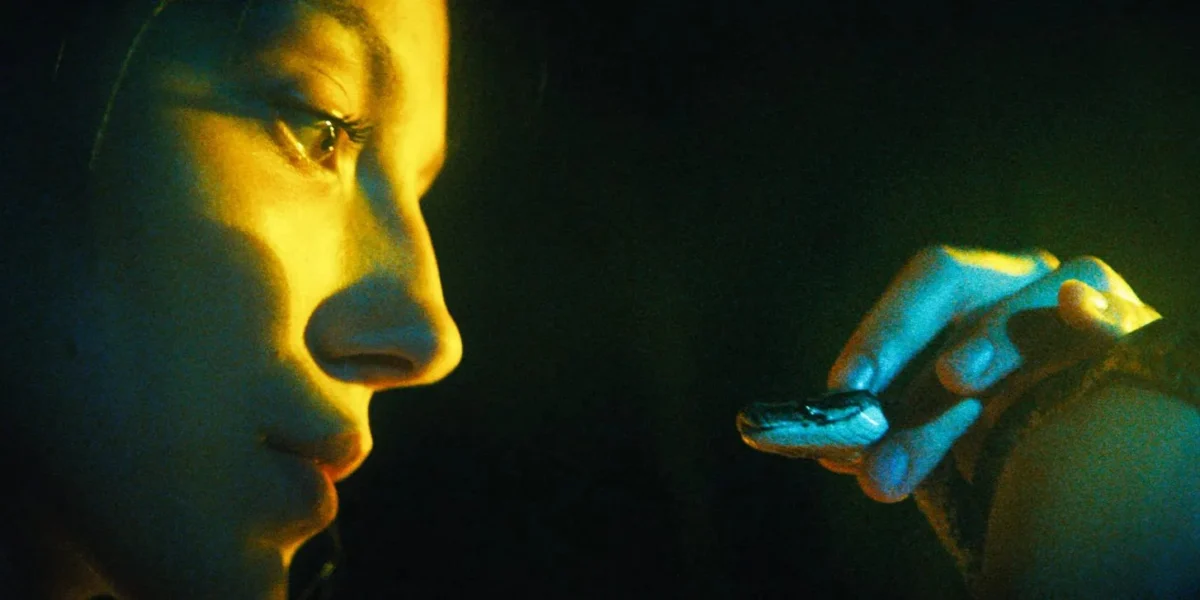
Xander Robin, a native of the Everglades region, brings an intimate knowledge of the landscape to the film. His directorial style is characterized by a heavy use of close-ups and frame rate changes, creating a distinctive aesthetic that captures the "Florida Gothic" atmosphere. While some critics might find these stylistic choices overly stylized, they succeed in making the Everglades feel like a character in its own right—ancient, unforgiving, and deeply wounded.
The documentary functions as a sly indictment of 21st-century America. By focusing on a "trashy thrill ride" of a competition, Robin uncovers deeper truths about how society addresses—or fails to address—environmental crises. The reliance on amateur hunters to solve a systemic ecological problem mirrors larger trends in governance where responsibility is shifted to the individual, often for the sake of optics rather than results.
Conclusion
The Python Hunt is a significant contribution to the genre of environmental documentary, eschewing the typical "educational" tone in favor of a gritty, character-driven exploration of a unique American subculture. It presents the Florida Everglades not just as a backdrop for a contest, but as a site of profound ecological and cultural conflict. Through its portrayal of people like Joe, Madison, and Jimbo, the film asks difficult questions about the nature of conservation, the ethics of blood sport, and the future of one of the world’s most vital ecosystems. As the credits roll, the audience is left with the sobering realization that while the ten-day hunt may end, the struggle for the soul of the Everglades—and the battle against the encroaching "slithering" threat—is far from over.