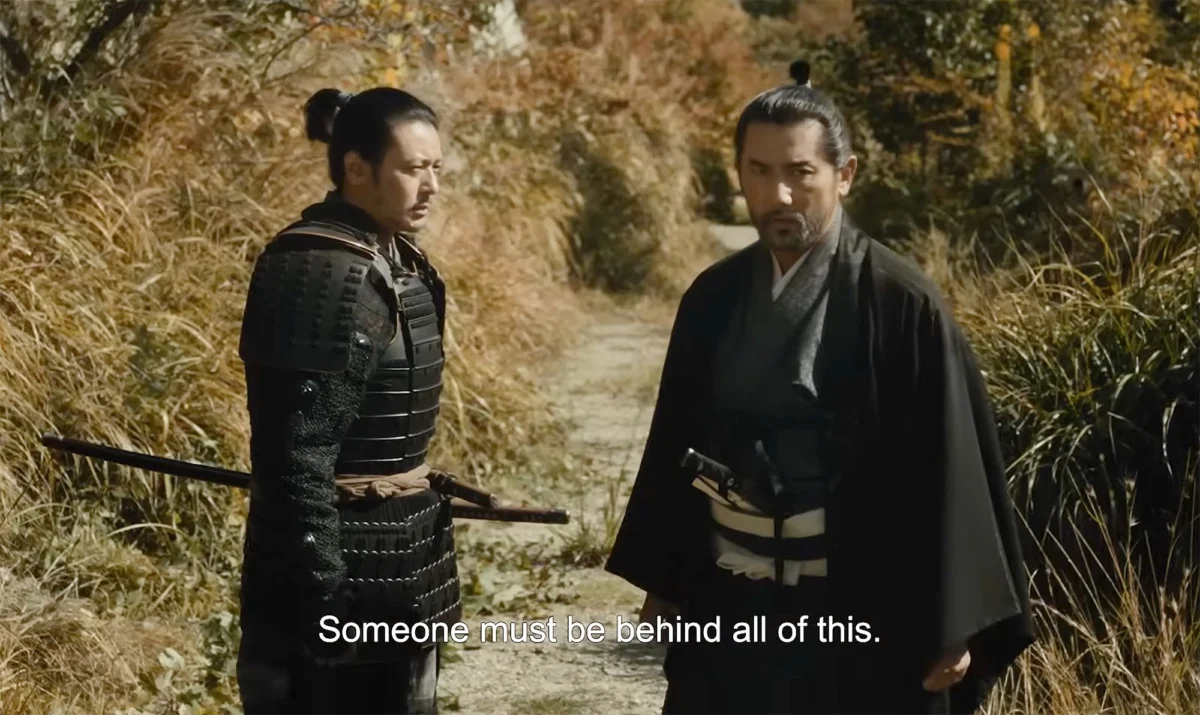
Janus Films has officially released the main United States trailer for Kiyoshi Kurosawa’s latest cinematic endeavor, The Samurai and the Prisoner, signaling the imminent arrival of the acclaimed Japanese historical mystery to North American audiences. Following its high-profile premiere at the 2026 Cannes Film Festival, where it was showcased out of competition, the film has garnered significant international attention for its unique fusion of the jidaigeki (period drama) genre with the intricate mechanics of a classic whodunit. Known in Japan as Kokurojo, the film represents a landmark moment in Kurosawa’s prolific career, marking his first venture into a full-scale feudal-era feature. The US theatrical rollout is scheduled to begin on July 31, 2026, following a successful domestic debut in Japan on June 19.
A New Direction for a Master of Suspense
Kiyoshi Kurosawa has long been celebrated as a titan of contemporary Japanese cinema, primarily for his contributions to the psychological horror and thriller genres. With a filmography that includes seminal works such as Cure (1997), Pulse (2001), and Tokyo Sonata (2008), Kurosawa has built a reputation for using atmosphere and existential dread to explore the anxieties of modern life. The Samurai and the Prisoner sees the director pivoting toward the Warring States period (Sengoku Jidai), a move that many industry analysts view as a natural evolution of his recent interest in historical tension, previously seen in his 2020 Hitchcockian thriller Wife of a Spy.
The Samurai and the Prisoner is an adaptation of the novel "Kurojō" by the esteemed mystery writer Honobu Yonezawa. By choosing Yonezawa’s work as his source material, Kurosawa integrates the "locked-room" mystery—a staple of detective fiction—into the chaotic landscape of 16th-century Japan. The narrative focuses on the Siege of Itami Castle, where Lord Araki Murashige has rebelled against the powerful warlord Oda Nobunaga. Within the claustrophobic confines of the besieged fortress, a series of inexplicable murders occurs, forcing the rebel lord into an unlikely partnership with an imprisoned strategist.
Chronology of Production and Release
The path to the film’s 2026 release began with a period of intense development following the success of Kurosawa’s recent projects, Chime and Cloud. Production for The Samurai and the Prisoner was characterized by an emphasis on historical authenticity, utilizing practical sets to recreate the oppressive atmosphere of a castle under siege.

The film’s international journey was accelerated by its selection for the Cannes Film Festival in May 2026. Critics at the festival praised the film for its stylistic departure from traditional samurai epics, noting that it prioritized psychological maneuvering over choreographed swordplay. Shortly after its European debut, the film opened in Japanese theaters on June 19, 2026, where it performed strongly at the box office, buoyed by the star power of its ensemble cast. The acquisition of North American distribution rights by Janus Films—a distributor known for its association with The Criterion Collection—ensures that the film will receive a curated theatrical release aimed at cinephiles and fans of international cinema.
Historical Foundations and Literary Roots
The Samurai and the Prisoner is grounded in the actual history of the Sengoku period, specifically the 1578–1579 rebellion of Araki Murashige. In historical accounts, Murashige was a general under Oda Nobunaga who defected, leading to a year-long siege at Itami Castle. A pivotal figure in this conflict was Kuroda Kanbei, a brilliant strategist sent by Nobunaga to negotiate Murashige’s surrender. Murashige instead chose to imprison Kanbei in a dungeon for nearly a year.
The film utilizes this historical framework to build its central dynamic. Masahiro Motoki portrays Lord Murashige, a man burdened by the weight of his rebellion and the encroaching shadow of Nobunaga’s retribution. Opposite him, Masaki Suda takes on the role of the imprisoned strategist, Kanbei. The narrative tension is derived from the power struggle between the two; while Murashige holds the keys to the cell, Kanbei holds the intellectual key to solving the murders that threaten to dismantle the castle’s internal order before the external enemy even strikes.
By adapting Honobu Yonezawa’s novel, Kurosawa brings a contemporary "shin honkaku" (new orthodox) mystery sensibility to the 16th century. Yonezawa, best known for the "Classic Literature Club" series (Hyouka), is a master of logical deduction, and his influence is evident in the film’s meticulous plotting.
A Cast of Contemporary Japanese Cinema Icons
The production features a "who’s who" of Japanese talent, blending veteran actors with some of the most prominent young stars in the industry. Masahiro Motoki, perhaps best known internationally for his Academy Award-winning performance in Departures (2008), provides a gravitas-heavy portrayal of a leader on the brink of collapse. Masaki Suda, a multi-award-winning actor and musician, brings a sharp, cerebral energy to the role of the imprisoned genius.

The supporting cast is equally distinguished, featuring:
- Yuriko Yoshitaka: Known for her versatile roles in both television and film, including Kurosawa’s own past projects.
- Joe Odagiri: A regular collaborator in high-concept Japanese cinema, Odagiri’s presence adds a layer of enigmatic depth to the ensemble.
- Tasuku Emoto and Ryota Miyadate: Both bring significant presence to the various factions within the castle’s court.
- Takashi Aoki: Rounding out a cast that represents several generations of Japanese acting excellence.
The chemistry between these performers is central to the film’s success, as the "closed room" nature of the plot requires a high degree of ensemble interplay. The suspicion and paranoia that permeate the court are conveyed through subtle performances that emphasize the internal rather than the external.
Critical Reception and Stylistic Analysis
Early reviews from the Cannes premiere and the Japanese release have been overwhelmingly positive, with critics highlighting the film’s unique tone. Descriptions have likened the experience to a blend of Agatha Christie’s detective logic and Shakespearean tragedy. One widely cited review from RogerEbert.com described the film as "Samurai Columbo," a testament to the methodical way the mystery is unraveled amidst the high-stakes environment of feudal warfare.
Visually, Kurosawa eschews the bright, saturated palettes often found in modern historical epics. Instead, he utilizes the shadows of the castle’s interior to mirror the moral ambiguity of the characters. The cinematography emphasizes the "prison" aspect of the title—not just the literal cell where Kanbei is kept, but the metaphorical prison of the castle walls and the rigid social hierarchies of the era.
The film’s pacing has been noted as deliberate, allowing the audience to engage with the clues alongside the characters. This intellectual engagement is a hallmark of Kurosawa’s work, where the audience is often asked to look beyond the surface of the image to find the underlying truth.

Broader Impact and Implications for the Genre
The release of The Samurai and the Prisoner comes at a time when there is a renewed global interest in Japanese historical narratives. Following the success of high-budget international co-productions and the continued popularity of Japanese media on streaming platforms, Kurosawa’s film stands as a reminder of the strength of domestic Japanese filmmaking.
By successfully merging the jidaigeki with the detective genre, Kurosawa may be opening the door for more genre-bending historical films. Traditionally, samurai films have focused on themes of honor, loyalty, and martial prowess. While these elements are present in The Samurai and the Prisoner, they are secondary to the pursuit of truth and the exercise of logic. This shift reflects a broader trend in global cinema where audiences are seeking more complex, multi-layered stories that challenge traditional genre boundaries.
Furthermore, the involvement of Janus Films suggests a long-term cultural impact for the film. Janus Films’ catalog is synonymous with cinematic excellence, and their decision to distribute The Samurai and the Prisoner ensures that the film will be preserved and studied as part of the canon of world cinema. It is likely that the film will eventually find a home on the Criterion Channel, further extending its reach to future generations of film students and enthusiasts.
Conclusion: A Milestone for Kiyoshi Kurosawa
As The Samurai and the Prisoner prepares for its US theatrical debut on July 31, 2026, it stands as a testament to Kiyoshi Kurosawa’s enduring creativity and his ability to reinvent himself after decades in the industry. By stepping into the past, Kurosawa has found a new way to explore the themes of isolation and psychological tension that have defined his career.
The film is not merely a historical mystery; it is a meditation on power, survival, and the human intellect’s capacity to find order in the midst of chaos. With its stellar cast, rigorous direction, and a plot that keeps audiences guessing until the final moments, The Samurai and the Prisoner is poised to be one of the most significant international releases of the 2026 summer season. For fans of Japanese cinema and mystery aficionados alike, the wait for this "Samurai Columbo" is nearly over.