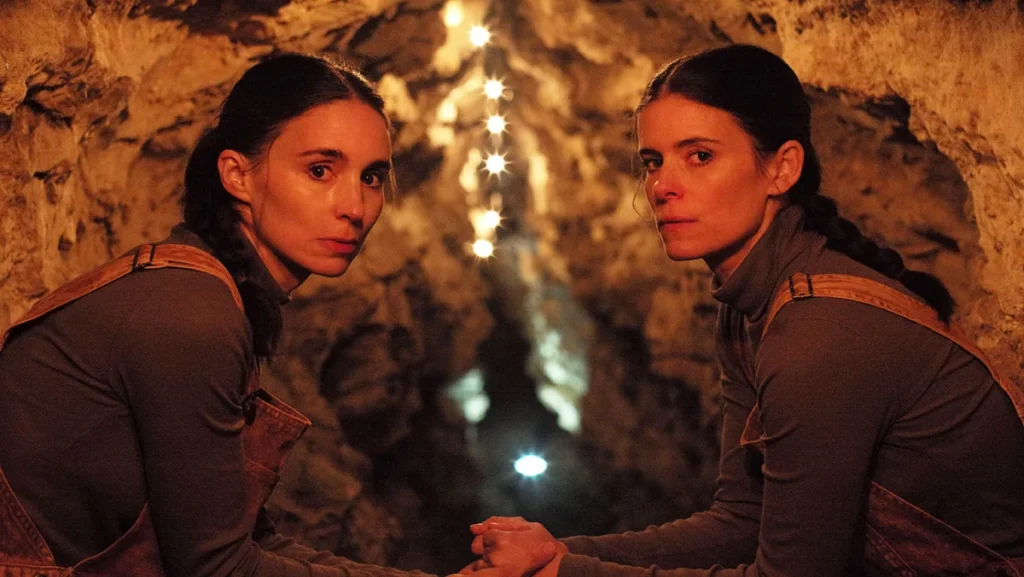
The theatrical release of The Social Reckoning, a high-profile production intended to serve as a thematic successor to the 2010 cultural milestone The Social Network, has faced a difficult debut. With a domestic opening weekend gross of just $5.5 million against a reported $30 million production budget, the film has significantly underperformed against initial industry projections. This lackluster showing has sparked a wider conversation within the entertainment industry regarding the commercial viability of films centered on the tech sector—a genre that was once considered a reliable wellspring for prestige drama and critical acclaim.
The Shift in Audience Sentiment
When The Social Network premiered in 2010, the landscape of digital media was fundamentally different. Directed by David Fincher and written by Aaron Sorkin, the film captured the meteoric and often contentious rise of Facebook, tapping into the zeitgeist of a public that was still discovering the transformative power of social platforms. It earned $224 million globally and became a benchmark for biographical drama, cementing Sorkin’s status as a screenwriter capable of turning corporate litigation into high-stakes theater.
However, the 16 years separating the two films have altered the public’s relationship with technology. According to Paul Dergarabedian, a senior media analyst at Rentrak, the initial fascination with the "tech founder" archetype has waned. "In 2010, Facebook was a new, exciting, and perhaps even ‘sexy’ subject," Dergarabedian explains. "Today, these platforms are viewed as utilities, often accompanied by a sense of cynicism regarding data privacy, political influence, and corporate overreach. The subject matter has shifted from an origin story to a critique of corporate misbehavior, which is inherently a harder sell at the multiplex."
The Social Reckoning, which stars Jeremy Strong as a tech CEO and Mikey Madison as a staffer attempting to expose corporate secrets alongside a journalist played by Jeremy Allen White, currently holds a 55 percent approval rating on Rotten Tomatoes. This middling critical reception, combined with a broader audience fatigue regarding the personal lives of Silicon Valley figures, has created a significant hurdle for the film’s theatrical run.
The Growing Library of Tech-Centric Cinema
The struggle of The Social Reckoning does not exist in a vacuum. The industry is currently witnessing a surge of interest in the lives of contemporary tech moguls, with several projects arriving in close proximity. This creates a crowded marketplace where audiences are asked to engage with similar themes repeatedly.

Last weekend also saw the release of Alex Gibney’s documentary titled Musk. The feature, which spans nearly four hours and offers an exhaustive look at the life and business operations of the Tesla and SpaceX founder, earned $69,321 from only four screens. While the per-screen average was strong, indicating a niche interest, it remains to be seen whether such long-form content can achieve broader penetration in a theatrical setting.
Looking ahead, the industry is closely watching the rollout of other high-profile projects. Nathan Fielder and Lance Oppenheim are set to release their three-hour documentary regarding Elizabeth Holmes, titled You Can See Everything. Additionally, Neon has scheduled the December release of Artificial, directed by Luca Guadagnino. The film, which stars Andrew Garfield as OpenAI CEO Sam Altman, was notably dropped by Amazon earlier this year, fueling rumors about the tension between major tech conglomerates and the filmmakers who seek to critique them.
Corporate Intertwining and Creative Independence
The relationship between Silicon Valley and Hollywood has become increasingly complex, characterized by both financial dependency and creative friction. The case of Artificial serves as a poignant example; Amazon’s decision to move away from the project occurred shortly after the tech giant entered into a significant partnership with OpenAI.
This level of corporate consolidation is a concern for many in academia. Andrew Utterson, a professor of screen studies at Ithaca College, notes that the lines between the creators of content and the distributors of technology are blurring. "The worlds of Hollywood and big tech have become increasingly intertwined and synonymous," Utterson observes. "We are seeing a convergence of funding, ownership, and influence. The critical question for the future of cinema is whether filmmakers can maintain the independence required to tell challenging stories about the very companies that are increasingly bankrolling their industry."
This dynamic is further evidenced by recent shifts in corporate leadership. Laurene Powell Jobs, a prominent figure in both philanthropy and media, recently joined the board of the newly formed Skydance Corporation. Skydance, founded by David Ellison, represents the intersection of old-school Hollywood pedigree and the immense capital of the Oracle fortune. Such appointments underscore the reality that the "tech overlords" are no longer just the subjects of film; they are becoming the architects of the entertainment infrastructure itself.
The Search for Relatability in the AI Era
Industry analysts are currently debating whether the failure of The Social Reckoning represents a rejection of the genre or merely a failure of execution. Gabriel Rossman, an economic sociology professor at UCLA, suggests that while the "social media" era may feel like yesterday’s news, the fascination with artificial intelligence remains a potent draw.

"Concerns about misinformation and the early days of social media feel somewhat settled in the public consciousness," Rossman explains. "However, the rapid development of AI is a different story. People are deeply curious and legitimately anxious about it. If any of these upcoming films are to break out, it will likely be those that capture the immediate, existential questions surrounding AI rather than the corporate dramas of the past decade."
This sentiment is echoed by Allison de Fren, a professor of media arts and culture at Occidental College. She argues that the lack of charisma in current tech leaders—compared to the perceived "revolutionary" figures of the early 2000s—makes it difficult for audiences to find a compelling narrative anchor. "The rich and powerful have always been a staple of cinema," de Fren notes. "But for a story to work, there must be a point of entry. If the audience views these individuals as either boring or deeply unlikable, they will seek escapism elsewhere, especially in a challenging cultural and economic climate."
Future Outlook for the Genre
As the theatrical window for these titles progresses, the box office performance of Artificial will likely serve as the ultimate litmus test for the "tech-founder biopic" genre. With stellar early reviews and the participation of high-caliber talent like Andrew Garfield, it holds the potential to capture the awards-season buzz that The Social Reckoning has largely failed to generate.
If these films continue to struggle, studios may reconsider the volume of tech-centric projects currently in development. The current trend suggests that while the "tech billionaire" is a figure of immense power, their cinematic portrayal requires a level of nuance and urgency that is currently missing from the market.
Ultimately, the failure of The Social Reckoning may be viewed by future industry historians not as the end of the tech-story genre, but as a transitional moment. Audiences have signaled that they are no longer satisfied with the standard "rise-and-fall" corporate narrative. For these stories to succeed in the future, filmmakers must move beyond the internal politics of the boardroom and address the broader, more pressing societal impacts of the technology that now governs the daily lives of the global population. As the industry moves into 2027 and beyond, the ability of these films to bridge the gap between technical complexity and emotional resonance will determine whether the tech-sphere remains a viable subject for the silver screen.