Tom Skerritt, the quintessential American character actor whose career spanned over six decades, more than 170 screen credits, and iconic turns in some of the most defining films of the 20th century, has died at the age of 93. His publicist confirmed that the legendary actor passed away from natural causes, leaving behind a rich cinematic legacy that stretched from gritty 1970s auteur cinema to blockbuster studio hits and acclaimed television.
In an official statement provided to media outlets, Skerritt’s family reflected on the man behind the extensive filmography. “While the world knew Tom through his remarkable acting career, we knew him for his humor, curiosity, wisdom, generosity, and the love he brought into our lives,” the statement read.
Renowned for his weathered charm, unflappable screen presence, and ability to elevate any ensemble cast, Skerritt established himself as a reliable and transformative presence across genres. Whether commanding a doomed commercial towing vehicle in deep space, playing a stern military commander, or embodying a small-town sheriff dealing with eccentric constituents, he brought a grounded authenticity to every role he undertook.
Military Service and Early Career Beginnings
Before finding his footing in the entertainment industry, Skerritt served a four-year tour of duty in the United States Air Force. The discipline and perspective he gained during his military service later informed the quiet authority that became a hallmark of his acting style.
Transitioning to the performing arts, Skerritt made his feature film debut in 1962 in the war drama War Hunt, directed by Denis Sanders. The film placed him alongside other emerging talents of the era, including Robert Redford and Sydney Pollack. Though the film was a modest release, it served as an entry point into a profession where Skerritt would steadily build a reputation for dependability and artistic integrity.
The Breakthrough: The 1970s and Collaborative Cinema
Skerritt’s major career breakthrough arrived in 1970 when he was cast in Robert Altman’s anti-war satirical masterpiece MASH*. Portraying Captain Augustus "Duke" Forrest, Skerritt brought a roguish charm to the chaotic medical tent environment. The film was a monumental box office success, critically lauded, and ultimately nominated for the Academy Award for Best Picture. This collaboration with Altman marked a pivotal turning point, aligning Skerritt with the burgeoning New Hollywood movement characterized by naturalistic performances and director-driven storytelling.
Throughout the 1970s, Skerritt capitalized on this momentum, working with some of the era’s most celebrated and diverse filmmakers. He appeared in Hal Ashby’s cult black comedy Harold and Maude (1971), reunited with Altman for the gritty crime drama Thieves Like Us (1974), and stepped into genre filmmaking with Roger Corman’s exploitation comedy Big Bad Mama (1974). His versatility was further demonstrated in Herbert Ross’s critically acclaimed, Oscar-nominated ballet drama The Turning Point (1977).
Conquering Space and the Blockbuster Era
Despite his deep-rooted affinity for independent and character-driven dramas, Skerritt secured his place in pop culture history through two massive sci-fi and action touchstones: Ridley Scott’s Alien (1979) and Tony Scott’s Top Gun (1986).
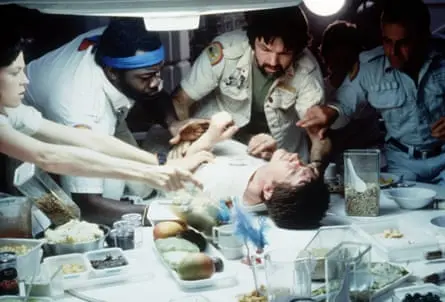
In Alien, Skerritt played Captain Dallas, the commander of the commercial space tug Nostromo. Initially, however, Skerritt was skeptical about the project. In a 2019 interview with Roger Ebert, he recalled turning down the initial offer due to budget concerns. “At two million bucks and with other actors that I don’t know about, this is a film that could have been directed by Ed Wood,” he remarked. Yet, recognizing the potential of the material and drawing upon the disciplined approaches of directors like Altman and Ashby, he accepted the role, anchoring the claustrophobic terror alongside Sigourney Weaver, Ian Holm, and Harry Dean Stanton.
Nearly a decade later, Skerritt joined the cast of Top Gun (1986) as Commander Mike "Viper" Metcalf, the wise and steady mentor to Tom Cruise’s Maverick. Landing the role, however, required Skerritt to push back against studio preconceptions. In a 2021 interview with Vulture, he recalled producers labeling him as "laconic."

“It pissed me off,” Skerritt said. “I went into it with [producer] Don Simpson… don’t tell me, as a producer, what you think I’m going to be doing. You’re going to get what you need.” What the production received was an authoritative, grounding performance that anchored the high-octane aerial sequences in genuine emotional stakes.
Television Acclaim and Later Film Roles
As his film career continued through the 1980s and 1990s—with notable appearances in David Cronenberg’s The Dead Zone (1983), the sci-fi adventure SpaceCamp (1986), horror sequel Poltergeist III (1988), and the female-led comedy-drama Steel Magnolias (1989)—Skerritt expanded his footprint into television and prestige cinema.
In the 1990s, he reunited with Robert Redford for the sweeping family drama A River Runs Through It (1992) and shared the screen with Jodie Foster in Robert Zemeckis’s sci-fi drama Contact (1997).
It was on television, however, that Skerritt achieved some of his most widely recognized critical acclaim. He starred as Sheriff Jimmy Brock in the David E. Kelley family drama Picket Fences, a role that earned him a Primetime Emmy Award for Outstanding Lead Actor in a Drama Series. The show, which ran for four seasons on CBS from 1992 to 1996, showcased Skerritt’s ability to play the moral center of an eccentric community balancing dark humor with profound ethical questions.
Into the 2000s and beyond, Skerritt maintained a steady output across mediums. He appeared alongside Bruce Willis in the action-thriller Tears of the Sun (2003) and Kate Beckinsale in Whiteout (2009), while making memorable guest appearances on hit television series such as Will & Grace, The West Wing, and Brothers & Sisters. His final film performance came in the 2025 western drama Broke, in which he starred alongside Dennis Quaid.
Philanthropy and the Red Badge Project
Beyond his extensive contributions to film and television, Skerritt dedicated a significant portion of his later years to advocacy and veteran support. In 2012, he co-founded the Red Badge Project, an initiative designed to help military veterans process post-traumatic stress disorder (PTSD) and reintegrate into civilian life through the power of storytelling and creative writing.
“It starts with that wanting to help someone else rather than talking about it,” Skerritt explained in an interview with CBS News. “I just got tired of talking about this if I could do something about it.”
The project reflected Skerritt’s personal ethos—one grounded in civic duty, empathy, and a practical approach to community building. Reflecting on his life and career in a 2021 interview, he maintained a remarkably humble perspective. “I’m just a lucky guy, man,” he said. “Strength is measured in how you confront your weaknesses. I have had a lot of weaknesses. I still have them.”
Legacy and Industry Impact
Tom Skerritt leaves behind an entertainment landscape transformed by the artistic movements he helped champion. By bridging the gap between the golden age of 1970s auteur cinema and modern blockbuster filmmaking, he demonstrated the enduring value of the character actor—the foundational pillar upon which countless cinematic masterpieces were built.
As tributes pour in from colleagues, filmmakers, and fans worldwide, Skerritt’s legacy remains etched in celluloid: a masterclass in subtlety, presence, and an unwavering dedication to the craft of storytelling.