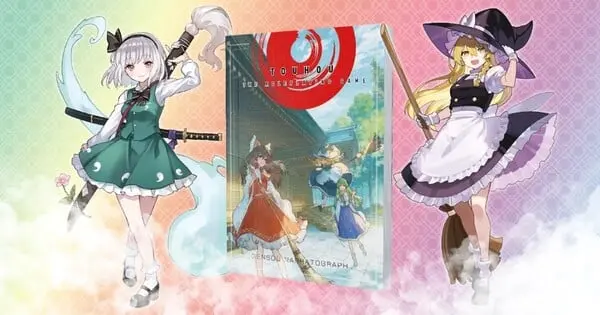
The announcement, made by American publisher LionWing on October 9, confirms that the tabletop adaptation of the long-running Touhou Project franchise will receive a comprehensive English release. Originally published in Japan by Kadokawa in 2023, the title, known in Japan as Gensou Narratograph, bridges the gap between the franchise’s high-octane video game roots and the collaborative storytelling environment of tabletop role-playing games (TTRPGs).
LionWing, a company specializing in the translation and localization of Japanese TTRPGs, has confirmed that the upcoming English version will include a substantial suite of content. The rulebook is slated to feature 30 playable characters, 21 distinct locales set within the world of Gensokyo, and entirely new character artwork and maps designed to appeal to both long-time fans of the series and newcomers to the tabletop medium. Perhaps most notably for enthusiasts of the franchise, the release will include a 100-page replay session featuring ZUN, the creator of the Touhou Project.
A Fusion of Cozy Narrative and Bullet-Hell Mechanics
At its core, Gensou Narratograph is designed for a party of up to four players and one game master. The system is marketed as a "cozy slice-of-life bullet-hell" RPG, a descriptor that seeks to reconcile the two seemingly disparate elements of the Touhou brand.
In practice, the game balances quiet, social interactions within the world of Gensokyo with "Danmaku Duels." These combat encounters are specifically engineered to emulate the series’ signature bullet-hell confrontations. By integrating tactical mechanics that reflect the pattern-heavy gameplay of the video games into a turn-based tabletop format, the game aims to provide an authentic experience that honors the source material’s mechanical legacy while fostering creative, narrative-driven play.
The Crowdfunding Campaign and Release Strategy
To manage the distribution and ensure the quality of the physical release, LionWing has scheduled a BackerKit crowdfunding campaign to launch on November 3. This approach follows an industry-standard model for niche tabletop titles, allowing the publisher to gauge demand and fund premium production tiers.
The publisher has outlined a three-tiered distribution strategy for the rulebook:
- Standard Hardcover: A high-quality binding designed for durability and shelf aesthetics.
- Premium Hardcover: A limited edition featuring painted edges, available exclusively during the initial ordering window to incentivize early adoption.
- Retail Softcover: A more accessible, standard-bound version intended for broader availability through traditional distribution channels.
By utilizing this tiered approach, LionWing hopes to cater to collectors and hobbyists who prioritize the visual and physical quality of their game books while maintaining a retail presence for the general consumer market.
Historical Context: The Evolution of Touhou Project
The emergence of Gensou Narratograph in the Western market is the latest milestone in a franchise that has evolved from a single-person passion project into a global cultural phenomenon.

The Touhou Project began in 1995 with the release of Touhou: Highly Responsive to Prayers, developed by Team Shanghai Alice for the PC-98 platform. For the first decade of its existence, the series remained a relatively underground phenomenon, primarily confined to the Japanese PC gaming scene. However, the unique combination of challenging gameplay, complex lore, and a memorable cast of characters allowed it to cultivate a massive, dedicated following.
The series reached a turning point in the mid-2010s regarding international availability. In May 2015, Playism released Touhou: Double Dealing Character, marking the first time an official entry in the franchise was made available in English-speaking territories. Since that milestone, a variety of publishers—including NIS America and XSEED Games—have worked to bring various fan-made and official spinoffs to the West. The localization of a formal TTRPG represents a significant shift in the franchise’s strategy, moving from purely interactive digital media to analog storytelling experiences.
The Role of Kadokawa and Industry Implications
The involvement of Kadokawa in the original 2023 release and the subsequent licensing for the English market underscores the ongoing integration of Japanese tabletop gaming into the global market. With the rise of platforms like D&D Beyond and the increasing popularity of Japanese RPGs (JRPGs) in the West, there is a clear appetite for tabletop systems that offer the same narrative tropes as popular anime and video game series.
Furthermore, the disclosure regarding Kadokawa World Entertainment’s ownership of various media outlets highlights the vast reach of the Kadokawa Corporation. As a parent company, Kadokawa has successfully leveraged its intellectual property across multiple media streams, from anime and light novels to tabletop gaming. By bringing Gensou Narratograph to the West, the company is effectively extending the lifecycle of the Touhou Project, utilizing the TTRPG space to deepen fan engagement with the brand’s expansive lore.
Strategic Analysis: The "Slice-of-Life" Appeal
The choice of a "slice-of-life" focus for the game is a strategic decision that differentiates it from more traditional, combat-centric RPGs. The Touhou Project is known for its world-building and the daily lives of its denizens in Gensokyo, a land where humanity and supernatural entities coexist. By focusing on narrative, the game allows players to explore these interpersonal dynamics rather than simply acting as a mechanical combat simulator.
This approach is likely to resonate with the existing Touhou community, which has long been driven by fan fiction, fan art, and derivative storytelling. The game provides a structured framework for these activities, effectively canonizing the act of creating stories within the Touhou universe. By providing tools for both social simulation and "Danmaku" combat, the game bridges the gap between the casual fan and the hardcore player.
Looking Ahead
As the November 3 crowdfunding date approaches, the success of the Gensou Narratograph campaign will serve as a bellwether for the interest in Japanese tabletop adaptations. If the project meets its funding goals, it could pave the way for further localizations of niche tabletop titles that have previously been locked behind language barriers.
For LionWing, the project represents a significant undertaking. The inclusion of new art, maps, and an extensive replay session with the series’ creator, ZUN, suggests a high level of commitment to quality control and authenticity. These elements are crucial for maintaining the trust of a fanbase that has been historically protective of the franchise’s integrity.
In summary, the localization of Gensou Narratograph: The Roleplaying Game Based on Touhou is more than just a new product launch; it is a testament to the enduring influence of the Touhou Project. As it transitions into the tabletop medium, the series continues to demonstrate its versatility, proving that its appeal extends far beyond the bullet-hell screens of its origin. Fans and tabletop enthusiasts alike will be watching closely as the project moves from its Japanese origins to a global audience next year, marking a new chapter in the ongoing history of Gensokyo.