Amidst a growing global appreciation for contemporary Japanese cinema, filmmaker Sho Miyake is steadily solidifying his reputation as a distinctive voice, moving from acclaimed independent features to international recognition. Since his graduation from the Film School of Tokyo, Miyake has cultivated a body of work characterized by its quietly considered dramas, often delving into intricate character studies and the subtle dynamics of human interaction. His latest offering, Two Seasons, Two Strangers, marks a significant milestone, earning the prestigious Golden Leopard at the Locarno Film Festival and garnering further critical attention through screenings at Lincoln Center and MoMA’s New Directors/New Films series.
The Evolution of a Filmmaker: Sho Miyake’s Distinctive Style
Miyake’s cinematic journey began in 2012 with two low-budget features that immediately hinted at his burgeoning talent. Playback, described as an Alain Resnais-ian exploration of youthful memories, showcased an early interest in non-linear narrative and the subjective nature of recollection. Concurrently, Good for Nothing offered a grounded portrayal of high-school boys navigating their roles within a security company in Miyake’s native Hokkaido, establishing his penchant for character-driven narratives rooted in specific local contexts. These early works laid the groundwork for a career defined by an empathetic lens focused on the interior lives of his subjects.
His subsequent films continued to refine this approach. And Your Bird Can Sing, an exceptional summer romance, exemplified Miyake’s ability to explore complex group dynamics with nuance and sensitivity, capturing the transient beauty of youth and connection. More recently, 2022’s Small, Slow But Steady garnered significant acclaim for its rhythmic and gentle portrayal of a deaf female boxer, demonstrating Miyake’s mastery in crafting immersive experiences through careful observation and a unique sense of pacing. The film, praised for its authentic representation and compelling lead performance, further cemented his status as a director capable of transforming seemingly ordinary lives into profound cinematic experiences. Following this, 2024’s All the Long Nights continued his exploration of human connection, focusing on a pair of lonely workers at a science toy company, suggesting a director meticulously refining his craft towards a distinctive mastery. These works collectively illustrate a thematic thread of individuals seeking connection, purpose, and understanding within their immediate environments, whether through shared work, romantic entanglement, or personal endeavor.
"Two Seasons, Two Strangers": A Meta-Narrative of Adaptation and Self-Discovery
Two Seasons, Two Strangers represents a bold artistic stride for Miyake. The film is a meticulously constructed diptych, adapting two distinct stories by the revered cult manga artist Yoshiharu Tsuge: "A View of the Seaside" and "Mister Ben of the Igloo." Miyake ingeniously frames this adaptation through the eyes of a fictional screenwriter, Li, portrayed by the accomplished South Korean actress Shim Eun-kyung, known for her versatile performances in films like Sunny and Miss Granny. The narrative opens with Li grappling with her writing, a struggle that seamlessly transitions into the world of her imagined film.
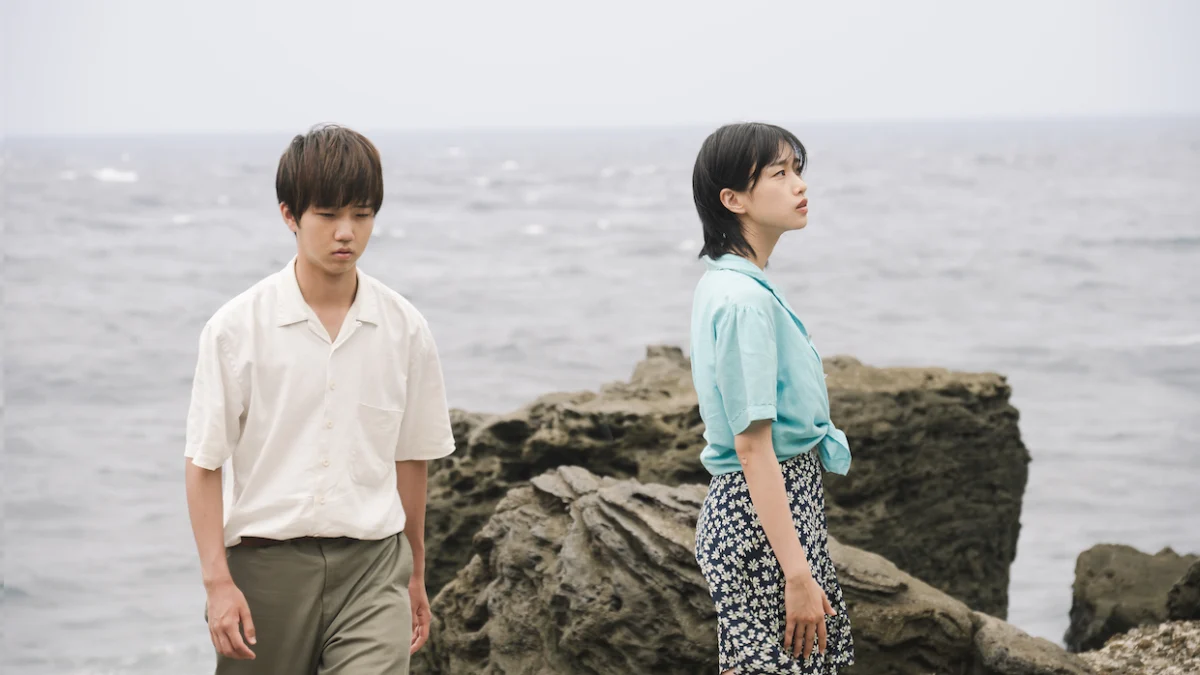
The first segment, Li’s creation, unfolds at an idyllic island resort, charting the intersecting lives of two young individuals. This "film-within-a-film" possesses a subtly romanticized aesthetic, characterized by vibrant colors and a youthful cast, depicting a summer atmosphere imbued with possibility and burgeoning connection. However, just as this narrative reaches its emotional peak, Miyake abruptly shifts perspective. The audience is transported to a classroom setting, where Li and the film’s director engage in a post-screening Q&A session. This meta-narrative device allows Miyake to explore the creative process itself, reflecting on the relationship between art, autobiography, and interpretation.
Struggling with her own creative block, Li embarks on a journey for inspiration, traveling to a snowy, rural town with minimal planning and high expectations. Her search leads her to a dilapidated inn run by the brusque, enigmatic Benzo, played by veteran Japanese actor Shinichi Tsutsumi, recognized for his extensive work across film and television, including roles in Suspect X and Why Don’t You Play in Hell?. This second segment sharply contrasts with the first, both in its wintery setting and its more grounded, often awkward, human interactions. Miyake’s delicate mise-en-scène throughout the film, characterized by careful composition and evocative atmospheric detail, recalls not only Tsuge’s distinctive graphic style but also the singular, observational staging of cinematic masters like Yasujirō Ozu. The result is a film that is "breezy to watch" yet "endlessly complex to reminisce on," inviting viewers to ponder its layers long after the credits roll.
The Enduring Influence of Yoshiharu Tsuge
The decision to adapt Yoshiharu Tsuge’s work is pivotal to understanding Two Seasons, Two Strangers. While not widely translated into English, Tsuge holds a legendary status within Japanese manga, particularly among aficionados of "alternative" or "subcultural" comics. Miyake recounted his first encounter with Tsuge’s work as a university student, describing it as strikingly different from anything he had read before. Tsuge emerged in the 1960s, a period of significant experimentation in Japanese comics, often associated with the gekiga movement which sought to create more mature, dramatic, and realistic narratives compared to mainstream shōnen or shōjo manga.
Tsuge’s work, frequently published in the avant-garde magazine Garo, is renowned for its deeply personal, often melancholic, and subtly surreal explorations of everyday life. His protagonists are typically ordinary men, often mangaka themselves, struggling with mundane realities, personal anxieties, and the absurdities of existence. His narratives often blend autobiographical elements with dreamlike sequences, creating a unique texture that blurs the line between reality and inner world. This distinctive approach, characterized by a quiet observational quality and a profound sense of introspection, resonated deeply with Miyake. For Miyake, Tsuge’s ambition to forge a unique form of expression within his art form served as a direct inspiration to seek new cinematic forms through adaptation, moving beyond a "surface-level adaptation" to a "core-level adaptation" that captures the spirit of Tsuge’s self-projection. By framing the film through a screenwriter grappling with her own creative identity, Miyake subtly mirrors Tsuge’s practice of projecting himself onto his mangaka protagonists, thereby creating a contemporary resonance with the source material.

Critical Acclaim and Festival Recognition
The global recognition for Two Seasons, Two Strangers underscores Miyake’s growing international profile. The film’s triumph at the Locarno Film Festival, where it secured the coveted Golden Leopard – the festival’s top prize – placed Miyake among a distinguished roster of world cinema talents. The Golden Leopard is celebrated for identifying bold, innovative works and emerging voices, and Miyake’s win signaled a significant endorsement from one of Europe’s most prestigious film events. This award often acts as a springboard for films to gain wider distribution and critical attention.
Its subsequent inclusion in the New Directors/New Films series, co-presented by Film at Lincoln Center and The Museum of Modern Art (MoMA) in New York, further cemented its standing. This festival is a vital platform for showcasing groundbreaking international cinema and is highly influential in introducing new talents to American audiences and critics. These screenings not only provided crucial visibility but also affirmed the film’s artistic merit and its capacity to engage with diverse audiences, facilitating conversations about its complex narrative structure and thematic depth.
Thematic Exploration: Contrasts, Connections, and the Art of Observation
Miyake’s interview sheds light on the deliberate thematic and stylistic contrasts within Two Seasons, Two Strangers. The most evident dichotomy is that of the seasons – the warm, vibrant summer of the film-within-a-film versus the stark, snowy winter of Li’s solitary journey. This extends beyond mere visual aesthetics; the summer segment subtly leans into a romanticized ideal, portraying youthful connection with a certain idealized glow. In contrast, Li’s winter sojourn is characterized by a more down-to-earth, often stark, realism, reflected in the lived-in, almost dilapidated appearance of Benzo’s inn. This deliberate contrast speaks to the film’s exploration of different modes of storytelling and different facets of human experience.
Miyake highlighted his intention to depict "dual meanings" and the "richness of film expression." He offered the example of a dead fish: ominous in the summer sequence, humorous when grilled in the winter. This seemingly minor detail encapsulates the film’s broader ambition to explore how context shapes perception and meaning, and how the same elements can evoke vastly different emotional and intellectual responses. This approach encourages viewers to engage actively with the narrative, discerning the subtle shifts in tone and interpretation.
A recurring theme in Miyake’s filmography has been the exploration of group dynamics and how individuals find happiness or meaning within collective environments, such as the shared workplace in And Your Bird Can Sing or All the Long Nights. Two Seasons, Two Strangers presents a thematic departure, posing a more challenging question: can people who meet purely by happenstance during travel, without pre-existing connections, forge "very special and deep moments together?" This reflects a contemporary preoccupation with transient connections and the search for authentic interaction in an increasingly mobile and individualistic world. Li’s often awkward conversations with Benzo, drawn directly from Tsuge’s humor, underscore the difficulties and unexpected delights of these unscripted encounters, where the usual social lubricants are absent, and vulnerability can emerge from unexpected places.
Influences and the Power of Observation
Miyake openly acknowledged the profound influence of critic and academic Shigehiko Hasumi, with whom he collaborated on the essay film John Ford and Throwing. Miyake revealed that Hasumi’s writings, which he had consumed since his teens, formed the bedrock of his understanding of film history and theory. Hasumi’s critical approach, known for its meticulous attention to the visible details on screen rather than abstract concepts, taught Miyake "how to love films and to watch and see them truly for what they are." This foundational philosophy is evident in Miyake’s own filmmaking, characterized by its observational quality, precise mise-en-scène, and an emphasis on the subtle gestures and rhythms that define human experience. The teacher character in the film’s Q&A scene, while Miyake denies a direct link to Hasumi, nonetheless embodies a certain intellectual rigor in discussing film, perhaps an echo of the critical discourse that shaped Miyake’s artistic sensibilities.
The film also subtly touches upon themes of regional identity. While Miyake states his Hokkaido upbringing is not directly reflected in Two Seasons, Two Strangers, the director character in the nested film grew up on a small island – an experience Miyake acknowledges is distinct from growing up in a major metropolis like Tokyo. This contrast between the "normative experience" of urban life and the unique perspectives forged in Japan’s "outer prefectures or islands" adds another layer to the film’s exploration of identity and belonging, resonating with broader cultural discussions about regionalism in Japan.
Finally, the film’s exploration of travel as a catalyst for creative inspiration finds a personal echo in Miyake’s own life. While he doesn’t undertake trips in the same way as his protagonist Li, his decision a few years ago to move from Tokyo to a more rural area was a "pivotal, great life choice" that fundamentally changed his environment. This change, akin to Li’s journey, suggests a belief in the transformative power of new surroundings to spark introspection and creative renewal, underlining the deeply personal connection between the artist’s life and their work.
Two Seasons, Two Strangers stands as a testament to Sho Miyake’s artistic maturity and his ability to craft narratives that are both aesthetically refined and profoundly human. Through its innovative structure, thoughtful thematic explorations, and subtle performances, the film not only pays homage to its source material but also solidifies Miyake’s position as one of the most compelling voices in contemporary Japanese cinema, a filmmaker who invites audiences to look deeper, connect more authentically, and reflect on the intricate tapestry of shared and solitary experiences.