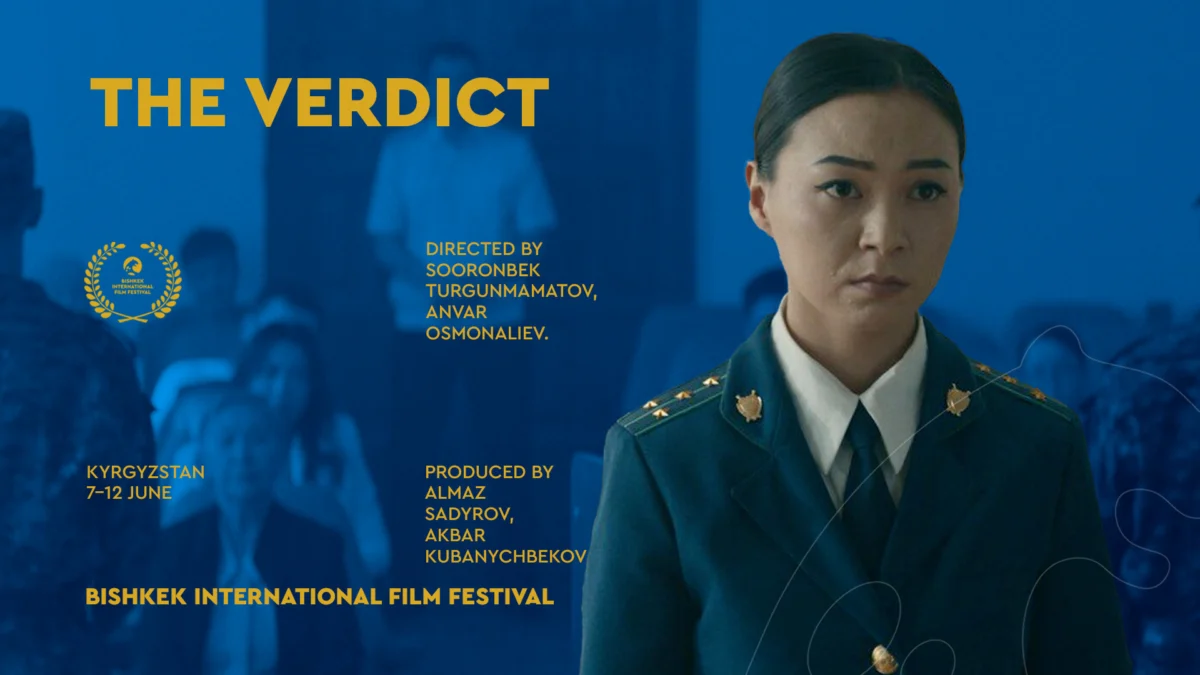
“Verdict,” a powerful Kyrgyz production, delves into the intricate dynamics of family and the pursuit of justice, drawing inspiration from a real-life case that profoundly impacted local society. The film skillfully navigates the complex terrain between intimate family drama and intense courtroom proceedings, offering an uncommon multi-faceted perspective on the events it portrays. By presenting a narrative that challenges conventional viewpoints, “Verdict” positions itself as a significant contribution to contemporary Kyrgyz cinema, prompting reflection on deeply ingrained societal issues.
Unraveling the Narrative: A Dual Timeline of Domesticity and Justice
The film unfolds across two distinct yet interconnected timelines, each crucial to understanding the full scope of the tragedy. The initial arc immerses viewers in the past, within the seemingly prosperous but emotionally fractured household of Arman, a successful cattle owner whose imposing presence casts a long shadow over his family. Arman is depicted as a figure of formidable authority, his strictness and decisive nature earning him both fear and grudging respect within his community. Beneath the veneer of prosperity, however, his home is a crucible of complicated emotions, unspoken secrets, and a simmering struggle for personal freedom. His control over his wife and two daughters is portrayed as relentless, marked by constant derogatory comments that chip away at their self-worth. As the narrative progresses, Arman’s wife is confronted with agonizing choices, while his daughters find themselves increasingly entangled in events that rigorously test their love, loyalty, and moral fortitude. This section meticulously details the slow erosion of familial bonds under the weight of patriarchal dominance, setting the stage for the dramatic events to follow.
The second arc transitions to the present day, focusing on the murder trial that serves as the narrative’s climax. Here, the legal arena becomes the battleground where the past is meticulously dissected. The public prosecutor and the defense lawyer, who shares a past connection as the defense attorney’s former professor, engage in a compelling clash that extends beyond mere legal arguments, hinting at deeper personal and philosophical disagreements. Central to these proceedings is the pervasive question of Arman’s true character – who he truly was behind the façade of the respected cattle owner. This ambiguity becomes a driving force, compelling all involved to confront the multifaceted nature of truth and perception. The film masterfully uses the courtroom as a lens through which to re-examine the domestic tensions previously established, allowing different interpretations of Arman’s life and legacy to emerge.
The Shadow of Reality: Kyrgyzstan’s Societal Context
The profound impact of “Verdict” is amplified by its roots in a real-life case that sent shockwaves through Kyrgyz society. While the film refrains from identifying the specific incident, its thematic resonance with prevalent social issues in Kyrgyzstan is undeniable. The narrative implicitly addresses the deep-seated challenges of domestic violence, patriarchal structures, and the struggle for women’s rights within a society grappling with the tension between traditional customs and modern legal frameworks.
Kyrgyzstan, like many Central Asian nations, has historically maintained strong patriarchal traditions where men often hold dominant positions within the family and community. While progress has been made in recent decades to promote gender equality and strengthen legal protections for women, issues such as domestic violence remain a significant concern. According to various reports from human rights organizations and UN agencies, a substantial percentage of women in Kyrgyzstan experience some form of violence, whether physical, psychological, or economic, often within their own homes. Underreporting is common due to societal pressure, fear of reprisal, and a lack of trust in the justice system. The concept of "family honor" can sometimes lead to victims remaining silent, and community mediation efforts may prioritize family unity over individual safety and justice.
The film’s exploration of Arman’s relentless control and his derogatory comments reflects a widespread pattern of emotional abuse that often precedes or accompanies physical violence. The wife’s "difficult choices" and the daughters’ entanglement in events that test their "moral principles" speak volumes about the impossible situations faced by women in abusive households, where leaving might mean social ostracization or economic destitution. "Verdict" thus functions not merely as a crime drama but as a mirror reflecting these societal vulnerabilities, urging a closer examination of the conditions that allow such tragedies to unfold. By portraying the complexities of victimhood and agency within this context, the film contributes to a broader national dialogue about justice, accountability, and the urgent need for robust social and legal support systems.
Crafting the Drama: Artistic Choices and Performances
Despite occasionally leaning into a TV drama aesthetic, a common characteristic in some regional productions, “Verdict” rises above its technical limitations through its compelling narrative, the compelling nature of the actual case, and a deliberate effort to achieve a “Rashomon” effect. This narrative strategy, presenting multiple subjective interpretations of the same event, is particularly effective in maintaining ambiguity around Arman’s character. Initially, he is presented as an almost archetypal villain, embodying oppressive patriarchy. However, the film gradually peels back layers to reveal positive values and dimensions to his personality, forcing the audience to grapple with the complexity of human nature and the subjective nature of perception. This duality is further mirrored in the differing attitudes and perspectives of his two daughters, each offering a unique lens through which to view their father and the events leading to the trial.
A particularly appealing twist emerges when one of the daughters is revealed to be the one who ultimately breaks the case, shifting the narrative focus and adding a layer of personal involvement to the pursuit of truth. This twist, combined with the intellectual and emotional clash between the former professor and student in the courtroom, forms the dramatic core of the story. The legal confrontations, while at times bordering on the overdramatic – particularly in the reactions of the judge and, occasionally, the defense lawyer – largely serve to heighten the tension and underscore the gravity of the proceedings without detracting significantly from the central narrative. These heightened moments contribute to the film’s engaging pace and ensure the audience remains invested in the unfolding drama.
The acting performances are central to the film’s success. Erzhan Osmonov delivers a convincing portrayal of Arman, masterfully navigating the character’s duality as both a tyrannical figure and, at times, a loving parent. The directorial choice to subtly lean towards Arman’s perspective in the latter part of the film adds depth to his characterization, making him more than a one-dimensional antagonist. Ainura Kachkynchbek kyzy, in the role of Arman’s wife, offers an equally compelling performance, embodying both the vulnerability of a victim and the strength of a femme fatale. Her nuanced portrayal in a crucial moment within the movie is particularly impactful, serving as a pivotal point in the narrative. Eliza Ryskulova also delivers a strong performance as the younger sister, whose actions essentially serve as the catalyst for the entire story, providing an essential emotional anchor for the audience.
From a technical standpoint, the cinematography is occasionally polished, consistent with the TV drama style, though the intense lighting can sometimes be a minor issue. However, the framing is consistently well-executed, and the presentation of the courtroom scenes is notably competent, creating an atmosphere of tension and formality. The editing contributes to a relatively fast pace, which suits the story’s dynamic nature, and the cuts between the different timelines are strategically placed, ensuring clarity and maintaining narrative momentum without disorienting the viewer.
A Rashomon Effect: Challenging Perceptions of Guilt and Virtue
The application of the "Rashomon effect" in "Verdict" is not merely a stylistic choice but a fundamental narrative device that elevates the film beyond a straightforward crime drama. By presenting Arman’s character and the family’s history through multiple, often conflicting, perspectives, the film forces the audience to question their initial judgments and confront the inherent subjectivity of truth. Arman is initially framed as a purely malevolent figure, his oppressive nature undeniable. However, glimpses into his positive values, perhaps his dedication as a provider, his standing in the community, or even moments of tenderness, complicate this simple villain archetype. This deliberate ambiguity challenges viewers to consider the possibility that individuals are rarely entirely good or evil, and that motivations can be deeply intertwined with personal history, societal expectations, and individual perceptions.
This narrative complexity is skillfully mirrored in the contrasting attitudes of Arman’s two daughters. One might remember him primarily for his tyranny and control, while the other might recall moments of paternal care or the economic stability he provided. These divergent memories are not presented as right or wrong but as valid interpretations shaped by their unique experiences and emotional bonds. This technique is crucial in exploring the film’s central question: "Who Arman really was?" It suggests that "who he was" depends entirely on who is asked, and under what circumstances. The film thereby avoids offering simplistic answers, instead inviting a more profound contemplation of justice, memory, and the intricate web of familial relationships. The dramatic tension arising from the clash between the teacher and student in court further underscores this theme, as both legal professionals present their versions of events and Arman’s character, each striving to construct a compelling narrative of guilt or innocence.
Beyond the Screen: Implications for Public Discourse
"Verdict" transcends its role as mere entertainment; it functions as a potent catalyst for public discourse on critical societal issues within Kyrgyzstan. By drawing inspiration from a real-life case that shocked the nation, the film provides a platform for examining the sensitive subjects of domestic violence, patriarchal authority, and the judicial system’s response to such crimes. Its nuanced portrayal encourages audiences to look beyond sensational headlines and consider the human complexities, motivations, and systemic factors that contribute to such tragedies.
The film’s exploration of Arman’s multifaceted character, the struggles of his wife and daughters, and the intricacies of the legal process can ignite conversations about the prevalence of abuse, the silence surrounding it, and the societal pressures that often trap victims. It prompts questions about how communities interpret justice, the role of cultural norms in perpetuating cycles of violence, and the effectiveness of legal frameworks in protecting vulnerable individuals. For instance, the film might encourage a re-evaluation of how domestic disputes are handled, advocating for stronger intervention mechanisms and support systems for victims.
Furthermore, "Verdict" contributes to the evolving landscape of Kyrgyz cinema by demonstrating its capacity to engage with profound social issues. Such productions are vital for fostering critical thinking, challenging long-held traditions that may be detrimental, and promoting a more empathetic understanding of human experiences. While official responses to the film itself might not be publicly documented, its existence inherently serves as a form of social commentary, potentially influencing policy discussions related to family law, victim support services, and judicial reform. By portraying the emotional toll and ethical dilemmas faced by characters involved in such a case, the film humanizes statistics and brings abstract societal problems into sharp, relatable focus, ultimately enriching the national dialogue on justice and human rights.
Conclusion: A Timely and Compelling Contribution to Kyrgyz Cinema
Although occasionally rough around the edges and at times leaning into hyperbolic dramatic expression, “Verdict” stands as a remarkably competent and significant cinematic work. It tackles a profound and sensitive case, inspired by real events that deeply resonated within Kyrgyz society, and presents it in a manner that is both thought-provoking and consistently entertaining from beginning to end. The film’s ambitious narrative structure, its nuanced characterizations, and its willingness to engage with complex societal issues elevate it beyond a simple genre piece. “Verdict” not only provides a gripping story but also serves as a poignant social commentary, inviting audiences to reflect on justice, family dynamics, and the intricate tapestry of human morality within the unique cultural context of Kyrgyzstan. Its contribution to sparking dialogue and challenging perceptions makes it a noteworthy addition to the country’s growing cinematic output.