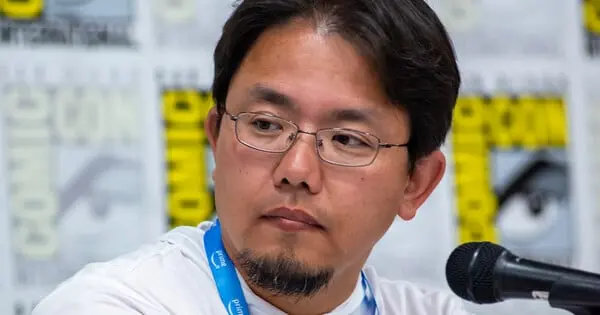
The intersection of creative labor and artificial intelligence has become a flashpoint for debate within the manga and anime industry, recently manifesting in a high-profile exchange involving renowned artist Makoto Yukimura. Best known for his historical epic Vinland Saga, Yukimura found himself at the center of a digital firestorm after a series of comments on the social media platform X (formerly Twitter) were misinterpreted by fans as an endorsement of generative AI tools. The incident highlights the growing anxiety among professional illustrators regarding the rapid advancement of machine learning models that can synthesize art based on existing datasets, often without the consent of the original creators.
The Chronology of the Controversy
The sequence of events began when an account on X shared an illustration depicting the protagonist of Vinland Saga, Thorfinn, standing in a field of wheat. The image, which captured the thematic essence of the series—specifically the character’s evolution toward non-violence and agricultural labor—prompted an appreciative response from Yukimura.
"Very wonderful! A rich wheat field all over the place," Yukimura wrote in his initial response. "Thank you for understanding his heart. If all people were rich enough, we wouldn’t have to fight."
Shortly after this interaction, other users in the thread intervened to inform the author that the image in question had been generated using artificial intelligence. One user alleged that the creator of the post had not only utilized AI but had also been scraping and repurposing work from other human artists within the fandom to train or generate content, a practice often referred to as "art theft" within the digital creative community.
Upon receiving this information, Yukimura responded with a succinct remark: "Wow, Is that so? AI does a good job."
This second comment was quickly disseminated across the platform, stripped of its context, and framed by critics as an active endorsement of AI-generated content over human craftsmanship. The backlash was immediate. A segment of his audience, particularly those who have been vocal in the ongoing movement to protect human artists from being replaced by automated systems, criticized the mangaka for what they perceived as a dismissive stance toward the ethical implications of generative software. Some users accused him of being "washed" or out of touch with the struggles of contemporary working illustrators.
Clarification and the Reassessment of Intent
Recognizing the rapid escalation of the misunderstanding, Yukimura took to his X account to issue a formal clarification on Sunday. He sought to distinguish between the technical capabilities of AI and the ethical, economic, and creative ramifications of its usage.
"Wow haha, I surprised everyone because I said ‘AI does a good job,’" Yukimura wrote, addressing the confusion. "AI steals art, and I’m in trouble if AI develops too much. The reason why we are in trouble is because AI does a good job to some extent. It’s just a fact. It is not an affirmation."
This distinction—between acknowledging a technical reality and endorsing a moral one—served to pivot the conversation. By stating that he is "in trouble" if AI continues to advance, Yukimura aligned himself with the professional concerns of his peers. His clarification was largely accepted by the fanbase, with many observers noting that the initial backlash was a result of impulsive social media behavior where nuance is frequently lost. The incident serves as a case study in how public figures in the creative industries are increasingly scrutinized for their interactions with technology that threatens their own professional livelihood.
Contextualizing the Threat to Creative Labor
The anxiety surrounding AI in the manga industry is not without empirical backing. Generative models, such as Midjourney, Stable Diffusion, and DALL-E, operate by ingesting massive datasets of copyrighted images to identify patterns and styles. For creators like Yukimura, whose distinct artistic identity is the product of decades of labor, the prospect of an algorithm replicating that style in seconds represents an existential economic threat.
According to industry reports from organizations such as the Japan Cartoonists Association, there is growing apprehension regarding the legal vacuum surrounding AI-generated manga. While Japanese copyright law is currently being debated to determine whether training AI on copyrighted works constitutes "fair use" or infringement, the lack of clear, enforceable regulation has left many individual creators feeling vulnerable.
The "good job" that Yukimura referred to in his clarification is a testament to the sophistication of current diffusion models. These systems are now capable of rendering complex lighting, anatomical structures, and textures that previously required years of training for a human artist to master. When a machine can produce an aesthetically pleasing image of a popular character, the barrier to entry for content creation drops, but the incentive to pay professional artists for original work risks being undermined.
Economic and Ethical Implications for Mangaka
The economic model of the manga industry relies heavily on serialized, labor-intensive production. A typical mangaka operates under grueling deadlines, often supported by a team of assistants. If AI-assisted art becomes normalized, it could lead to a devaluation of the "human touch"—the idiosyncratic imperfections and emotional depth that define high-quality manga.
Furthermore, the issue of "style mimicry" remains a primary concern. When AI models are trained on specific artists’ portfolios, they can generate new works that are indistinguishable from the original, potentially diluting the brand value of the actual creator. For a series as globally recognized as Vinland Saga, the presence of high-quality, non-consensual AI content creates a marketplace saturation that can confuse consumers and misrepresent the creator’s vision.
Broader Industry Reactions and Future Outlook
The reaction to Yukimura’s comments reflects a wider cultural rift. On one side, there is an audience that prioritizes the accessibility and speed of digital content, often overlooking the provenance of the media they consume. On the other side, there is a burgeoning movement of artists, writers, and fans who argue that the ethical cost of AI—which relies on the unauthorized use of human labor—is too high to ignore.
This incident also highlights the responsibilities of public figures in the digital age. When a creator of Yukimura’s stature engages with fan-created content, it carries significant weight. His initial, lighthearted praise for the "wheat field" image—likely made without knowledge of its provenance—shows how easily even the most tech-savvy creators can be caught off guard by the ubiquity of AI-generated content.
As the industry moves forward, it is expected that more creators will adopt a defensive posture regarding their intellectual property. The legal landscape in Japan, as well as in the United States and the European Union, is currently undergoing significant changes as lawmakers attempt to reconcile the benefits of innovation with the rights of copyright holders.
Conclusion
The controversy surrounding Makoto Yukimura was short-lived, but it serves as a microcosm of the larger, unresolved conflict between traditional artistry and generative technology. By clarifying that his recognition of AI’s technical proficiency was a sober assessment of a threat rather than an endorsement, Yukimura successfully de-escalated the situation.
However, the underlying issue—the encroachment of AI into the professional creative space—remains. As generative models continue to evolve, the distinction between "a job well done" by an algorithm and the irreplaceable contribution of a human artist will remain a central theme in the future of global entertainment. For now, the takeaway for both creators and their audiences is clear: in an era of rapid technological disruption, the definition of authorship and the value of human labor are being rewritten, and the conversation is only just beginning.