The 2026 San Sebastian International Film Festival commenced this Friday at the Kursaal Theatre in northern Spain with a high-profile ceremony that balanced the celebration of cinematic mastery with urgent declarations regarding global human rights. German auteur Werner Herzog, a towering figure in world cinema, was honored with the Donostia Award, the festival’s most significant recognition, while the event’s opening remarks served as a platform for sharp criticism of international conflicts and government-led intimidation against filmmakers.
A Legacy Honored: Werner Herzog at the Kursaal
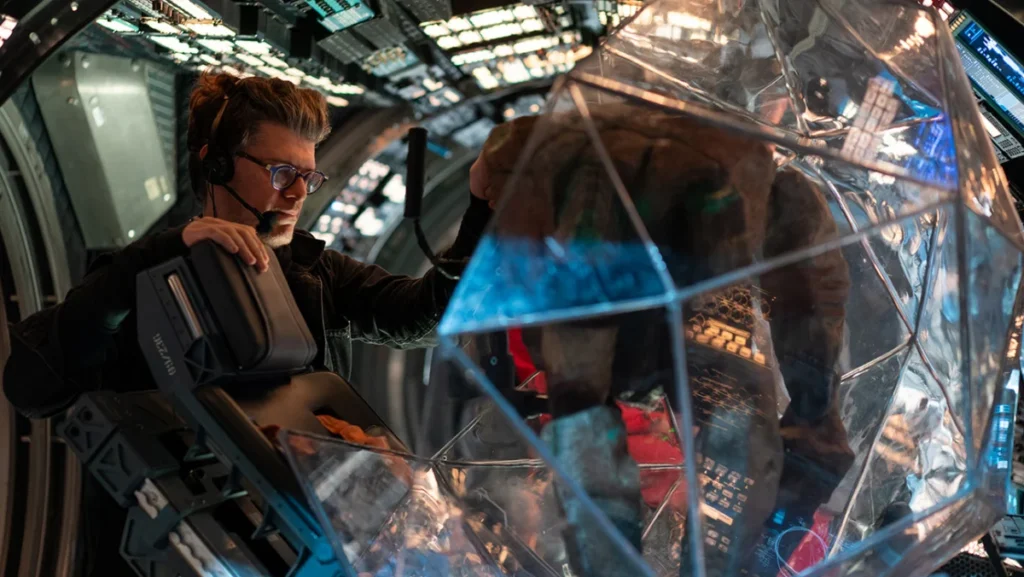
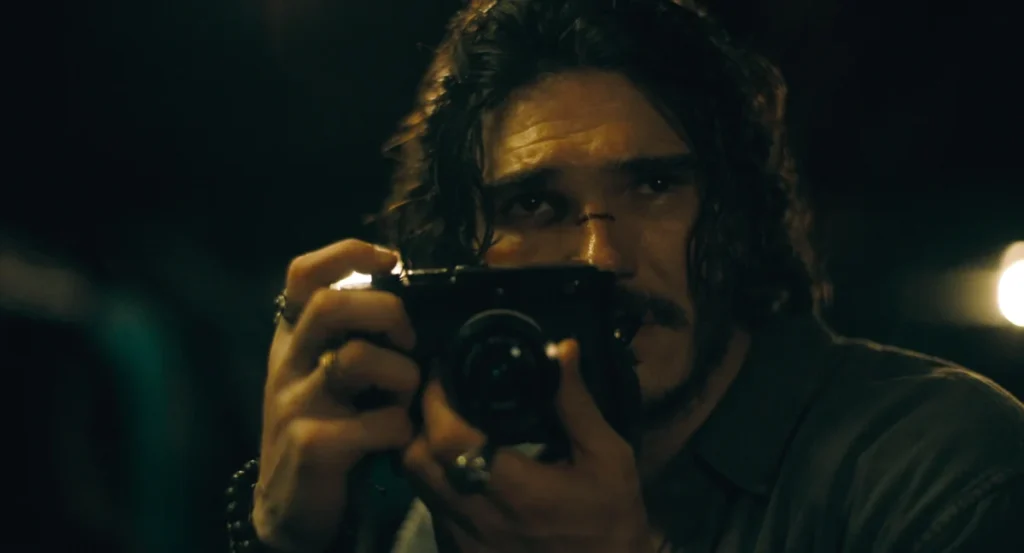
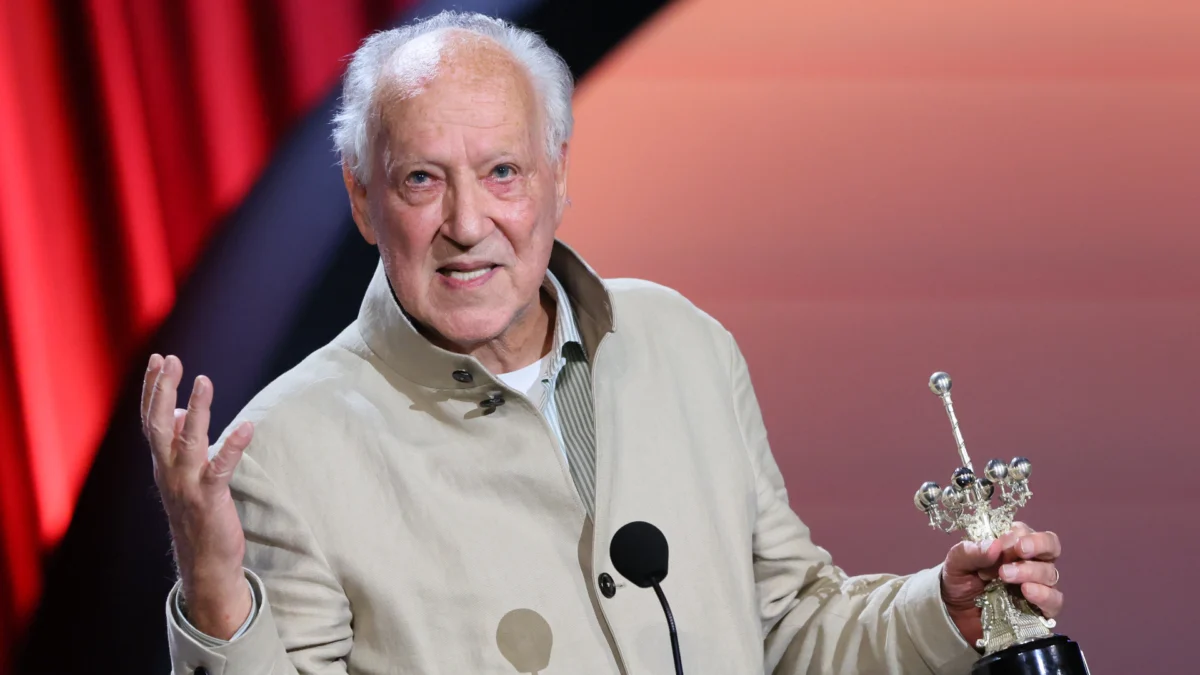
The evening reached its emotional zenith when British actor Orlando Bloom took the stage to present the Donostia Award to Werner Herzog. The audience, comprised of European creative luminaries and international industry delegates, greeted the director with a standing ovation. Herzog, whose career spans over six decades, is currently in San Sebastian to promote his latest feature, Bucking Fastards, which boasts a high-profile ensemble cast including Kate and Rooney Mara, Orlando Bloom, and Domhnall Gleeson.
In his acceptance speech, Herzog maintained his characteristic blend of philosophical reflection and self-deprecating wit. He expressed profound appreciation for Bloom, describing him as a "treasure of cinema" and a "living legend." Herzog’s connection to the Basque region, he noted, dates back to the production of his 1972 masterwork Aguirre, the Wrath of God. He recounted a formative, albeit geographically imprecise, journey taken on foot from the Cannes Film Festival across the Pyrenees. "I must confess, I ended up in Biarritz, not San Sebastian," the director quipped, drawing laughter from the crowd.
However, Herzog’s remarks quickly pivoted to a deeper affinity for the region and its cultural identity. By highlighting his admiration for Spain’s national poetry competitions, the director positioned himself not as an outsider, but as an observer of a "country of poets." His filmography—including iconic titles such as Fitzcarraldo (1982), Grizzly Man (2005), and the Oscar-nominated Cave of Forgotten Dreams (2010)—has long explored the intersection of human endurance and the sublime, themes he suggests are echoed in the Basque spirit.
The Political Backdrop: A Festival of Conscience
While the Donostia Award provided a moment of traditional prestige, the festival’s opening ceremony was punctuated by explicit political messaging. Hosts Fariba Sheikhan and Mariona Terés utilized their platform to issue a formal condemnation of the ongoing humanitarian crisis in Gaza. The hosts explicitly called for an end to the genocide, echoing the festival’s formal stance from the previous year, when the organization issued a searing critique of the actions of the Benjamin Netanyahu administration and the catastrophic impact on Palestinian civilians.
Central to this year’s political discourse was the plight of filmmakers Yuval Abraham and Rachel Szor, the directors of the acclaimed documentary NAZA. The film, which debuted at the Venice Film Festival to record-breaking standing ovations, provides a harrowing look at the internal systems and protocols within the Israeli military through the testimonies of 24 former officers. The documentary has brought intense scrutiny to the methods used in the Gaza campaign.
The political pressure surrounding the film has manifested in direct threats from government officials. Israeli Culture Minister Miki Zohar has publicly threatened to revoke the citizenship of the filmmakers in response to their project. During the opening ceremony, the festival hosts declared their unwavering solidarity with Abraham and Szor, stating, "We stand in solidarity with the directors of the film NAZA… who have been threatened by the Israeli government." This move signals a growing trend within the international festival circuit—led by Venice and now San Sebastian—to serve as an active shield for artists whose work faces state-sanctioned censorship or retaliation.
Chronology of the 2026 Festival Opening
The 2026 San Sebastian International Film Festival, running from September 18 to September 26, is structured to highlight both emerging voices and established giants. The opening night was headlined by the premiere of Fatih Akin’s Ghost Song.
- Friday, Sept 18 (Morning/Afternoon): Industry press conferences and red-carpet arrivals begin.
- Friday, Sept 18 (Evening): Opening ceremony at the Kursaal Theatre.
- Friday, Sept 18 (Late Evening): Official premiere of Fatih Akin’s Ghost Song, a narrative feature exploring the ephemeral nature of love and death, heavily influenced by the director’s interest in anime and manga aesthetics.
- Saturday, Sept 19 – Sept 26: The competition slate, encompassing the Zabaltegi-Tabakalera and New Directors programs, proceeds with a focus on human rights and social justice themes.
Data and Context: The Impact of NAZA
The inclusion of discourse regarding NAZA is not merely incidental; it reflects a broader shift in the film industry’s responsibility toward political documentation. NAZA secured the Special Jury Prize at the Venice Film Festival, a testament to its critical reception. The film’s significance lies in its primary source material: testimonies from military personnel themselves. By documenting the mechanical processes of civilian targeting, the film has created a factual record that the Israeli government has struggled to counter with rhetoric alone.
The threats issued by Miki Zohar represent a significant escalation in the tensions between the Israeli state and its intellectual class. Legal analysts and human rights organizations have noted that threatening citizenship revocation for artistic output is a violation of international norms regarding freedom of expression. By aligning themselves with the directors, the San Sebastian Film Festival is effectively asserting that the "unilateral breaking of international law" is a matter of critical concern for the global cinematic community.
Broader Implications for Global Cinema
The San Sebastian festival has long occupied a unique space as a bridge between Latin American, European, and global cinema. By juxtaposing the career of a visionary like Herzog—who often films in the world’s most remote and inhospitable environments—with the immediate, visceral political documentation of NAZA, the festival is articulating a vision of film as both a medium for aesthetic transcendence and a tool for moral accountability.
The festival’s organizers, in their closing remarks for the opening ceremony, emphasized a commitment to opposing "colonialist looting, sexual violence, and cruel wars." This rhetoric marks a departure from the "neutral" stance often adopted by major cultural institutions. Instead, the festival is adopting a policy of "active engagement."
For Werner Herzog, the award serves as a capstone to a career that has defied conventional production constraints. For the industry at large, the festival acts as a barometer for how film festivals will handle the increasing pressures of global geopolitics in the coming decade. As the festival progresses through September 26, the focus will remain on whether the artistic contributions can coexist with the political gravity that has defined the opening of this 74th edition.
Conclusion: The Intersection of Art and Activism
The 2026 San Sebastian International Film Festival has set a tone of high stakes and high expectations. By honoring Werner Herzog, the festival acknowledges the power of the individual filmmaker to interpret the world through a lens of wonder. By standing with filmmakers like Abraham and Szor, it acknowledges the necessity of the filmmaker to interpret the world through a lens of truth, even when that truth is dangerous. As the curtains rise on the remaining competition films, the message is clear: cinema remains one of the few remaining platforms where the personal, the poetic, and the profoundly political can occupy the same space. The coming days of the festival will likely continue to test this delicate balance, as audiences and critics alike engage with the diverse narratives presented by directors from every corner of the globe.