The mid-1990s marked a pivotal era in human communication, as the burgeoning internet transitioned from academic and military networks to public accessibility. This period witnessed a rapid evolution of online interaction, with email and forums serving as foundational precursors to the sophisticated social media platforms and instant messaging applications that dominate today’s digital landscape. Amidst this technological revolution, the concept of "digital intimacy" began to emerge, subtly foreshadowing the rise of modern dating apps and online relationships. It was in this transformative context that Japanese filmmaker Yoshimitsu Morita released his critically acclaimed work, "Haru" (also known as "Haru, the Stranger" in some markets) in 1996. The film stands as a unique and remarkably prescient exploration of human connection forged within the then-nascent online world, earning accolades such as being an award-winning standout at the 18th Yokohama Film Festival and cementing its place as one of Morita’s essential works, alongside classics like "The Family Game" (Kazoku Gēmu).
The Genesis of Online Connection: A Mid-90s Phenomenon
The 1990s saw the internet’s global user base grow exponentially. In Japan, while dial-up connections were still the norm, the number of internet users steadily climbed, moving from an estimated few hundred thousand in the early 90s to several million by the decade’s end. Bulletin Board Systems (BBS) and specialized online forums became vibrant virtual communities where individuals could connect over shared interests, transcending geographical boundaries. "Haru" captures this specific moment, immersing its audience in the very mechanics of early online communication.
The narrative centers on Noboru Hayami, a Tokyo businessman who, seeking an outlet for his passions and perhaps a respite from urban anonymity, joins an online movie forum. He adopts the username "Haru," a shortened version of his real name that also carries the evocative meaning of "Spring" in Japanese. Within this digital space, he forms a profound connection with another user, "Hoshi," meaning "Star," who is later revealed to be Mitsue Fujima, a woman residing in the more rural setting of Morioka. Their correspondence, initially centered on film discussions, gradually deepens into an intimate emotional bond, becoming a conduit for sharing personal hardships and vulnerabilities that might have remained unarticulated in face-to-face interactions.
Noboru, grappling with the abandonment of his dream to become an American football player due to health issues, finds solace and understanding in Hoshi. Mitsue, in turn, navigates the profound grief of losing her lover and the disquiet of a series of unfulfilling jobs. The online forum provides them a unique sanctuary where they can express their innermost feelings without the immediate pressures of physical presence, fostering a connection built purely on shared emotional resonance and intellectual exchange. Despite navigating a series of complications inherent in such a relationship, their digital intimacy inevitably cultivates a powerful yearning for a real-life meeting, testing the boundaries of their virtual bond.
Yoshimitsu Morita’s Nuanced Vision Amidst Technological Shifts
Yoshimitsu Morita, known for his diverse filmography that often satirized Japanese society and explored human psychology, chose a path less trodden by his contemporaries in "Haru." During this period, particularly in Japan, cinematic explorations of technology often veered into the realm of critique, frequently manifesting in the burgeoning J-horror genre. Films like "Ring" (1998) would soon popularize the idea of technology as a vector for supernatural malevolence, highlighting humanity’s growing isolation and dependence on digital tools as a source of dread. Morita, however, deviates significantly from this common trend, offering a far more nuanced and humanistic perspective.
"Haru" meticulously unpacks the dual nature of early cyber-romance. On one hand, the film acknowledges the legitimate concerns prevalent at the time, which continue to resonate today: the potential for digital communication to replace intimate face-to-face interactions, leading to a growing disconnect from tangible reality and intensifying feelings of loneliness. It highlights the ease with which online personas can become elaborate illusions, masking one’s true self, and how internet-based conversations can breed false perceptions, misunderstandings, and premature judgments. These issues are not shied away from but rather woven into the fabric of Noboru and Mitsue’s journey, adding layers of complexity to their relationship.
Conversely, Morita masterfully portrays the online landscape as a vital, liberating space for his lonely protagonists. For Noboru and Mitsue, the internet functions as a safe haven, allowing them to express their vulnerability without the immediate scrutiny or social anxieties often associated with physical encounters. It serves as a powerful bridge for emotional distance, fostering a connection that might otherwise have been impossible given their geographical separation and individual life circumstances. The film argues that far from being merely isolating, the internet could, in fact, forge new paths for profound human connection, offering a lifeline to those struggling with personal hardship and a sense of alienation.
Bridging the Divide: Technology as a Catalyst for Real-World Connection
The film’s exploration of technology extends beyond the confines of internet hardware. As Noboru and Mitsue’s yearning for a physical meeting intensifies, they ingeniously turn to other technological avenues to make their in-person encounter a reality, illustrating a broader human impulse to leverage tools to overcome obstacles. Moving between their respective urban and rural environments, they devise creative solutions to bridge the digital and physical divide.
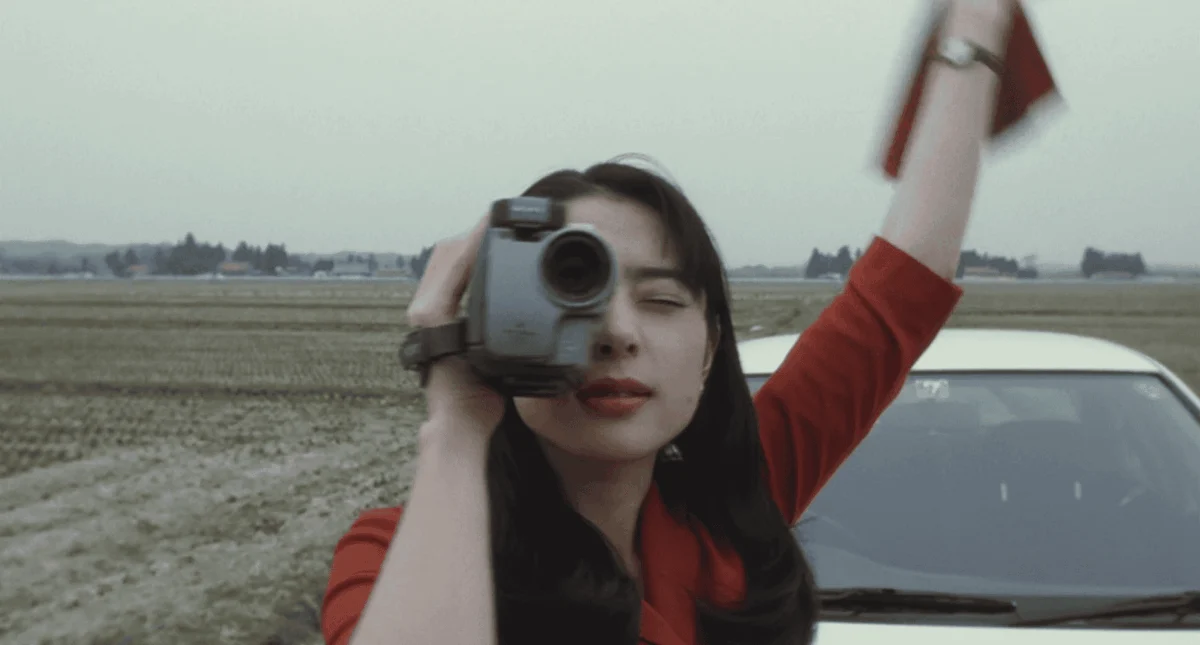
A standout example, and one of the film’s most iconic sequences, involves the protagonists using handheld video camcorders. In a beautifully orchestrated scene that underscores both their determination and the challenges of their long-distance relationship, Noboru rides a bullet train (Shinkansen) through the Japanese countryside, past a field where Mitsue stands. Both are holding brightly colored handkerchiefs, aiming to make themselves visible to each other through the lens of their respective cameras. This moment is not merely a clever plot device; it profoundly elevates the emotional tension, symbolizing their desperate attempts to connect and perceive each other in a tangible way, even if mediated by technology. This scene not only makes "Haru" an endearing time capsule of 1990s technology but also serves as a poignant reminder of the enduring human desire for physical presence and shared reality, even when nurtured in a virtual space.
Artistic Excellence: Direction, Performances, and Technical Craft
Morita’s directorial prowess is evident in his meticulous crafting of the emotional core of "Haru." He carefully allows the romantic feelings between Noboru and Mitsue to develop organically, avoiding common romantic clichés and ensuring that their text-based interactions remain engaging rather than repetitive. He skillfully counterbalances these online exchanges with scenes dedicated to the characters in their individual lives, gradually allowing the audience to understand Noboru Hayami as "Haru" and Mitsue Fujima as "Hoshi" – their inner worlds, their struggles, and the specific qualities that draw them to each other.
The film is significantly elevated by the fantastic performances of Seiyo Uchino as Noboru and Eri Fukatsu as Mitsue. Both actors bring a natural believability and profound sincerity to these roles, which many critics consider career-defining. Their ability to convey deep emotion and vulnerability, often through subtle expressions and internal monologues that complement their on-screen typing, is central to the film’s success.
Adding another layer of depth to the narrative is Naho Toda’s portrayal of "Rose," a character who enters the central dynamic as a potential disruptor. Crucially, Morita’s screenplay avoids reducing Rose to a clichéd romantic antagonist. Instead, she is presented as a charismatic, grounded individual, similarly seeking happiness and connection online. This nuanced portrayal of Rose makes her a crucially neutral presence, meaningfully shaping the story without resorting to simplistic villainy, highlighting the complex web of human interactions possible within online communities.
Technically, "Haru" is equally impressive. Hiroshi Takase’s cinematography is a standout, artfully balancing steady shots that capture the stillness of digital interaction with handheld camerawork that conveys the characters’ emotional turmoil and the dynamic energy of their physical environments. The elegant collaborative music score by Soichi Noriki and Toshihiko Sahashi is used judiciously and appropriately, enhancing emotional moments without overpowering them. Furthermore, Morita makes strong use of natural sound and silence, a hallmark of his style, allowing visuals and the powerful performances to carry much of the dramatic weight and immerse the audience in the characters’ subjective experiences.
Legacy and Enduring Relevance
Yoshimitsu Morita’s "Haru" is far more than a period piece about the early internet. It is a moving romantic drama that uniquely leverages the nascent internet boom to explore timeless themes of loneliness, vulnerability, and the universal human quest for love and connection. The film’s brilliance lies in its exceptional nuance, refusing to offer simplistic judgments on technology, but instead portraying it as a tool that amplifies both the challenges and opportunities for human connection.
In the decades since its release, "Haru" has proven remarkably prescient. It accurately anticipated the profound ways in which digital platforms would come to shape relationships, foreshadowing the ubiquitous presence of online dating apps and the intricate interplay between our online personas and our true selves. Its exploration of identity, authenticity, and the desire for genuine intimacy in a mediated world remains profoundly relevant, perhaps even more so, in today’s hyper-connected society.
As a significant cultural artifact, "Haru" not only documents a pivotal moment in technological history but also offers a timeless analysis of the human condition. Its enduring critical acclaim, solidified by its recognition at major film festivals, underscores its status as an essential work that continues to resonate with audiences, inviting reflection on how we seek and find connection in an ever-evolving digital age. Morita’s masterful direction, combined with excellent performances and technical artistry, ensures that "Haru" remains a compelling and insightful cinematic experience, a testament to the power of film to capture and interpret the complexities of human existence.