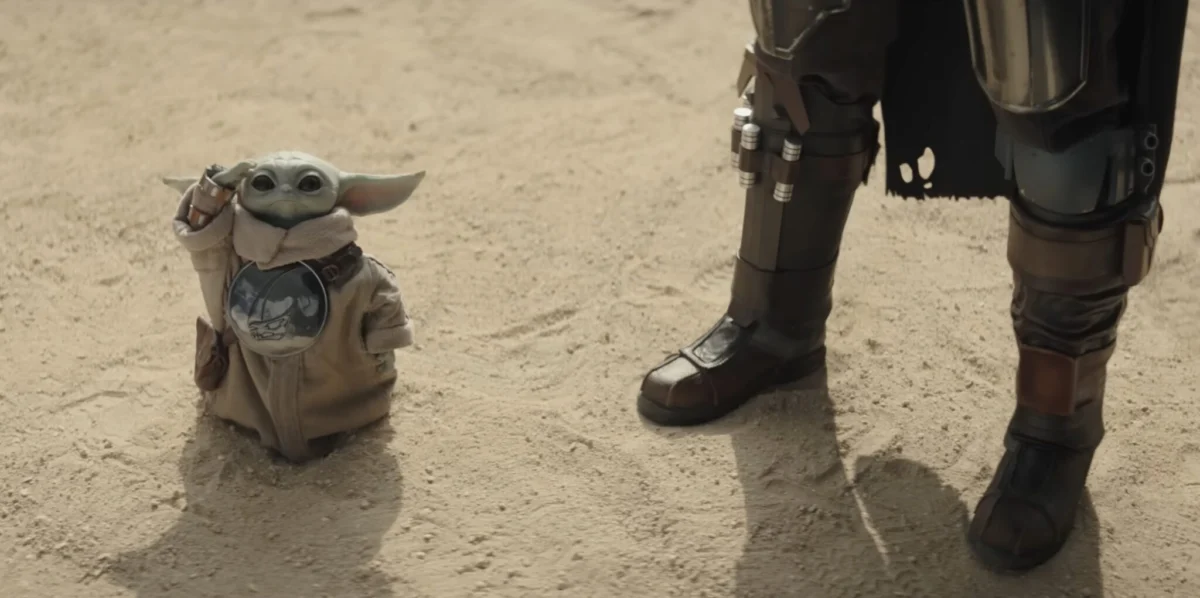
The cinematic universe of Star Wars has expanded with the release of The Mandalorian and Grogu, a feature film adaptation that brings the beloved characters Din Djarin and Grogu to the silver screen. This highly anticipated project, helmed by creator and director Jon Favreau with contributions from Dave Filoni and Noah Kloor in script development, aims to translate the narrative arc and aesthetic of the successful Disney+ series into a feature-length experience. Initial reactions suggest a film that leans heavily into the niche appeal of its source material, blending elements of gritty westerns, character-driven drama, and the whimsical, often peculiar, corners of the Star Wars galaxy.
A Shift to the Big Screen: Expectations and Initial Impressions
Despite the established popularity of The Mandalorian series, there existed a degree of cautious optimism surrounding its transition to a film. The series, while lauded for its core concept and visual execution, has been critiqued by some for its often episodic and thinly spread narrative. The involvement of Filoni and Kloor was intended to address this, promising a more cohesive and robust script for the cinematic outing.
The film’s opening sequence, featuring Din Djarin dismantling an Imperial garrison controlled by a corrupt official, immediately draws parallels with established narratives within the wider Star Wars lore. Specifically, the scenario echoes elements from the anthology series Tales of the Empire, featuring Boba Fett. This overlap has been noted by dedicated fans as a recurring theme, with some expressing a desire for more original storylines for Din Djarin, rather than a recapitulation of scenarios previously explored by other iconic bounty hunters.
Plot Development: New Missions and Familiar Faces
The narrative of The Mandalorian and Grogu quickly escalates as Din Djarin receives a new ship, visually similar to his previous vessel but with a fresh paint job, from Sigourney Weaver’s character, Colonel Ward. This upgrade comes with a crucial new mission: travel to Nal Hutta. The objective is to engage with the relatives of the late Jabba the Hutt, who are reportedly concerned about the well-being of Jabba’s nephew, Rotta. The successful retrieval of Rotta is promised to yield intelligence on a significant Imperial remnant leader, Janu Coin, portrayed by Jonny Coyne.

This plot point immediately reignites interest by revisiting key elements from the animated series. The prospect of seeing Nal Hutta rendered on a cinematic scale, coupled with the task of locating Jabba’s son—a character unseen since his rescue in the premiere episode of The Clone Wars by Anakin Skywalker, Obi-Wan Kenobi, and Ahsoka Tano—offers a direct connection to established lore. Furthermore, the inclusion of Garazeb "Zeb" Orrelios, a prominent member of the Ghost crew from the beloved Star Wars Rebels animated series, as a teammate for this mission, signals a significant role beyond a mere cameo, integrating the animated ensemble into the film’s core narrative.
A Niche Appeal: Targeting Specific Fandoms
The Mandalorian and Grogu appears to be a film meticulously crafted for a specific segment of the Star Wars audience, potentially alienating more general viewers. It occupies a unique intersection of cinematic tastes:
- Fans of The Mandalorian series: For those who enjoyed the television show, the film offers an extended, potentially more focused, season-like experience.
- Appreciators of animated Star Wars content: The movie embraces the freedom and creative exploration often found in the animated series, delving into the more obscure and eccentric aspects of the galaxy.
- Admirers of 1980s fantasy films: The production incorporates elements reminiscent of classic fantasy cinema, featuring practical effects, creature designs, and a certain playful absurdity. The film even draws a thematic parallel with The Ewok Adventures, suggesting a fondness for lighter, more whimsical storytelling.
This approach highlights a recurring argument regarding the success of Star Wars animated narratives: their appeal to children allows for a greater tolerance of the strange, the goofy, and the absurd. Stories involving complex galactic economics, the ethical implications of weaponizing alien species, or intricate Hutt politics can be explored without alienating a younger demographic. This, the film suggests, is a vital ingredient for unique Star Wars storytelling, a facet that perhaps a segment of the adult fanbase may not actively seek.
The Enduring Appeal of the "Weird" Star Wars
While acknowledging the existence of more grounded narratives like Andor, the reviewer emphasizes that this is not the primary draw for their personal engagement with the Star Wars universe. The appeal lies in the fantastical elements: alien worlds, sentient droids, emotionally resonant puppet characters, and imaginative resurrection narratives. The film The Mandalorian and Grogu is seen as one of the few contemporary productions delivering these specific, often unconventional, Star Wars experiences on a grand scale. The fact that such elements are still considered novel or niche nearly fifty years into the franchise’s existence is noted as a curious phenomenon.
Detailed World-Building and Lore Integration
The film’s commitment to integrating detailed lore is evident in several key scenes. Upon arriving at Nal Hutta, the background of a Hutt orgy—or, as the creative team might claim, a lavish feast—provides a vivid, albeit R-rated, glimpse into their culture. The architectural style of the Hutt palace is depicted as consistent with Jabba’s palace on Tatooine, suggesting a shared design lineage among prominent Hutt dwellings rather than a unique, isolated structure. The presence of droid guards, assembled from scavenged parts across various droid models, including Separatist battle droids, hints at a thriving aftermarket for droid components and the ongoing adaptation and self-improvement of independent droids. The visual representation of Rotta, through an outdated photograph, directly matches his appearance in The Clone Wars premiere, reinforcing the continuity.

Action and Score: A Familiar Foundation
While the film’s narrative and world-building are emphasized as its strengths, the action sequences themselves are described as competent but not groundbreaking. The primary performers for the Mandalorian, stunt coordinators Lateef Crowder and Brendan Wayne, continue to deliver exceptional physical performances. Pedro Pascal’s brief on-screen appearances as Din Djarin, while limited, are noted for their commitment to the character’s established persona, even with the reviewer’s reservations about the Death Watch cult’s rules.
The musical score, composed by Ludwig Göransson, is a significant asset, amplifying the show’s existing themes for the big screen. Göransson’s playful reinterpretation and expansion of his previous work are highlighted as contributing to the film’s overall enjoyment.
Grogu: A Character-Driven Force
Grogu, the diminutive co-lead, is presented as a showcase for the full range of puppetry and CGI capabilities. His independent story arcs, which unfold entirely without dialogue, are a source of considerable slapstick comedy and emotional resonance. The film effectively portrays Grogu’s persistent desire for snacks, a recurring character trait. A notable subplot involves Grogu hitching a ride with a group of Anzellans (the species of Babu Frick), revealing the existence of hyperspace-capable vessels designed for smaller beings.
Rotta the Hutt: A Surprisingly Moving Arc
The character of Rotta, voiced by Jeremy Allen White, emerges as a surprisingly compelling figure. Despite his CGI rendering as a slug-like creature, Rotta’s narrative arc, which explores themes of parenthood and the consequences of its absence, is described as genuinely moving. This thematic resonance reinforces the idea that good parenting is a paramount virtue within the Star Wars universe.
Cameos and Cultural References
The film is peppered with notable cameos and cultural nods. Martin Scorsese makes an extended appearance as a CGI food vendor, fully committing to his role. The narrative also features sea serpents and Zeb Orrelios engaging in his favored pastime of fighting stormtroopers. The New Republic forces are depicted in a more heroic light, a welcome change for some viewers. The film offers a satisfying comeuppance to the Hutts for their exploitation of imprisoned animals. A scene that parodies gladiator-style combat, reminiscent of Thor: Ragnarok, is given a unique Star Wars twist with the villainous Janu Coin declaring it a Dejarik Match, a subtle yet rewarding reference for knowledgeable fans.

Technical Aspects and Minor Criticisms
While The Mandalorian and Grogu largely succeeds in its ambitious undertaking, some technical limitations are noted. The animation of certain CGI characters, particularly Zeb Orrelios, presents challenges. Zeb’s intended imposing stature and distinctly non-human limbs are scaled down, likely to facilitate integration with human actors and practical effects. This is viewed as a minor disappointment, as the advancements in CGI were expected to overcome such restrictions. However, the opportunity for a character like Zeb to play a substantial role in a feature film is acknowledged as a positive outcome enabled by modern technology.
A Bold Move in Modern Blockbuster Cinema
The Mandalorian and Grogu is not positioned as a film for every viewer. Its specific blend of tones and deep cuts into Star Wars lore make it a unique proposition. In an era dominated by conventional blockbuster formulas, the film’s willingness to embrace the eccentricities and narrative possibilities of its animated predecessors is seen as a bold and refreshing choice. The reviewer expresses concern that such a project might be a rare occurrence in the current cinematic landscape and strongly recommends that audiences seeking this particular flavor of Star Wars adventure should experience it in theaters, ideally with a friend or a younger audience member.
The film’s success hinges on its ability to resonate with its dedicated fanbase, offering a deep dive into the beloved world of The Mandalorian while expanding the narrative possibilities of the wider Star Wars saga through its unique blend of character, lore, and unashamedly peculiar storytelling. The film’s release marks a significant moment, demonstrating a commitment to exploring the diverse tapestry of the Star Wars universe beyond the Skywalker saga.