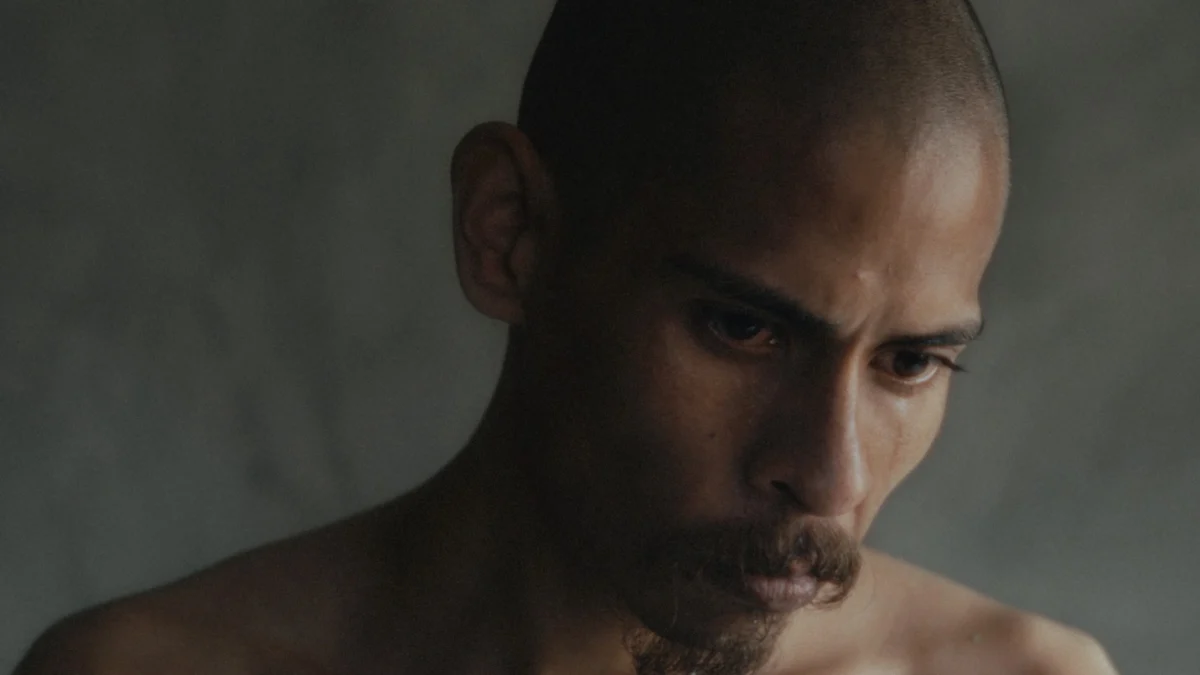
Mexican filmmaker Axel Bertha is poised to make his feature directorial debut with Against Nature, a compelling and enigmatic work slated for its world premiere in the Proxima competition program of the 60th Karlovy Vary International Film Festival (KVIFF) on Thursday, July 9. The film introduces audiences to Jonás, a stonemason who returns to the countryside after a prolonged absence, a character as shrouded in mystery as the narrative itself, which promises to navigate the complex cinematic terrain between the physical and the spiritual. This highly anticipated premiere at one of Europe’s most esteemed film festivals signals a significant moment for independent cinema, particularly for emerging voices from Latin America.
Karlovy Vary: A Prestigious Platform for Global Cinema
The Karlovy Vary International Film Festival, established in 1946, stands as one of the world’s oldest and most prestigious film festivals, particularly renowned for its focus on Central and Eastern European cinema, while also providing a crucial platform for independent and arthouse films from across the globe. Celebrating its 60th edition, KVIFF has consistently championed innovative storytelling and emerging talents, offering a vital space for cinematic exploration outside mainstream commercial narratives. The festival’s main competitive section, the Crystal Globe, is complemented by specialized programs designed to highlight diverse cinematic approaches. Against Nature will debut in the Proxima competition, a segment specifically dedicated to showcasing groundbreaking and experimental works that challenge conventional cinematic boundaries. This placement underscores the festival’s recognition of Bertha’s distinctive vision and the film’s potential to provoke profound contemplation. The Proxima competition has historically served as a launching pad for films that later gain significant critical acclaim and influence, positioning Against Nature for considerable international attention.
Unveiling the Enigma: The Narrative Heart of ‘Against Nature’
At the core of Against Nature is Jonás, a protagonist whose silence and mysterious demeanor are central to the film’s narrative fabric. Described as being "as mysterious as the movie that wanders along the cinematic edge between the physical and the spiritual worlds," Jonás is not merely a character but a conduit through which the film explores deeper, often unsettling, philosophical questions. According to the KVIFF website, Jonás "opens himself up to something intangible – a force that permeates the landscape, bodies, and time itself." This suggests a narrative deeply rooted in magical realism or a heightened sense of spiritual awareness, a characteristic often found in Latin American literature and cinema, where the mundane frequently intersects with the mystical. The enigmatic nature of the man, the festival notes further explain, "stems from the dark side of humanity and from his contact with the sacred." This duality – the inherent darkness within human nature juxtaposed with a profound connection to the sacred – promises a nuanced and challenging exploration of morality, existence, and the forces that shape human destiny. The film eschews traditional storytelling conventions, opting instead for a focus on intricate sound design and a hypnotic visual style. This deliberate choice aims to immerse the viewer in Jonás’s internal world and the atmospheric intensity of his surroundings, allowing the audience to experience the unfolding drama through sensory perception rather than explicit exposition. This approach aligns with the director’s ambition to create "an absorbing cinematic experience that explores human cruelty as part of a cycle of destruction from which humanity has yet to find a way out," a stark reflection on the perpetual struggles inherent in the human condition.
A Departure from Tradition: Cinematic Language and Sensory Immersion
The artistic choices behind Against Nature are deliberate and designed to create a unique sensory experience. By moving away from traditional narrative structures, Axel Bertha places emphasis on the power of sound design and a hypnotic visual aesthetic. This strategy is not merely stylistic; it is integral to the film’s thematic exploration. In a world where Jonás struggles with communication, the film itself communicates through atmosphere, texture, and rhythm. The absence of conventional dialogue or a linear plot forces the audience to engage with the film on a more visceral and intuitive level, mirroring the protagonist’s own journey into the intangible. This method is reminiscent of certain avant-garde and experimental films that prioritize mood and emotional resonance over explicit plot points, inviting viewers to actively interpret and connect with the film’s deeper currents. The soundscape, meticulously crafted by Andrés Silva, is expected to be a crucial element, conveying unspoken tensions, the subtle shifts in the environment, and the internal turmoil of Jonás. Similarly, the cinematography by Flavia Martínez and Edson Reyes, combined with the decision to shoot on 35mm film, suggests a deliberate pursuit of a raw, tactile visual quality that further grounds the film in its natural setting while simultaneously elevating its spiritual dimensions. This combination of elements aims to transport the audience beyond passive observation, drawing them into the enigmatic world of Against Nature and its unsettling truths.
The Director’s Vision: Axel Bertha on Inspiration and Execution
Axel Bertha’s journey to Against Nature is deeply rooted in a real-world tragedy and a profound philosophical inquiry. "The film draws from a police report of a murder that I found in a local newspaper in Mexico," Bertha explains, revealing the raw, factual starting point for his ambitious project. This incident, rather than being depicted literally, serves as a catalyst for a broader contemplation on humanity’s enduring struggles. Bertha’s directorial vision expands this singular event into a universal meditation on human cruelty and our relationship with the natural world. He poses a fundamental question: "If we observe our recorded history, expansion, dominion of resources and violence are constant forces in the human story. Is human progress taking us away from nature and the world or bringing us closer to it?" This inquiry places Against Nature squarely within contemporary discussions about environmental degradation, societal alienation, and the inherent contradictions of human civilization.
The production of Against Nature was as unconventional and immersive as its narrative style. Bertha recounts the challenges: "We shot on 35 millimeter on a very limited amount of film, in the surroundings and locations in the area where the real incident happened, under difficult weather conditions and with a cast of local non-actors." The choice of 35mm film, increasingly rare in the digital age, speaks to a desire for a particular aesthetic quality – a grainy, textural realism that digital formats often struggle to replicate. The limited film stock, while presenting technical challenges, also imposed an artistic discipline, forcing precise and deliberate filmmaking. Crucially, Bertha’s commitment to authenticity extended to his personal life, as he "even lived in the location for six months prior to the start of filming, immersing myself in the landscapes and the rhythms of daily life there." This level of dedication, echoing methods employed by acclaimed directors like Carlos Reygadas (who co-produced this film), speaks volumes about Bertha’s commitment to capturing the true essence of the environment and its people. This intimate knowledge of the setting, combined with the use of local non-actors, promises a film steeped in a raw, unvarnished reality. For Bertha, Against Nature is more than a film; it is an urgent plea for introspection. With "our markers to understand the world at risk," he aimed "to make a film that questions and helps us regain our relationship with reality, with each other, and bring us closer to our hearts and dreams." This deeply personal and philosophical approach defines the core of his feature debut.
Collaborative Craft: Key Production Teams and Artistic Contributions
The realization of Against Nature is a testament to a collaborative effort involving prominent independent production houses and a talented crew. The film is a joint production from Mexico-based Domme and Cárcava Cine, alongside U.S.-based Love Song. Fernanda de la Peza of Cárcava Cine serves as a key producer alongside Bertha himself, indicating a shared vision and commitment to the project’s unique demands. The film also benefited from the co-production support of The Lift and, notably, acclaimed Mexican filmmaker Carlos Reygadas. Reygadas, known for his distinct and often challenging cinematic works such as Japón, Silent Light, and Post Tenebras Lux, brings significant weight and artistic credibility to the project. His involvement as a co-producer not only serves as an endorsement of Bertha’s vision but also suggests a shared artistic sensibility, particularly regarding experimental narrative, profound philosophical themes, and a deep connection to the landscapes of Mexico.
The technical crew assembled for Against Nature is equally integral to its non-traditional, sensory-driven approach. The editing by Óscar Enríquez is crucial in shaping the film’s hypnotic rhythm and atmosphere, especially given the absence of conventional plot progression. Cinematographers Flavia Martínez and Edson Reyes were tasked with capturing the evocative power of the natural environment, working with 35mm film under challenging conditions to achieve a distinct visual texture. The film’s emphasis on sensory immersion is further underscored by the musical contributions of Ela Minus and Ariel Guzik. Ela Minus, an acclaimed electronic musician, is known for her atmospheric and often melancholic soundscapes, which could profoundly contribute to the film’s unsettling mood. Ariel Guzik, an artist and inventor, often creates intricate sound installations, suggesting a musical score that might transcend traditional composition to become an integral part of the film’s sound design. Finally, the sound design by Andrés Silva is paramount, as the film relies heavily on auditory cues to convey emotion, meaning, and the pervasive "intangible force" that permeates Jonás’s world. Each member of the team plays a vital role in crafting a cinematic experience that challenges conventions and invites deep introspection.
Glimpse into the Abyss: Decoding the Trailer
The exclusive trailer for Against Nature, recently premiered by THR, offers a tantalizing and unsettling glimpse into the film’s atmospheric intensity. Eschewing clear plot points, the trailer instead relies on evocative phrases and visceral imagery to convey the film’s core themes. Phrases like "hatred for the world," "alienation," "evil," and "that black sphere" hint at a profound psychological and existential struggle. These cryptic utterances suggest a narrative that delves into the darkest corners of the human psyche, exploring feelings of disconnection from both society and the natural world. The "black sphere" could be a literal object, a metaphorical representation of a pervasive evil, or a symbol of an oppressive force that Jonás confronts. The trailer meticulously builds an "unsettling atmosphere," utilizing the film’s promised focus on senses over traditional dialogue. Viewers are invited to "watch the haunting trailer below with care," a warning that underscores the film’s potential to disturb and provoke. The visual language likely combines stark, beautiful landscapes with moments of intense, almost hallucinatory, imagery, reflecting the blend of physical and spiritual worlds that define the film. The absence of conventional dialogue in the trailer itself reinforces the film’s commitment to non-traditional storytelling, relying instead on powerful visual and auditory cues to communicate its profound and often disquieting message.
Broader Resonances: ‘Against Nature’ in Contemporary Cinema
Axel Bertha’s Against Nature arrives at a moment when global cinema is increasingly grappling with themes of environmental crisis, human alienation, and the re-evaluation of societal progress. The film’s central question—whether human progress distances us from or connects us to nature—resonates deeply in an era marked by climate change anxiety and growing concerns about mental health and societal fragmentation. By grounding its philosophical explorations in a real-life murder incident, the film transcends mere abstraction, imbuing its grand themes with a stark, human reality. This approach allows Against Nature to contribute significantly to the ongoing discourse within contemporary art-house cinema, particularly from Latin America, which has a rich tradition of using film to interrogate social, political, and existential issues. The involvement of Carlos Reygadas, a director whose work often delves into similar territories of spirituality, nature, and the human condition, further solidifies the film’s potential to be a significant voice in this cinematic landscape. Its premiere at KVIFF, a festival known for nurturing bold and unconventional films, positions Against Nature to gain critical traction and engage audiences willing to confront challenging ideas presented through innovative cinematic forms.
Anticipation and Outlook
As Against Nature prepares for its world premiere at the 60th Karlovy Vary International Film Festival, anticipation within the independent film community is palpable. Axel Bertha’s feature debut is not merely another film; it represents a brave artistic statement, a challenging exploration of human nature, and a testament to the power of unconventional storytelling. Its unique blend of a compelling, silent protagonist, a focus on sensory immersion, and profound philosophical questions positions it as a potential standout in the Proxima competition. The film’s journey, from a local police report to an international film festival stage, underscores the universal resonance of its themes: the cycle of destruction, the search for meaning, and the intricate, often unsettling, relationship between humanity and the world it inhabits. Against Nature promises to be an experience that lingers long after the credits roll, inviting audiences to reflect on their own place within the complex tapestry of existence and the urgent need to reconnect with reality, each other, and our deepest dreams.