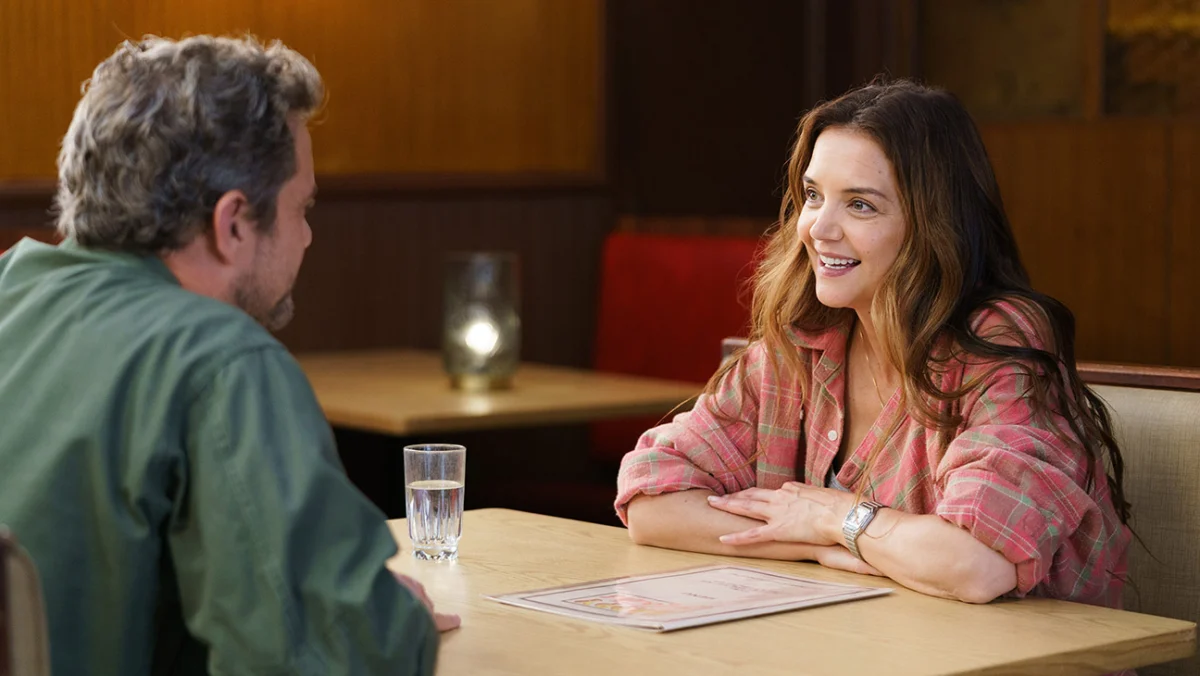
Happy Hours, the latest cinematic endeavor written, directed by, and starring Katie Holmes, made its world premiere at the prestigious Tribeca Festival, reigniting the nostalgic affections of Dawson’s Creek fans with the reunion of Holmes and former castmate Joshua Jackson. The film, a romantic drama, showcases the undeniable on-screen chemistry between the two performers, who gracefully portray middle-aged characters. However, despite the magnetic appeal of its leads, Happy Hours has garnered a mixed critical reception, with many reviewers pointing to a narrative plagued by contrived situations and a perceived lack of authentic character development, leaving some audiences in a state of befuddlement.
The Tribeca Festival Spotlight: A Platform for Independent Cinema
The Tribeca Festival, founded in 2002 by Robert De Niro, Jane Rosenthal, and Craig Hatkoff, emerged in the aftermath of the September 11th attacks to revitalize lower Manhattan and celebrate the power of film. Over two decades, it has grown into a significant international film festival, renowned for championing independent cinema, fostering emerging talent, and providing a crucial platform for diverse storytelling. Premiering a film at Tribeca offers invaluable exposure, attracting industry professionals, critics, and a dedicated audience eager to discover new voices and narratives. For Happy Hours, its inclusion in the U.S. Narrative Spotlight category positioned it among a curated selection of films aiming to make a cultural impact, placing a particular emphasis on American independent filmmaking. This platform inherently brings a heightened level of scrutiny, with critics and audiences often looking for narrative innovation and a distinct artistic vision.
The Enduring Legacy of "Dawson’s Creek" and the Allure of a Reunion
The casting of Katie Holmes and Joshua Jackson together for the first time in a feature film since their iconic roles as Joey Potter and Pacey Witter in the late 1990s and early 2000s teen drama Dawson’s Creek was undoubtedly a major draw for Happy Hours. Dawson’s Creek, which aired for six seasons from 1998 to 2003, became a cultural touchstone, defining a generation’s understanding of adolescent angst, friendship, and first loves. The series, set in the fictional town of Capeside, Massachusetts, explored complex relationships and intellectualized dialogue that resonated deeply with its young audience. The on-screen relationship between Joey and Pacey, often lauded as one of television’s most beloved pairings, forged a lasting connection with viewers who eagerly followed their tumultuous journey.
The decision to reunite Holmes and Jackson taps directly into a powerful vein of nostalgia. In an era where reboots, revivals, and reunions dominate entertainment headlines, the prospect of seeing two beloved actors from a formative show collaborate again naturally generates significant anticipation. Fans often project their affection for the original characters onto the new project, hoping to recapture some of that past magic. This built-in audience provides a substantial initial buzz for Happy Hours, distinguishing it from many other independent films premiering at festivals. However, it also sets a high bar, as the film must not only stand on its own merits but also navigate the weight of two decades of fan expectations.
Katie Holmes’ Expanding Role as Auteur: From Actress to Director-Screenwriter
Katie Holmes’ journey in Hollywood has evolved considerably since her Dawson’s Creek days. Beyond her established career as an actress in films like Batman Begins and Thank You for Smoking, she has increasingly ventured into directing and screenwriting. Happy Hours marks her third feature film as a director, following All We Had (2016) and Alone Together (2022). This progression indicates a clear ambition to move beyond performance and assert a more comprehensive creative control over her projects, developing a distinct authorial voice.
Her previous directorial efforts have explored themes of connection, resilience, and the complexities of relationships, often with a grounded, intimate feel. Alone Together, which also premiered at Tribeca, saw Holmes navigating a COVID-19 lockdown romance, showcasing her interest in contemporary human experiences within specific urban settings. With Happy Hours, Holmes takes on the challenging triple role of writer, director, and lead actress, a testament to her commitment to her vision. This level of involvement is often lauded in independent cinema, allowing for a singular artistic perspective, but it also places immense pressure on the individual to deliver across multiple creative disciplines.
Narrative Framework and Influences: A Labyrinth of Literary and Cinematic Homages
Happy Hours centers on the reunion of former high school sweethearts, Liz (Holmes) and Andrew (Jackson), decades after their initial separation. The film opens with an onscreen quote by Alan Watts, an early indicator of Holmes’ intent to imbue the narrative with philosophical undertones. Watts, a British philosopher, writer, and speaker, was known for his interpretations of Eastern philosophies for a Western audience, particularly Zen Buddhism, Taoism, and Hinduism. His work often explored themes of self-discovery, the nature of reality, and living in the present moment, suggesting that Liz and Andrew’s journey might delve into these deeper existential questions as they confront their past and future.
Throughout the film, further literary allusions surface, with shout-outs to poets such as Pablo Neruda and Rainer Maria Rilke. Neruda, the Chilean Nobel laureate, is celebrated for his passionate love poems and politically charged works, while Rilke, an Austrian poet, is renowned for his intensely lyrical and philosophical verse exploring themes of solitude, love, and the challenges of modern life. These references collectively paint a picture of Holmes attempting to craft a film that is not merely a romantic drama but a thoughtful, introspective exploration of human connection, informed by a rich intellectual tapestry.
However, critics have noted that these overt literary and philosophical nods, while indicative of Holmes’ artistic aspirations, sometimes feel less like organic thematic integrations and more like deliberate demonstrations of intellectual depth. This perception is further amplified by stylistic choices that draw comparisons to the works of Woody Allen, particularly his New York-centric romantic comedies. Allen’s films are characterized by their witty, often neurotic dialogue, intellectual banter, and picturesque portrayals of Manhattan. While Holmes’ intent may be to evoke a similar sophisticated, urban romantic sensibility, some reviewers found the execution in Happy Hours to lean into pastiche rather than genuine originality, leading to a sense of déjà vu.
Plot Development and Character Authenticity: The Core of Critical Discontent
The film’s narrative unfolds in quintessential Manhattan locales, from the iconic pathways of Central Park to the vibrant energy of Washington Square Park and the bustling streets of Chinatown. These settings provide a visually appealing backdrop, often recognizable even to those unfamiliar with the city, and contribute to the romanticized urban aesthetic that Holmes seemingly aims for.
Liz, portrayed by Holmes, is introduced as a recently divorced photojournalist who has shifted her professional focus from celebrity photography to capturing "real people." This artistic pivot sets up her character as someone seeking deeper meaning and authenticity in her work and, by extension, her life. Her agent, played by Constance Wu, expresses consternation at this career shift, providing a brief, albeit somewhat superficial, exploration of the pressures faced by artists. Liz’s photographic wanderings through the city, where she repeatedly encounters "canoodling couples," are presented as a device to underscore her own longing for connection, though some critics found this portrayal of a love-struck city to feel overly manufactured.
The catalyst for the reunion is a convenient coincidence: Liz discovers her former love, Andrew (Jackson), in the background of one of her photographs. Andrew is revealed to be a renowned travel writer, a profession that lends itself to philosophical pronouncements, such as his declaration about the importance of "the global experience expressed through local conversation." This characterization positions Andrew as an intellectual, thoughtful figure, seemingly a perfect match for Liz’s introspective nature.
The subsequent reunion, prompted by Liz being assigned to photograph Michael for a magazine story, is described as awkwardly staged, with Michael appearing overtly delighted and Liz maintaining a cool, guarded facade. Their agreement to a coffee date, where both characters arrive with "prepared questions," is highlighted as a prime example of the film’s struggle with authenticity. While the intention might be to portray characters who are carefully navigating a delicate emotional landscape, the execution struck some as fundamentally unrealistic and forced, rather than genuinely charming or poignant.
A significant portion of the film’s runtime is dedicated to a prolonged miscommunication, a common trope in romantic dramas. Michael’s declaration of having "someone new in his life" is immediately misinterpreted by Liz as him being romantically involved, leading her to freeze him out. The eventual reveal that this miscommunication stems from a misunderstanding of his actual situation – which, to the film’s narrative, only further proves his "certifiable catch" status – felt to many critics like an unnecessary narrative contrivance designed to artificially extend conflict rather than explore genuine emotional obstacles.
Flashback sequences feature the couple as lovestruck teenagers (Johnna Dias-Watson and Jack Martin), bonding over their shared love for Blondie. These glimpses into their past aim to provide context for their enduring connection and the reasons behind their initial breakup. However, the explanation for their separation and subsequent lack of communication was largely found to be as implausible and unsatisfying as other aspects of the main storyline, failing to provide the emotional depth required to justify their decades-long estrangement.
Supporting Characters and Tonal Imbalance
The film attempts to inject comic relief through several supporting characters, though their efficacy has been questioned. Mary-Louise Parker’s portrayal of Liz’s "randy aunt," who is happily juggling multiple sexual partners, was described as "cringey." While intended to provide a contrasting, more liberated perspective on love and relationships, the character’s scenes reportedly felt out of place or excessively broad, disrupting the film’s overall tone.
On the other hand, Michael’s interactions with his teasing best friends, Charlie (Joe Tippett) and John (John McGinty), garnered a more nuanced reception. Much of their dialogue is delivered in American Sign Language (ASL) due to John’s deafness. While this inclusion offers a commendable nod to diverse representation and provides a unique dynamic, some critics found these scenes, despite their potential, to be "amusing if more than a little forced." The integration of ASL, when done organically, can add significant depth and authenticity to a film, but if perceived as a narrative device rather than an intrinsic character element, it risks feeling performative.
Performances and Undeniable Chemistry
Despite the narrative shortcomings, the performances of Katie Holmes and Joshua Jackson were consistently praised. Both actors are described as "likeable, soulful performers" who bring a natural charisma to their roles. Their on-screen chemistry, a lingering echo of their Dawson’s Creek days, is cited as undeniable and a significant strength of the film. This inherent connection between the leads makes the perceived artificiality of the plot even more frustrating for some viewers, as the talent of Holmes and Jackson feels underserved by the script. Their ability to convey emotion and vulnerability, even within contrived scenarios, highlights their enduring appeal and acting prowess.
Broader Implications and The "Before" Trilogy Comparison
Katie Holmes has reportedly indicated that Happy Hours is intended as the first installment in a trilogy, drawing inspiration from Richard Linklater’s acclaimed Before films (Before Sunrise, Before Sunset, Before Midnight). Linklater’s trilogy, starring Ethan Hawke and Julie Delpy, is celebrated for its authentic, dialogue-driven exploration of a relationship over two decades, unfolding almost in real-time, with incredibly nuanced performances and deeply philosophical conversations. The strength of the Before films lies in their organic progression, the genuine intellectual and emotional connection between the characters, and the believable evolution of their relationship.
This comparison, while ambitious, immediately sets a very high bar for Happy Hours. For a film to emulate the success of the Before trilogy, it requires an extraordinary level of narrative realism, profound character development, and dialogue that feels utterly unscripted and natural. Critics observing Happy Hours within this context have suggested that the film’s current iteration struggles to achieve the narrative authenticity and emotional depth necessary for a compelling, multi-part saga. The criticisms regarding contrived situations, forced dialogue, and superficial character motivations indicate a significant gap between the aspiration to emulate Linklater’s work and the current execution.
The implications for Holmes’ directorial career are significant. While her ambition is clear, the critical reception of Happy Hours suggests a need for a more refined approach to screenwriting and narrative construction. Developing a trilogy requires meticulous planning, a deep understanding of character arcs, and the ability to sustain audience engagement over extended periods. For Holmes to successfully realize her vision for a multi-part romantic drama, future installments would likely need to address the fundamental issues of authenticity and believability that have been raised.
In the broader landscape of romantic dramas, Happy Hours highlights the ongoing challenge of crafting stories that feel fresh, relevant, and genuinely moving in an often saturated genre. While the draw of nostalgic casting is potent, ultimately, the success of such films rests on their ability to create relatable characters and situations that resonate with universal human experiences, rather than relying on familiar tropes and overt intellectual posturing.
Conclusion: A Promising Pairing in a Perplexing Package
Happy Hours serves as a poignant reunion for Dawson’s Creek fans, showcasing the undeniable, enduring chemistry between Katie Holmes and Joshua Jackson. Their individual performances are commendable, injecting warmth and soul into their characters. However, the film’s ambitious attempt to weave philosophical and literary influences into a sophisticated urban romance is often undermined by a narrative that many critics found to be contrived, inauthentic, and reliant on familiar, often clumsily executed, romantic drama tropes.
While the Tribeca Festival premiere provided a significant platform for Holmes’ latest directorial effort, the mixed critical reception suggests that Happy Hours, in its current form, falls short of its potential. For Katie Holmes to successfully establish a directorial legacy comparable to her stated inspirations, a re-evaluation of narrative structure and a deeper commitment to organic character development may be necessary for any subsequent installments in her proposed trilogy. The film stands as a testament to the powerful allure of nostalgia and star power, but also as a reminder that even the most charismatic pairings require a believable, authentic story to truly resonate.