The curtains have drawn on the 2026 Cannes Film Festival, leaving behind a palpable sense of ambivalence within the cinematic community. While the Côte d’Azur once again played host to a dazzling array of international talent and eager audiences, a prevailing sentiment emerged: this year’s festival, while not without merit, has fallen short of being a truly vintage edition. Whispers among seasoned industry veterans have even drawn parallels to the challenging 2003 festival, a year infamously marked by Vincent Gallo’s polarizing and critically lambasted erotic road movie, The Brown Bunny. The question on many lips: was the potent Cannes cocktail missing a crucial element – the undeniable allure and gravitational pull of Hollywood’s A-list productions?
Historically, Cannes has served as a prestigious platform, often showcasing major Hollywood blockbusters like the Mission: Impossible franchise or Baz Luhrmann’s Elvis in out-of-competition slots. These appearances, while adding significant glamour, did not directly impact the fiercely contested Palme d’Or and other prestigious awards. However, the conspicuous absence of a major studio tentpole within the official selection this year has been noted. Industry analysts are pondering the motivations behind this trend. Are major Hollywood studios increasingly apprehensive about the potential for critical takedowns from influential French critics, fearing such reviews could derail their carefully crafted marketing campaigns and impact box office performance? The rise of aggregation sites like Rotten Tomatoes, with their often reductive percentage-based scoring systems, may also be contributing to a more risk-averse approach. While definitive statements from studio executives remain elusive, the strategic avoidance of the Cannes crucible for their flagship projects is a phenomenon worth observing.
However, the perceived "Tinseltown no-show" is not the sole factor contributing to the subdued atmosphere of Cannes 2026. A more significant concern for many cinephiles has been the relative underperformance of films from established "auteur" directors – the revered figures of world cinema who have consistently delivered compelling and often groundbreaking works on the Croisette. This year, several prominent directors, including László Nemes, Pedro Almodóvar, Asghar Farhadi, Ryusuke Hamaguchi, Cristian Mungiu, and Ira Sachs, presented films that, in the view of many critics, leaned towards the decidedly average.
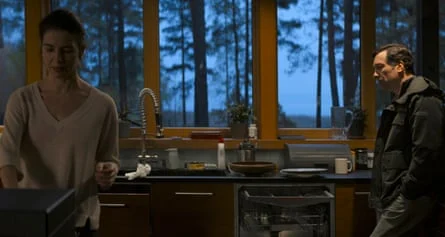
Cristian Mungiu’s Fjord, a drama exploring themes of patriarchal abuse and featuring Renate Reinsve and Sebastian Stan, garnered a degree of appreciation from some quarters. Similarly, Ryusuke Hamaguchi’s All of a Sudden, a narrative centered on an unlikely friendship between an actor and a care home director, received a notable amount of critical praise, though some reviewers found its plot contrived and implausible.
In contrast, the present writer found a certain, albeit understated, charm in Asghar Farhadi’s Parallel Tales. This film, featuring a noteworthy pairing of Catherine Deneuve and Isabelle Huppert, was described by some as a minor work, yet it offered an eccentric and unhurried comedic sensibility that was, for some, a welcome departure. However, there was widespread consensus regarding the disappointing reception of Hirokazu Kore-eda’s Sheep in the Box. The acclaimed Japanese director’s foray into sentimental science-fiction fantasy, concerning AI children, was met with a resounding critical thud, widely regarded as a significant misstep best left in the annals of the festival’s less memorable entries.
A recurring critique leveled at some of the festival’s less successful entries centers on the phenomenon of "Europudding" co-productions. This approach, often born from filmmakers’ extensive international festival circuits and collaborations with global admirers, can sometimes result in a dilution of cultural specificity. Hamaguchi’s All of a Sudden, for instance, blended French and Japanese settings, while Mungiu’s Fjord juxtaposed Romanian and Norwegian backdrops. Critics argue that such multi-national collaborations, while potentially fostering artistic exchange, can sometimes fail to offer profound insights into either of the contributing cultures, resulting in narratives that feel thematically diffuse.
A Glimmer of Hope Amidst the Mediocrity
Despite the prevailing sense of a less-than-stellar year, Cannes 2026 was not devoid of cinematic triumphs. The exiled Russian director Andrey Zvyagintsev delivered a powerful and critically lauded work with Minotaur. This film is understood to be a profound exploration of Russia’s collective trauma and its complex relationship with denial concerning its leader’s actions in Ukraine. Zvyagintsev’s incisive examination of national identity and historical reckoning resonated deeply with audiences and critics alike, marking it as a significant achievement of the festival.
The Polish director Paweł Pawlikowski made a welcome return to Cannes with Fatherland. This historical vignette, focusing on Thomas Mann’s post-World War II return to Germany with his daughter Erika, was hailed as a brilliant and dense exploration of regret, historical burden, and the lingering tensions of the past. The film was particularly praised for its exceptional performances, notably from Hanns Zischler and Sandra Hüller.

Further adding to the festival’s highlights were Rodrigo Sorogoyen’s The Beloved and Marie Kreutzer’s Gentle Monster. Sorogoyen’s film offered a gripping and unsentimental portrayal of emotional abuse within the film industry, while Kreutzer’s Gentle Monster presented a stark and brutal examination of a married man’s hidden transgressions. Both films were recognized for their unflinching honesty and compelling narratives.
The French contingent, while exhibiting its usual variability, also offered notable contributions. Emmanuel Marre’s Notre Salut, a fascinating study of the Vichy France bureaucracy during the Nazi occupation, was considered the stronger of two films addressing this historical period.
Anticipated Awards and the Unofficial "Braddies"
As the festival concluded, speculation turned to the official awards. Based on critical reception and perceived artistic merit, the following predictions were widely circulated:
Palme d’Or: Minotaur (dir. Andrey Zvyagintsev)
Grand Prix: Fatherland (dir. Paweł Pawlikowski)
Jury Prize: The Black Ball (dirs. Javier Calvo, Javier Ambrossi)
Best Director: Marie Kreutzer for Gentle Monster
Best Screenplay: Emmanuel Marre for Notre Salut
Best Actor: Javier Bardem for The Beloved
Best Actress: Léa Seydoux for Gentle Monster and The Unknown
Beyond the official accolades, a playful, yet insightful, set of "Braddies" – awards for categories that, in the eyes of many, ought to exist – also emerged:
Best Supporting Actor: Miles Teller for Paper Tiger
Best Supporting Actress: Lola Dueñas for The Black Ball
Best Cinematography: Mikhail Krichman for Minotaur
Best Production Design: Antón Gómez for Bitter Christmas
Broader Implications and the Future of Cannes
The 2026 Cannes Film Festival has underscored a significant shift in the global film landscape. The increasing hesitancy of major Hollywood studios to engage with the festival’s competitive and critical environment raises questions about the future role of Cannes in showcasing mainstream cinema. While its reputation as a launchpad for independent and art-house films remains secure, its ability to attract the broadest spectrum of cinematic achievement may be waning.
Furthermore, the perceived dip in the quality of films from established auteurs prompts a discussion about the pressures and influences on contemporary filmmaking. The prevalence of co-productions, while enabling international collaboration, may inadvertently lead to a homogenization of artistic vision. As filmmakers navigate the complex demands of global financing and festival circuits, maintaining a distinct cultural voice becomes an ever-greater challenge.
The enduring success of films like Minotaur and Fatherland, however, serves as a powerful reminder of cinema’s capacity to provoke, reflect, and engage with the most pressing issues of our time. The 2026 festival, despite its perceived shortcomings, has still provided a vital platform for these essential voices. The challenge for Cannes moving forward will be to re-engage with the broader industry while continuing to champion the bold and original storytelling that has defined its legacy. The question remains: will the festival adapt to the evolving dynamics of global cinema, or will it risk becoming an increasingly niche event, celebrated by a dedicated few but less representative of the cinematic zeitgeist? The answer will undoubtedly shape the future of filmmaking on the international stage.