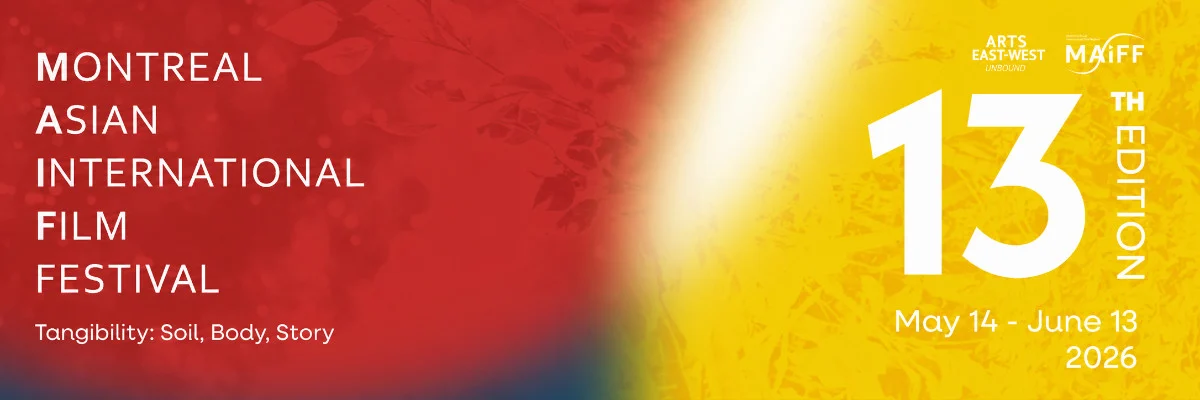
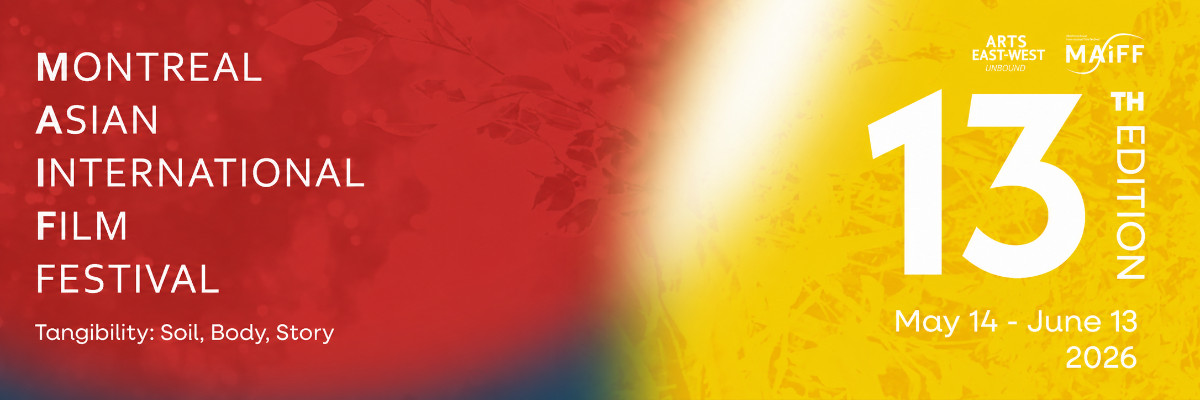
Tiohtià:ke/Montréal, QC – Arts East-West, an organization celebrating its 30th anniversary, proudly presents the 13th edition of the Montreal Asian International Film Festival (MAiFF), a significant cultural event running from its launch in May through June 13, 2026. This landmark edition signifies a pivotal moment in the festival’s history, as it marks the official transformation of the long-standing Korean Film Festival Canada (KFFC) into the broader MAiFF. This strategic rebranding, launched during Asian Heritage Month, aims to create a bold new platform for Asian arthouse cinema and cultural exchange, featuring more than 60 films and events under the compelling 2026–2027 theme, "Tangibility: Soil, Body, Stories."
The festival’s expanded scope reflects Arts East-West’s three-decade commitment to fostering Asian and Asian-Canadian arts and culture. Screenings and events are scheduled across nine prominent venues in Montréal, underscoring its deep integration into the city’s vibrant cultural landscape. These venues include Cinéma du Musée, Cinéma Moderne, Cinéma du Parc, Goethe-Institut Montreal, Ada X, Groupe Intervention Vidéo, Place Ville Marie, Korean Community Association of Montreal, and Providence St-Dominique, ensuring accessibility and diverse settings for audiences. The programming is meticulously curated across three distinct categories: KFFC, AmérAsia, and East Meets West, each designed to explore different facets of Asian cinematic artistry and its global connections.
A Legacy of Cultural Promotion: From KFFC to MAiFF
The transformation of the Korean Film Festival Canada (KFFC) into the Montreal Asian International Film Festival (MAiFF) is not merely a name change but a profound evolution reflecting Arts East-West’s enduring mission and adaptability. For years, KFFC served as a vital conduit for introducing Canadian audiences to the rich and diverse cinematic traditions of Korea, contributing significantly to the Hallyu (Korean Wave) phenomenon in North America. Its dedication to showcasing both established masters and emerging talents from Korea garnered a loyal following and established a strong foundation for Asian cinema appreciation in Montreal.
Arts East-West, as the umbrella organization, has consistently championed cultural diversity and intercultural dialogue since its inception 30 years ago. Its anniversary provides a fitting backdrop for this strategic expansion. The decision to broaden the festival’s mandate to encompass all of Asia, including the diaspora, aligns with a growing global interest in Asian storytelling and the increasing presence of Asian communities in Canada. This evolution positions MAiFF as a more inclusive and comprehensive platform, capable of reflecting the intricate tapestry of Asian cultures and their interconnectedness with global narratives. The timing of the launch during Asian Heritage Month further amplifies its significance, providing a dedicated period to celebrate and explore the contributions of Asian communities through the powerful medium of film.
The chosen theme for 2026–2027, "Tangibility: Soil, Body, Stories," serves as a conceptual anchor for this expanded vision. It invites audiences and filmmakers alike to explore the fundamental elements that shape human experience—the land we inhabit, the physical forms we embody, and the narratives we construct to understand our existence. This theme promises a deeply resonant and contemplative selection of films that delve into identity, belonging, migration, and the impact of history on contemporary life, all through the diverse lenses of Asian filmmakers.
A Comprehensive Cinematic Journey: Programming Categories and Global Reach
MAiFF’s programming architecture is designed to offer a multifaceted exploration of Asian cinema. The three primary categories—KFFC, AmérAsia, and East Meets West—strategically cater to different thematic and geographic focuses:
- KFFC: This category pays homage to the festival’s roots, continuing its tradition of showcasing the best of contemporary and classic Korean cinema. It ensures that the strong legacy built by the Korean Film Festival Canada remains a cornerstone of MAiFF, providing a dedicated space for the nuanced storytelling and distinct aesthetics of Korean filmmaking.
- AmérAsia: This innovative category focuses on the Asian diaspora in North America, particularly in Canada and the United States, as well as films from Asian countries that explore themes relevant to these diasporic experiences. It highlights the unique perspectives of Asian-Canadian and Asian-American filmmakers, bridging cultural divides and fostering a deeper understanding of identity formation within multicultural societies. This section also prominently features films from First Nations communities, establishing vital connections between diverse Indigenous and diasporic narratives.
- East Meets West: This category is dedicated to films that exemplify cross-cultural dialogue and collaboration, featuring productions that transcend geographical boundaries and explore universal themes through a global lens. It includes films from a broad spectrum of countries such as China, Germany, Hong Kong, Iran, Japan, Vietnam, Australia, and the United States, showcasing the intricate ways in which Asian narratives intersect with global cinema.
The impressive roster of participating countries—Canada, China, Germany, Hong Kong, Iran, Japan, Korea, Vietnam, Australia, the United States, and First Nations communities—underscores MAiFF’s commitment to presenting a truly international and inclusive program. This diverse selection ensures that the festival acts as a significant platform for cultural exchange, allowing Montreal audiences to engage with a wide array of cinematic styles, storytelling traditions, and socio-political contexts from across the globe.
Festival Highlights: A Curated Experience
MAiFF 2026 offers a rich tapestry of cinematic experiences, from retrospectives of legendary actors to Canadian premieres and insightful panel discussions.
Online Screenings: Ahn Sung-Ki Retrospective
Running from May 25 to June 13, MAiFF presents a special retrospective dedicated to the venerable Korean actor Ahn Sung-Ki. This unique program, offered free of charge and accessible internationally online, is a collaborative effort with the esteemed Korean Film Archive (KOFA). Ahn Sung-Ki, often referred to as "Korea’s National Actor," boasts a prolific career spanning over six decades, having starred in more than 130 films. His roles have often reflected the tumultuous history and evolving social fabric of South Korea, making him an iconic figure whose work offers a profound window into the nation’s cinematic and cultural identity. The retrospective provides a rare opportunity for global audiences to delve into his extraordinary filmography and appreciate his immense contribution to world cinema.
In-Person Screenings: Premieres and Classics
- Double Bill: Canadian/Quebec Premieres (May 26, 6:30 – 8:30 PM @ Goethe-Institut Montreal): The festival proudly hosts the Canadian and Quebec premieres of two compelling short films. David Quach’s "Dad vs Bees" (2026) promises a unique narrative, while Yan Kuao’s "Jet Lag in Summer" (2025) offers another fresh voice in contemporary cinema. These premieres highlight the festival’s role in introducing new and diverse talent to local audiences.
- New Wave Asian Cinema (May 30, 5:00 PM @ Cinéma du Parc; June 8, 6:00 PM @ Cinéma Moderne): This curatorial programme revisits the transformative period of the late 1980s and 1990s in Asia, examining how sociopolitical upheavals were vividly reflected on screen. The program features seminal works such as Wong Kar-wai’s "Days of Being Wild" (1990), a cornerstone of the Hong Kong New Wave known for its distinctive visual style and melancholic exploration of urban alienation. Also screened is Iwai Shunji’s "Love Letter" (1995), a beloved Japanese film that masterfully blends romance, memory, and grief, showcasing the era’s diverse cinematic expressions. This section offers a valuable historical perspective on the evolution of Asian arthouse cinema and its enduring impact.
Panel Discussion: Interconnecting Dialogues
On June 12, from 1:00 – 2:30 PM at the Goethe-Institut Montreal, MAiFF will host a crucial panel discussion titled "Interconnecting Dialogues: Navigating Montreal’s Cross-Cultural Landscape." Moderated by Guy Rodgers, a respected figure in the arts community, the panel will delve into strategies for bridging generational and sectoral gaps within the arts and for fostering new connections between diverse cultural communities in Montreal. This discussion is particularly pertinent in a multicultural city like Montreal, emphasizing MAiFF’s commitment to facilitating meaningful dialogue beyond the silver screen.
Closing Film: "In the Sea of Strange Thoughts" (2025)
The festival will conclude on June 13 at 6:00 PM at Cinema Moderne with the Canadian Premiere of Choi Jeongdan’s debut feature, "In the Sea of Strange Thoughts" (2025). The director will be in attendance, offering audiences a unique opportunity for direct engagement. This film has already garnered international acclaim, world-premiering at the Busan International Film Festival in 2025 and subsequently winning two awards at the Moscow International Film Festival in April 2026. Its inclusion as a competitor in MAiFF’s prestigious Dancheong Competition further highlights its significance as a promising work by an emerging filmmaker.
The Dancheong Competition: Honoring New Narratives
Central to MAiFF’s mission of nurturing new talent is the "Dancheong Competition," the festival’s official competitive section. "Dancheong" refers to the ancient Korean art of painting wooden temples and palaces with vivid, intricate colors and patterns. Like these sacred patterns adorning historic structures, the competition seeks to honor emerging filmmakers who are painting bold new narratives in contemporary cinema.
Dancheong has served as Arts East-West’s representative mark for three years, and its elevation to the name of MAiFF’s official competition underscores its symbolic importance. In its fourth consecutive year, the Dancheong Competition proudly presents a total of eight awards across both short and feature films: the prestigious Grand Prize of Dancheong and seven "Silk Thread" awards. This unique competition structure distinguishes itself by recognizing exceptional emerging directors whose films have already received critical acclaim, as each of the eight selected films is already a prize recipient from other festivals. The jury’s role is not to decide if a film receives an award, but rather which specific award each deserving film will receive, highlighting the depth of talent within the selection. The eight films selected for this year’s Dancheong Competition were announced at the Opening Ceremony on May 14th, with the much-anticipated winners to be revealed at the Closing Ceremony on June 13th. This competition serves as a critical launchpad for new voices, providing significant recognition and exposure on an international stage.
Official Voices and Broader Implications
The enthusiastic reception for MAiFF’s expanded vision is evident across the cultural landscape. Frédéric Loury, Director & Founder of Art Souterrain, eloquently articulated the festival’s importance: "In Montreal, a city defined by its diversity and vibrancy, initiatives like MAiFF remind us of the importance of connecting cultures, sharing stories, and embracing multiple viewpoints. Contemporary Asian cinema, with its visual power and sensitivity, allows us to explore the complexity of our society while fostering curiosity and openness to the world."
This sentiment resonates deeply with the festival’s organizers. Leadership at Arts East-West has emphasized that the transformation into MAiFF is a direct response to the evolving global cinematic landscape and Montreal’s dynamic multicultural identity. They see the festival as an essential cultural bridge, facilitating understanding and appreciation for the rich diversity of Asian artistic expression. The festival not only showcases cinematic excellence but also fosters critical dialogue, providing a platform for discussions on identity, heritage, and the future of cross-cultural artistic collaboration.
The broader implications of MAiFF’s evolution are significant for Montreal and the wider Canadian cultural scene. By expanding its focus beyond Korean cinema, MAiFF solidifies Montreal’s position as a major international film festival hub, attracting a broader spectrum of filmmakers, industry professionals, and audiences. This fosters economic benefits through tourism and local spending, but more importantly, it enriches the city’s cultural fabric, offering residents and visitors unparalleled access to diverse global perspectives. The inclusion of Asian-Canadian and First Nations narratives within the programming further reinforces the festival’s commitment to representing the complex and multifaceted identities that define contemporary Canada. MAiFF serves as a vital institution for arts education, cultural preservation, and the continuous celebration of human stories from every corner of Asia and its diasporas.
As the 13th edition of the Montreal Asian International Film Festival draws to a close on June 13, 2026, its legacy as a transformed and expansive platform for Asian cinema will be firmly established. With its ambitious programming, commitment to emerging talent through the Dancheong Competition, and a resonant theme that encourages deep reflection, MAiFF stands poised to become an even more influential voice in the global film community, embodying the enduring power of film to connect, inform, and inspire.