The psychological pressures within the New Hyde facility intensify in the latest episode of "The Terror: Devil in Silver," as key characters confront their pasts and the harsh realities of their confinement. This installment delves deeper into the systemic issues plaguing the institution, revealing the profound impact of institutional control and the desperate search for agency in an environment designed to suppress it. The episode highlights the tragic fates of patients like Coffee, whose hopes are ultimately crushed, and the complex, often contradictory, roles played by the staff.
Dorry’s Past Unveiled Amidst Institutional Cruelty
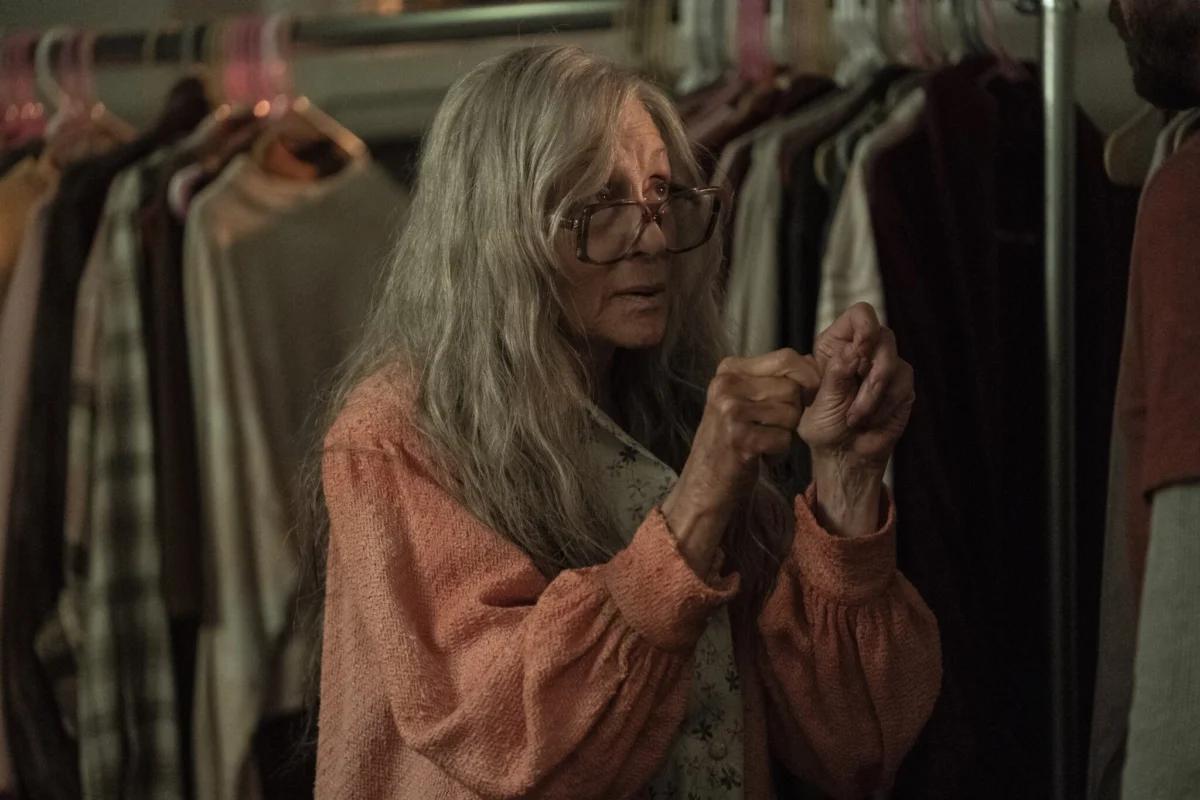
The episode opens with a stark depiction of Dorry’s past, directly addressing the suspicions surrounding her initial commitment to New Hyde decades ago. The narrative strongly suggests that her husband, unable to tolerate her perceived emotional excess, used her sensitivity as a pretext for institutionalization. This revelation serves as a potent microcosm of a broader historical pattern where women exhibiting emotional distress or non-conformity were often marginalized and confined within mental health facilities, frequently at the behest of male relatives seeking control or social expediency. The dialogue, particularly Dorry’s recollection of crying "too much for her husband’s liking," underscores the arbitrary nature of such confinements and the societal attitudes that facilitated them.
Dr. Anand’s perspective, presented through the lens of an overworked administrator, offers a pragmatic, albeit chilling, justification for institutional protocols. His focus on "noncompliance" and the need to minimize "hassles" for a strained budget and understaffed facility, while seemingly administrative, is deeply rooted in a philosophy of enforced obedience. The expectation that patients adhere to "years of regimen," as described by the disquieting Dr. Walter, overlooks the fundamental human need for autonomy and moments of personal solace. The inherent rigidity demanded by such a system, especially without external support, is not only unrealistic but actively detrimental to psychological well-being. This is further exemplified by Miss Chris’s harsh reaction to patients enjoying a home-cooked meal, a reaction that, while ostensibly about maintaining order, mirrors the oppressive control exerted by figures like Dr. Walter, who historically sanctioned invasive procedures like lobotomies. The comparison, though potentially objectionable to Miss Chris, highlights a shared authoritarian impulse within the institution.

The Lifelong Entrapment of New Hyde
Dorry’s understanding of her situation is further deepened by her conversation with Loochie. The analysis of Dorry’s youthful spirit, once attractive to her husband, now possibly a source of his resentment, speaks to the complex dynamics of relationships and the societal pressure on women to conform to specific expectations. The chilling realization that "he doesn’t have to fuck with Loochie" or Dorry because "he doesn’t have to" exposes the power imbalance inherent in their situations. Loochie, a "lifer" with "no meds, no rules," exists in a state of perpetual captivity, her existence defined by the confines of New Hyde rather than any connection to the outside world. This shared lack of external ties between Dorry and Loochie is a profoundly dispiriting observation, emphasizing the extent to which their identities and futures have been subsumed by the institution. Their present reality underscores the bleak prognosis for long-term inmates in such facilities, where the passage of time often equates to further detachment from the world they once knew.
The Dichotomy of Miss Chris’s Role
The stark contrast between Miss Chris’s stated beliefs and her actions creates a profound dissonance. Her pronouncements to her daughter, such as "How can I leave a man like that?" and "They need me," suggest a maternal dedication to the patients. However, her subsequent actions—keeping an elderly man in solitary confinement for decades, physically harming patients, and administering medication—paint a picture of someone deeply enmeshed in and complicit with the institution’s harmful practices. Her stated desire to avoid mundane retirement tasks, like "babysitting and clean[ing] all day," ironically mirrors the infantilizing and custodial role she plays within New Hyde. While she may be correct in predicting that conditions on "Northwest 2" will deteriorate without her, her current role, far from providing genuine aid, perpetuates a cycle of dependency and control. The article posits that her work, while perhaps well-intentioned in her mind, falls short of providing actual therapeutic intervention, serving more as a form of management than healing.
Navigating Corrupt Systems: A Typology of Staff Behavior
The established pattern that the institution, Dr. Walter, and the enigmatic figure behind the "silver door" do not harm those who attempt to leave or seek genuine help provides critical context for Miss Chris’s claim of never having been harmed by these entities. This suggests a selective application of control and a pragmatic approach to maintaining the status quo. The analysis of individuals within corrupt systems identifies three primary categories: those who directly benefit and resist change, those who attempt minor modifications and become disillusioned, and those who make superficial changes to rationalize their involvement. Dr. Anand is placed in the first category, benefiting from the system’s inertia. Scotch Tape, while tough, exhibits moments of empathy, aligning him with the second category, attempting small acts of kindness that may not fundamentally alter his participation. Josephine, new to the system, is predicted to follow a similar path. Miss Chris, however, is categorized as the third, likely attempting to reconcile her role with a perceived sense of making a difference, even if her actions are ultimately limited in scope.
The Nuances of Kindness and Control: Miss Chris and Coffee’s Relationship
The relationship between Miss Chris and Coffee further illustrates the complex dynamics at play. Miss Chris’s typical interactions with Coffee are often characterized by parental admonishment, a dynamic mirrored in her conversations with her own daughter. However, the episode marks a significant shift with Coffee’s emotional breakdown at the payphone, prompting an uncharacteristic display of care from Miss Chris. This act of kindness, however, is notably timed with the impending arrival of Dr. Cleave from the review board, raising questions about its sincerity and potential motivations.

The shared background of Black immigrant diaspora between Miss Chris and Coffee provides a unique point of potential connection, yet this perceived empathy is not reciprocated by Coffee. His statement, "You demand honesty, but you are not honest. None of you are," reveals a deep distrust and a perception of hypocrisy within the staff. The word "demand" is critical, highlighting Coffee’s feeling of being ordered rather than asked, a stark contrast to Miss Chris’s likely perception of her own requests. Her dismissal of his concerns about the "man behind the silver door" as "nonsense," rather than engaging with his experience of physical and psychological pain, exemplifies a systemic failure to truly listen to and validate the patients’ lived realities. This points to a fundamental disconnect: the staff hear the patients, but they do not truly listen.
Distinguishing Kindness from Niceness: A Spectrum of Care
The episode draws a crucial distinction between being "kind" and being "nice." Miss Chris is primarily characterized as "nice"—ensuring patients receive basic necessities and maintain compliance. Josephine, in contrast, embodies "kindness," offering tangible acts of care like homemade food and personal laundry services. Scotch Tape occupies a middle ground, exhibiting both toughness and compassion. While he enforces rules, he also displays empathy towards Loochie and offers Pepper a back adjustment. His attentiveness to the elderly suggests a deeper, perhaps familial, connection, prompting speculation about his personal life and motivations for working in elder care. The author’s humorous interjection about a fictional crossover between Scotch Tape and Dr. Mohan from "The Pitt" highlights a desire for narrative exploration of such compassionate characters within the show’s often bleak landscape.
The Maternal Smothering of New Hyde’s Guardians
A compelling parallel is drawn between Dorry and Miss Chris, both women who have, in their own ways, sacrificed personal happiness for the perceived well-being of the New Hyde patients. Their maternal instincts, while perhaps well-intentioned, manifest as a "smothering love" that prioritizes compliance over genuine agency. They believe they are steering the "New Hyde ship" away from disaster, but their methods, focused on control, are likened to arranging "deck chairs on the Titanic"—a futile effort in the face of systemic collapse. This underscores the tragic irony of their positions: their dedication, framed as protection, ultimately contributes to the very confinement and suppression they ostensibly seek to mitigate.
The Labyrinth of Walter’s Influence and the Shadow of the Silver Door
Following Loochie, Coffee, and Pepper’s diminishing hopes, Dorry offers a perilous escape route, guiding Pepper through a hidden passage to Dr. Walter. Walter, in turn, thrusts Pepper into a manufactured memory, presenting him with a past opportunity to be a better father to Anthony. Walter’s choice, prioritizing immediate personal gratification over genuine assistance, is presented not as malicious intent but as a consequence of a life lived without accountability. His offer of a "frictionless existence" at the cost of humanity is a potent commentary on the allure of artificial ease in an era of advanced technology, echoing concerns about generative AI’s potential to offer placid comfort at the expense of authentic experience. Walter, the article suggests, is a solution in search of a problem, a facilitator of surrender rather than growth. Dorry’s eventual surrender to him, after what was likely an initial struggle upon her arrival at New Hyde, reflects a broader theme: Pepper, who sees himself as a hero fighting evil, may find that true heroism lies not in confrontation, but in confronting the damage he has caused.

Meanwhile, Loochie and Coffee’s desperate attempt to rescue Pepper leads them to Dorry, who guides them into the abandoned hallway. It is here that Coffee realizes their location is beyond the "silver door." Their escape is fraught with peril, shadowed by a monstrous presence. The true horror, however, unfolds when Anand, attempting to leverage the police’s fear of the patients to address the "man behind the silver door," inadvertently triggers a fatal response. The police, conditioned to react with violence to individuals experiencing mental health crises, gun down Coffee as he seeks help. This tragic event serves as a grim, albeit unsurprising, culmination of the episode’s exploration of systemic failures and the devastating consequences of institutional prejudice, particularly within law enforcement’s response to mental health emergencies.
The Unfolding Mystery of New Hyde’s Entities
The episode concludes with a growing rift between Dorry and the patients, particularly Loochie, Coffee, and Pepper, after she admits her connection to "him." Their belief that she refers to the malevolent entity behind the silver door, whom they dub "it," contrasts with her intended meaning of Walter. This ambiguity intensifies the mystery surrounding the three entities Dorry claims are terrorizing Northwest. The patients’ perception of these forces as a singular entity, rather than distinct beings, adds another layer of complexity. The discussion of Walter’s potential role in orchestrating Pepper’s escape from New Hyde, coupled with the literal interpretation of the "devil," leaves the narrative’s ultimate direction uncertain. The article acknowledges the source material’s established plot points but questions whether the show will adhere to them or forge a new path, admitting a lack of clear prediction regarding the series’ conclusion.
Concluding Observations and Future Trajectories
With only two episodes remaining, "The Terror: Devil in Silver" faces the challenge of resolving its intricate narrative threads. The article expresses uncertainty about the show’s overarching message—whether it’s building towards a specific point, reiterating a theme, or lacking a discernible purpose. The concluding thoughts emphasize the need for narrative cohesion and resolution in the remaining installments.
Notable Quotes from the Episode:
- "This is chaos." — A statement often used by staff, but contrasted with the observation: "No ma’am. It’s lumpia!" This highlights the human element and everyday life within the institution, often overlooked by the staff’s focus on order.
- "He can even be your friend if you do what he tells you." — This chilling offer from a staff member underscores the manipulative tactics used to control patients, preying on their isolation and desire for connection.
- "I am done calling for help. I used to think this system was broken and people out there just didn’t know. But now I realize nothing is broken. The system is working perfectly. That’s why they never fix it." — This powerful declaration reflects a profound disillusionment with the institutional framework, suggesting that its perceived flaws are, in fact, its intended function.
- "It hurts the most the first time, but you get used to it." — A stark and tragic observation regarding the dehumanizing processes within New Hyde, indicating a gradual erosion of sensibility and resilience in the face of persistent suffering.