Batto, a 31-year-old artist, archivist, and programmer, delves into the chaotic yet profoundly human reactions that unfolded across the nascent internet during a pivotal cultural event. His film grapples with the inherent challenges of digitally reconstructing a single day, acknowledging the internet’s relentless pace, algorithmic myopia, and the increasing fragility of its historical record. With search engines losing their efficacy due to advertisements, optimization, and the rise of artificial intelligence, Batto’s work serves as a crucial act of preservation, illuminating a period when the digital realm was still characterized by a striking degree of innocence and unselfconscious experimentation.
The Genesis of a Digital Archaeology Project
Marcus Batto’s artistic journey is deeply rooted in the early days of the internet, particularly the formative first decade of YouTube’s existence. He describes himself as a "YouTube ethnographer," having developed an interest in found-footage creations, blurring the lines between film, music videos, and pure art pieces. His fascination began at a young age, coinciding with the viral sensation of "Charlie Bit My Finger" in 2007, and has since matured into a sophisticated practice of digital archaeology.
For years, notably since the COVID-19 pandemic, Batto has been at the helm of the Certain Moments To Remember series (2020–), a collection of compilations that bear witness to subculture, shared experience, and social phenomena through found online footage. A standout entry, RANDOM WEBCAM DANCE @ DA IMAC STORE (2023), stitches together various individuals filming themselves dancing in Apple Stores in 2011, utilizing the then-novel front-facing cameras on Mac products. Set to Johnny Duncan and Jane Fricke’s 1978 rendition of "Stranger," the film creates a layered nostalgia, juxtaposing the techno-utopian vision of Apple with the burgeoning "graveyard of lost media," as a V-necked teen does the robot in front of an iPad 2 advertisement.
Other significant works in this series include Flashmob Compilation (2023) and Maid of the Mist VII (2023), all demonstrating Batto’s keen eye for moments where online and offline experiences intersect to form unique cultural phenomena. This tension between compilation, "found-footage thing," and video art is further explored in his short documentary, Honeycomb (2024). This film, also composed entirely of found footage—from vlogs, television broadcasts, and security cameras—documents the widespread catalytic converter theft phenomenon in the United States between 2020 and 2022. The "honeycomb," the part of the converter containing precious rare metals like platinum, rhodium, and palladium, became a target for "looters" who, in Batto’s provocative framing, could also be seen as "archivists" or "programmers," extracting hidden value from unexpected places. This parallel underscores Batto’s consistent theme: the obsessive pursuit of untapped value, whether it’s rhodium from a car or an overlooked video from the depths of YouTube.
June 25, 2009: A Day of Unprecedented Global Mourning
The selection of June 25, 2009, as the subject for There’ll Likely Be Michael Jackson Vigils Throughout the Night was not driven by Batto’s personal fandom but by its profound and singular cultural impact. As Batto notes, "You always hear people saying, ‘Where were you when Michael Jackson died?’ In my lifetime, there hasn’t really been another death that was so effective, culturally." This sentiment captures the collective shock and grief that rippled across the globe following the unexpected demise of the "King of Pop."
Michael Jackson, a figure of immense global celebrity and artistic innovation, died at his home in Holmby Hills, Los Angeles, at the age of 50. The news broke initially through TMZ, a then-burgeoning entertainment news website, around 2:44 PM PDT, quickly cascading across traditional news outlets and the nascent social media landscape. Reports indicated that Jackson had suffered cardiac arrest, later confirmed to be an acute propofol and benzodiazepine intoxication administered by his personal physician, Dr. Conrad Murray, who was subsequently convicted of involuntary manslaughter.
The immediate aftermath was characterized by an outpouring of grief, remembrance, and disbelief. Major news networks interrupted regular programming, dedicating hours to live coverage. Public spaces, from New York’s Times Square to London’s Piccadilly Circus, became impromptu shrines, with fans gathering to mourn, dance to his music, and share their memories. Record sales surged globally, and his music dominated airwaves and digital platforms for weeks. The internet, still relatively young in its capacity for real-time collective mourning, became a focal point for many. Twitter, launched just three years prior, experienced outages due to the sheer volume of traffic as users shared their reactions. Google, too, initially interpreted the surge in searches for "Michael Jackson" as a DDoS attack, briefly blocking search queries.
Batto’s own memory of the day—"I was at a friend’s house, one of the first times that we had smoked weed… Someone said that Michael Jackson died, and we all huddled around his desktop computer"—highlights how a generation experienced this pivotal moment through the lens of emerging digital technology. For the "cast of thousands" in Batto’s film, the answer to "Where were you?" was often "on the computer."
The Internet in 2009: A Nascent Digital Landscape
The year 2009 stands as a fascinating inflection point in the history of the internet, particularly concerning user-generated content and social media. YouTube, founded in 2005, was still in its relative infancy, transitioning from a platform primarily for short, quirky clips to one increasingly recognized for personal vlogs and citizen journalism. The widespread adoption of front-facing cameras on devices like the iPhone 4 (released in 2010, but the trend was building) and webcams on desktop computers meant that for many, their immediate response to major news was to turn these cameras on themselves.
This period predated the highly curated, algorithmically optimized, and commercially driven internet of today. Social media platforms like Facebook (which reached 250 million users in 2009) and Twitter were growing rapidly but had not yet fully professionalized user interaction. The concept of "influencer" was largely nonexistent, and the pressure to perform for a vast, critical audience was significantly less. This environment fostered a sense of uninhibited experimentation, a "naïveté" that Batto finds deeply attractive. "People didn’t care about how they looked on their webcam, or how they came off, in the same way they do today," he explains. "They were just experimenting with this new technology."
This era saw the rise of nascent genres like the personal vlog, where individuals recorded their impressions for audiences often in the single digits. Batto’s film captures this raw authenticity: an emo teenager offering sarcastic tears, individuals making threats against blogger Perez Hilton (who had controversially suggested Jackson’s death was a publicity stunt), and others reacting to the day’s other celebrity death, that of Farrah Fawcett. One amateur film reviewer quaintly observes, "One of Charlie’s Angels just became an angel herself," in front of a framed poster for Halloween H20: 20 Years Later (1998), a detail that further anchors the footage in a specific cultural moment.
The Film’s Structure and Overwhelming Affect
Batto’s first feature-length film, There’ll Likely Be Michael Jackson Vigils Throughout the Night, embraces a sense of overwhelm as its primary affective quality. The film employs a recurring visual device: a rotating prism, each side composed of a five-by-four grid, displaying twenty different rectangular videos from June 25, 2009, simultaneously. This multi-paneled approach immediately immerses the viewer in the sheer volume and disparate nature of the day’s digital output.
The film’s opening sequence exemplifies this technique, abruptly shifting from a sweeping shot of the Botafumeiro swinging incense at a Spanish cathedral to a few seconds of ultrasound footage, then to what appears to be a group of refugees on a lifeboat. The rapid-fire succession of seemingly unrelated clips, drawn from a global pool of user-generated content, renders any attempt at cataloguing each scene futile for the viewer. This deliberate sensory overload mirrors the chaotic, fragmented experience of trying to comprehend a global event through the unfiltered lens of the early internet.
The process of creating this film was as overwhelming as its viewing experience. Batto amassed "playlists that… have maybe 800 videos." The challenge, much like for Ian Bell’s WTO/99 (2025), a found-footage documentary on the 1999 Seattle anti-globalization protests, lay not just in locating the material but in boiling it down to a coherent, impactful narrative. "I had a work-in-progress screening last June, but I couldn’t stop finding videos even after that. It was becoming an issue," Batto admits, underscoring the boundless nature of the digital archive he sought to tame.
Thematic Depths: Global Connectedness, Lost Innocence, and Digital Archaeology
Batto’s work is profoundly concerned with the global dimension of shared human experience. His gridded arrays of videos are often superimposed on a digital rendering of the rotating earth, emphasizing the worldwide scope of the reactions he captures. He posits that as more and more daily experience is captured on video, the digital archive grows exponentially, yet paradoxically becomes more unstable and harder to preserve.
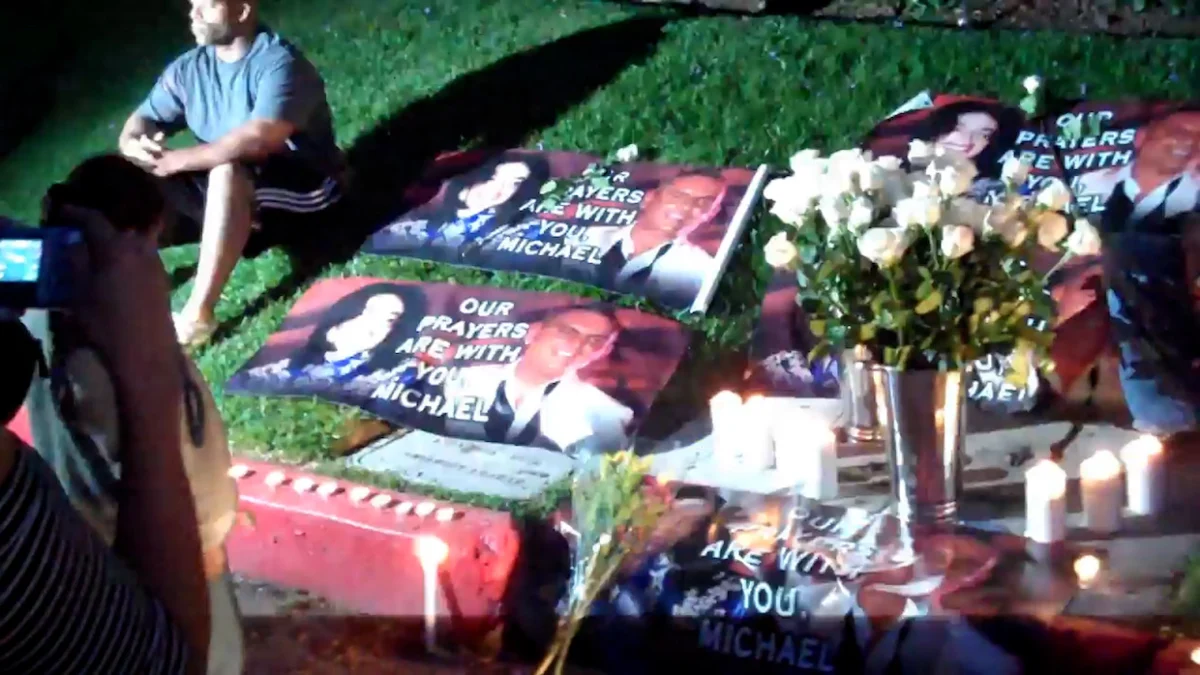
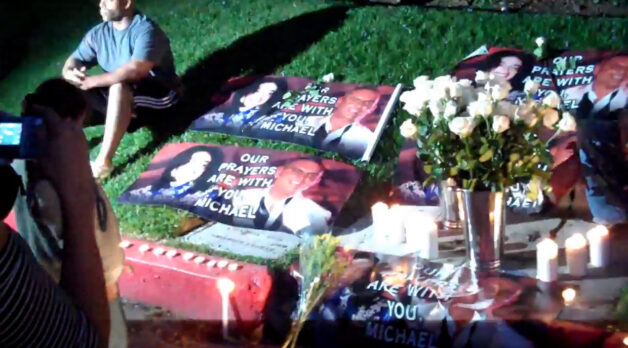
The film serves as a double memorial: not only for Michael Jackson, the King of Pop, but also for a specific moment in internet history. It captures a time when the internet’s cacophony could still coalesce into something resembling a "single chorus," a collective, albeit often unpolished, voice of shared grief and reaction. Batto follows mourners onto the streets of Los Angeles, where they gather around the Walk of Fame star of the British radio DJ Michael Jackson, mistakenly believing it to be the King of Pop’s (whose star was under a red carpet for Sacha Baron Cohen’s Bruno premiere). This detail, a poignant mix-up born of collective emotion, further highlights the chaotic yet genuine nature of public mourning in 2009.
A central theme woven throughout Batto’s work is the concept of "innocence." He is drawn to spectacles of joint online-IRL experience—flash mobs, dance crazes, celebrity deaths—because they reveal a less self-aware, more experimental relationship with new technology. The early YouTube vloggers, unburdened by today’s pressures of monetization, algorithmic visibility, or relentless critique, simply documented their lives and reactions. This contrasts sharply with the contemporary internet, where every post, every video, is often meticulously curated for performance and impact.
Watching the cascade of early YouTube footage in Batto’s film evokes a striking parallel with the historical work of Mitchell and Kenyon, the "Local Films for Local People" made in late 19th-century Britain. These early cinematographers captured the curious faces of children encountering a movie camera for the first time, a profound innocence mirrored in the webcam-captured mourners of Batto’s film. This unexpected kinship compresses over a century of technological and social change, underscoring how fundamentally different the digital landscape of 2009 feels from 2026, let alone 1897.
Implications for Digital Preservation and the Future of Memory
Batto’s work implicitly critiques the "slow obsolescence of search engines—lost first to advertisements, then to optimization, and now to artificial intelligence," which renders our digital past increasingly blurry. His meticulous archival process is a direct response to this threat, a proactive effort to salvage meaningful moments before they are swallowed by the ever-churning maw of the internet.
The film’s premiere, accompanied by a giveaway of refurbished third-generation iPod Touches preloaded with the film and a playlist, alongside a Michael Jackson impersonator (who reportedly found the film "okay" after falling asleep), further emphasizes Batto’s engagement with the artifacts and aesthetics of a bygone digital era. This choice of distribution medium is a deliberate nod to the period the film documents, a tangible link to the technological context of 2009.
When questioned about the feasibility of creating a similar film for a more recent celebrity death, Batto’s response is telling: today’s internet, he argues, no longer creates discernible, unified moments in the same way. "It’s all so fleeting," he observes. "You can’t really hold it anymore." This statement encapsulates a crucial implication of his work: the acceleration of audiovisual history has fragmented shared experience. The collective, synchronous mourning witnessed in 2009, when a significant portion of the world’s diffuse energy momentarily coalesced, is increasingly rare in an era of hyper-personalized algorithms and content silos.
There’ll Likely Be Michael Jackson Vigils Throughout the Night does more than merely document a historical event; it serves as a critical commentary on the nature of digital memory, the evolution of online culture, and the role of the archivist in a hyper-connected, yet paradoxically forgetful, world. Like the catalytic converter thieves he documented in Honeycomb, Batto operates at the "end of a certain product’s life-cycle," whether that product is a physical car part or a fleeting digital moment. His work spans the gaps—between artist and archivist, between 2026 and 2009—mourning a lost innocence while keenly aware of what invaluable parts might still be stripped from the accelerating torrent of digital history. His films are not just compilations; they are urgent acts of cultural preservation, offering profound insights into how we experience, document, and ultimately remember our shared human story in the digital age.