Thanasis Neofotistos’s highly anticipated Greek feature film debut, The Boy With the Light-Blue Eyes, is poised for its world premiere at the esteemed Screen Festival of SXSW London 2026 on Thursday, June 4. This genre-bending cinematic offering, written and directed by Neofotistos, promises a compelling narrative set in an unspecified time, yet rich with evocative visual references to the recent past. Audiences attending the premiere are encouraged to keep an eye out for a subtle, intriguing tribute to a certain group of extinct reptiles, a direct nod to a pivotal inspiration for the filmmaker.
A Deep Dive into the Narrative and Thematic Core
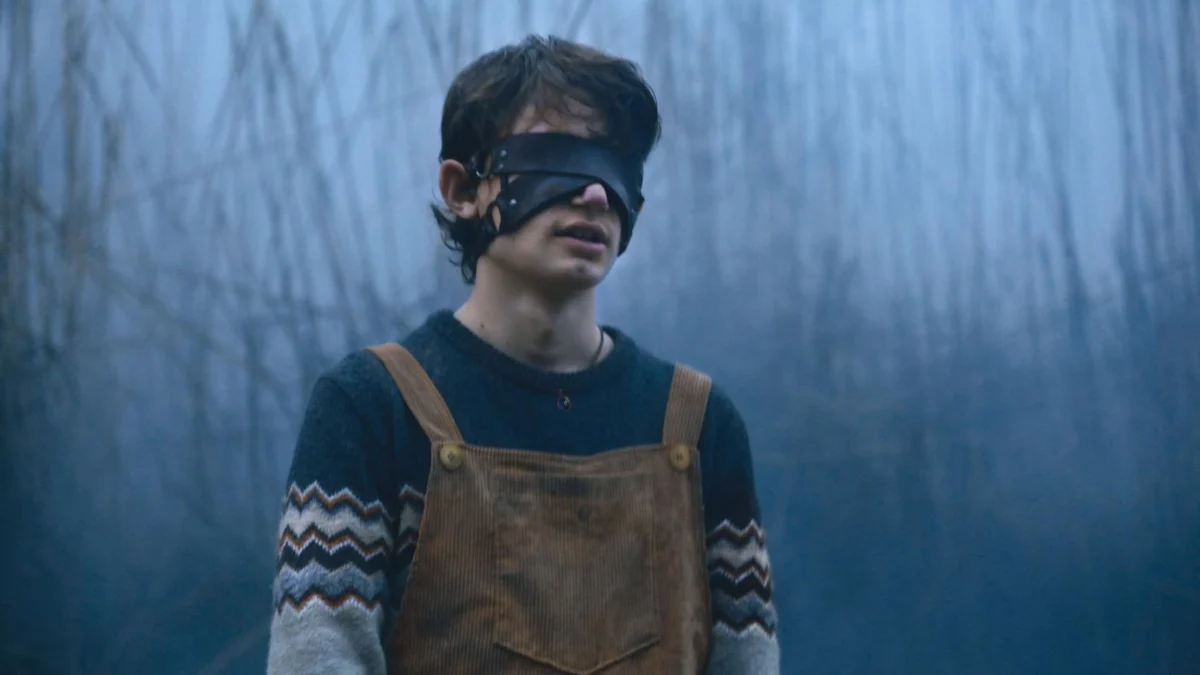
At its heart, The Boy With the Light-Blue Eyes functions as a poignant allegory for exclusion, the profound human desire for love, and the relentless pursuit of freedom. Beyond its broader thematic scope, the film also elegantly unfolds as a queer coming-of-age story, adding layers of contemporary relevance and personal introspection. The narrative centers on Petros, portrayed by Giorgos Karydis, a young boy living in a remote mountain village where ancient fears and deeply entrenched superstitions dictate daily life. Petros is tragically compelled by his stern grandmother and the influential village mayor to conceal his distinctive blue eyes behind a mask. This unique eye color, in their isolated community, is not merely a physical trait but a potent source of terror and ingrained prejudice among the local populace.
The premise immediately establishes a powerful conflict between individual identity and societal conformity, a timeless struggle amplified by the specific cultural and superstitious context of the village. Petros’s blue eyes become a symbol of otherness, a mark that sets him apart and simultaneously renders him an object of fear and ostracization. The mask he is forced to wear is not just a physical barrier but a metaphor for the suppression of his true self, highlighting the psychological toll of enforced concealment. The film’s exploration of these themes resonates deeply in an era grappling with issues of identity, acceptance, and the challenges faced by marginalized communities.
The Creative Minds Behind the Vision
The intricate screenplay of The Boy With the Light-Blue Eyes is a collaborative effort between Thanasis Neofotistos and Grigoris Skarakis, whose combined narrative prowess brings this complex story to life. The film’s visual landscape is crafted by cinematographer Djordje Arambasic, whose lens captures the nuanced beauty and stark realities of the remote village, while Panagiotis Angelopoulos’s editing ensures a compelling pace and narrative flow. The film’s commercial reach is being handled by Gersh, which is managing U.S. sales, signaling its potential for international distribution and recognition.
Thanasis Neofotistos: From Dinosaurs to Deeper Meanings
Ahead of the highly anticipated premiere, Neofotistos offered insights into his formative cinematic experiences and inspirations, revealing a fascinating connection between childhood wonder and mature artistic vision. Speaking with The Hollywood Reporter, Neofotistos recounted, “My biggest role model, my inspiration, is what I call ‘good old-school cinema,’ for example, Jurassic Park by Steven Spielberg.” This revelation might seem unexpected for a film dealing with such intimate and allegorical themes, but Neofotistos elaborates on its profound impact: “That was the first film I ever saw in the cinema, and I got fascinated with dinosaurs because of it. I felt that dinosaurs really existed in real life when I was less than 10 years old. This was my main inspiration to be a filmmaker.”
This early exposure to Spielberg’s masterpiece instilled in Neofotistos not just a love for cinema, but a deep appreciation for its immersive power. The sense of wonder, the belief in the impossible made tangible, became a cornerstone of his artistic ambition. He was particularly struck by the craftsmanship behind the 1993 blockbuster, emphasizing its reliance on practical effects over digital wizardry. “He used animatronics, he used materials that they handmade, handcrafted,” the Greek creative gushed. “It was not VFX, or AI now. It felt so real. The story felt so unique, and I got into this universe. That’s why I wanted to be a storyteller.” This admiration for tangible, artisanal filmmaking directly informs his approach to The Boy With the Light-Blue Eyes.
The Philosophy of Handcrafted Cinema
Neofotistos’s commitment to a handcrafted aesthetic is a defining characteristic of his debut feature. In an age increasingly dominated by sophisticated visual effects and artificial intelligence in filmmaking, his deliberate choice to minimize digital manipulation stands out. “I really love to create universes,” he told THR. “So, my goal here was to create something unique and very handcrafted. We didn’t use any AI. We used minimal VFX. Everything was made in the shooting [process].” This approach not only harks back to the "old-school cinema" he reveres but also imbues The Boy With the Light-Blue Eyes with a distinct texture and authenticity. It suggests a belief that tactile, in-camera effects can evoke a more profound and visceral emotional response, grounding the film’s allegorical elements in a believable, if fantastical, reality. This artistic decision aligns with a growing movement within independent cinema to prioritize practical artistry and tangible world-building, offering audiences a refreshing alternative to CGI-heavy blockbusters.

Influences from the Pantheon of Greek Cinema
Beyond the global impact of Spielberg, Neofotistos also draws significant inspiration from the rich tradition of Greek cinema, particularly from two of its most celebrated auteurs: Theo Angelopoulos and Yorgos Lanthimos. “His work is also very much inspired by some Greek filmmakers,” he affirmed. He specifically cited “the first film of [Theo] Angelopoulos, The Reconstruction, which was made close to my hometown and gives a great representation of societies.” Angelopoulos, a titan of European art cinema, was renowned for his long takes, melancholic atmosphere, and profound social commentary, often exploring themes of history, memory, and the human condition within the Greek landscape. Neofotistos’s mention of The Reconstruction (1970) suggests an interest in exploring societal dynamics and local realities with a similar depth and observational power, potentially grounding his allegorical tale in a recognizable cultural fabric.
Furthermore, Neofotistos acknowledges the influence of Yorgos Lanthimos, a contemporary Greek filmmaker who has achieved massive international acclaim. “And Yorgos Lanthimos, a case of a Greek filmmaker who became huge — the magical realism that he uses is something that I’m inspired by.” Lanthimos, a leading figure of the "Greek Weird Wave," is known for his darkly comedic, often surreal narratives, deadpan dialogue, and stylized realism that blurs the lines between the mundane and the absurd. His films, like Dogtooth and The Favourite, delve into social constructs, power dynamics, and the eccentricities of human behavior. Neofotistos’s admiration for Lanthimos’s magical realism indicates a willingness to weave fantastical or surreal elements into his narrative, enriching the allegory and perhaps allowing for a more profound, less literal exploration of themes like exclusion and freedom. This blend of Angelopoulos’s societal critique with Lanthimos’s distinctive magical realism positions The Boy With the Light-Blue Eyes as a fascinating synthesis of Greek cinematic heritage.
The SXSW London Platform: A Launchpad for Innovation
The selection of The Boy With the Light-Blue Eyes for a world premiere at SXSW London 2026 is a significant milestone for Neofotistos and Greek cinema alike. SXSW (South by Southwest) is an internationally renowned conglomerate of festivals and conferences that celebrates the convergence of film, music, and interactive media. Its London iteration, while newer, carries the prestige and curatorial vision of its Austin counterpart, providing a vital platform for emerging talent and groundbreaking independent films. A world premiere at such an event confers immediate visibility and credibility, positioning the film for critical attention and potential acquisition by distributors.
SXSW London is particularly known for its diverse programming, embracing films that push boundaries, explore challenging themes, and offer fresh perspectives. For a "genre-bending" film described as a "cinematic allegory for exclusion" and a "queer coming-of-age story," SXSW London provides an ideal environment for its debut. The festival attracts a global audience of industry professionals, critics, and cinephiles, ensuring that The Boy With the Light-Blue Eyes will be seen by influential figures who can propel its journey beyond the festival circuit. The event’s reputation for fostering innovation and artistic courage aligns perfectly with Neofotistos’s ambitious and handcrafted approach to filmmaking.
The Enduring Echo of Dinosaurs
Bringing the circle of inspiration back to its origin, Neofotistos playfully confirmed that his childhood fascination with Jurassic Park finds a tangible, albeit subtle, presence within his debut feature. “There are some dinosaurs in Petros’s room, because of my inspiration from Jurassic Park,” he revealed. This small detail serves as a charming Easter egg for eagle-eyed viewers, a personal signature from the director that connects his foundational cinematic experience to the very fabric of his first feature film. It underscores the idea that even the most profound allegories can be rooted in personal history and seemingly disparate influences, demonstrating how a filmmaker’s journey is often a mosaic of diverse inspirations converging into a singular artistic vision.
Implications for Contemporary Cinema and Greek Film
The Boy With the Light-Blue Eyes arrives at a moment when global cinema is increasingly embracing diverse narratives and challenging traditional genre classifications. Its blend of allegory, social commentary, and a queer coming-of-age arc speaks to a desire for films that reflect complex human experiences. For Greek cinema, which has garnered significant international attention in recent decades through the "Weird Wave" movement and the successes of directors like Lanthimos, Neofotistos’s film represents another exciting chapter. It suggests a continued evolution, where new voices draw from both local traditions and global influences to craft unique stories.
The film’s exploration of exclusion and the struggle for identity, particularly through the lens of a "queer coming-of-age story," is particularly timely. In many societies, discussions around LGBTQ+ rights and acceptance are ongoing, making Petros’s journey of hiding his true self a powerful metaphor for countless individuals facing similar pressures. The remote village setting, where superstition reigns, can be seen as a microcosm of larger societal structures that impose conformity and fear difference.
The anticipation surrounding The Boy With the Light-Blue Eyes is palpable, not just for its unique narrative and thematic depth, but also for its commitment to a handcrafted, authentic filmmaking process. As it prepares to unveil itself to the world at SXSW London 2026, the film stands as a testament to the power of personal inspiration, the enduring legacy of cinematic masters, and the courage of new voices to tell stories that resonate with universal truths. It invites audiences to look beyond the surface, to explore the allegories hidden within, and to celebrate the freedom that comes with embracing one’s true self.