Prismatic Ground: A Beacon for Avant-Garde Cinema
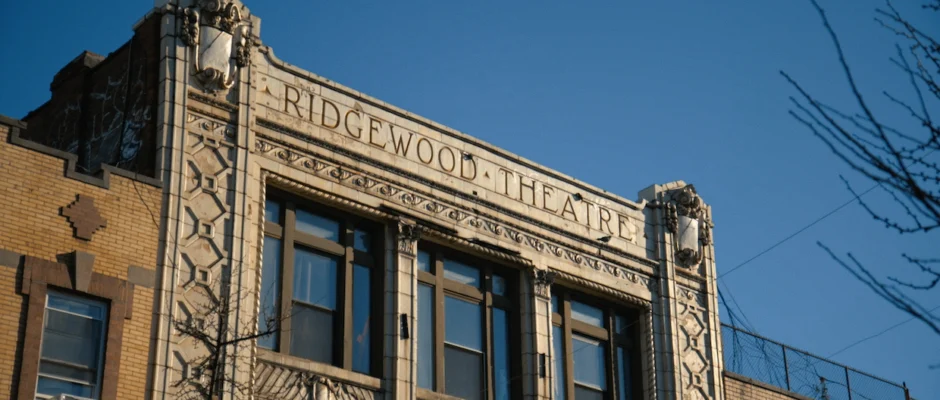
Now in its sixth year, the Prismatic Ground festival has solidified its reputation as a vital institution within New York City’s vibrant independent film scene. Held annually, its commitment to showcasing experimental, boundary-pushing cinema from around the world distinguishes it from more mainstream film festivals. The 2026 edition, spanning five intensive days from April 29 to May 3, featured a meticulously curated selection of films across four distinct waves, inviting audiences to delve into complex themes and innovative cinematic forms. This unique approach is particularly significant at a time when traditional cinematic structures are continually being re-evaluated, and the democratizing power of digital media presents both unprecedented opportunities and new challenges for artists and viewers alike. The festival’s focus on "global voices" is not merely a geographic descriptor but a philosophical stance, seeking to decenter conventional narratives and bring to the fore perspectives often marginalized in commercial circuits. By doing so, Prismatic Ground contributes significantly to a more inclusive and diverse understanding of what cinema can be, reinforcing the medium’s capacity for critical engagement and profound emotional resonance. Its consistent growth since its inception underscores a burgeoning appetite for films that dare to question, innovate, and challenge established norms, making it an essential annual event for cinephiles, scholars, and practitioners of experimental media.
Unveiling New Visions: Feature Debuts at Prismatic Ground
The 2026 festival prominently featured several notable feature debuts, signaling the arrival of fresh talent and innovative perspectives on the global stage. These films, while diverse in their origins and thematic concerns, shared a common thread of artistic ambition and a willingness to push narrative and stylistic boundaries.
Wong Ka Ki’s I Heard That They Are Not Going to See Each Other Anymore
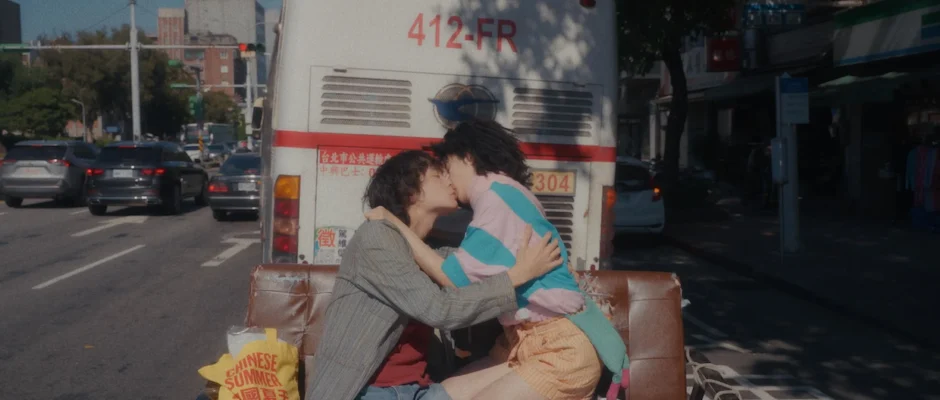
Opening the festival with a buoyant, almost insouciant flourish, Hong Kong filmmaker Wong Ka Ki’s I Heard That They Are Not Going to See Each Other Anymore captivated audiences with its metatextual whimsy and unique narrative structure. Building upon the experimental foundations laid in her acclaimed shorts, such as A Shrimp’s Daily Rehearsal (which also screened at this year’s festival), Wong’s feature debut delves into the intricate travails of two parallel relationships. One storyline follows a filmmaker named Tao, whose tumultuous relationship with her boyfriend, Shin, is either meticulously documented or artfully recreated through an abundance of footage, blurring the lines between reality and cinematic construction. The other narrative thread introduces Mehli, a Turkish vendor whose perpetual melancholy draws him to a kindred spirit named Ping.
Wong’s distinctive methodology, heavily reliant on improvisation during production, imbues the film with a slippery, unpredictable nature, oscillating between iterative patterns and wayward digressions. At its most potent, the film masterfully blends generic signatures of neorealism, silent comedy, and the essay film, crafting an unapologetically distinct meditation on how the moving image transfigures intimacy and pain. The film’s formal daring challenges viewers to reconsider the boundaries of storytelling and the inherent biases in cinematic representation. However, some critical observations noted that flashes of poignant reflexivity were occasionally overshadowed by digressions that felt more like affectations than organic developments of the central themes. For instance, the cosmopolitan backdrop of Taipei was granted a somewhat rudimentary corollary with Mehli’s exilic identity, an area where deeper exploration could have enhanced the film’s resonance. Despite these observations, the overriding impression left by I Heard That They Are Not Going to See Each Other Anymore is one of a filmmaker possessing immense confidence in her creative process, yielding significant promise for her future endeavors in the ever-evolving landscape of Hong Kong independent cinema.
Isabelle Kalandar’s Another Birth
Another significant feature debut showcased at Prismatic Ground was Isabelle Kalandar’s Another Birth. While described as more conventional in its selections compared to some of the festival’s more radical offerings, this does not diminish the profound thematic ambitions of Kalandar’s work. Set against the stark, evocative landscapes of a small village in Tajikistan, the film centers on Parastu (portrayed by Shukrona Navruzbekova), a young girl convinced that her grandfather’s failing health is a direct result of a broken heart, stemming from the prolonged absence of his son. Parastu embarks on a poignant quest to save her grandfather, a journey that gradually shifts its focus toward locating the elusive father who also caused immense heartbreak for her own mother, a role compellingly played by Kalandar herself.
Another Birth is rich with cultural and literary references, freely interspersing verses from the renowned Persian poet Forough Farrokhzad—a figure celebrated for her defiant and feminist voice in Iranian literature—alongside the mythic figure of Pari, a benevolent fairy or spirit in Persian folklore. This deliberate artistic choice privileges a decidedly feminist historiography, presenting a world where girls and women navigate and contend with the profound emotional violence inflicted by absent men. What elevates Kalandar’s work beyond mere miserablism is her exceptionally keen eye for earthy poeticism, strategically situating her characters within the rugged beauty of the land, using it to articulate her own strain of "terrestrial verses." As the second installment in a planned trilogy, Another Birth meticulously navigates a complex skein of tragedy, culminating in a tantalizingly ambiguous denouement. This conclusion sees its magical realist gambit through to quietly moving ends, leaving audiences to ponder the enduring resilience of women and the cyclical nature of family narratives in Central Asian cultures. The film’s inclusion at Prismatic Ground highlights the festival’s commitment to diverse geographic narratives and storytelling traditions.
Recontextualizing History: Rediscovered Works and Digital Explorations
A beguiling quality of Prismatic Ground’s repertory slate is its ability to present rediscovered films that function simultaneously as time capsules and as prescient gestures towards alternative futures. These selections not only offer a glimpse into past cinematic practices but also resonate powerfully with contemporary issues, demonstrating the enduring relevance of overlooked artistic voices.

Parine Jaddo’s Trilogy: Thirst, Surviving, and Astray
A standout example was the trilogy of shorts by Iraqi-Lebanese-American filmmaker Parine Jaddo, produced during a pivotal historical period: between the aftermath of the First Gulf War (1990-1991) and the months leading up to the second (2003). These films are steeped in their historical context, weaving counter-hegemonic narratives concerning women and the intricate construction of their images, both within and beyond the often-reductive lens of an Orientalist gaze. Jaddo’s work offers a crucial commentary on representation and identity for women from the Middle East in Western media.
- Thirst (1995): The first in the trilogy, Thirst, observes a woman engrossed in reading Mohammed Mrabet’s short story "The Big Mirror." Jaddo masterfully contrasts the illicit sensationalism inherent in Mrabet’s tale with quotidian glimpses of life in post-war Lebanon. This juxtaposition not only highlights the resilience of everyday existence amidst turmoil but also critiques the sensationalist narratives often imposed upon the region.
- Surviving (1998): This film marks a significant geographical shift to the United States, informing the remainder of the trilogy. Surviving deepens its inquiry into questions of subjectivity as a young woman undertakes a pseudo-documentary project about her cousin and the American men who have fetishized her. This powerful exploration of the "Orientalist gaze" dissects how cultural stereotypes and exoticization impact individual identity and relationships, particularly for women of Middle Eastern descent living in the West.
- Astray (produced in 2002, screened for the first time at Prismatic Ground): The final film in the trilogy narrows its focus to claustrophobic ends, as a woman grapples with profound questions of belonging in the wake of the September 11 attacks. This film captures the heightened scrutiny, prejudice, and identity crises faced by Arab and Muslim communities in the post-9/11 landscape. It is in the closing passages of Astray that Jaddo poignantly summarizes her unwavering position as an artist and an individual: "I may get lost in this world, but I refuse to lose myself there." This statement serves as a powerful declaration of resistance against erasure and a testament to the enduring quest for selfhood amidst external pressures and misrepresentation. The rediscovery and screening of Jaddo’s trilogy at Prismatic Ground underscore the festival’s commitment to historical reclamation and its role in enriching contemporary discourse on geopolitics, identity, and feminist cinema.
Kevin B. Lee’s Afterlives
Picking up the thread of Orientalist othering and media representation found in Parine Jaddo’s work, Kevin B. Lee’s Afterlives embarks on its own incisive exploration of how violence circulates across digital media. Lee, known for his signature desktop documentary format—a style where the film unfolds entirely on a computer screen, utilizing windows, web browsers, and various media files—deftly navigates complex ethical and philosophical terrain. In Afterlives, he hopscotches across various interviews with scholars, archivists, and cultural experts, all responding to the deliberate destruction of cultural artifacts wrought by ISIS. This destructive campaign, exemplified by the demolition of ancient sites like Palmyra, raised global alarms about cultural heritage and the weaponization of history.
Lee’s film refuses to settle for a simplistic binary between reconstruction and annihilation. Instead, his interests expand more broadly to interrogate the insidious cycles of sectarian violence and, more profoundly, to question whether a cycle of exploitation—both of images and of people—can ever truly be broken. The film is striking in its sophisticated employment of multiple onscreen images, all contending with the psychic and sociopolitical weight of violent media in constant circulation in our digital age. For instance, behind one specialist reviewing ISIS execution videos, a poster featuring the recognizable visage of filmmaker Werner Herzog is subtly visible. Lee indeed channels a Herzogian clinicism in his approach—a detached, observational rigor—without ever sacrificing his own deeply personal positionality as a consumer and interpreter of these brutal images. The resulting film is a formally dexterous and resolutely humane riposte to the atomization of our species, a phenomenon increasingly exacerbated by our own digitized creations and the relentless flow of potentially desensitizing content. Afterlives stands as a powerful testament to the capacity of experimental cinema to engage with pressing global issues through innovative aesthetic strategies.
The Fury and Conviction of Contemporary Avant-Garde
If the mournful yet quietly hopeful fervor of Kevin B. Lee’s Afterlives offers a glimmer of redemption for digital media, Isiah Medina’s Gangsterism barrels headfirst into that existential angst with a furious elasticity unmatched by anything else at this year’s Prismatic Ground. Medina, a Canadian-Filipino filmmaker, is known for his highly conceptual and formally challenging work.
Isiah Medina’s Gangsterism
This audacious film about filmmaking itself consists of fragmented conversations between a Canadian-Filipino filmmaker, Mark Bacolcol, and his crew, delving into intricate discussions on economics, colonialism, and the very nature of criticism within the cinematic landscape. Medina’s recognizable, mathematically-inflected array of rapid cuts is both exhilarating and exasperating in equal measure, serving as a visceral representation of the immensity of cinema’s possibilities while simultaneously gesturing towards the overwhelming dearth of information that frequently inundates our synaptic processes in the digital age. The film’s relentless pace and dense intellectual content demand active engagement, reflecting the complexities of the topics it addresses.
Comparisons to iconic experimental works are entirely appropriate here, notably Jean-Luc Godard’s La Chinoise (1967), a film that similarly explored political ideology and youthful intellectual ferment through fragmented, didactic dialogue and experimental aesthetics, and the structuralist films of Hollis Frampton. Medina, however, navigates a fine line, running the risk of stitching his citations together like the patchwork of a familiar quilt. What ultimately salvages Gangsterism—or what makes it such an oddly vivifying watch—is its fierce, unwavering conviction in the relevance of the medium in this fraught, turbulent moment. The film is neither romantic nor despairing; instead, it offers a trial by fire, a cinematic crucible for ideas and forms. This trial is literalized in its provocative final moments, which cheekily conclude on a title card reading "Intermission." This pause, Medina seems to suggest, is sorely needed for us to take stock of how redeeming our vocation—our art, our critical thought—is inextricably inseparable from salvaging the best qualities of a dying empire. This "dying empire" can be interpreted in various ways: the decline of traditional cinematic structures, the waning influence of Western cultural hegemony, or perhaps even the crumbling frameworks of global capitalism, all of which Medina’s film critiques with urgent intellectual fervor. Gangsterism serves as a powerful call to action, urging a re-evaluation of cinema’s role in confronting contemporary crises.
Broader Implications and the Future of Experimental Cinema
The 2026 Prismatic Ground festival once again underscored its critical role in shaping the discourse around experimental and avant-garde cinema. By consistently championing diverse global voices and innovative formal approaches, the festival acts as a vital counterpoint to commercial film industries, fostering a space where artistic integrity and intellectual curiosity take precedence. The programming, meticulously crafted by Inney Prakash, demonstrates that the "moving image" continues to be a potent medium for exploring complex social, political, and personal narratives.
The festival’s impact extends beyond the screenings themselves. It contributes to a broader understanding of film history by rediscovering and recontextualizing works like Parine Jaddo’s trilogy, ensuring that important voices from the past continue to inform contemporary conversations. Furthermore, by platforming artists like Kevin B. Lee and Isiah Medina, Prismatic Ground highlights the ongoing evolution of cinematic language in the digital age, demonstrating how new technologies and formats can be harnessed for profound artistic and critical expression. The implications for independent filmmaking are significant: festivals like Prismatic Ground provide crucial visibility and validation for works that challenge conventions, thereby inspiring a new generation of filmmakers to explore uncharted artistic territories. In an increasingly homogenized media landscape, the festival’s commitment to the surprising, generative, and ultimately grounding nature of experimental cinema remains an indispensable force for artistic innovation and cultural dialogue.