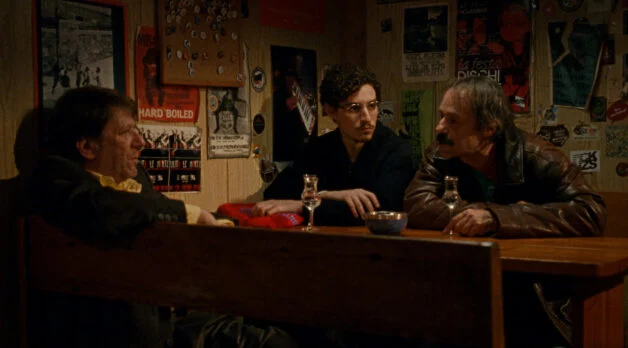
The 79th Cannes Film Festival, a global epicenter for cinematic innovation and industry networking, continues its demanding schedule, drawing thousands of filmmakers, critics, and programmers to the French Riviera. Amidst the intense marathon of screenings and professional engagements, a representative from the Asia Society, a global organization dedicated to fostering understanding between Asia and the world, has been diligently scouting for compelling narratives to enrich its New York museum’s film programming. The festival’s mid-point highlights include the highly anticipated premiere of Ryusuke Hamaguchi’s All of a Sudden and a significant restoration of Ken Russell’s controversial 1971 film, The Devils, both offering profound explorations of institutional care, human connection, and societal structures.
The Strategic Importance of Cannes for Cultural Institutions
The Cannes Film Festival, established in 1946, stands as one of the "Big Three" international film festivals, alongside Venice and Berlin. It serves not only as a prestigious platform for artistic recognition—culminating in the Palme d’Or—but also as the host of the Marché du Film, one of the largest film markets worldwide. For institutions like the Asia Society, attending Cannes is a strategic imperative. The Society, which operates a 258-seat theater at its museum building on New York’s Upper East Side, actively seeks out new releases and repertory films that align with its mission of cultural exchange and global understanding. This involves navigating a rigorous schedule of screenings, press conferences, and industry meetings, underscoring the festival’s dual nature as both an artistic showcase and a demanding professional environment. The selections made at Cannes often dictate the programming slate for major cultural centers and arthouse cinemas for the coming year, influencing public discourse and cinematic tastes.
Ryusuke Hamaguchi’s ‘All of a Sudden’: A Deep Dive into Human Connection and Care
Among the most eagerly awaited premieres was Ryusuke Hamaguchi’s latest feature, All of a Sudden. Hamaguchi, an acclaimed Japanese director whose previous works like Drive My Car (2021, Oscar winner for Best International Feature Film) and Wheel of Fortune and Fantasy (2021, Silver Bear at Berlin) have garnered international critical acclaim for their nuanced character studies and intricate narratives, continues his exploration of human relationships and societal intricacies.
All of a Sudden is a French-Japanese co-production, reflecting a growing trend of international collaboration in contemporary cinema. The film centers on the evolving, intimate friendship between Marie-Louise (portrayed by French actress Virginie Efira), the director of a senior care facility in the Parisian suburbs, and Mari (played by Japanese theater director Tao Okamoto), a visiting Japanese theater director. Efira, known for her roles in films like Sibyl (2019) and Benedetta (2021), brings a compelling intensity to Marie-Louise, while Okamoto’s presence offers a striking counterpoint.
The narrative intricately weaves together two distinct yet thematically resonant professional spheres. Marie-Louise is depicted as a dedicated workaholic, striving to implement a new care protocol known as Humanitude within her for-profit facility. Humanitude is a real-life, widely recognized methodology developed by French gerontologists Yves Gineste and Rosette Marescotti. It emphasizes a philosophy of "verticality, gaze, speech, and touch" to restore dignity and improve the quality of life for elderly patients, particularly those with dementia. The program trains caregivers to provide greater individual attention, fostering communication and empathy in institutional settings.
Concurrently, Mari is engaged in staging an experimental theatrical production that delves into the revolutionary work of Franco Basaglia. Basaglia (1924–1980) was a pivotal Italian psychiatrist and neurologist who spearheaded the anti-psychiatry movement in Italy. His radical reforms culminated in the dismantling of traditional psychiatric asylums, or "manicomio," and the passage of Law 180 in 1978, which effectively abolished mental hospitals and mandated community-based mental health care. Basaglia’s work challenged the very notion of institutionalization and advocated for the human rights of individuals with mental illness, profoundly influencing mental health policy worldwide.
Thematic Resonance and Critical Reception
The film’s nearly three-and-a-half-hour runtime is carried by the extraordinary chemistry between Efira and Okamoto, and a profoundly earnest dialogue that spans their personal histories, the philosophy of chance, and the pervasive effects of capitalism on their respective professions and the broader world. The characters, almost sharing a name (Marie-Louise and Mari), function not merely as friends but as intellectual foils, representing different scales of engagement with the concept of "care"—one operating within a large institution, the other through the more intimate and experimental lens of theater. Their eventual collaboration in the film becomes a powerful testament to the advancement of their shared ideals, suggesting that systemic change and individual transformation are interconnected.

Early critical responses from Cannes have lauded Hamaguchi’s intricate screenplay and the powerful performances, particularly highlighting the film’s "life-affirming" qualities despite its engagement with complex philosophical and societal issues. The film’s exploration of Basaglia’s legacy is particularly timely, prompting renewed interest in the ethics of institutional care and mental health systems. The thematic link between Marie-Louise’s struggle to humanize a for-profit care facility and Basaglia’s historical battle against the asylum system resonates deeply. As historian John Foot articulates in his biography, The Man Who Closed the Asylums: Franco Basaglia and the Revolution in Mental Health Care, the inherent contradiction of managing an institution while simultaneously seeking to deny its problematic aspects is a central challenge. Marie-Louise’s quest to "create possibility from impossibility" within the capitalist framework of healthcare mirrors Basaglia’s own radical actions within the existing psychiatric system. This layered exploration positions All of a Sudden as a significant contribution to contemporary cinematic discourse on human dignity, systemic reform, and the power of empathetic connection.
‘The Devils’ Restoration: A Glimpse into Ken Russell’s Provocative Vision
Beyond the contemporary premieres, the Cannes festival often features meticulously restored classics, offering new generations the opportunity to experience cinematic milestones as their creators intended. This year, a notable event was the screening of Ken Russell’s newly restored and extended original cut of The Devils (1971). This British historical drama, renowned for its audacious visual style and controversial subject matter, was famously censored upon its initial release in both Britain and the USA due to its explicit depictions of violence, sexuality, and religious hysteria.
The Devils is based on Aldous Huxley’s 1952 non-fiction book The Devils of Loudun, which chronicles a true incident from 17th-century France. The film depicts the alleged demonic possession of a convent of Ursuline nuns in Loudun, orchestrated by the corrupt ecclesiastical and political powers of the time to discredit and execute Urbain Grandier, a charismatic and libertine priest. Oliver Reed delivers a virile and intense performance as Grandier, while Vanessa Redgrave’s portrayal of the tormented and sexually repressed Mother Superior, Sister Jeanne, is equally compelling and often described as one of her most visceral roles.
The restoration, spearheaded by Warner Bros.’s new Clockwork label, is particularly significant as it re-inserts six minutes of footage deemed too obscene for public viewing in 1971. British film critic Mark Kermode, a long-time advocate for Russell’s work and The Devils in particular, introduced the screening, recounting his discovery of the missing footage two decades prior during the making of a documentary on the film. Kermode affirmed Russell’s lifelong desire to see the complete version realized, a wish now fulfilled posthumously.
Ken Russell (1927–2011) was known for his bombastic, often controversial, and visually extravagant films, which frequently challenged conventional cinematic norms. His work, including Women in Love (1969), Tommy (1975), and Altered States (1980), demonstrated that historical dramas could be thrillingly alive and far from "stuffy affairs." The Devils, with its gruesome and shocking spectacle, stands as a powerful indictment of institutional hypocrisy, particularly within the Catholic Church, and the dangers of religious fanaticism and political opportunism. Its themes of power, corruption, sexual repression, and mass hysteria remain strikingly relevant, making its 2026 reintroduction to new audiences a timely cultural event. The film’s unflinching examination of institutional contradictions resonates with the themes found in All of a Sudden, albeit through a vastly different historical and aesthetic lens.
Cultural Diplomacy and Future Film Prospects
Amidst the intense schedule of screenings, Cannes also offers moments of cultural respite and discovery. The Palestine Pavilion, one of the many national and institutional tents located in the Village International section of the Marché du Film, provided such an interlude. The Village International gathers international film institutions, promoting their national cinemas and fostering global collaborations. A Tuesday evening performance by Sol Band at the Palestine Pavilion offered a "joyous musical interlude," underscoring the role of the festival in facilitating cultural exchange beyond the confines of film screenings. Such events provide invaluable opportunities for networking and experiencing the diverse global cultures present at Cannes.
The Asia Society’s representative also noted several other films that warrant significant attention and could potentially grace the screens of its New York theater. These include:
- 9 Temples to Heaven: The moving feature debut by Sompot Chidgasornpongse, who has a long-standing collaboration with acclaimed Thai director Apichatpong Weerasethakul as his assistant director. This film is anticipated to carry some of Weerasethakul’s contemplative and dreamlike qualities while establishing Chidgasornpongse’s unique voice.
- The Samurai and the Prisoner: A new "eye-popping samurai epic" from the legendary Japanese director Kiyoshi Kurosawa. Known for his contributions to Japanese horror (Pulse, Cure) and more recently for historical dramas (Wife of a Spy), Kurosawa’s latest promises a visually stunning and narratively gripping addition to the samurai genre.
- Hope: An "outrageous monster movie" by South Korean director Na Hong-jin. Na is celebrated for his intense thrillers and horror films, such as The Chaser and The Wailing, and his foray into the monster genre is expected to be both terrifying and thought-provoking.
- Clarissa: A "clever and sumptuous" adaptation of Virginia Woolf’s seminal novel Mrs. Dalloway, directed by the sibling duo Arie and Chuko Esiri. The Esiri brothers, known for their work like Eyimofe (This Is My Desire), bring a fresh perspective to this classic modernist text, promising a sophisticated and engaging cinematic interpretation.
These selections reflect the diverse cinematic landscape showcased at Cannes, spanning different genres, regions, and directorial styles, all while offering profound insights into the human condition and global societies. The work of film programmers at such festivals is crucial in curating the cultural experiences available to audiences worldwide, extending the impact of these cinematic works far beyond the French Riviera. The Asia Society’s commitment to bringing such films to New York underscores the vital role of cultural institutions in fostering global understanding through the powerful medium of cinema.