Takashi Koyama’s "All Greens," adapted from Do Namiki’s novel "Banji Kaicho: All Greens," emerges as a significant cinematic work, boldly confronting the often-unspoken realities of youth disillusionment in Japan through the controversial lens of illegal marijuana cultivation. The film notably deviates from the conventional narrative arcs typically found in Japanese coming-of-age dramas, offering a stark, yet humorously infused, portrayal of teenage escapism from grim socio-economic realities. Its willingness to engage with Japan’s infamously stringent policies on cannabis production and use positions it as a rare and provocative commentary within the nation’s film landscape.
The Context of Disillusionment: Youth in Contemporary Japan
The narrative of "All Greens" is deeply rooted in the broader socio-economic pressures and psychological challenges confronting young people in modern Japan, particularly those residing in smaller towns. While Japan often projects an image of prosperity and social order, beneath the surface, many rural communities grapple with economic stagnation, limited opportunities, and an exodus of younger generations to larger cities. This environment often fosters a sense of entrapment and hopelessness among those who remain.
Youth in these areas frequently face immense pressure to conform to societal expectations, whether it’s academic success, securing stable employment, or adhering to traditional family roles. The rigid social structures can stifle individual ambition and expression, leading to a pervasive sense of boredom and frustration. Mental health issues, though increasingly acknowledged, still carry a significant stigma, making it difficult for young individuals to seek help or openly discuss their struggles. Reports from organizations like the Japan Youth Research Institute frequently highlight concerns over youth engagement, perceived lack of future prospects, and mental well-being, painting a picture of a demographic often quietly struggling despite outward appearances of stability. It is within this intricate web of societal expectations and personal anxieties that the characters of "All Greens" find themselves, their "miserable lives" a direct reflection of these larger systemic issues.
Japan’s Unyielding Stance on Cannabis: A Legal Landscape
Central to the film’s audacious premise is Japan’s exceptionally strict and long-standing prohibition on cannabis. The Cannabis Control Law (大麻取締法), enacted in 1948 during the post-World War II Allied Occupation, has remained largely unchanged and rigorously enforced for decades. Unlike many Western nations that have seen a gradual liberalization of cannabis laws for medicinal or recreational use, Japan maintains a zero-tolerance policy. Possession, cultivation, or transfer of cannabis, even in minute quantities, can result in severe penalties, including lengthy prison sentences and substantial fines. For instance, cultivation with intent to profit can lead to sentences of up to ten years imprisonment and fines exceeding ¥3 million (approximately $20,000 USD).
Public perception of cannabis in Japan is overwhelmingly negative, shaped by decades of government-led anti-drug campaigns that frequently link cannabis use to more dangerous illicit substances and societal decay. This deeply ingrained cultural stigma contributes to the extremely low rates of reported cannabis use compared to Western countries, making any public discussion or artistic representation that deviates from the official narrative particularly daring. "All Greens" directly challenges this societal taboo, not only by featuring cannabis as a central plot device but by portraying its cultivation by ostensibly ordinary, albeit troubled, high school students. This thematic choice immediately elevates the film beyond a simple coming-of-age story, transforming it into a commentary on legal rigidity and the desperate measures individuals might take when faced with seemingly insurmountable obstacles.
The Genesis of Rebellion: Hidemi, Milk, and Mako’s Stories
The narrative backbone of "All Greens" is built upon the raw, emotionally resonant portrayals of its three protagonists: Hidemi, Milk, and Mako. Their collective journey from youthful ennui to audacious criminality is fueled by deeply personal struggles that resonate with broader societal anxieties.
Hidemi, the group’s de facto leader, embodies the spirit of defiance born from a dysfunctional household. Her home life, riddled with unseen conflicts and emotional neglect, pushes her towards a desperate search for agency and control. This simmering rebellion intensifies dramatically after a harrowing encounter with a predatory music artist named Nosferatu, who attempts to exploit her vulnerability. This incident not only highlights the dangers young women face in pursuit of their dreams but also solidifies Hidemi’s resolve to carve out her own path, irrespective of societal norms or legal boundaries. Her passion for music, channeled into amateur rap performances under the alias "Neuromancer," serves as both an escape and a powerful form of self-expression, a direct confrontation with the silence and suppression she experiences elsewhere.
Milk’s story is equally poignant, marked by the challenges of living with a mentally unstable mother and processing a traumatic accident at school. Her home environment, characterized by unpredictability and emotional strain, forces her into a premature role of responsibility and caregiving. The school accident, while not explicitly detailed, leaves her grappling with psychological scars, further isolating her and fueling a desire for a different reality. Milk’s love for athleticism provides a physical outlet for her emotional turmoil, while her deep appreciation for cinema offers a window into alternative worlds, a stark contrast to her own difficult circumstances.
Mako, on the other hand, faces the pressure of traditional familial expectations. Hailing from a farming family, she is continually pushed to abandon her personal ambitions—specifically, her dream of becoming a professional manga artist—in favor of marriage and eventually taking over the family farm. This intergenerational conflict, common in many traditional Japanese households, pits individual aspiration against collective duty. Mako’s artistic endeavors, her detailed manga drawings, are not just a hobby but a defiant assertion of her identity and a silent rebellion against a predetermined future.
Despite their individual struggles, the trio’s bond is depicted with genuine warmth and unwavering support. Their friendship acts as a crucial anchor, allowing them to navigate their challenges and find collective strength. It is this profound connection that emboldens them to take the extraordinary risk of establishing an illegal marijuana business, driven not by malice, but by a desperate yearning for financial independence and a means to escape their respective, suffocating realities. The film meticulously illustrates how their shared vulnerabilities and mutual encouragement transform youthful boredom into a shared, high-stakes enterprise, embodying a fearless determination to defy the odds, even when flirting with severe danger.
From Boredom to Business: The Greenhouse Operation
The pivotal turn in "All Greens" occurs when Hidemi acquires a batch of hemp seeds, an event that transforms their collective ennui into a tangible, albeit illegal, entrepreneurial venture. The trio, driven by a shared desperation for financial freedom and an escape from their stagnant lives, formulates an audacious plan: to cultivate marijuana within their school’s unused greenhouse. This premise, inherently unconventional and darkly humorous, immediately sets the film apart.
The movie meticulously details the practicalities of their illicit operation, presenting the cultivation and preservation of cannabis for sale in a strikingly matter-of-fact manner. This almost documentary-style approach to the mechanics of drug production, juxtaposed with the youthful innocence of the protagonists, creates a compelling and often comedic tension. Viewers are taken through the steps of planting, nurturing, harvesting, and preparing the product, stripping away any romanticism and instead focusing on the mundane, albeit illegal, labor involved. This unusual narrative choice not only educates the audience on the process but also highlights the girls’ dedication and resourcefulness in pursuit of their goal.
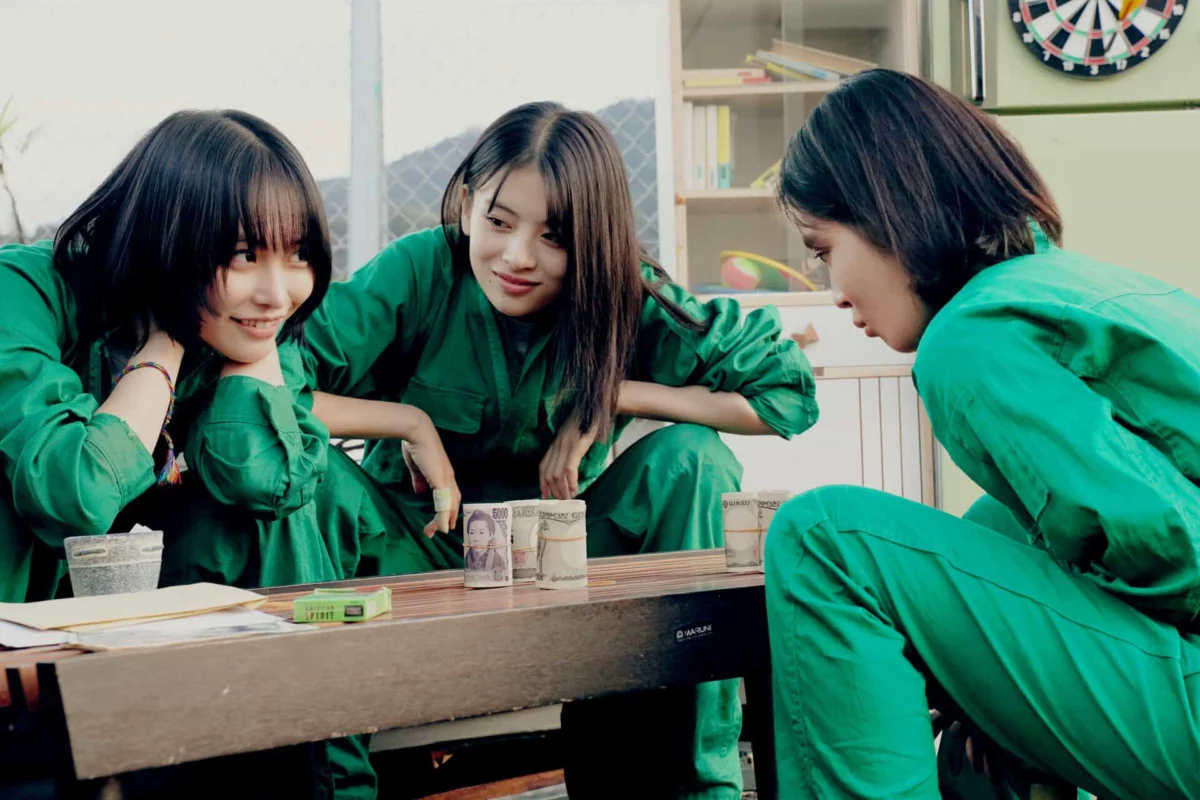
Their venture is further characterized by the charmingly ironic choice of their group’s name, "All Greens," which not only evokes the color most associated with cannabis but also directly references the green outfits they frequently wear, symbolizing their collective identity and rebellious spirit. The film also injects moments of pure absurdity into the expansion of their operation, particularly in how they recruit additional members. These recruitment drives are often accidental and humorous, such as stumbling upon a gay couple secretly using the greenhouse as a private meeting spot, who are subsequently drawn into the enterprise. Another instance involves Mako casually recruiting a fellow manga enthusiast, demonstrating how their underground network expands through unexpected connections and shared interests, adding layers of community and camaraderie to their high-stakes undertaking. This blend of meticulous detail, dark humor, and unexpected human connections defines the unique tone of "All Greens.’
Artistic Vision: Blending Raw Drama with Absurdist Comedy
Takashi Koyama’s direction in "All Greens" is a masterclass in tonal balance, seamlessly weaving together the raw emotional intensity of a gritty drama with moments of pure absurdity and dry, dark comedy. This stylistic choice is crucial in preventing the film from becoming overly bleak or preachy, instead offering a nuanced exploration of its complex themes. The intentionally quirky direction and zany sense of humor serve as a filter through which the harsh realities of the characters’ lives are presented, making their struggles more palatable and their rebellious acts more understandable, even endearing.
The visual storytelling, spearheaded by Ryo Saito’s excellent cinematography, plays a significant role in achieving this balance. Saito demonstrates a remarkable ability to transition between intimate, close-up shots that capture the raw vulnerability of the characters and expansive widescreen compositions that effectively showcase the varied environments of their small town—from the suffocating confines of their homes to the clandestine operations within the school greenhouse. This visual dynamism enhances the film’s kinetic energy and underscores the narrative’s emotional beats, allowing both the quiet moments of despair and the frenetic energy of their illicit activities to resonate equally.
Complementing the cinematography is the stylized editing, which is not merely functional but actively enhances the film’s tone. The editing often accentuates the comedic timing in key moments, allowing the absurdity to land with maximum impact. It also contributes to the overall kinetic pace, reflecting the turbulent inner lives of the protagonists and the high-stakes nature of their enterprise. The soundscape, featuring hip-hop-influenced music by Zo Zhit (of Dos Monos), further enriches the film’s atmosphere. This contemporary score aligns perfectly with Hidemi’s passion for rap and provides a pulsating, urban edge that contrasts with the rural setting, symbolizing the characters’ desire to break free from their confined world and carve out a modern identity. The technical prowess displayed in "All Greens" is not just for aesthetic appeal; it is integral to conveying the film’s unique blend of heartfelt drama and audacious humor, solidifying its place as a visually and aurally compelling cinematic experience.
Compelling Performances and Razor-Sharp Chemistry
The success of "All Greens" hinges significantly on the extraordinary performances of its lead actresses, Sara Minami, Natsuki Deguchi, and Mizuki Yoshida, who portray Hidemi, Milk, and Mako, respectively. Their collective chemistry is nothing short of razor-sharp, grounding the film’s ambitious premise in authentic human connection and emotional depth. Each actress delivers a nuanced performance, portraying the multifaceted struggles and aspirations of their characters with compelling conviction.
Sara Minami as Hidemi perfectly captures the character’s blend of defiance and underlying vulnerability. Her portrayal of a young woman burdened by a dysfunctional home life and traumatized by a predatory encounter, yet channeling her frustrations into rap as "Neuromancer," is both fierce and poignant. Minami’s ability to convey strength alongside moments of raw emotional fragility makes Hidemi a deeply relatable and compelling leader.
Natsuki Deguchi brings a quiet intensity to Milk, whose life is complicated by a mentally unstable mother and the lingering effects of a school accident. Deguchi masterfully communicates Milk’s inner turmoil and her yearning for stability, often through subtle expressions and body language. Her performance highlights the silent resilience of a character forced to mature prematurely, finding solace in athleticism and the escapism of cinema.
Mizuki Yoshida’s Mako is a spirited portrayal of an artist constrained by familial expectations. Yoshida skillfully navigates Mako’s internal conflict between her dream of becoming a manga artist and the pressure to conform to traditional roles. Her comedic timing, particularly in the scenes involving the recruitment of fellow manga enthusiasts, adds a delightful lightness to the film, while her underlying determination underscores the universal struggle for self-actualization.
Beyond the central trio, the supporting cast also shines, adding texture and depth to the narrative. Jinsei Hamura, Kodai Kurosaki, and Daichi Kaneko, among others, are given ample room to develop their characters, contributing to the film’s rich ensemble. A particular standout is Yuko Ando as Milk’s mother. Despite limited screen time, Ando leaves a lasting impression, portraying a character grappling with mental illness while maintaining a loving, albeit complex, bond with her daughter. Her performance is a sensitive depiction of mental health challenges within a family context, avoiding caricature and instead offering a glimpse into the enduring power of maternal love amidst adversity. The collective strength of the cast elevates "All Greens" from a mere genre piece to a powerful character study, making the audience deeply invested in the fates of its unconventional protagonists.
Implications and Broader Dialogue: Challenging the Status Quo
"All Greens" is more than just an entertaining film; it is a significant cultural artifact that holds the potential to spark broader dialogue within Japan and beyond. By directly addressing the strictness of Japan’s Cannabis Control Law and portraying young people who subvert it, the film implicitly challenges the entrenched societal norms and legal frameworks surrounding illicit substances. It raises questions about the efficacy and justice of such severe prohibitions, especially when juxtaposed with the desperation of individuals seeking a means of survival or escape.
The film’s exploration of youthful rebellion against grim realities serves as a poignant social commentary. It highlights the often-overlooked struggles of young people in contemporary Japan, particularly those in rural areas, who may feel marginalized, unheard, and without viable paths to a fulfilling future. By presenting these characters not as inherently malicious criminals but as vulnerable individuals driven by circumstance and a desire for agency, "All Greens" encourages empathy and a critical re-evaluation of societal pressures that can lead to such extreme measures.
Furthermore, "All Greens" represents a refreshing departure within the landscape of Japanese cinema, particularly the coming-of-age genre. While many films in this category tend to focus on themes of academic struggle, romance, or finding one’s place within established social structures, Koyama’s work bravely ventures into darker, more controversial territory. This boldness distinguishes it and potentially paves the way for other filmmakers to tackle sensitive subjects with greater artistic freedom and nuance. Its appearance at international film festivals, such as the Nippon Connection Film Festival (as suggested by the trailer’s mention of 2026), indicates its potential to resonate with global audiences, fostering cross-cultural discussions about youth, legality, and social justice.
While there have been no official statements from Japanese authorities regarding the film, its mere existence, coupled with potential critical acclaim, could subtly contribute to a broader public discourse. Inferred reactions from cultural critics suggest the film is likely to be praised for its originality and courage in tackling a taboo subject, while some conservative elements might view it with caution due to its controversial premise. Regardless, "All Greens" serves as a powerful artistic statement, demonstrating how cinema can not only entertain but also provoke thought, challenge perceptions, and shed light on uncomfortable truths, thereby contributing to a more nuanced understanding of contemporary Japanese society.
Conclusion: A Timely and Provocative Narrative
"All Greens" stands as a compelling and audacious entry into contemporary Japanese cinema. Takashi Koyama’s skillful direction, coupled with powerful performances and a unique blend of gritty drama and absurdist comedy, creates a narrative that is both deeply moving and surprisingly funny. The film’s willingness to confront the harsh realities faced by disillusioned youth and to directly engage with Japan’s stringent cannabis laws marks it as a significant departure from typical coming-of-age stories.
By offering a nuanced portrayal of Hidemi, Milk, and Mako’s struggles and their desperate, albeit illegal, quest for agency, "All Greens" compels viewers to look beyond surface appearances and consider the complex socio-economic and psychological factors that drive such youthful rebellion. It is a timely and provocative narrative that not only entertains but also stimulates critical thought, challenging societal norms and fostering a broader dialogue about justice, opportunity, and the definition of freedom in modern Japan. Its distinctive artistic vision and fearless thematic exploration firmly establish "All Greens" as a memorable and important contribution to the global cinematic landscape.