The arrival of the first-ever television adaptation of William Golding’s seminal 1954 novel, Lord of the Flies, marks a significant milestone in the history of literary transpositions to the small screen. Developed by the multi-award-winning screenwriter Jack Thorne and directed by the visually distinctive Marc Munden, this four-part miniseries represents a collaborative international effort between the BBC, the Australian streaming service Stan, and Sony Pictures Television. After a successful initial rollout in the United Kingdom via BBC iPlayer in February 2026, the series found a global audience when Netflix acquired the United States distribution rights, leading to a high-profile premiere on May 4, 2026. The production has since garnered widespread acclaim for its uncompromising narrative tone, technical precision, and the raw performances delivered by its ensemble of emerging young actors.
The Genesis of the First Television Adaptation
William Golding’s Lord of the Flies has long been a staple of global educational curricula and a cornerstone of 20th-century allegorical literature. Despite its enduring popularity and two previous feature film adaptations—Peter Brook’s stark black-and-white 1963 version and Harry Hook’s 1990 Americanized iteration—the novel had never been adapted for the episodic format of television until this 2026 release. The decision to expand the narrative into a four-episode miniseries allowed the creative team to delve deeper into the psychological disintegration of the characters than a standard two-hour film would permit.
The project was spearheaded by Jack Thorne, a writer renowned for his ability to capture the complexities of adolescence and social decay in works such as Skins, The Virtues, and the stage play Harry Potter and the Cursed Child. Thorne’s approach to the material was reportedly rooted in a desire to remain faithful to Golding’s grim philosophical inquiry into the inherent nature of evil, while updating the sociopolitical subtext to resonate with a modern audience. Under the executive leadership of Joel Wilson for BBC One, the production sought to move away from the "adventure" tropes often associated with desert island narratives, focusing instead on the harrowing descent into tribalism and violence.
Creative Direction and Visual Language
Director Marc Munden, whose previous work on The Sympathizer and Utopia established him as a master of high-contrast, atmospheric storytelling, brought a distinct aesthetic to the series. Working alongside cinematographer Ben Fordesman, Munden utilized the island setting not as a tropical paradise, but as a claustrophobic, sensory-overloaded pressure cooker. The direction emphasized the transition from the orderly, disciplined world of the schoolboys to the chaotic, primal environment they eventually inhabit.
The production’s commitment to realism was reflected in its cinematography, which shifted from the bright, saturated hues of the boys’ arrival to a darker, more muted palette as the social order collapsed. This visual evolution mirrored the script’s progression, capturing the loss of innocence with a visceral intensity that critics have described as both beautiful and deeply unsettling. The use of natural light and immersive sound design contributed to a sense of "heightened reality," grounding the allegorical elements of Golding’s prose in a tangible, frightening physical space.
A Timeline of Development and Distribution
The journey of Lord of the Flies from announcement to international acclaim followed a strategic rollout designed to maximize its impact across different markets.
- Early 2024: The BBC officially announces the project, confirming Jack Thorne as the lead writer and Eleven (the production company behind Sex Education) as the primary producer.
- Mid-2025: Principal photography concludes on location, utilizing remote coastal areas to simulate the isolation of the uninhabited island.
- February 2026: The series premieres in the United Kingdom on BBC One and BBC iPlayer. It receives immediate critical praise for its pacing and its refusal to soften the novel’s more controversial elements.
- March 2026: Sony Pictures Television, acting as the international distributor, enters negotiations for North American rights.
- April 2026: Netflix confirms the acquisition of the series for the U.S. market, positioning it as a flagship "prestige" offering for the spring season.
- May 4, 2026: Lord of the Flies debuts on Netflix in the United States, sparking a renewed cultural conversation regarding the relevance of Golding’s themes in the digital age.
Performance and Casting: The New Generation
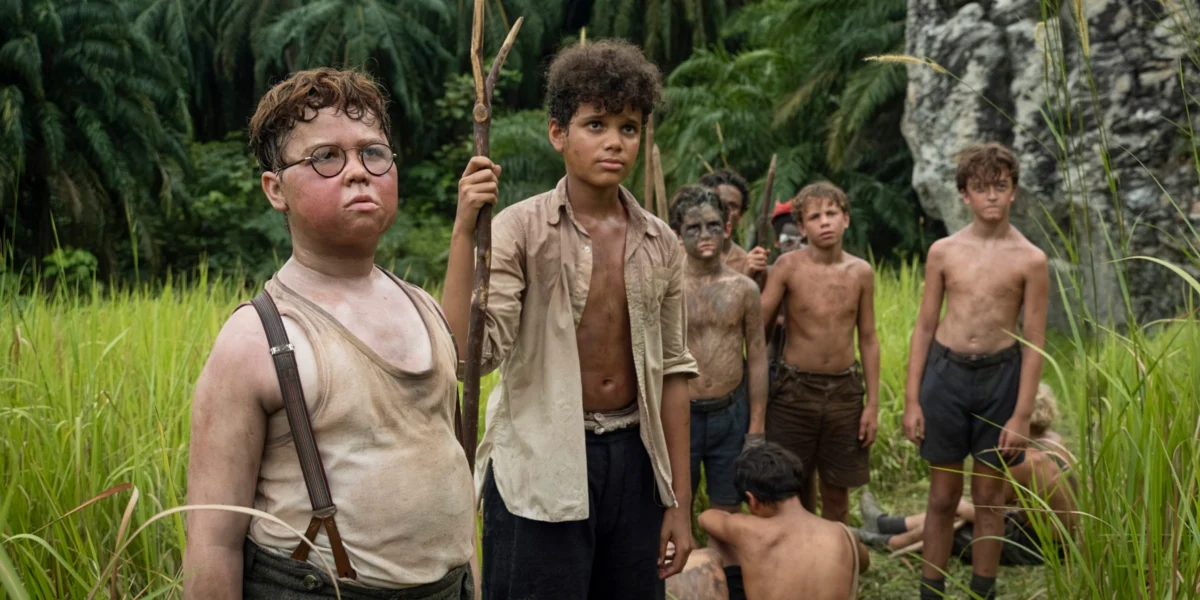
Central to the success of the 2026 adaptation is the performance of its young cast. Casting directors for the series reportedly auditioned thousands of young actors to find the specific combination of vulnerability and burgeoning aggression required for the roles of Ralph, Piggy, Jack, and Simon.
Winston Sawyers, who portrays Ralph, has been lauded for his nuanced depiction of a boy struggling to maintain the vestiges of democracy under impossible circumstances. Lox Pratt’s portrayal of Jack provides a chilling counterpoint, tracing the character’s evolution from a frustrated choir leader to a charismatic, terrifying warlord. David McKenna’s performance as Piggy has been cited as a standout, bringing a profound sense of pathos and intellectual frustration to the role, while Ike Talbut’s Simon offers a haunting, spiritual presence that serves as the moral heart of the story.

In recent interviews, the cast and crew discussed the challenges of filming in demanding outdoor environments. Thorne and Munden emphasized the importance of fostering a supportive environment for the young actors, given the intense psychological nature of the scenes they were required to perform. The chemistry between the leads allowed for a believable escalation of tension, ensuring that the eventual fracture of their society felt earned and inevitable.
Industry Implications and Streaming Strategy
The acquisition of Lord of the Flies by Netflix highlights a continuing trend in the streaming industry: the purchase of high-quality, pre-produced international content to bolster domestic libraries. By partnering with Sony Pictures Television, Netflix secured a "ready-made" critical hit that fits within the current appetite for dark, character-driven dramas. This strategy allows streaming platforms to bypass the lengthy development cycles of original productions while still offering "event" television to their subscribers.
Furthermore, the involvement of Stan, the Australian streaming service, as a co-producer illustrates the increasingly globalized nature of television financing. Such partnerships allow for higher production values, enabling creators like Thorne and Munden to execute a vision that matches the scale of a feature film within the structure of a limited series.
Critical Analysis and Thematic Relevance
Critics have noted that the 2026 adaptation of Lord of the Flies arrives at a time of significant global anxiety, making its themes of societal collapse and the fragility of democratic norms particularly poignant. By "fully embracing humanity’s darkness," as suggested by early reviews, the series avoids the trap of being a mere period piece. Instead, it serves as a stark reflection on how quickly human behavior can revert to tribalism when the guardrails of civilization are removed.
Thorne’s writing does not shy away from the cruelty inherent in Golding’s work, but it also adds layers of psychological complexity. The series explores the concept of the "Beast" not just as an external threat or a manifestation of fear, but as a psychological projection of the boys’ internal shadows. This thematic depth has positioned the series as a strong contender for the upcoming Emmy Awards, particularly in categories such as Outstanding Limited or Anthology Series, Writing, and Directing.
Legacy and Award Prospects
As the television industry moves into the awards season, Lord of the Flies is expected to be a major player. Its status as a "prestige" adaptation of a literary classic, combined with the pedigree of its creative team and the strength of its performances, makes it a formidable candidate for Academy of Television Arts & Sciences recognition. Beyond the awards circuit, the series is likely to become the definitive visual reference for Golding’s work for the next generation of viewers.
The successful transition of this story to television suggests that other complex literary works, previously thought to be the exclusive domain of cinema or the stage, may find a more expansive and effective home in the limited series format. By providing the narrative space required for character development and thematic exploration, Jack Thorne and Marc Munden have demonstrated that Lord of the Flies remains as vital, terrifying, and necessary today as it was when it first saw print seven decades ago.
The series is currently available for streaming on Netflix in the United States and BBC iPlayer in the United Kingdom, where it continues to attract high viewership and spark intense debate among audiences and scholars alike. With its uncompromising look at the darker side of the human condition, this adaptation stands as a testament to the enduring power of Golding’s vision and the creative possibilities of modern television.