Studiocanal has officially unveiled the trailer for Visitation, the latest cinematic endeavor from Academy Award-winning director Volker Schlöndorff. Known in its native Germany as Heimsuchung, the film serves as an expansive chronological tapestry, tracing the life of a single lakeside residence near Berlin over the course of a century. The project, which recently made its world premiere at the 2026 Cannes Film Festival, represents a significant cultural milestone, reuniting one of the most influential figures of the New German Cinema movement with a narrative that examines the turbulent soul of the nation.
The film is an adaptation of the acclaimed 2008 novel by Jenny Erpenbeck, a work celebrated for its poetic and fragmented exploration of the German concept of Heimat—a word signifying home or a sense of belonging. Through the lens of a single property, Schlöndorff navigates the rise of the Third Reich, the horrors of World War II, the subsequent Soviet occupation, the division of East and West Germany, and the eventual reunification. By anchoring the narrative to a fixed physical location, the film offers a unique perspective on how global geopolitical shifts manifest within the intimate confines of domestic life.
Narrative Structure and the Chronology of the House
Visitation functions as a collective biography of twelve distinct individuals whose lives intersect with the property at different points in time. The house, situated on the picturesque shores of a lake in the Brandenburg region, acts as the primary protagonist, remaining relatively unchanged while the human occupants are buffeted by the winds of political change.
The timeline begins in the 1930s, documenting the tragic displacement of a Jewish family who is forced to sell their beloved summer home under the increasing pressure of Nazi racial laws. This period highlights the beginning of the erosion of private sanctuary by state-sponsored ideology. Following their departure, the narrative shifts to an opportunistic architect, a proponent of the Bauhaus movement, who seeks to imprint his modernist vision onto the landscape. His story continues into the post-war era, where he attempts to navigate the rigid architectural requirements of the German Democratic Republic (GDR), hoping to realize the grand construction projects that were denied to him under the previous regime.
As the Cold War takes hold, the house transitions into a refuge for a writer couple returning from exile in the Soviet Union. Their tenure reflects the intellectual and social struggles of the GDR, where the dream of a socialist utopia often clashed with the reality of state surveillance and restricted freedoms. Finally, the film follows the granddaughter of these writers, bringing the story into the contemporary era and examining the lingering psychological scars of the 20th century on the modern German identity.

Production Background and Artistic Direction
Volker Schlöndorff, now in his mid-80s, remains a prolific force in international cinema. His filmography, which includes the 1979 Palme d’Or and Academy Award winner The Tin Drum, has frequently returned to themes of German history and the moral complexities of the human condition. Visitation is viewed by critics as a spiritual successor to his earlier historical dramas, utilizing a more contemplative and visually vibrant aesthetic than some of his grittier works.
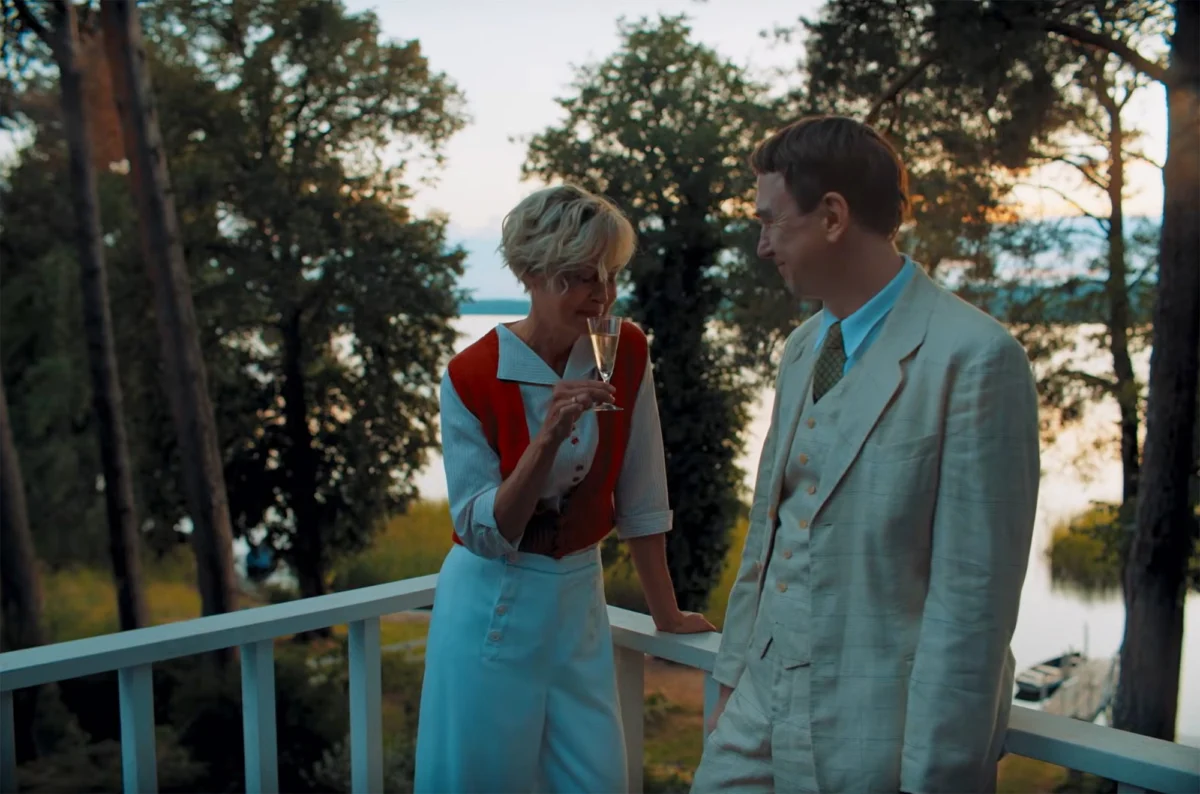
The cinematography in the trailer suggests a deliberate use of light and color to differentiate between the various eras. The lush greens of the Brandenburg forest and the shimmering blues of the lake provide a constant backdrop, emphasizing the indifference of nature to the human tragedies unfolding on its shores. This visual approach contrasts the "small" destinies of the inhabitants with the "large" scale of world history, a central theme of Erpenbeck’s original text.
The production was a collaborative effort between Schlöndorff’s own production company and Regina Ziegler, one of Germany’s most prominent producers. The involvement of Studiocanal ensures a wide international distribution, reflecting the high expectations for the film’s performance on the global festival circuit and in commercial theaters.
Analysis of the Ensemble Cast
The film features a "who’s who" of contemporary German acting talent, many of whom have significant experience in historical dramas.
- Martina Gedeck: Known internationally for her role in the Oscar-winning The Lives of Others, Gedeck brings a nuanced gravity to the production. Her ability to portray internal emotional conflict makes her a natural fit for a narrative centered on the search for peace and belonging.
- Lars Eidinger: A versatile actor known for his work in Babylon Berlin and numerous high-profile European films, Eidinger’s presence adds a layer of modern intensity to the ensemble.
- Ulrich Matthes: Often recognized for his portrayal of Joseph Goebbels in Downfall, Matthes is a veteran of German stage and screen, providing a link to the classical traditions of German performance.
- Susanne Wolff and Detlev Buck: These actors round out a cast that represents different generations of German talent, mirroring the multi-generational scope of the film itself.
The chemistry between these performers is essential for a film that relies on brief but impactful glimpses into the lives of its characters. Because the narrative is episodic, the actors must quickly establish the emotional stakes of their respective eras, a challenge that the trailer suggests has been met with significant success.
Comparative Context in Modern Cinema
Industry analysts have noted the thematic similarities between Visitation and Robert Zemeckis’s 2024 film Here, which also utilizes a single location to track the passage of time. However, while Zemeckis’s film utilized a fixed camera angle and extensive digital de-aging technology to maintain a singular perspective, Schlöndorff’s approach appears more traditionally cinematic and expansive.

Visitation is less about the technical gimmick of a fixed frame and more about the historical weight of the soil. It belongs to a tradition of European "heritage cinema" that seeks to understand the present by meticulously reconstructing the past. By focusing on a lakeside house rather than an urban center like Berlin, the film also touches upon the rural German experience, which is often overshadowed by the metropolitan narratives of the World Wars and the Cold War.
Critical Reception and Official Responses
Following its premiere at the 2026 Cannes Film Festival, Visitation received praise for its ambitious scope and its refusal to simplify the complexities of German history. While it screened "Out of Competition," the buzz surrounding the film suggests it will be a major contender for the German Film Awards (Lolas) and potentially a candidate for international awards consideration.
Initial reactions from critics highlight the film’s "bright and vibrant" cinematography, which some have called a refreshing departure from the somber, muted tones often associated with German historical dramas. The film has been described as a "visual poem about the persistence of place," with many noting that Schlöndorff has lost none of his ability to weave personal narratives into the broader fabric of national identity.
Studiocanal representatives have expressed confidence in the film’s universal appeal. "While the story is deeply rooted in the German experience, the themes of home, loss, and the search for belonging are universal," a spokesperson for the distributor stated during the Cannes press junket. "Volker Schlöndorff has created a masterpiece that speaks to anyone who has ever wondered about the history of the walls that surround them."
Broader Impact and Implications
The release of Visitation comes at a time when German society continues to grapple with its past and its role in a changing Europe. The concept of "Vergangenheitsbewältigung" (coming to terms with the past) remains a central pillar of German culture, and films like Visitation play a crucial role in this ongoing dialogue.
By dramatizing the transition from the Nazi era to the Soviet era and finally to the capitalist present, the film prompts audiences to consider how much of the past remains embedded in the present. The "12 destinies" depicted in the film are not just historical figures; they are archetypes of the various paths taken by the German people over the last century—resistance, collaboration, survival, and adaptation.

Furthermore, the film’s focus on the Bauhaus architect and the Soviet-era writers highlights the role of art and intellect in shaping (and being shaped by) political regimes. It serves as a reminder of how the creative impulse can be co-opted by the state, yet also how it can serve as a form of quiet resistance or a means of preserving one’s humanity in inhuman times.
Release Schedule
Visitation (Heimsuchung) is scheduled for a wide theatrical release in Germany on October 15, 2026. Following its domestic debut, the film is expected to roll out in various international markets, including the United Kingdom, France, and North America, later in the fourth quarter of 2026.
The October release date positions the film ideally for the autumn awards season, where it is expected to be a significant player in the foreign-language categories. As audiences return to theaters for substantial, thought-provoking dramas, Visitation stands as a testament to the enduring power of historical storytelling and the vision of one of cinema’s living legends.