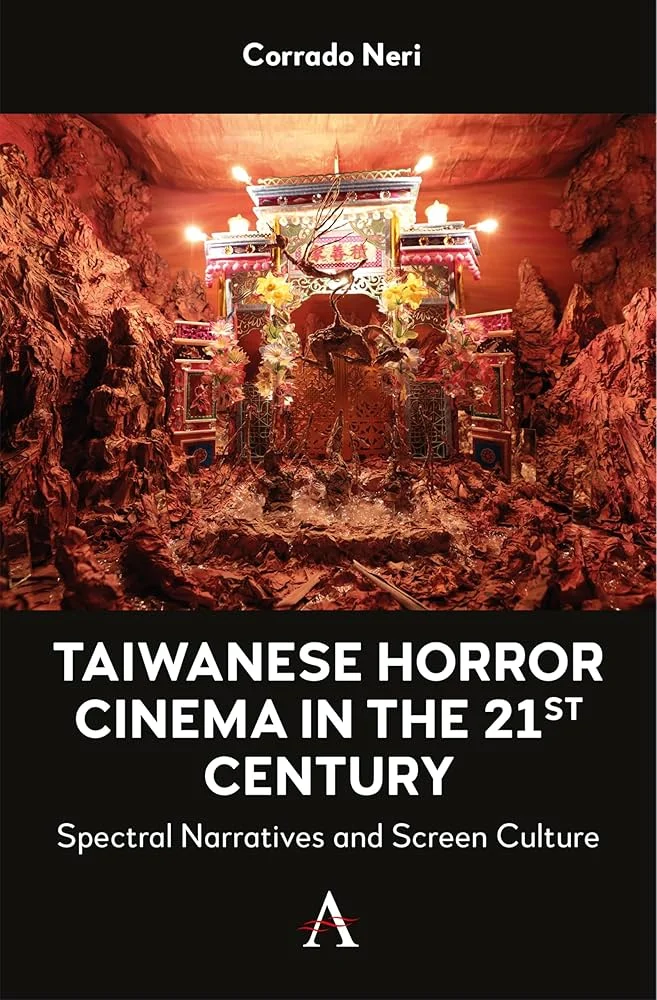
Anthem Press has officially released "Taiwanese Horror Cinema in the 21st Century," a seminal new study by Professor Corrado Neri, which delves into the intricate ways contemporary Taiwanese horror films utilize supernatural elements, ghost narratives, and established genre conventions to explore profound themes of national identity, historical trauma, and ongoing cultural transformation. The book, published on June 2, 2026, offers a comprehensive and multidisciplinary analysis, positioning Taiwanese horror not merely as entertainment, but as a vital conduit for societal reflection and discourse.
Unveiling the Supernatural: A Deeper Look into Taiwanese Identity
Professor Neri’s research meticulously unpacks the resurgence of horror and ghost stories within Taiwan’s remarkably diverse cinematic landscape of the 21st century. From postmodern horror comedies that playfully subvert expectations to more somber, art-house meditations on existential dread, the study examines how a new generation of filmmakers employs haunted spaces and spectral figures. These ghostly apparitions and eerie locales are presented not as mere scare tactics, but as potent metaphors for collective memory, evolving spiritual beliefs, pervasive social anxieties, and the continuous process of cultural renewal within a rapidly changing society. The book posits that these narratives offer a unique lens through which to understand the complex psycho-social fabric of modern Taiwan, a nation grappling with its past, present, and future identity on the global stage.
The core of Neri’s argument lies in the idea that horror, with its inherent capacity to confront the uncomfortable and the unknown, provides a powerful, often subversive, platform for addressing issues that might be difficult to articulate through more conventional cinematic forms. Ghosts, in this context, transcend their supernatural roles to embody unresolved historical injustices, suppressed collective memories, and anxieties about a future fraught with geopolitical uncertainties and rapid technological shifts. This analytical framework allows for a nuanced appreciation of how Taiwanese filmmakers contribute to a global horror discourse while simultaneously carving out a distinctive voice rooted in local traditions and specific national experiences.
Bridging Folklore and the Digital Age: A Multidisciplinary Approach
"Taiwanese Horror Cinema in the 21st Century" distinguishes itself through its multidisciplinary approach, seamlessly integrating film studies, cultural history, and media theory. This methodological richness allows Professor Neri to explore the fascinating interplay between traditional Taiwanese folklore – rich with local deities, spirits, and cautionary tales – and the pervasive influence of the digital age. The book investigates how contemporary directors navigate this cultural crossroads, responding to both internal developments within Taiwanese society and broader global trends in filmmaking, technology, and audience consumption.
The study pays particular attention to the dynamic interaction between genre cinema, often perceived as commercially driven, and the more aesthetically ambitious art-house films. This intersection highlights a unique characteristic of Taiwanese cinema, where boundaries between commercial viability and artistic expression are frequently blurred, allowing for innovative narrative structures and visual styles. Furthermore, Neri scrutinizes the position of Taiwan’s distinctive "ghost island" narratives within wider academic and popular conversations concerning globalization, queer representation in cinema, and the continuous pursuit of cinematic innovation. The concept of Taiwan as a "ghost island" – a term often used metaphorically to describe its contested international status and historical marginalization – finds potent expression in its horror cinema, where the unseen and the unheard are given voice. Through supernatural imagery, the study argues, filmmakers are able to articulate historical wounds, navigate shifting identities, and confront contemporary anxieties, making the genre a critical site for cultural expression and critique.
The Author: Corrado Neri’s Expertise and Contributions
Corrado Neri is a distinguished Professor at Jean Moulin University Lyon 3, bringing a wealth of academic experience and profound expertise to this publication. His extensive research career has focused primarily on Chinese and Taiwanese cinema, characterized by rigorous fieldwork conducted in major cultural hubs such as Beijing and Taipei. This immersive approach has provided him with an intimate understanding of the cinematic landscapes and cultural nuances of the region.
Prior to his current professorship, Neri served as the Director of the French Centre for Research on Contemporary China in Taipei, a role that further solidified his connection to and authority on Taiwanese cultural studies. His scholarly contributions are widely recognized, with numerous publications spanning French, English, and Italian, demonstrating his international academic reach and linguistic versatility.
Professor Neri’s previous works have significantly contributed to the understanding of East Asian cinema. These include monographs such as "Tsai Ming-liang," a deep dive into the oeuvre of the acclaimed Taiwanese New Wave director; "Ages inquiets. Cinémas chinois: une représentation de la jeunesse," which explores the portrayal of youth in Chinese cinemas; and "Rétro Taiwan. Le temps retrouvé dans le cinéma sinophone contemporain," examining themes of nostalgia and the past in contemporary Sinophone cinema. His commitment to collaborative scholarship is also evident in his co-editorship of the 2024 volume, "Taiwanese-Language Cinema: Rediscovered and Reconsidered," alongside esteemed colleagues Chris Berry, Wafa Ghermani, and Ming-Yeh Rawnsley. This impressive bibliography underscores Neri’s deep engagement with the subject matter and his consistent contribution to the academic discourse surrounding Taiwanese and Chinese film. His current work on horror cinema builds upon this foundation, extending his critical lens to a genre that has, until recently, often been overlooked in serious academic discourse.
The Historical and Cultural Canvas of Taiwanese Horror
To fully appreciate the scope of Neri’s book, it is crucial to understand the historical and cultural context that has shaped Taiwanese horror cinema. Taiwan’s 20th-century history is marked by significant periods of trauma and transformation, from Japanese colonial rule (1895-1945) to the authoritarian Kuomintang (KMT) regime following the Chinese Civil War, which imposed martial law for nearly four decades (1949-1987). This era was characterized by political repression, the suppression of local culture, and a complex national identity debate. The lifting of martial law in 1987 ushered in a period of democratization, cultural liberalization, and a re-examination of historical narratives.
These historical currents provide fertile ground for the themes explored in Taiwanese horror. The "historical trauma" Neri refers to can encompass the scars of colonial past, the violence and suppression of the White Terror period under KMT rule, the indigenous experience of marginalization, and the ongoing anxieties surrounding Taiwan’s precarious international status vis-à-vis mainland China. Ghosts and supernatural entities often serve as allegories for these unresolved pasts, representing the voices of the silenced, the memories that refuse to fade, and the collective psychological wounds that continue to haunt the present.
The concept of "cultural transformation" reflects Taiwan’s rapid modernization, its embrace of digital technologies, and the evolving relationship between traditional values and global influences. Horror cinema, in this context, can explore anxieties related to urban alienation, the disintegration of family structures, environmental concerns, and the impact of globalization on local identity. The interplay between traditional folklore – with its rich pantheon of spirits, deities, and ancestral worship – and contemporary social issues creates a unique hybridity in Taiwanese horror, distinguishing it from its counterparts in other East Asian nations.
While J-horror (Japanese horror) and K-horror (Korean horror) gained significant international traction in the late 20th and early 21st centuries, often focusing on vengeful female spirits and psychological dread, Taiwanese horror has developed its own distinct flavor. It often draws more explicitly on indigenous myths, localized ghost stories, and a complex political history, weaving these elements into narratives that are both culturally specific and universally resonant. Films that touch upon these themes have started gaining international recognition, signaling a growing interest in Taiwan’s unique contributions to the genre.
Academic and Broader Implications: A Catalyst for Discourse
"Taiwanese Horror Cinema in the 21st Century" is not merely an academic text; it is poised to be a significant catalyst for broader discourse. Written for a diverse audience comprising scholars, students, and dedicated cinephiles, the book offers an accessible yet extensively documented introduction to contemporary Taiwanese horror. Its clear prose and rigorous analysis make it an invaluable resource for anyone seeking to understand this vibrant cinematic tradition.
For scholars, the book provides a robust theoretical framework for analyzing genre cinema as a site of profound cultural expression. It challenges conventional hierarchies that often relegate horror to a secondary status, demonstrating its capacity for complex social commentary and artistic innovation. The multidisciplinary approach encourages cross-pollination between various fields, enriching discussions in film studies, cultural history, media theory, and even sociology and political science.
Students will find the book an indispensable guide, offering a structured approach to understanding a complex and often overlooked cinematic landscape. Its focus on specific themes like identity, trauma, and cultural transformation provides clear entry points for critical analysis and research projects. The extensive documentation ensures that readers can delve deeper into specific films, directors, or historical contexts.
Beyond academia, the book targets a wider readership interested in Asian cinema, horror studies generally, the intricacies of cultural identity, and the enduring power of supernatural storytelling across cultures. In an era where cultural exchange and understanding are paramount, Neri’s work offers a window into the soul of Taiwan through its popular culture. It highlights how universal fears and anxieties can be articulated through culturally specific narratives, fostering a deeper appreciation for the diversity of human experience. The ongoing reinvention of supernatural storytelling, as explored in the book, speaks to humanity’s persistent fascination with the unknown and its enduring need to confront its deepest fears through narrative.
Publication Details and Market Position
"Taiwanese Horror Cinema in the 21st Century" was officially published by Anthem Press on June 2, 2026. Anthem Press, known for its commitment to high-quality academic and scholarly publications across the humanities and social sciences, adds this title to its impressive catalog, reinforcing its position as a leading publisher in Asian studies and film theory.
The book is presented in a concise yet comprehensive 100-page paperback format, making it both accessible and portable for students and researchers. Its pricing strategy positions it competitively within the academic publishing market: £20.99 in the United Kingdom and $24.95 in the United States. This pricing reflects its value as a specialized academic text while remaining within a reasonable range for individual purchasers.
The publication’s ISBN is 9781839997853, ensuring easy identification and ordering through various channels. Distribution is efficiently handled by Ingram Publisher Services, a global leader in book distribution, guaranteeing wide availability across academic institutions, bookstores, and online retailers worldwide. This robust distribution network ensures that Professor Neri’s critical insights reach the intended global audience, fostering wider engagement with Taiwanese horror cinema and its profound cultural significance. The release of this book is anticipated to further elevate the profile of Taiwanese cinema on the international stage, encouraging more critical attention and appreciation for its unique contributions to the global film industry.