John Travolta, the iconic actor celebrated for his roles in cinematic classics like Saturday Night Fever and Pulp Fiction, has made a profound mark with his feature directorial debut, Propeller One-Way Night Coach (2026). The film, which premiered to significant acclaim at the Cannes Film Festival, was not only lauded for its artistic merit but also heralded by industry figures as a beacon for impactful, low-budget filmmaking. Its subsequent release on Apple TV+ saw it rapidly ascend to the top spot globally for seven consecutive days, cementing its status as a surprise triumph. The premiere, held on a bustling Friday night at Cannes, was preceded by a career-spanning highlights reel and culminated in a touching moment where festival director Thierry Frémaux bestowed an honorary Palme d’Or upon Travolta, acknowledging his immense contributions to cinema. The anticipation in the packed theater was palpable, with audiences eager to witness what Travolta’s vision for a film about a young boy’s inaugural airplane journey in 1962 would entail.
The Genesis of a Personal Vision: From Novella to Screen
Propeller One-Way Night Coach is a deeply personal project, an adaptation of Travolta’s own 1997 novella of the same name. The book itself was born in 1993, initially conceived as a cherished gift for his family, with only 70 copies circulated. Its intimate and evocative nature resonated so strongly with his relatives that they encouraged him to seek wider publication, leading to its release by Warner Brothers without alteration in 1997. Over the subsequent decades, there was considerable interest from producers in adapting the novella into a film. However, Travolta, acutely aware of the deeply subjective and personal nature of the story, resisted, fearing that an external interpretation might compromise its essence.
The impetus for him to finally direct the film himself emerged approximately a year and a half ago. Approaching his 70th birthday, Travolta recognized a crucial juncture in his life. "If you don’t do it now, you’re never going to do it," he recalled telling himself. This realization spurred him to self-finance and produce the film, ensuring his artistic vision remained uncompromised. He approached the project much like a painter approaches a canvas, crafting an unadulterated reflection of his memories and imagination, with the intent to then present this unique "painting" to the world.
Cannes Triumph and Industry Acclaim
The film’s journey to Cannes was swift and marked by significant endorsements. The first industry figure to see the completed 60-minute feature was Eddie Cue of Apple, who was immediately captivated. Cue declared it "spectacular" and committed to ensuring its global reach, recognizing its importance. This early support from a major streaming platform underscored the film’s potential.
Three months later, Thierry Frémaux, the influential director of the Cannes Film Festival, viewed the film. Unaware of Apple’s prior interest, Frémaux was profoundly moved, stating, "I can’t see anything wrong with this movie. I love it." His admiration was so profound that he engaged Travolta in a 45-minute discussion about the film, an unusually extensive interrogation for a festival director. In an unprecedented move, Frémaux then informed Travolta that Propeller One-Way Night Coach would be the first official selection for the Cannes Film Festival, five months ahead of the event – a departure from the festival’s typical selection process. He promised Travolta a "very special night," a commitment he unequivocally delivered upon.
The Cannes premiere was indeed a momentous occasion. Before the screening, a montage celebrating Travolta’s illustrious career played, reminding audiences of his cinematic legacy. Following this, Frémaux presented Travolta with an honorary Palme d’Or, a prestigious recognition for his lifetime achievements in film. Travolta expressed profound gratitude, reflecting on the experience: "I was just happy to have a premiere at Cannes. That was a complete and 100% honor. So everything that followed, the Palme d’Or, then becoming number one around the world for seven days in a row, I mean, this has been an extraordinary thing." He noted how the unfolding success echoed the film’s central theme: "It almost follows the theme of the movie, when the little boy says, ‘Just when I thought life couldn’t get better, it did.’"
Frémaux’s enthusiasm extended beyond mere praise; upon learning of the film’s modest production cost, he declared it "the most important film in the festival." He saw Propeller One-Way Night Coach as a powerful demonstration that "film can be made at a low cost and still be impactful," positioning it as an inspiring model for aspiring filmmakers and the industry at large. This sentiment highlights a broader conversation within the film industry about the viability of independent projects that prioritize artistic integrity and narrative over extravagant budgets.
A Journey Through Time: Crafting the 1962 Experience
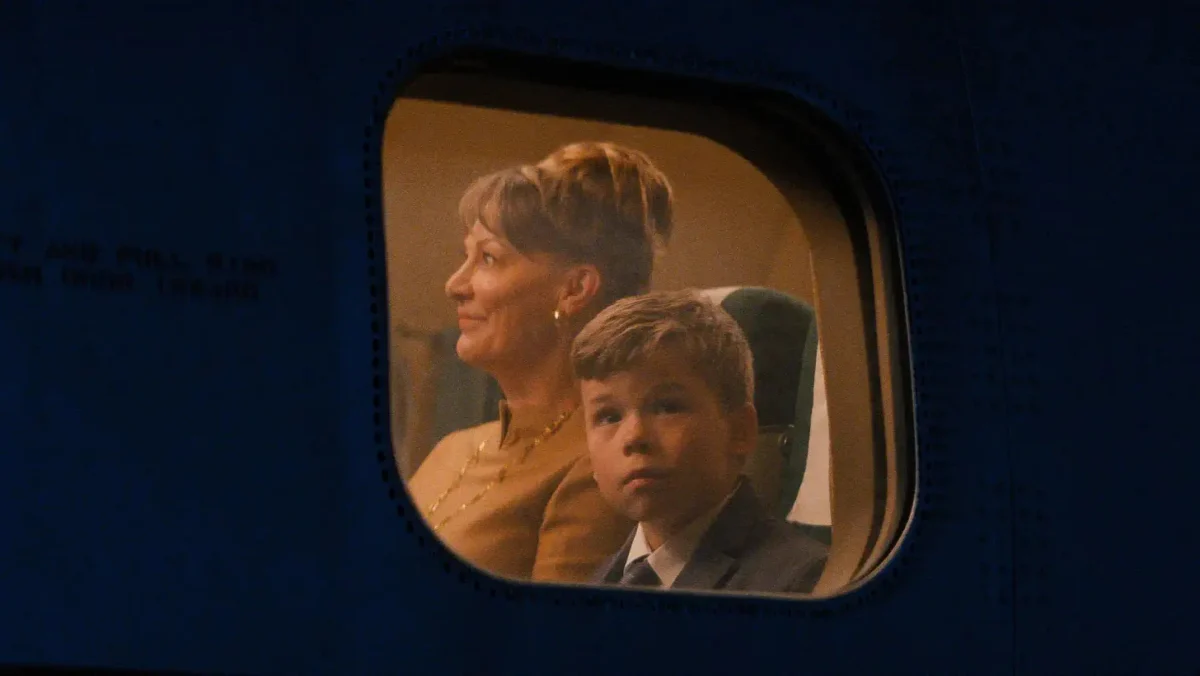
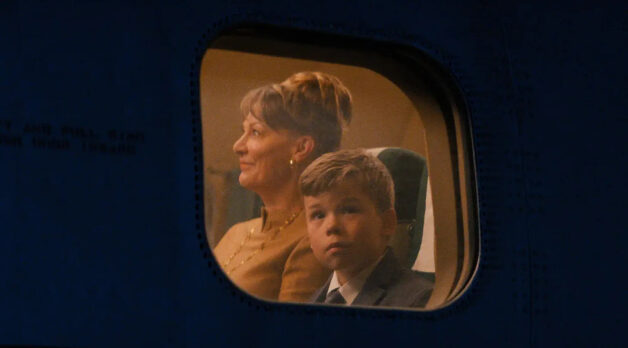
Propeller One-Way Night Coach is an "absolutely charming portrait of experience," characterized by a loving attention to detail and a profound sense of memory. The film transports viewers back to 1962, seen through the eyes of a precocious young boy named Jeff, portrayed by Clark Shotwell. Shotwell, whom Travolta’s daughter Ella Bleu described as "a little him," embodies the childhood essence of Travolta himself. Ella Bleu also features in the film as a captivating flight attendant, while Kelly Eviston-Quinnett plays his mother, Helen, whose inherent joie de vivre is clearly contagious for her son.
Travolta’s meticulous approach to recreating the era stemmed from his own vivid childhood memories and observations. As a child, he was a keen observer, collecting airline tickets and schedules, absorbing the visual language of advertisements for cars, buildings, and especially aircraft. He aimed to faithfully capture "the impact of each visual," from the distinct color palettes of airplane interiors to the elaborate meals served during flights in the 1960s. Chateaubriand and chicken cordon bleu, presented with colorful vegetables on divine plateware and glassware, evoke a bygone era of sophisticated air travel. The elegance extended to the flight attendants’ uniforms, designed by renowned figures like Don Loper and even Dior in earlier decades, reflecting a period when air travel was a luxurious, aspirational experience.
A key detail Travolta aimed to portray was the relative emptiness of planes in those days. Unlike today’s often-packed flights, he recalled cabins that felt "a fourth full," a testament to the fact that air travel was still largely inaccessible to the general public, lending it an air of exclusivity and spaciousness. The sensory experience is further enriched by the inclusion of "the smoke in the cabin that was mixed with the scent of the food," a detail that might be jarring to modern audiences but was commonplace then.
The film’s soundtrack is a carefully curated tapestry of 1960s sounds. Travolta highlights the "beautiful onslaught of Brazilian samba music" from artists like Jobim and Sérgio Mendes, which gained global popularity, alongside the enduring tunes of Frank Sinatra, Tony Bennett, and Barbra Streisand. These were not merely incidental choices but deeply intertwined with his own memories, reflecting the music that filled his childhood home. The score also pays homage to classic cinema, such as the evocative "Moon River" from Breakfast at Tiffany’s (1961) accompanying a walk through the TWA terminal, or Dave Brubeck’s iconic "Take Five" aligning perfectly with the modernist architecture of the era. He even integrated "Rhapsody in Blue" from An American in Paris (1951), recognizing how these pieces resonated with his youthful wonder at the marvel of flight. Each musical cue is precisely chosen to evoke a specific mood or memory, creating a rich auditory landscape that complements the visuals.
Directorial Philosophy and Influences
Travolta’s transition to directing, while deeply personal, also reflects lessons gleaned from a distinguished acting career working with some of cinema’s most revered directors. He specifically cited Quentin Tarantino, Brian De Palma, and Mike Nichols as significant influences. From Tarantino, he learned the power of "efficiency" in storytelling – the ability to convey narrative without over-explaining every detail, trusting the audience to infer. He recounted a specific moment during Pulp Fiction where Tarantino opted for a tight close-up and implied action rather than explicit exposition, a technique Travolta embraced in Propeller One-Way Night Coach.
He also adopted a philosophy of meticulous rehearsal and minimal takes, believing that well-prepared actors deliver their best performances quickly, leading to a more dynamic and productive set. "The better you’re rehearsed and the better the actors know what they’re doing, they won’t be rehearsing on screen," he explained. This approach not only yields stronger initial takes but also energizes both cast and crew, fostering a sense of progress and accomplishment.
Casting, for Travolta, is paramount, a lesson reinforced by Nichols and De Palma, who believed that "90% of your issues are: is everyone right for those characters?" He echoed his mother’s insight that acting is an "inborn thing," and a director’s role is to guide and suggest, not to instill talent. Correct casting, he argues, means actors already "own that character," allowing the director to focus on adding "color and dimension" rather than micromanaging performances.
Travolta viewed Propeller One-Way Night Coach as "more than an homage to aviation; this is an homage to movies and actors and cinema and soundtracks and music." He consciously incorporated stylistic elements and references from films that impacted him, creating an "eclectic" blend. This includes nods to Liz Taylor in The V.I.P.s (1963), Paul Newman, Kirk Douglas, Grace Kelly, Audrey Hepburn in Breakfast at Tiffany’s, A Man and a Woman (1966), and Two for the Road (1967). He even infused elements reminiscent of European masters like Bertolucci (The Last Tango in Paris, 1972) and Fellini, noting how a seemingly bizarre real-life encounter with a ten-foot-tall man felt like a "Fellini move." The South American film Black Orpheus (1959) also left a stunning impression, influencing the musical and visual textures. This diverse array of influences, he noted, felt cohesive because they were "of a similar era," creating a harmonious blend that mirrored the mid-century aesthetic.
A Child’s Eye View: Narrative and Performance
The film’s narrative strength lies in its unique perspective, primarily conveyed through a fascinating voiceover narration that serves as Jeff’s internal monologue and commentary. Travolta approached this voiceover as an adult recalling a child’s "fleeting thoughts," imbued with a "childlike tonality." This allows for a rich, sincere, and often humorous exploration of a child’s experience, capturing the unfiltered observations and innocent ponderings that define early childhood.
Jeff, as portrayed by Shotwell, is presented as an exceptionally observant and non-judgmental child. He keenly notices his mother’s flirtatiousness and habits, such as her drinking and smoking, but without any hint of judgment. Instead, his focus remains on what he perceives as important, such as ensuring they return to the airport, or finding solutions to his immediate concerns, like a broken toy. This perspective imbues the film with a sense of wonder and empathy, even when confronted with more serious realities. For instance, his understanding of a neighbor’s painful memories from a concentration camp, or his reaction to news of a real-life airplane crash (the famous 1960 Idlewild accident), are filtered through a child’s lens of empathy and resilience. He quickly shifts from concern to problem-solving, like seeking the pilot’s help for his broken toy plane, a testament to the inherent optimism and adaptability of youth.
The detailed observations extend to his mother, Helen, played by Eviston-Quinnett. Jeff watches her with keen interest as she savors a gourmet meal, appreciating her enjoyment even if the food isn’t to his own taste. His observation of her inspecting the back of a china plate, a detail born from his mother’s love for expensive dishware, highlights the stream-of-consciousness detail that makes the film so immersive.
The film deliberately eschews conventional dramatic conflict, a choice Travolta consciously made. He resisted the pressure to introduce typical plot devices, such as the boy getting lost in the airport. Instead, he trusted that the "cool journey" and the "fascinating and bizarre" characters encountered along the way would be inherently compelling. The "drama," he explains, is in the "effect that it’s having" on the viewer, awakening their senses to a different era, much like a Michelin-star dining experience. This unconventional narrative structure, focusing on observation and sensory immersion rather than overt conflict, proved to be one of the film’s most refreshing qualities at Cannes, providing an "uncynical oasis" amid the festival’s typical fare.
Production, Streaming Success, and Broader Implications
The production of Propeller One-Way Night Coach was remarkably efficient. The 60-minute film was shot over just 15 days – five in New York, five in Kansas, and five in Los Angeles – following a month and a half of preparation. This lean production schedule and budget were central to Thierry Frémaux’s admiration for the film, as he championed it as a model for how "film can be made at a low cost and still be impactful." This statement carries significant weight in an industry often dominated by blockbuster budgets, suggesting a renewed focus on story, vision, and execution over sheer financial scale. The film’s success demonstrates that creative freedom, coupled with a clear artistic vision, can yield powerful and widely appreciated results, even on a modest budget.
Following its acclaimed Cannes premiere, Propeller One-Way Night Coach launched on Apple TV+, where it immediately found a global audience. Its achievement of being the "most-streamed film this week" and holding the number one spot worldwide for seven days running is a significant accomplishment, especially for a 60-minute feature and a directorial debut. In the highly competitive landscape of streaming services, this level of sustained popularity underscores the film’s broad appeal and its ability to connect with viewers across different demographics. Apple’s decision to acquire and promote the film reflects a strategic move to offer unique, quality content that stands out from mainstream productions.
The success of Propeller One-Way Night Coach carries several implications for the film industry. Firstly, it reaffirms the potential for established actors to transition successfully into directing, particularly when driven by a deeply personal narrative. Secondly, it highlights the enduring appeal of nostalgic, character-driven stories that offer a respite from cynicism. Thirdly, and perhaps most importantly, it reinforces the message that artistic merit and audience engagement are not solely dependent on massive budgets. Frémaux’s public endorsement of the film as a testament to low-cost impact could encourage more independent filmmakers and studios to invest in similarly scaled projects, fostering a more diverse and creatively vibrant cinematic landscape. The film’s unique blend of autobiography, historical detail, and cinematic homage makes it a standout project, signaling a new chapter in John Travolta’s illustrious career and offering a delightful and thought-provoking experience to audiences worldwide.