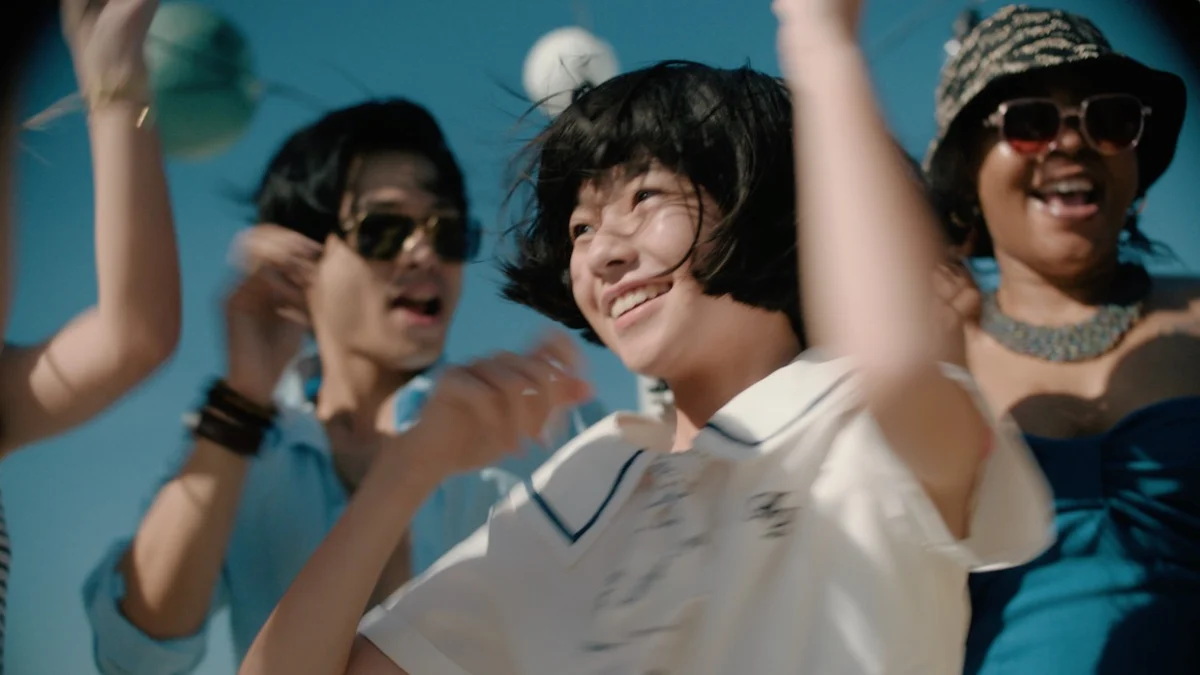
Chie Hayakawa’s sophomore feature, Renoir, released in 2026, offers a poignant and complex exploration of a preteenage girl’s coming-of-age amid profound personal loss and significant societal transformation. The film centers on Fuki (portrayed by the remarkably talented Yui Suzuki), an eleven-year-old whose vibrant perspective on life begins to darken and complicate as her father grapples with a terminal illness. Set in 1987, the narrative unfolds against the vivid backdrop of Japan’s burgeoning "bubble period," a transformative era marked by unprecedented financial and real-estate speculation that dramatically reshaped the nation’s economy, merely a generation after its astounding postwar recovery. This era of economic exuberance, often remembered for its optimism and material prosperity, serves as a crucial counterpoint to Fuki’s internal struggle, as she navigates burgeoning self-awareness, the dynamics of human relationships, and the intricate consequences of her actions. A pivotal moment in her journey involves a chance encounter with a reproduction of Auguste Renoir’s 1880 oil portrait of the eight-year-old Irène Cahen d’Anvers, a painting that unexpectedly provides Fuki with a nascent understanding of her own burgeoning taste and a clue to how she wishes to conduct herself in an increasingly complex world.
A Deep Dive into Renoir: A Coming-of-Age Story
Renoir masterfully adopts Fuki’s intimate perspective, creating a compelling contrast between her rich inner life—which includes an undeniable fascination with the macabre—and the seemingly mundane day-to-day rituals and stringent societal expectations placed upon an 11-year-old in late 1980s Japan. Director Chie Hayakawa, in a departure from her critically acclaimed debut, Plan 75 (2022), crafts a narrative that is both mysterious and inherently risky. While Plan 75 presented a stark, near-future dystopia where the Japanese government institutes an incentivized euthanasia program for senior citizens to mitigate a looming population crisis, Renoir delves into the deeply personal challenge of reconciling one’s individual suffering with the broader suffering of others. Both films, despite their divergent registers, form a fascinating diptych in their respective approaches to grief, deliberately eschewing simplistic catharses and cheap sentimentality, even as they acknowledge the profound role of such emotions in the psychic landscape of late childhood. Hayakawa revealed that the film’s genesis was deeply personal, stemming from her own experiences at Fuki’s age. She also drew significant inspiration from cinematic touchstones like Shinji Somai’s 1993 film Moving and the works of Taiwanese auteur Edward Yang, particularly his celebrated 2000 family drama, Yi Yi.
The casting of Yui Suzuki as Fuki is central to the film’s success. Hayakawa recounted a rigorous audition process, noting her readiness to audition hundreds of children if necessary. Yet, Suzuki, the very first candidate, immediately captivated the director. "What caught my attention was that she would do everything just slightly different from how I had imagined the character would," Hayakawa explained. "Saying things differently or moving in a different way. Her expressions surprised me. She had absolutely no hesitation. She was not afraid of the camera at all." Suzuki’s unique blend of childlike essence and surprising maturity, coexisting within her performance, solidified her selection. A memorable moment during the audition, where Suzuki performed a horse imitation—a "special skill" she later incorporated into the film—"totally stole my heart," leading Hayakawa to immediately integrate it into the script.
Setting the Scene: Japan’s Bubble Economy of the 1980s
The film’s temporal setting in 1987, approximately a year into Japan’s "bubble period," is subtly yet effectively woven into the narrative fabric. This era, generally recognized as spanning from 1986 to 1991, witnessed an unprecedented economic boom driven by speculative bubbles in asset prices, primarily real estate and stocks. Following decades of miraculous postwar growth, Japan’s economy was experiencing rapid expansion, with GDP growth rates often exceeding 5% annually. The Nikkei 225 stock index soared, reaching an all-time high of nearly 39,000 yen by late 1989, an increase of over 300% in less than five years. Real estate prices in major cities like Tokyo skyrocketed, making property acquisition a national obsession and a symbol of newfound wealth. This period fostered a pervasive sense of optimism and prosperity, where many Japanese genuinely believed that the future held only brighter prospects.
This optimistic backdrop contrasts sharply with Fuki’s internal turmoil. Hayakawa deliberately evokes the cultural milieu of the 1980s, a time she cherishes for its lack of ubiquitous digital distractions. "I feel very thankful that my childhood did not happen during the time of smartphones or the internet," she stated, reflecting on how modern technology complicates personal relationships and a connection to "what’s real." Renoir captures the essence of this pre-digital age through specific cultural signifiers: children dancing to the iconic sounds of Yellow Magic Orchestra at camp, a popular electronic music band that epitomized Japan’s technological and cultural ascendancy; a subplot involving Fuki’s nerve-wracking "friendship" cultivated through a phone chat service, a precursor to modern online communication; and the prevalence of VHS tapes, a primary medium for home entertainment. The director also highlights the widespread fascination with spiritualism, noting that "programs like the psychic on the television were very popular, and everybody watched the same stuff." This collective experience, coupled with a profound admiration for Western culture, contributed to a unique blend of curiosity and innocence.
Beyond Fuki: The Loneliness of Adulthood
While Renoir is undeniably Fuki’s story, it also meticulously explores the profound loneliness experienced by the adults around her, a theme that deeply motivated Hayakawa. Fuki’s mother, grappling with the impending loss of her husband, is simultaneously obligated to attend a corporate course on how to interact effectively with coworkers and employees. This subplot offers a poignant window into the immense pressures faced by women in 1980s Japanese society, particularly those balancing family crises with professional expectations. Hayakawa revealed that this character was partly inspired by her own mother, who struggled with anger management. "My own mother was the type of person who had difficulty controlling her anger, and I remember being very upset by that as a child," she shared. However, with maturity, her perspective shifted. "When I was around 20 I realized what an isolating experience it was for her, to be constantly expressing her anger and falling into hysterics, and I actually began to feel very sad for her." This empathetic understanding informed her portrayal, transforming what might have been a "bad person" in a younger director’s hands into a figure of profound isolation.
The mandatory anger-management training, while humiliating for the mother and exacerbating her anger, also becomes a space where she encounters someone who sees the good in her, highlighting the complex paths to human connection. Hayakawa also notes the cross-cultural dimension of this detail, pointing out that such "anger-management courses came from the United States." This reflects a broader trend in 1980s Japan where concepts and trends from the West, particularly America and Europe, were often viewed as superior and readily adopted, underscoring the era’s cultural admiration for the "First World."
The film’s titular painting, a reproduction of Renoir’s Irène Cahen d’Anvers, is more than just a plot device; it serves as a powerful symbol of this cultural dynamic. During the bubble period, there was an immense admiration for Western culture, art, and history. This manifested in a trend where Japanese households, driven by a desire to "catch up" with the West, would purchase replicas of European masterworks. Hayakawa herself experienced this phenomenon: "The painting in the film is actually one I begged my parents to buy me, and they did so from an ad in the back of a newspaper." These replicas, often housed in "very gaudy, Gothic frames," presented an "odd thing" when displayed in typical, often tiny, Japanese homes. For Hayakawa, this trend, and her own childhood fixation, represent an "innocence… representative of many Japanese people’s outlook at that time." The director noted that her own childhood replica, likely still in storage at her parents’ home, was significantly larger than the one depicted in the film.
A Diptych of Grief: Renoir and Plan 75
Renoir emerges as a compelling counterpart to Hayakawa’s acclaimed debut, Plan 75. While Renoir is a deeply personal, character-driven drama set in the past, Plan 75 is a chilling, speculative narrative rooted in Japan’s contemporary demographic anxieties. Released in 2022, Plan 75 depicted a near-future Japan where, by 2050, one-third of the population is projected to be over 65. To manage this unprecedented demographic shift and its associated economic strain, the government implements a program offering euthanasia to citizens aged 75 and above, incentivized with financial and logistical support.
Hayakawa herself never considered Plan 75 to be science fiction, preferring to describe it as "depicting a world parallel to our contemporary existing society." This perspective highlights the film’s grounding in very real, pressing concerns within Japan. However, internationally, the film was widely received as a dystopian sci-fi narrative, an interpretation Hayakawa found "very fresh, interesting." The domestic reception in Japan was notably starker. "What I remember very well is people describing it as ‘scarier than a horror movie,’ because people were saying it could happen in real life, perhaps even in the near future," Hayakawa recounted. The film resonated deeply with ongoing discussions in Japan about valuing or marginalizing individuals based on their productivity, a concept that gained further traction during the COVID-19 pandemic. A short film version of Plan 75, made four years prior to the feature, was initially dismissed as unrealistic. However, the pandemic, with its forced societal shifts and re-evaluations of life and mortality, caused a profound change in perspective, making the film’s premise seem "almost an inevitability."
The two films, while stylistically distinct—Plan 75 often employs a more mobile, handheld camera, especially for its "lively" Filipino care worker character, contrasting with Renoir‘s more composed frames—are thematically linked by their sensitive yet unsentimental exploration of grief and human dignity. They both avoid easy answers, instead offering nuanced reflections on suffering, empathy, and the societal structures that shape individual experiences of loss.
Japan’s Demographic Challenges and Societal Anxiety
Hayakawa’s insights into the societal shifts in Japan since the 1980s are particularly telling. She notes a pervasive "feeling of helplessness" across the nation, a stark contrast to the optimism of the bubble era. "I think people everywhere are very concerned about the future today, and that is felt across all of Japan," she observed. This anxiety is deeply rooted in the country’s severe demographic challenges. Japan faces one of the most rapidly aging populations globally, with projections indicating that by 2050, nearly 40% of its population could be aged 65 or older. The birth rate has consistently declined, falling to a record low of 1.20 in 2023, far below the 2.1 needed to maintain a stable population. This combination of declining births and increasing longevity has led to an anticipated population decline and immense strain on social welfare systems, healthcare, and the workforce.
The director also points to a generational divide, where the "older generation has memories of the bubble period and often thinks the old ways are better." This resistance to change, she argues, has contributed to decades of stagnation. While the United States grapples with a powerful class of older politicians who resist relinquishing power, Hayakawa stresses that the primary concern in Japan is the widespread discrimination faced by the majority of elderly, who are "very much struggling economically" and often labeled a "burden." This societal pressure to maintain productivity and the marginalization of those perceived as non-contributing members are critical underlying themes connecting Renoir and Plan 75.
Independent Filmmaking in a Commercial Landscape
Navigating the contemporary Japanese film industry presents unique challenges for directors like Hayakawa, who prioritize original storytelling. She highlights the industry’s heavy reliance on pre-existing intellectual property (IP). "So many films in Japan are based on best-selling novels, or they are adaptations of manga, or live-action adaptations of anime," she explained. "I would imagine maybe 90% are based on preexisting IP, which is considered the least risky type of investment." Hayakawa, while respecting anime and manga as distinct art forms, prefers to develop original screenplays or adapt novels that resonate with her.
This commercial reality often pushes independent filmmakers towards international co-productions. Hayakawa notes that "in Japan there are very few funding opportunities for a first film that’s also based on an original script." Consequently, she looked to Europe, where "many grants and opportunities for debut features" exist, along with dedicated sections in film festivals. Both Plan 75 and Renoir benefited from this international approach. While her crew was primarily Japanese, her development process diverged from typical Japanese norms, making her feel somewhat outside the conventional system. However, she sees a positive trend in the blurring of national borders in filmmaking, with increasing numbers of foreign directors working in Japan and Japanese directors venturing abroad, signifying a more globalized cinematic landscape.
Hayakawa’s collaboration with cinematographer Hideho Urata, a returning crew member from Plan 75, is also central to Renoir‘s visual artistry. Despite initial logistical hurdles during the COVID-19 lockdown, which limited their face-to-face interaction and Urata’s involvement in location scouting for Plan 75, a strong artistic synergy developed. Hayakawa, who lacked traditional assistant director experience, found Urata’s patience and guidance invaluable. She humorously dismissed a Hollywood Reporter anecdote suggesting she expressed doubts about Plan 75‘s quality on the first day of filming. Instead, she emphasized their improvisational working style and a deep, shared sensitivity to image-making. "Through these other long conversations, I learned that his sensitivity to image-making is very similar to mine, so once we were on set I didn’t have to say much for him to produce these images that I really loved," she elaborated. By the time Renoir was filmed, the returning crew members from Plan 75 fostered an environment of trust, allowing Hayakawa to "ease into my role as director, and play up my strengths," making the second production significantly more relaxed.
The Nuances of Loss and Empathy
At its core, Renoir is a profound meditation on grief, which Hayakawa describes as an inherently solitary experience, even when surrounded by well-intentioned support. She recounted a striking childhood memory surrounding her father’s impending death: "I imagined that the funeral would happen, all my school friends would be there, and they would be actively trying to relate to me and feel my pain. And I remember feeling excited about that, while also carrying a tremendous sense of guilt, or shame, for even thinking that thought while my father was dying." This complex emotional landscape—the simultaneous longing for connection and the self-reproach—is mirrored in Fuki’s journey.
Hayakawa also shared a poignant observation from her father’s funeral: "My mother was the main character at that funeral… she lost her balance, like she was about to faint. I remember thinking, and even saying to my older sister, it was as if she was acting out the role of a widow from a movie or a television show." This layered, almost performative aspect of grief, particularly in a child’s perception, underscores the film’s nuanced approach to human emotion. While Fuki’s initial experience of loss is isolating, the film ultimately traces her path towards empathy, learning to understand the suffering of others, particularly her mother.
Despite its sober themes, Renoir is visually stunning, balancing a wistful, summer aesthetic with the creeping onset of grief and isolation. Hayakawa acknowledges that her own childhood memories, often "worried, stressed, lonely, or isolated," infuse the film with a particular gravitas, perhaps contributing to its sober nostalgia rather than a purely romanticized view of youth. Her personal philosophy, describing herself as an "optimistic pessimist," perfectly encapsulates the spirit of her films: unflinching in their depiction of difficult realities, yet imbued with a deep sense of compassion and a flicker of hope.
Renoir is currently playing at the IFC Center in New York and is scheduled to open this Friday at the NuArt in Los Angeles, with a broader expansion to other cities via Film Movement. Through its intricate portrayal of childhood grief, its evocative rendering of a pivotal historical era, and its profound exploration of empathy, Chie Hayakawa’s Renoir solidifies her position as a vital and distinctive voice in contemporary Japanese cinema, offering audiences a deeply human story that resonates far beyond its specific setting.