One of the most common misconceptions about performance art is the expectation that it must convey a fixed purpose or clearly defined intention. While such an approach may be appropriate for narrative cinema, literature, or theatre, performance is primarily concerned not with the artist’s intentions but with the audience’s response—how people react to what they witness and what meaning they ultimately derive from it. Acclaimed Taiwanese director Tsai Ming-liang has made this idea one of the central concerns of his prolific body of work, nowhere more evident than in his seminal "Walker" series. Although performative elements can be found throughout his oeuvre, the indelible image of a Buddhist monk slowly walking through busy urban landscapes remains one of his most striking and enduring creations. Beyond raising pertinent questions about modernity, globalization, and contemporary society, these works consistently invite viewers to reflect on their own responses to the performance, making those reactions an essential and integral part of the overall experience. "Journey to the West," released in 2014, marks the sixth entry in the "Walker" series, depending on whether one includes the earlier experimental short "No Form" (2012), solidifying its place within a critically lauded and philosophically rich cinematic exploration.
The Genesis of the "Walker" Series: A Chronicle of Deliberate Pace
The "Walker" series commenced in 2012, emerging from Tsai Ming-liang’s long-standing fascination with slowness, duration, and the human body in space. Tsai, a leading figure in the New Taiwanese Cinema movement, has consistently challenged conventional cinematic narratives, often employing long takes, minimal dialogue, and an observational style that demands patience from his audience. His recurring collaborator, actor Lee Kang-sheng, has been the central figure in nearly all of Tsai’s films, forming one of the most significant director-actor partnerships in contemporary cinema. The "Walker" series distills Tsai’s aesthetic to its purest form: Lee Kang-sheng, clad in a saffron Buddhist monk’s robe, moves at an impossibly slow pace through various bustling metropolises around the world. This deliberate deceleration serves as a stark counterpoint to the relentless speed of modern life, compelling passers-by and cinematic audiences alike to confront their own perceptions of time, space, and existence.
The inaugural film in the series, simply titled "Walker" (2012), saw the monk navigate the frenetic streets of Hong Kong. This was followed by "Diamond Sutra" (2012), filmed in Taipei, and "Xiang Cai Tian Bian" (2013), which explored the landscape of his native Malaysia. "Chun Meng" (2013) continued the contemplative journey, with "Shui Bian Zuo" (2014) preceding "Journey to the West." Each installment, while adhering to the core concept, offers subtle variations in setting, urban interaction, and visual texture, creating a cumulative meditation on patience, observation, and the profound act of being present. The series’ consistent aesthetic and thematic concerns have positioned it as a unique and important contribution to both performance art and slow cinema, prompting dialogue about the very nature of cinematic experience and its potential to transcend traditional storytelling.
"Journey to the West": Marseille as a Canvas for Contemplation
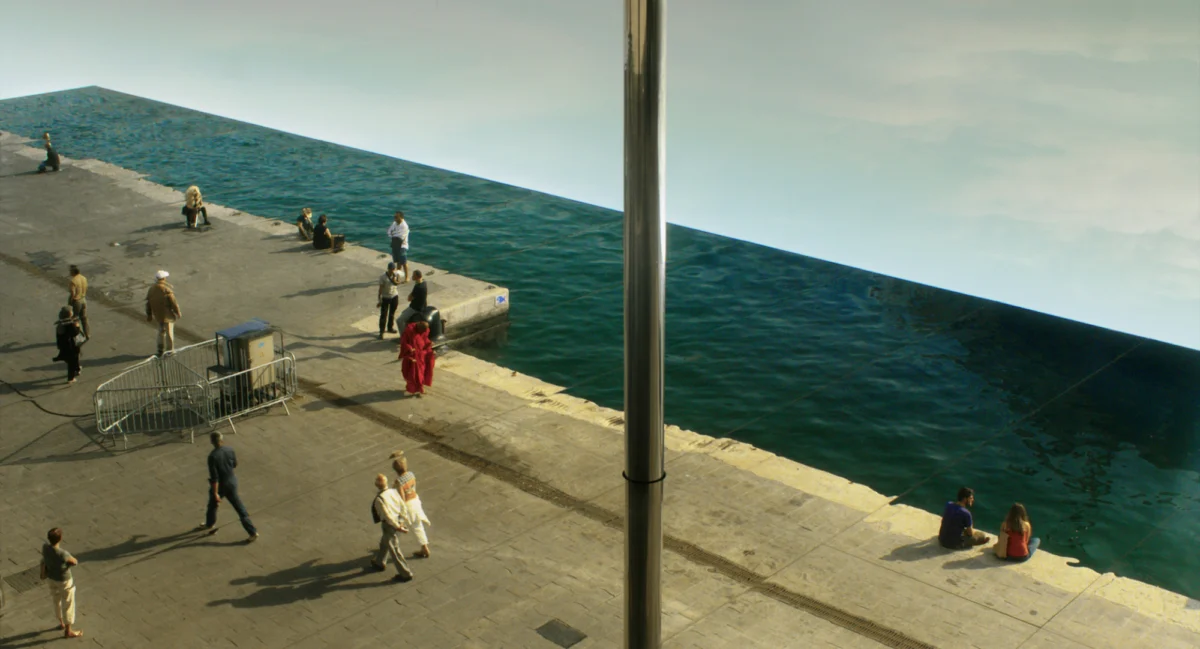
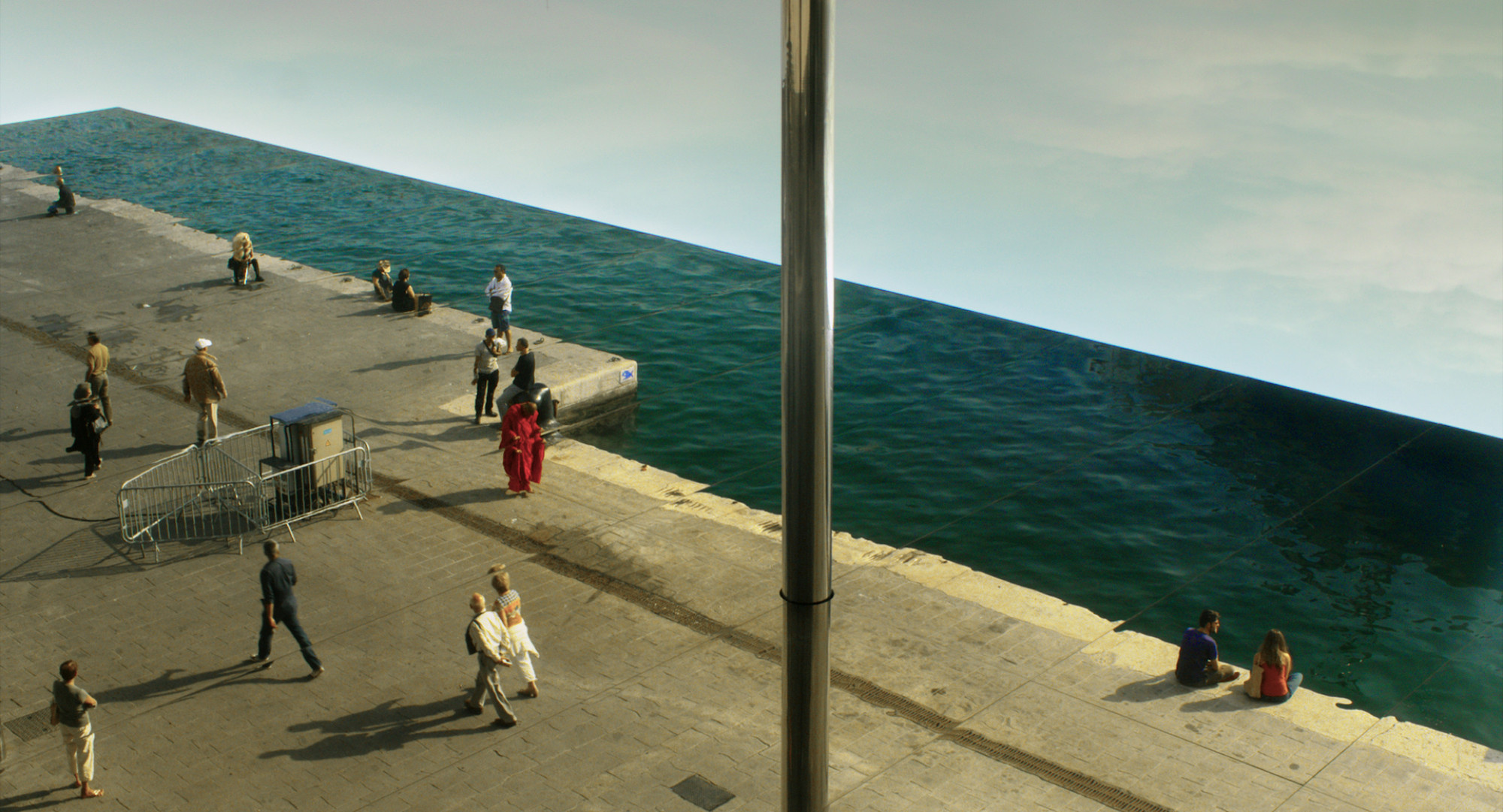
"Journey to the West" distinguishes itself within the series by its specific geographical and cultural context. As in the previous installments, the film features Lee Kang-sheng as the Buddhist monk, dressed in his distinctive saffron robe, slowly traversing various public spaces. However, this time his pilgrimage unfolds against the vibrant, historically rich backdrop of Marseille, France. His journey takes him past iconic metro entrances, through bustling pedestrian zones, and amidst the lively chaos of public markets. The choice of Marseille, a major port city with a diverse population and a rich tapestry of cultural influences, adds another layer of intriguing contrast to the monk’s serene, almost otherworldly presence. The juxtaposition of ancient spiritual practice with the hurried rhythms of a modern European city creates a powerful visual and thematic tension, inviting reflection on globalization, cultural encounter, and the persistent search for inner peace amidst external clamor.
A significant addition to this installment is the presence of acclaimed French actor Denis Lavant, known for his intense physical performances in films by directors like Leos Carax. Lavant quietly joins the monk, eventually mirroring his every movement, adopting the same painstaking pace. This mirroring act is not merely imitation but a profound exploration of empathy, discipline, and the transference of a meditative state. Lavant, initially a curious observer, gradually becomes a participant, embodying the film’s core tenet of audience engagement and the transformative power of shared experience. His inclusion introduces a dynamic interplay, highlighting how the monk’s presence can subtly influence and alter the behavior of those around him, whether they are unwitting passers-by or a fellow performer committing to the same radical slowness. This dual presence elevates "Journey to the West" from a solitary performance to a duet, emphasizing connection and shared human vulnerability.
Literary Inspiration and Thematic Depths
Unlike the purely observational nature of some earlier entries in the "Walker" series, "Journey to the West" draws direct inspiration from a foundational work of Chinese literature: Wu Cheng’en’s classic 16th-century novel of the same title. This epic narrative follows the Buddhist monk Xuanzang on his arduous pilgrimage to obtain sacred scriptures from India, exploring profound themes of self-cultivation, spiritual enlightenment, and the complexities of human nature, often through allegorical encounters with demons and deities.
While Tsai’s film does not offer a literal adaptation of the novel’s fantastical elements, the connection between his work and Wu Cheng’en’s text is deeply thematic. Tsai’s monk, like Xuanzang, embarks on a journey that is both physical and spiritual. The slowness of his movement becomes a metaphor for the arduous, often frustrating, path of self-discovery and spiritual discipline. The urban environment, with its myriad distractions and temptations, functions as a contemporary equivalent of the challenges and obstacles Xuanzang faced. The film implicitly asks: What does it mean to undertake a "journey to the west" in a hyper-modern, secularized world?
The performative nature of Tsai’s piece turns the spectator into an essential participant in its thematic journey. Whether it is a passer-by pausing to observe the monk for a brief moment, their daily routine momentarily disrupted, or a member of the cinema audience immersed in the extended takes, their reaction becomes part of the artwork itself. The film, much like many of Tsai Ming-liang’s works, resembles a blank canvas onto which viewers inevitably project their own thoughts, emotions, and experiences. This reflective quality mirrors the very nature of performance art, where meaning is co-created between artist and audience, and the act of witnessing becomes a form of participation. The literary allusion grounds this open interpretation in a rich cultural tradition, suggesting that the contemporary urban pilgrimage is merely a new iteration of an age-old quest for understanding.
The Art of Slowness and Audience Engagement: A Counter-Narrative to Modernity
The "Walker" series, and "Journey to the West" in particular, serves as a powerful testament to the principles of "slow cinema." This cinematic movement, often characterized by minimalist narratives, long takes, and an emphasis on atmosphere and duration over plot, offers a deliberate antidote to the fast-paced, information-dense nature of contemporary media. Directors like Bela Tarr, Lav Diaz, and Apichatpong Weerasethakul share Tsai’s commitment to challenging conventional viewing habits, encouraging a deeper, more meditative engagement with the moving image.
Tsai Ming-liang’s contribution to slow cinema is uniquely defined by the extreme, almost ritualistic, slowness of the monk’s walk. This deliberate pace forces viewers to recalibrate their attention spans, to notice details they might otherwise miss, and to experience the passage of time in a fundamentally different way. In a world saturated with instant gratification and constant stimulation, "Journey to the West" offers its audience a brief, yet profound, respite from the relentless pace of contemporary life.
The film’s impact on audience perception is multifaceted. For some, the extreme slowness can be challenging, even frustrating, mirroring the impatience ingrained by modern society. For others, it becomes a revelatory experience, unlocking a heightened sense of awareness and presence. Lee Kang-sheng’s and Denis Lavant’s faces, stripped of overt emotion, gradually become part of the surrounding landscape, their expressions morphing into masks of quiet contemplation. The subtle sound of their breathing, often amplified, serves as the feature’s quiet metronome, grounding the experience in the primal rhythms of the body. Images of picturesque mountains and serene coastlines, interspersed with or giving way to crowded streets, impersonal subway entrances, and lively public squares—places we encounter every day, yet rarely stop to truly observe—are transformed. Through the monk’s slow journey, Tsai encourages us to rediscover the extraordinary within the ordinary, to find beauty and profundity in the overlooked textures of urban existence.
Critical Acclaim and Broader Implications
"Journey to the West" premiered at the 2014 Berlin International Film Festival, garnering significant critical attention and further cementing Tsai Ming-liang’s reputation as a visionary filmmaker pushing the boundaries of cinematic expression. Critics lauded its hypnotic quality, its audacious artistic vision, and its profound philosophical undertones. Reviews frequently highlighted the film’s ability to provoke introspection and its unique commentary on contemporary urban life. While some acknowledged the film’s demanding nature, many celebrated its courage in offering an experience that defies mainstream expectations, prioritizing contemplation over conventional entertainment.
The film’s success at international festivals underscores the global appeal of Tsai’s distinctive approach, demonstrating that there is an audience hungry for cinema that challenges and provokes rather than merely entertains. The "Walker" series, through its consistent artistic rigor, has contributed significantly to the discourse surrounding performance art in cinema, the aesthetics of slowness, and the role of the audience in meaning-making. It has inspired scholarly articles, academic discussions, and a new appreciation for durational art forms.
Beyond its artistic merits, the "Walker" series carries broader cultural and societal implications. In an era dominated by hyper-connectivity, dwindling attention spans, and an ever-accelerating lifestyle, Tsai’s work serves as a vital counter-narrative. It implicitly critiques the relentless pursuit of efficiency and speed, advocating for a return to presence, mindfulness, and the value of deliberate observation. The monk’s slow walk becomes a silent protest against the prevailing ethos of hurried consumption, a powerful symbol of resistance against the tyranny of speed. It suggests that true understanding and connection might only be achieved when we allow ourselves to slow down, to truly see, and to simply be.
Legacy and Enduring Relevance
"Journey to the West" stands as another remarkable entry in Tsai Ming-liang’s "Walker" series, a project that continues to evolve and resonate. Through an audiovisual journey defined by patience and observation, the director encourages us to look at our surroundings—and at one another—with fresh eyes. In doing so, he creates a profoundly human experience that offers something increasingly rare in our modern world: the time and space simply to observe, to reflect, and to engage deeply with the present moment.
The series as a whole, and "Journey to the West" specifically, ensures Tsai Ming-liang’s enduring legacy as a filmmaker who consistently challenges the conventions of cinema, forging a unique path that blurs the lines between film, performance art, and spiritual contemplation. His work reminds us that the most profound insights often emerge from stillness, and that the most radical act in a fast-paced world might simply be to slow down. The "Walker" series continues to invite audiences worldwide to embark on their own journeys to the west—an internal pilgrimage towards a deeper understanding of self and surroundings, facilitated by the quiet, unwavering presence of a monk walking, one deliberate step at a time.