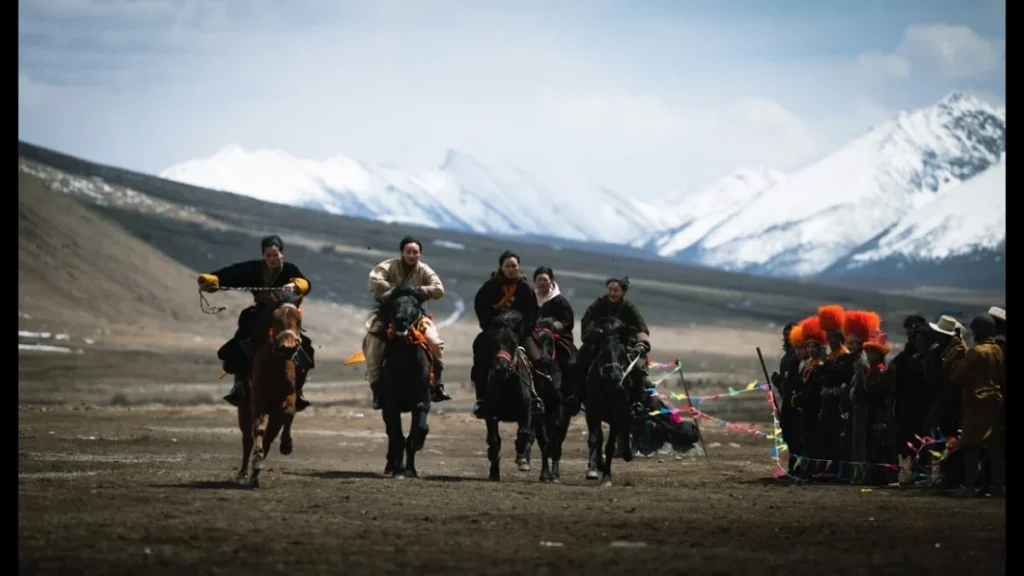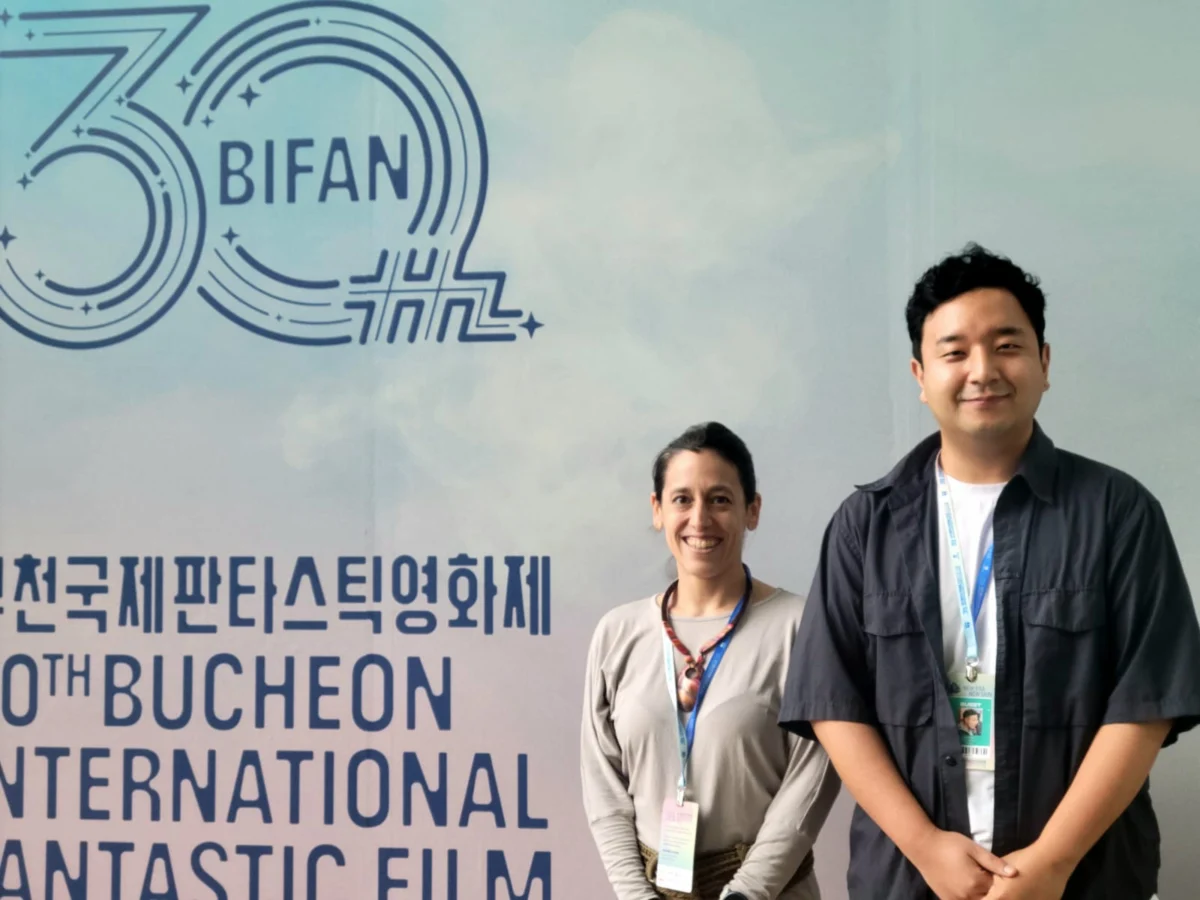
Director Huh Gun’s debut feature film, "Last Mankind," has emerged as a compelling testament to artistic tenacity and innovative filmmaking, garnering significant attention from the global cinematic community. Supported by the prestigious Bucheon International Fantastic Film Festival (BIFAN), the film embarked on a notable journey, culminating in its presentation at the Croisette in Cannes as part of the Fantastic 7 program before its much-anticipated domestic premiere. This unique trajectory underscores the film’s distinctive blend of a painterly aesthetic, a nostalgic nod to classic science fiction, and a deeply human narrative exploring themes of redemption and connection amidst a desolate future.
The film, which chronicles the solitary existence of Sina, a test subject in an experiment to forge an evolved human race, has been lauded for its tenacious visual identity despite severe budget constraints. It presents a gentle fable of escape from loneliness, driven by a search for genuine human connection, making its technical achievements all the more remarkable. The opportunity for a first-time director like Huh Gun to showcase his work at Cannes, especially in an edition graced by cinematic luminaries such as jury president Park Chan-wook, Na Hong-jin, and Yeon Sang-ho, marked a pivotal moment in his burgeoning career.
A Genesis of Innovation: The Production Journey of ‘Last Mankind’
The genesis of "Last Mankind" traces back to 2021, when Huh Gun, a graduate of the Korea National University of Art’s Master of Fine Arts program, selected the script as his feature film project. Facing severely restricted budgetary resources, a common challenge for independent productions, Huh Gun found himself at a crossroads. He could opt for the seemingly easier path of filming in real, pre-existing locations – a real basement, a physical entrance – or embrace a more ambitious, technically demanding alternative: recreating the entire environment through post-production.
Inspired by the advancements in visual effects seen in films like "Avatar," which had set new benchmarks over a decade prior, Huh Gun chose the latter. He saw it as an opportunity to challenge himself and achieve the precise visual aesthetic he envisioned, believing it would yield a superior and more unique result. This decision, while creatively liberating, initiated an arduous five-year production odyssey. "Honestly, I couldn’t imagine it would take so long, five years, that long!" Huh Gun remarked during an interview at BIFAN. The profound commitment to this vision meant that, ultimately, only the actors and the props they physically interacted with were real; everything else, from the expansive dystopian backdrops to the intricate confined spaces, was meticulously reconstructed in post-production.
The principal photography for "Last Mankind" took place in 2022, with traditional visual effects (VFX) pipelines consuming over 80% of the entire shooting schedule. At that time, the nascent field of artificial intelligence (AI) in filmmaking was not yet mature enough to deliver the convincing outcomes Huh Gun required. The film faced a crucial missing piece: the realization of the enigmatic creatures contained within capsules, a detail that constituted less than 10% of the movie but was vital for its narrative and visual coherence. This particular challenge proved difficult to overcome with conventional computer graphics (CG) within the existing low budget.
It wasn’t until 2025-2026, well after the initial shooting phase, that AI tools evolved sufficiently to offer a satisfying solution. The integration of these advanced AI technologies provided the breakthrough needed to complete the challenging sequences involving the capsule-bound figures. Huh Gun explicitly stated that without this technological leap, "I wouldn’t have been able to finish unless I could secure additional budget." This strategic and timely adoption of AI highlights a burgeoning trend in independent filmmaking, where innovative directors are leveraging emerging technologies to circumvent traditional financial limitations and realize ambitious creative visions.
The Croisette and Bucheon: A Festival Trajectory
"Last Mankind"’s journey through the international festival circuit underscores its critical acclaim and industry recognition. The film’s initial support from the BIFAN Bucheon International Fantastic Film Festival was instrumental. BIFAN, a cornerstone of Asian genre cinema, is renowned for its commitment to discovering and nurturing innovative filmmaking talent. Its Network of Asian Fantastic Films (NAFF) program, which supports projects in various stages of development, played a crucial role in the early life of "Last Mankind." Being selected and subsequently screened at BIFAN provides a vital platform for independent films, connecting them with industry professionals, distributors, and a passionate audience base.
The film’s appearance at the Cannes Film Festival’s Fantastic 7 program further elevated its profile. Fantastic 7 is a prestigious initiative launched by the Marché du Film in collaboration with leading genre festivals worldwide, including BIFAN, Sitges (Spain), Toronto After Dark (Canada), SXSW (USA), and others. Its primary goal is to identify and spotlight promising genre projects from across the globe, facilitating their exposure to potential co-producers, sales agents, and distributors. For "Last Mankind" to be chosen for this exclusive showcase signified a strong endorsement of its artistic merit and commercial potential.
The significance of presenting a debut work at Cannes, particularly in a year where renowned Korean directors like Park Chan-wook (who served as jury president), Na Hong-jin, and Yeon Sang-ho were prominent guests, was not lost on Huh Gun. This confluence of talent and opportunity provided an unparalleled platform for "Last Mankind" to connect with the very architects of contemporary Korean cinema, offering invaluable exposure and validation for a first-time director venturing into the ambitious realm of independent sci-fi.
Crafting a Dystopian Vision: World-Building and Visual Identity
The distinctive visual identity of "Last Mankind" is deeply rooted in a blend of real-world environmental concerns and speculative scientific theory. Huh Gun explained that the film’s dystopian setting draws directly from contemporary anxieties surrounding global warming and the escalating levels of carbon dioxide in the atmosphere. This ecological backdrop is further enriched by his personal history; his father, a paleontologist, instilled in him a profound understanding of mass extinction events that have punctuated Earth’s history. While many often fear nuclear war or asteroid impacts, Huh Gun posits that a mass extinction triggered by atmospheric pollution is a far more plausible scenario.
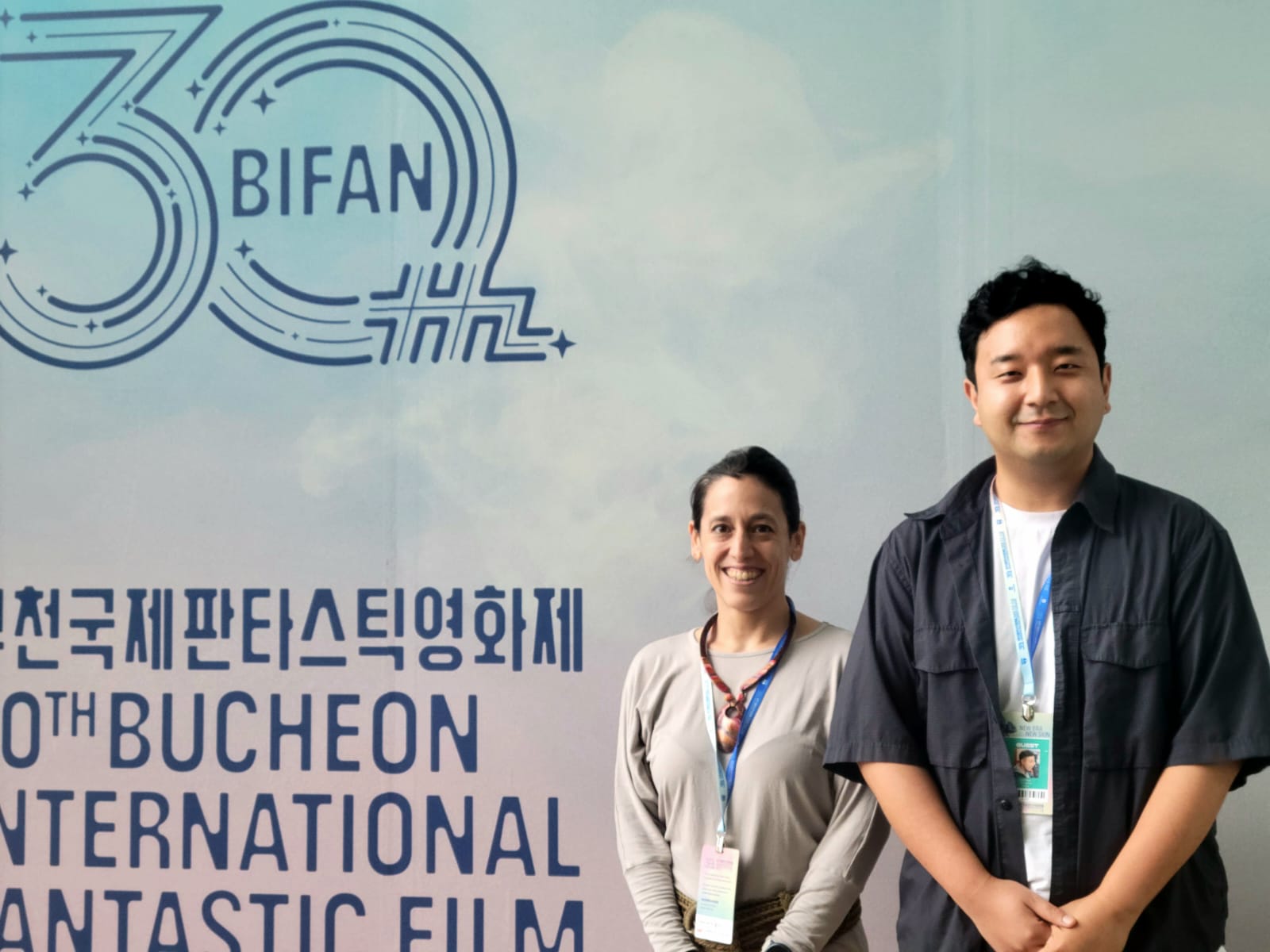
From this foundation, he constructed a unique scientific premise for his film. His imaginative theory, while not strictly based on current scientific fact, extrapolates from real-world technologies. He referenced Direct Air Capture (DAC) machines, which function like large fans to filter and split CO2 into carbon monoxide (CO) and oxygen (O2). In Huh Gun’s fictional world, this process leads to an unexpected recombination of oxygen molecules into an unstable O4 molecule, which he terms "Zed Gas." This "Zed Gas," characterized by its "alphabetic Zed" shape, proves inimical to life, preventing oxygen from reaching human cells. The visible manifestation of this cellular demise—grey and yellow spots on the skin—becomes the chilling harbinger of humanity’s impending extinction.
The creation of this meticulously detailed and visually distinct world was a collaborative effort, with post-production designer Kang So-rang being a pivotal figure from the earliest stages of pre-production and scriptwriting. Her continuous involvement ensured that the film’s visual language was consistently developed. Additionally, editor Park Ju-hee, who also served as the post-production supervisor, played an essential role. Huh Gun heavily relied on these two women, highlighting their indispensable contributions to realizing the film’s unique aesthetic and color palette, which, despite initial aspirations for a more horror-centric look, evolved into its current compelling form.
Thematic Undercurrents: Humanity, Experimentation, and Redemption
Beyond its impressive visual spectacle, "Last Mankind" delves into profound thematic territory, exploring the ethics of human experimentation and the fundamental human need for connection. The experiments conducted on Sina, the protagonist, draw striking parallels to historical atrocities such as those perpetrated under Nazi Germany or Imperial Japan’s Unit 731. Huh Gun, having majored in History for his undergraduate degree, readily acknowledged these influences, stating, "I myself was very affected by these experiments conducted for superior race when I studied about Nazi Germany." This academic background lends a layer of historical gravitas to the film’s exploration of scientific hubris and the dark side of human ambition.
One of the director’s significant challenges during the four years of post-production was maintaining a balance between the film’s elaborate sci-fi visuals and the emotional core of Sina’s journey. The sheer exhaustion of crafting the complex visual effects often overshadowed character development. However, in the final stages of the film’s completion, Huh Gun confronted a critical decision: to prioritize an overtly aesthetic, "artwork" approach that would emphasize visual brushstrokes, or to rebalance the narrative to amplify the emotional truth and expressivity of his cast. He ultimately chose the latter, recognizing that "this is Sina’s journey. This is what counts." This conscious decision to prioritize emotional depth over pure visual flair underscores the film’s commitment to its human story, even within a vast, speculative framework.
Pioneering Korean Genre Cinema: A Call for Ambition
Huh Gun’s decision to undertake an ambitious sci-fi project in the independent Korean film landscape was a deliberate act of defiance against perceived industry trends. Driven by a deep love for the sci-fi genre, he embarked on "Last Mankind" in 2021 with a clear objective: to demonstrate that an independent Korean production could successfully execute a compelling sci-fi film. He observed that while mainstream Korean cinema has seen successes in genre films (e.g., "Space Sweepers," "Train to Busan" in the zombie-apocalypse subgenre), ambitious dystopian sci-fi narratives, particularly in the independent sector, remain relatively uncommon.
"I don’t think that in Korea many embraced the same challenge," Huh Gun noted, expressing a degree of disappointment that many talented directors shy away from the "hard way" of VFX-heavy filmmaking. He believes that despite the inherent difficulties, more filmmakers should be encouraged to tackle such challenges. His personal preference, given the budget, would always lean towards practical filmmaking and physical sets over green screens, highlighting the immense effort and compromise involved in his chosen path for "Last Mankind." His film stands as a potential trailblazer, challenging the notion that high-concept genre cinema is solely the domain of large studios and substantial budgets. It makes a compelling case for creative vision and technological ingenuity as powerful alternatives.
Beyond ‘Last Mankind’: The Future Vision of Huh Gun
The arduous five-year journey of creating "Last Mankind" initially left Huh Gun reluctant to ever embark on another VFX-heavy project. "It was so overwhelming that I refused to consider shooting a VFX film again!" he admitted. However, having successfully navigated the complexities of this production and gained invaluable experience with VFX processes and AI integration, his perspective has shifted. He now views this hard-won knowledge as a newfound strength, stating, "I’m not afraid of the VFX world anymore."
This renewed confidence has already translated into concrete plans for his future cinematic endeavors. Huh Gun revealed that he has three scripts prepared, two of which necessitate significant VFX work. The most ambitious of these is a project set in space, which he envisions as his "next, next job," indicating a clear trajectory towards more expansive sci-fi narratives. Another project, while requiring a lower budget for VFX, will be filmed on a physical set and explores the relationship between humanoid robots and the elderly, touching on themes of companionship and aging in a technologically advanced world.
His third project represents a departure from genre filmmaking, focusing on a deeply personal narrative about a father-son relationship and its inherent struggles. This film, requiring no visual effects, delves into the universal feeling of taking distance from one’s parental heritage and work—a sentiment with which Huh Gun himself continues to grapple. This diverse slate of upcoming projects demonstrates Huh Gun’s versatile storytelling ambitions and his readiness to explore various genres and themes, leveraging his hard-earned technical expertise while also returning to more intimate, character-driven narratives.
Conclusion: A Landmark Debut
"Last Mankind" stands as more than just a debut feature; it is a significant statement from Huh Gun about the potential of independent Korean cinema to push boundaries, both technically and thematically. By successfully fusing a unique visual style, a compelling dystopian narrative, and profound human emotion, all while navigating considerable budgetary constraints through innovative use of VFX and AI, the film has carved out a distinct niche. Its journey from BIFAN support to the global stage at Cannes’ Fantastic 7 underscores its universal appeal and critical recognition.
As "Last Mankind" continues its festival run and prepares for broader release, it offers a compelling vision for the future of genre filmmaking, particularly in regions where independent productions aspire to tackle ambitious narratives. Huh Gun’s tenacity, his creative problem-solving, and his unwavering commitment to his artistic vision position him as a formidable new voice in Korean cinema, poised to inspire a new generation of filmmakers to embrace the challenges and rewards of the "hard way."