Marcus Batto’s directorial debut, There’ll Likely Be Michael Jackson Vigils Throughout the Night, embarks on an ambitious and arguably impossible cinematic endeavor: to reconstruct June 25, 2009 – the day Michael Jackson died – entirely through found footage culled from the nascent digital landscape of the internet. The film, a profound meditation on memory, media, and collective experience, challenges conventional notions of historical documentation by presenting a kaleidoscopic view of a world grappling with the sudden loss of the "King of Pop" at a pivotal moment in the internet’s evolution.
The Day the Music World Stood Still: June 25, 2009
The day Michael Jackson passed away stands as a unique cultural marker, etched into the global consciousness. On June 25, 2009, news began to ripple across traditional and digital media channels that the iconic pop star had suffered a cardiac arrest at his Holmby Hills home in Los Angeles. Paramedics responded, and Jackson was rushed to Ronald Reagan UCLA Medical Center, where he was pronounced dead in the afternoon. He was 50 years old.
The immediate aftermath was nothing short of a global phenomenon. News outlets worldwide scrambled to confirm and report on the unfolding tragedy. Within minutes, television broadcasts interrupted regular programming, and breaking news alerts flooded early social media platforms like Twitter and Facebook. Websites, including Google, CNN, and the BBC, experienced unprecedented traffic spikes, with some temporarily crashing under the sheer volume of users seeking information. Twitter, still in its relative infancy, reported a surge in activity, with tweets per second reaching new highs as users shared their disbelief, grief, and tributes. It was a stark demonstration of the internet’s burgeoning power to disseminate news and facilitate real-time collective mourning on an unprecedented scale.
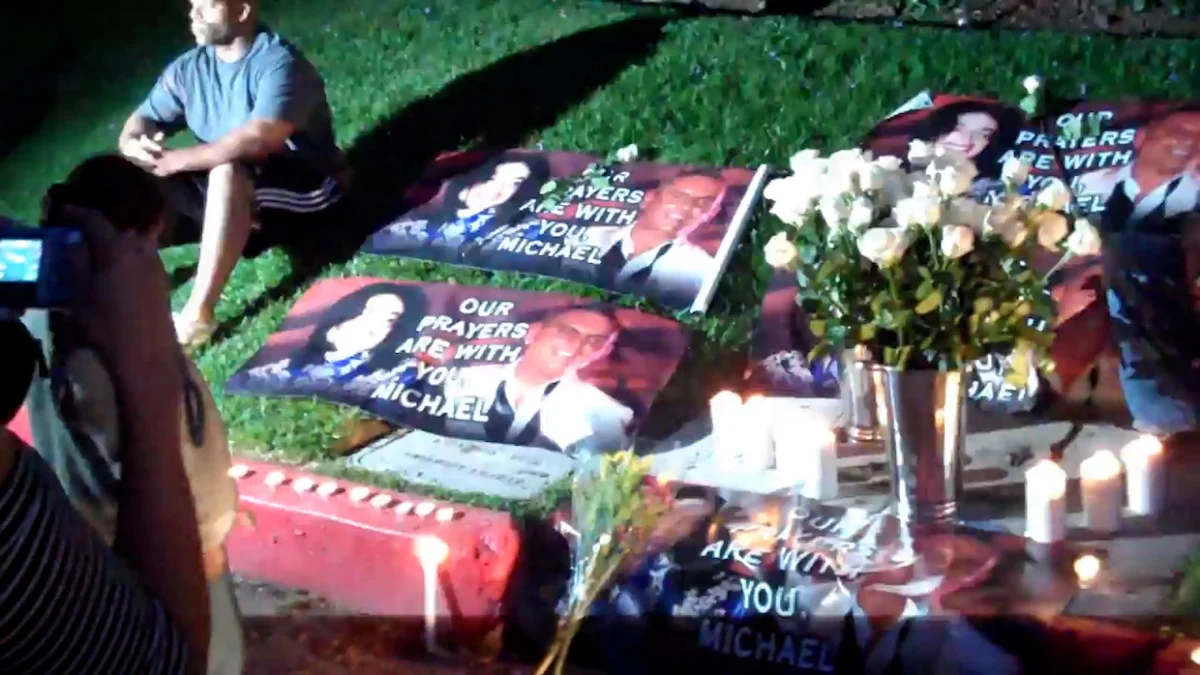
Beyond the digital realm, spontaneous vigils erupted globally. Fans gathered outside Jackson’s former Neverland Ranch, his childhood home in Gary, Indiana, and in major cities from New York to London to Tokyo. They brought flowers, candles, handwritten signs, and played his music, creating impromptu memorials that underscored the depth of his global impact. The event quickly transcended mere celebrity death, becoming a shared cultural touchstone, a moment where the world’s diffuse energy, as Batto notes, was harnessed in one singular direction. The shock was amplified by Jackson’s impending "This Is It" concert series, a highly anticipated comeback planned for London’s O2 Arena, which had sold out millions of tickets, symbolizing a potential resurgence in his career after years of personal and legal troubles.
Marcus Batto: The Digital Archaeologist
At the heart of There’ll Likely Be Michael Jackson Vigils Throughout the Night is Marcus Batto, a 31-year-old artist, archivist, programmer, and self-described YouTube ethnographer. Batto’s work is driven by a fascination with the internet’s formative years, particularly the first decade of YouTube’s existence, a period he experienced firsthand as a twelve-year-old when viral sensations like "Charlie Bit My Finger" first captivated audiences. This personal connection to the early internet informs his artistic practice, which seeks to unearth and recontextualize forgotten or overlooked digital artifacts.
Batto’s journey into filmmaking began with an interest in editing, evolving into the creation of "found-footage things" that blurred the lines between film, music videos, and art pieces. His unique approach reflects a broader artistic movement that interrogates the nature of digital memory, the ephemerality of online content, and the challenge of reconstructing narratives from the vast, often disorganized, digital past. He recognizes that as search engines become increasingly opaque, influenced by advertisements, optimization algorithms, and now artificial intelligence, our digital history grows progressively blurrier, making the task of digital archaeology both more urgent and more complex.
The "Certain Moments To Remember" Series: Chronicling Digital Subcultures
Batto’s feature film is a culmination of years spent developing his distinctive found-footage methodology, most notably through his ongoing Certain Moments To Remember series (2020–). This series, which Batto’s website aptly describes as "bearing witness to subculture, shared experience, and social phenomena," delves into specific online trends and cultural moments, compiling disparate user-generated content into cohesive, insightful narratives.
One standout entry, RANDOM WEBCAM DANCE @ DA IMAC STORE (2023), exemplifies Batto’s keen eye for capturing the innocent experimentation of early internet users. The film compiles various individuals dancing in front of Apple Store iMacs in 2011, utilizing the then-novel front-facing cameras. Set to Johnny Duncan and Jane Fricke’s 1978 lovelorn rendition of "Stranger," the juxtaposition of a 1970s country ballad with V-necked teens doing the robot in front of an iPad 2 advertisement creates a potent sense of doubled nostalgia. This layering of pasts imbues the footage with an "eerie sense of technological determinism," highlighting the contrast between the techno-utopian vision of the Apple Store and the eventual "overpopulated graveyard of lost media" that much of this content now inhabits. It’s a poignant commentary on how quickly technology evolves, rendering once-cutting-edge interactions into quaint historical documents.
Other notable films in the series include Flashmob Compilation (2023), which documents the viral social phenomenon of flash mobs that captivated public spaces in the late 2000s and early 2010s, and Maid of the Mist VII (2023). These works collectively explore the tension between raw, uncurated digital content and its transformation into structured video art, showcasing Batto’s skill in finding coherence within digital chaos.
"Honeycomb" and the Value of the Overlooked
Batto’s short documentary Honeycomb (2024) further elaborates on his thematic concerns, focusing on the 2020–2022 phenomenon of catalytic converter theft in the United States. Composed entirely of found footage from vlogs, television broadcasts, and security cameras, the film explores the illicit trade of precious metals found within catalytic converters – platinum, rhodium, and palladium. The "honeycomb" refers to the filter within the converter, which thieves would extract, melt down, and refine for their high market value (rhodium, for instance, once sold for $21,000 per ounce).
The film’s subject matter shares a thematic parallel with Batto’s artistic process: an obsession with "untapped value sitting where it’s least expected." Just as thieves would strip valuable components from seemingly ordinary vehicles, Batto, as a digital archivist, "hacks" components from the vast, undifferentiated mass of online content. He extracts meaningful narratives and cultural insights from overlooked YouTube videos, forum posts, and early web ephemera. This comparison positions Batto not merely as a filmmaker but as a kind of digital prospector, revealing the hidden worth within what others might deem digital refuse. There’s a palpable "air of frantic activity" that surrounds both the catalytic converter thief and the diligent archivist, driven by the realization that something valuable, whether material or cultural, lies unattended, awaiting discovery.
Reconstructing a Global Mourning: The Genesis of "Michael Jackson Vigils"
There’ll Likely Be Michael Jackson Vigils Throughout the Night is Batto’s most ambitious project to date, seeking to encapsulate a specific global event through the lens of early internet recordings. The film’s primary "affective quality," as described by critics, is a sense of overwhelm. It begins with a distinctive visual motif: a rotating prism displaying a five-by-four grid of twenty simultaneous videos from June 25, 2009. This cacophony of simultaneous perspectives immediately plunges the viewer into the digital deluge of that day. Batto then selectively keys in on individual videos – a Botafumeiro swinging incense in a Spanish cathedral, ultrasound footage, a group of refugees on a lifeboat – creating a dizzying, non-linear tapestry of human experience. The deliberate futility of attempting to catalogue each scene mirrors the overwhelming nature of the real-time information overload experienced on that day.
The sheer volume of material presented a significant challenge. Batto meticulously curated "playlists that… have maybe 800 videos," a testament to the immense archival work involved. This process echoes the difficulties faced by other found-footage documentarians, such as Ian Bell with WTO/99 (2025), which chronicled the 1999 anti-globalization protests in Seattle. The act of "boiling it down to a coherent cut" became an artistic and logistical battle for Batto, who admitted, "I couldn’t stop finding videos even after that. It was becoming an issue."
Batto’s decision to focus on June 25, 2009, was not born out of a specific devotion to Michael Jackson as a fan, but rather due to its singular cultural significance. "You always hear people saying, ‘Where were you when Michael Jackson died?’" Batto explains. "In my lifetime, there hasn’t really been another death that was so effective, culturally." He recalls his own experience of huddling around a desktop computer with friends, newly introduced to cannabis, as the news broke – a personal anecdote that grounds his film in the shared experience of that pivotal moment. For the "cast of thousands" in his film, the answer to "where were you?" was overwhelmingly, "on the computer."
The Internet’s Evolving Face: 2009 vs. Today
The year 2009 marked a critical juncture in the internet’s development. It was the "start of the front-facing camera boom," giving rise to nascent genres like YouTube vlogs. For many, the instinctual response to Jackson’s death was to turn on these new cameras and record their raw, unvarnished impressions, often for an audience of single digits. Batto’s film captures this fascinating innocence: an emo teenager performing sarcastic tears, individuals making threats against blogger Perez Hilton for his controversial remarks, and others reacting to the day’s other celebrity death, Farah Fawcett. One amateur film reviewer, standing before a Halloween H20 poster, sagely observes, "One of Charlie’s Angels just became an angel herself."
The film also captures the poignant misdirected grief as mourners gathered around the Hollywood Walk of Fame star of British radio DJ Michael Jackson, mistaking it for the King of Pop’s star (which was obscured by a red carpet for Sacha Baron Cohen’s Bruno premiere). This detail serves as a powerful metaphor for the film itself – a "double memorial" not only for the King of Pop but also for a bygone era of the internet, where its "cacophony could still sound something like a single chorus."
Batto is deeply drawn to the "naïveté" of these early online-IRL spectacles – flash mobs, dance crazes, celebrity deaths. He observes a "through-line of innocence" in the videos: "People didn’t care about how they looked on their webcam, or how they came off, in the same way they do today. They were just experimenting with this new technology." This sentiment highlights a profound shift in online behavior, from initial experimentation and unfiltered self-expression to the hyper-curated, self-aware, and often performative digital identities prevalent today. The early internet, as depicted by Batto, was a space of genuine, unmediated reaction, a stark contrast to the algorithms and optimized content that dominate contemporary platforms.
The Art of Digital Archeology: Implications and Legacy
Viewing Batto’s cascade of early YouTube footage evokes a sense of historical resonance, reminiscent of the "Local Films for Local People" made by Mitchell and Kenyon in late 19th-century Britain. These historical documents, often showing the curious faces of children encountering a movie camera for the first time, share an "odd kinship" with Batto’s webcam-captured mourners. This profound innocence, spanning the century between 1897 and 2009, feels a long way off from the hyper-digital, AI-saturated landscape of 2026. The comparison underscores the cyclical nature of media evolution and the enduring human impulse to document and react to significant events, regardless of the technology available.
The film’s premiere, accompanied by a giveaway of refurbished third-generation iPod Touches preloaded with the film and a playlist, was a fitting meta-commentary on Batto’s work. The choice of an obsolete device to deliver a film about obsolete digital content reinforces the themes of preservation, nostalgia, and the rapid obsolescence of technology. The anecdote of a Michael Jackson impersonator falling asleep during the screening, offering an "okay" review, adds a touch of wry humor, grounding the lofty themes in human reality.
When asked about the possibility of creating a similar film for a more recent celebrity death, Batto’s response is telling: "It’s all so fleeting… You can’t really hold it anymore." This observation speaks to the profound changes in internet culture. Today’s hyper-fragmented, algorithmically driven online experience means that discernible, unifying moments of collective global attention, like the one that followed Michael Jackson’s death, are increasingly rare. The digital landscape has become a cacophony of individual echo chambers, making a singular "chorus" nearly impossible to reconstruct.
There’ll Likely Be Michael Jackson Vigils Throughout the Night does more than simply memorialize a pop icon; it makes evident the rapid acceleration of audiovisual history and the inherent fragility of digital memory. Like the catalytic converter thieves, Marcus Batto positions himself at the "end of a certain product’s life-cycle," sifting through the digital detritus for untapped value. His work spans the critical gaps – between artist and archivist, between 2026 and 2009 – and while it mourns a lost innocence, it also keenly recognizes what might still be "stripped for parts" from the vast, ever-expanding, and increasingly ephemeral digital past. Batto’s film is a vital act of digital preservation, a poignant reminder of a time when the internet was still finding its voice, and in doing so, offered a raw, unfiltered mirror to humanity’s collective soul.