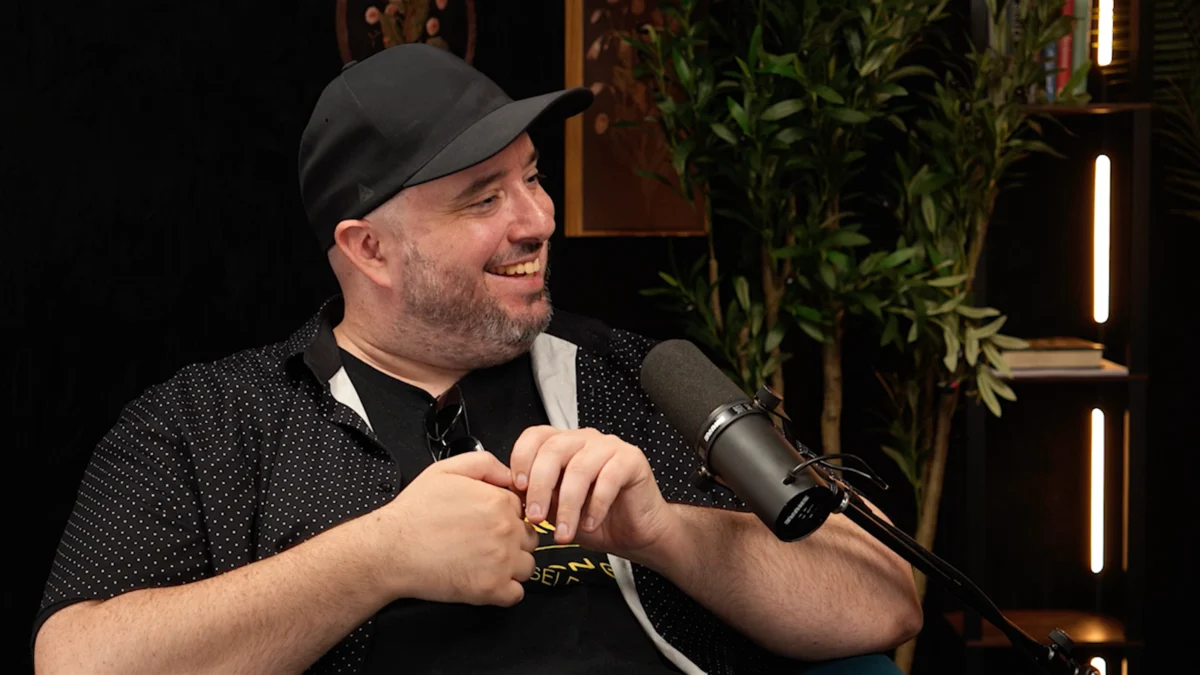
Logan Marshall-Green, a veteran performer with a career spanning more than two decades, recently joined the Next Best Picture Podcast to discuss his involvement in Christopher Nolan’s latest cinematic undertaking, The Odyssey, alongside a retrospective of his diverse body of work. The interview, hosted by Matt Neglia, provided an in-depth look at Marshall-Green’s transition from high-profile television guest spots to becoming a staple of "elevated genre" cinema and eventually a director in his own right. Currently playing in theaters via Universal Pictures, The Odyssey represents a significant milestone for Marshall-Green, marking his second collaboration with actor Tom Holland and his first with Nolan, a director known for reshaping the landscape of modern blockbuster filmmaking. During the hour-long session, Marshall-Green reflected on the disciplined nature of his theater-based upbringing, the ethical complexities of artificial intelligence in the creative arts, and the persistent public comparisons to fellow actor Tom Hardy, offering a candid glimpse into the psyche of a character actor who has consistently prioritized the craft over the trappings of traditional stardom.
The Trajectory of a Twenty-Year Career
Logan Marshall-Green’s professional journey began in the early 2000s, a period characterized by a rapid ascent through the ranks of prestige and procedural television. His early credits, including "The O.C." and "24," established him as a versatile talent capable of navigating both teen drama and high-stakes political thrillers. However, it was his transition into feature films that solidified his reputation as a "director’s actor."
In 2012, Marshall-Green appeared in Ridley Scott’s "Prometheus," a film that served as a prequel to the "Alien" franchise. His portrayal of Charlie Holloway showcased an ability to handle large-scale, effects-heavy productions while maintaining a grounded, character-driven performance. This was followed by a series of roles in critically acclaimed independent projects, most notably Karyn Kusama’s "The Invitation" (2015). In that film, Marshall-Green’s performance was widely praised for its psychological depth, anchoring a claustrophobic thriller that dealt with themes of grief and paranoia.
The actor’s career timeline reflects a deliberate movement toward projects that challenge conventional genre boundaries. This is perhaps most evident in Leigh Whannell’s "Upgrade" (2018), a cyberpunk action-thriller where Marshall-Green’s physical performance was central to the film’s success. By portraying a man whose body is controlled by an artificial intelligence implant, he demonstrated a level of physicality and comedic timing that broadened his appeal to international audiences. Other significant credits in his filmography include the visceral Vietnam-era drama "Quarry," Ava DuVernay’s "When They See Us," and the recent Netflix thriller "Carry-On."
Collaboration with Christopher Nolan and Tom Holland
The release of "The Odyssey" marks a pivotal chapter for Marshall-Green, as he joins the ensemble of a Christopher Nolan production. Following the massive critical and commercial success of "Oppenheimer," Nolan’s partnership with Universal Pictures has become one of the most watched dynamics in the industry. "The Odyssey," an ambitious adaptation of the Homeric epic, reportedly utilizes the large-format IMAX cinematography and practical effects that have become Nolan’s signature.
Marshall-Green spoke at length about the experience of working under Nolan’s rigorous direction. He noted the director’s preference for "tangible reality," which requires actors to be fully present in meticulously constructed environments rather than relying on green screens. This philosophy aligns with Marshall-Green’s own theater background, where the physical space and the presence of fellow performers dictate the emotional rhythm of a scene.

The film also serves as a reunion for Marshall-Green and Tom Holland. The two previously shared the screen in "Spider-Man: Homecoming" (2017), where Marshall-Green played Jackson Brice, one of the early iterations of the Shocker. In the podcast, Marshall-Green reflected on Holland’s growth as a performer, moving from the youthful energy of the Marvel Cinematic Universe to the more somber, demanding requirements of Nolan’s historical and mythological vision. Industry analysts suggest that the chemistry between the seasoned Marshall-Green and the globally recognized Holland provides a vital anchor for the film’s sprawling narrative.
The Directorial Debut and Future Aspirations
In 2019, Marshall-Green made his directorial debut with "Adopt a Highway," starring Ethan Hawke. The film, which follows an ex-convict who finds an abandoned baby in a dumpster, was a departure from the high-octane projects Marshall-Green is often associated with. It received positive notices for its sensitivity and restraint, leading many to wonder if he would pivot permanently to behind-the-camera roles.
When questioned about his future in directing, Marshall-Green expressed a continued interest in the craft but emphasized that his primary passion remains acting. He described the process of directing as an "exhausting but rewarding" extension of his storytelling instincts. He indicated that while he is developing new material, he is waiting for a project that demands his specific perspective as a filmmaker. His goal, he stated, is not to be known for a specific "type" of role, but rather to be recognized as a reliable and transformative artist who can disappear into a character, regardless of the medium.
Addressing the Industry’s Technological Shift
A significant portion of the interview was dedicated to the evolving role of Artificial Intelligence (A.I.) in Hollywood. Given his starring role in "Upgrade"—a film that serves as a cautionary tale about the loss of human agency to technology—Marshall-Green’s perspective is particularly relevant. He expressed a cautious stance, echoing the concerns raised by SAG-AFTRA during the 2023 strikes regarding the protection of an actor’s "digital likeness" and the preservation of the human element in performance.
Marshall-Green argued that while technology can be a tool for enhancement, it cannot replicate the "happy accidents" that occur during a live performance. He noted that the nuance of a look or a tremor in the voice is born from human experience, something that algorithms, however sophisticated, are currently unable to authentically simulate. His comments reflect a broader industry sentiment that seeks to balance technological innovation with ethical safeguards for creative professionals.
The Tom Hardy Comparison and Professional Identity
For years, a recurring theme in Marshall-Green’s media coverage has been his striking physical resemblance to British actor Tom Hardy. While often treated as a trivia point by fans and internet memes, the comparison has occasionally overshadowed his individual contributions to the craft. Marshall-Green addressed this topic with a mixture of humor and professional detachment.
He acknowledged that while the comparisons are "countless," they do not bother him on a personal level. Instead, he views his identity through the lens of his work and his upbringing in the theater. By focusing on his specific "theater upbringing" and the discipline it instilled, he has carved out a distinct niche for himself. He noted that his objective has always been to be a "working actor" rather than a "celebrity," a distinction that has allowed him to navigate a twenty-year career with his integrity intact.

Broader Impact and Market Implications
The release of "The Odyssey" through Universal Pictures is a significant test for the theatrical market’s appetite for high-concept, auteur-driven epics. Following the restructuring of distribution models post-pandemic, Universal has leaned heavily into "event cinema." By casting respected veterans like Marshall-Green alongside bankable stars like Holland, the studio is positioning "The Odyssey" as both a critical contender and a commercial powerhouse.
The involvement of Logan Marshall-Green adds a layer of "prestige grit" to the production. His history of working with visionary directors—Scott, Kusama, Whannell, and now Nolan—suggests a discerning eye for material. For Universal, his presence reinforces the film’s credentials as a serious piece of cinema.
As "The Odyssey" continues its theatrical run, the discourse surrounding Marshall-Green’s career serves as a reminder of the enduring value of the character actor. In an era often dominated by franchise branding, his commitment to the "theater-first" mentality and his willingness to engage with complex themes like A.I. and directorial responsibility highlight a path for longevity in a volatile industry.
The Next Best Picture Podcast, part of the Evergreen Podcasts Network, continues to provide a platform for these long-form discussions, allowing actors like Marshall-Green to provide context that exceeds the limitations of standard press junkets. As Marshall-Green looks toward the future, whether in front of the lens for another blockbuster or behind it for an intimate indie, his influence on the contemporary cinematic landscape remains both steady and significant.
Listeners interested in the full conversation, including detailed anecdotes about his time on the set of "Marshals" and his thoughts on the current state of independent cinema, can access the episode via major podcast platforms or the Next Best Picture website. With "The Odyssey" currently vying for box office dominance, Marshall-Green’s reflections offer a timely look at the intersection of classical storytelling and modern filmmaking technology.