The 79th Cannes Film Festival, held in May 2026, initially faced a common refrain from some critics: a "ho-hum edition," lacking the immediate, visceral masterpieces that defined previous years. However, beneath this surface assessment, a deeper, quieter cinematic revolution was unfolding. This year’s selections, particularly prominent works like Ryusuke Hamaguchi’s All of a Sudden, Valeska Grisebach’s The Dreamed Adventure, and Marine Atlan’s La Gradiva, distinguished themselves as "accumulative works." These films, while beautifully wrought and deeply affecting, eschewed the white-knuckle dramatic intensity of titles such as last year’s Sirat or It Was Just an Accident. Instead, they delivered an incremental emotional impact, fostering a dramatic muscle memory within the viewer through their nuanced storytelling and profound thematic explorations.
The Palme d’Or and the Shifting Landscape of Care
The festival’s highest honor, the Palme d’Or, was awarded to Cristian Mungiu’s Fjord, a multilingual drama that presented a supersized exposé of Norwegian child protective services. Mungiu, a previous Palme d’Or winner for his 2007 film 4 Months, 3 Weeks, and 2 Days, delivered a narrative described by some as a "stacked deck," contrasting sharply in both execution and thematic focus with Hamaguchi’s more introspective study of human connection. While Fjord showcased Mungiu’s signature unflinching realism and explored themes of systemic failure and individual resilience, its perceived "reactionary outlook" regarding a "Scandinavian nanny state" sparked considerable debate among critics and industry observers. This marked Mungiu’s second Palme d’Or, placing him among an elite group of filmmakers to achieve this rare feat, yet it also highlighted a divergence in critical opinion regarding the festival’s top choice.
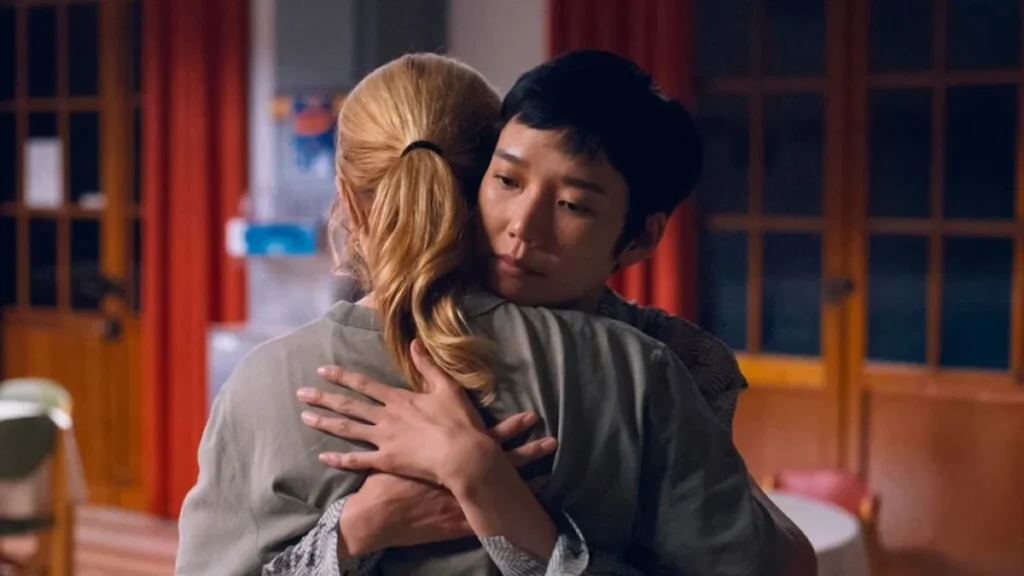
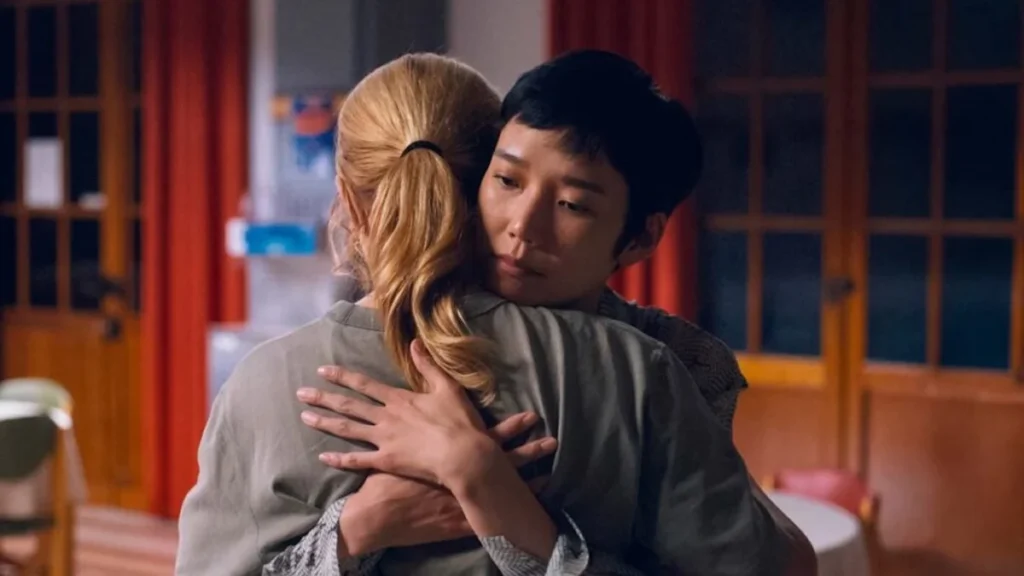
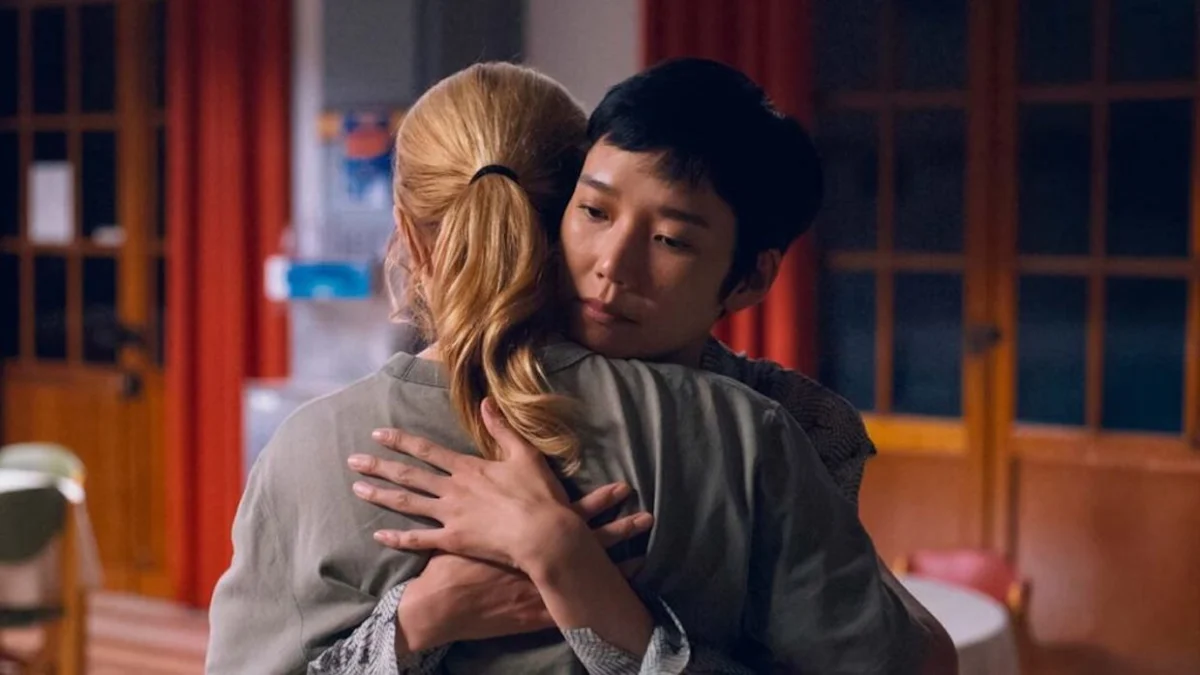
In stark contrast to Fjord‘s confrontational style, Ryusuke Hamaguchi’s All of a Sudden offered a compassionate and deeply stirring adventure in reflection and connection. The film meticulously charts the evolving heart-to-heart between Mari, a Japanese playwright, and Marie-Lou, a French eldercare manager. Their encounter, initially as strangers, blossoms into a fortifying friendship, organically encompassing their mutual concerns for each other and the broader decline of the world. This narrative, celebrated for its nuanced portrayal of human empathy and resilience, garnered the joint Best Actress award for Virginie Efira and Tao Okamoto, whose performances were lauded for capturing the intricate emotional landscape of a burgeoning, life-affirming bond. The film’s resonance was deepened by its real-world inspiration: the correspondence between Japanese anthropologist Maho Isono, who attended the premiere, and philosopher Makiko Miyano, whose terminal illness mirrored a plot point in the film. This personal connection underscored Hamaguchi’s ability to craft scenarios where chance encounters become profound lifelines, a recurring motif in his celebrated filmography, which includes critically acclaimed works like Drive My Car (2021) and Wheel of Fortune and Fantasy (2021).
The Art of Gradual Unfolding: Narrative Depth and Subtlety
A week after All of a Sudden‘s premiere, Valeska Grisebach’s The Dreamed Adventure emerged as another masterclass in gradual storytelling. Despite its challenging three-hour-plus runtime and its placement on the festival’s final afternoon of premieres, the film quickly secured US distribution, a testament to its compelling artistry. Grisebach, known for her meticulous, lived-in approach to filmmaking, spent years conducting research in the Eastern European borderlands to imbue her saga with authenticity. The film follows Veska (portrayed with rock-steady conviction by nonprofessional actor Yana Radeva), a middle-aged archaeologist with little patience for the lingering post-Soviet gangsterism that permeates her environment. While the film opens with a rugged figure on an unclear mission (Syuleyman Letifov, also seen in Grisebach’s Western), its core lies in layers of alfresco table talk and intricate village intrigue, slowly settling around Veska and her circle of friends and helpers.
The Dreamed Adventure masterfully evokes and simultaneously subverts the Western genre, with Veska choosing her moment to react to a tiresome status quo of chest-thumping, gun-toting men clinging to the faded glory of 1990s mafias. Grisebach articulated her vision for the film in an industry paper, stating, "It was more interesting to address ideas about who is strong and who’s weak… Who is, to speak frankly, fucking, and who is being fucked?" This candid approach reflected the film’s bluff treatment of backward gender relations and power dynamics, offering a mature and incisive commentary on societal structures. Critics lauded Grisebach for her confident realization of a complex narrative that allowed its themes to simmer and develop, mirroring the quiet strength of its protagonist.
The Critics’ Week section provided another example of this gradualist approach with La Gradiva, the gorgeously observed debut feature from Marine Atlan. Atlan, who co-wrote the screenplay and served as co-cinematographer, received significant accolades, including a prize in her section. Filmed on location in Naples, La Gradiva focused its wondrously attuned eye on a group of French students on a school trip to Pompeii. Atlan demonstrated a whisker-sensitive feel for adolescent angst and joy, alongside a credible dedication from their teacher (Antonia Buresi). The ensemble of newcomers, including Suzanne Gerin as a budding artist resigned to loneliness and Colas Quignard as a somewhat inept tragic outsider, delivered electric performances. The film excelled in its ability to immerse the audience in the characters’ teenage crises, never diminishing their experiences or resorting to winking humor. Atlan’s innovative camera framing further enhanced the narrative, deftly shifting perspectives to explore teenage dynamics and autonomy, questioning who is observing and who is participating. La Gradiva‘s immediate acquisition of US distribution through 1-2 Special and an early rave review from The New Yorker underscored its significant impact, serving as a welcome counter-narrative to the Competition-centric hierarchy of attention at Cannes.
Historical Echoes and Contemporary Relevancy: WWII Dramas
Cannes 2026 also featured several period dramas that, while set in the past, offered distinct ways of dropping viewers into historical contexts with profound contemporary resonance. Pawel Pawlikowski’s Fatherland presented an impeccably shot and constructed road movie, chronicling Thomas Mann (Hanns Zischler) and his daughter, Erika Mann (Sandra Hüller), on the writer’s 1949 speaking tour across West and East Germany. Pawlikowski, known for his concise yet impactful storytelling in films like Ida (2013) and Cold War (2018), rapidly distilled a pivotal moment in postwar thought. Mann’s eloquent speeches, resonating with the monumental 19th-century first principles of Kant and Goethe, struggled to fully address the immediate realities of postwar ruins, blinkered opportunism, and resurgent authoritarian demons. The film prompted audiences to consider whether they were witnessing a reflection of our own future, a few years hence, grappling with similar societal fissures.

Emmanuel Marre’s A Man of His Time held up another disquieting mirror to the present by tracking the moral decay of a middling municipal bureaucrat (a maddeningly good Swann Arlaud) in Nazi-occupied Vichy France. The film’s aesthetic, with its hard-lit 16mm cinematography, lent a visceral "you-are-there" feel to the Frenchman’s gradual shuffle toward fascism and genocide. The character of Arlaud’s bureaucrat was based on Marre’s own great-grandfather, whose letters to his wife were directly quoted, providing a chillingly personal dimension to the exploration of complicity and moral compromise during a dark historical period. Both Fatherland and A Man of His Time demonstrated the power of historical narratives to illuminate present-day concerns, prompting reflection on enduring human vulnerabilities and societal patterns.
Beyond the Main Competition: Un Certain Regard and Other Highlights
The festival’s various sections showcased a rich tapestry of cinematic expression. The Camera d’Or for best debut feature went to Clarissa, a sumptuously mounted reworking of Virginia Woolf’s Mrs. Dalloway from Nigerian directors Arie Esiri and Chuko Esiri. Their adaptation incorporated a sharpened colonialist critique, explicitly referencing the work of Chinua Achebe, thereby reimagining a literary classic through a crucial post-colonial lens. This film was one of several titles that arrived at the festival with distribution from NEON, a prominent independent distributor whose diverse slate also included the turbocharged South Korean monster movie Hope, featuring a galloping, stretchy hominid alien inspired by Goya’s Saturn Devouring His Son. Also from NEON was James Gray’s Paper Tiger, a pitch-perfect classical work depicting a Queens family tragedy that, despite its artistic merit, did not receive its full due at the festival.
The Un Certain Regard sidebar, dedicated to innovative and daring works, opened in grand style with Jane Schoenbrun’s Teenage Sex and Death at Camp Miasma. This febrile meta-horror journey of self-realization and pleasure, Schoenbrun’s latest and most readily digestible parasocial exploration of desire, featured performances by Hannah Einbinder and Gillian Armstrong. The section’s top prize, however, was awarded to Sandra Wollner’s Everytime, a shattering study in divergent, often mysterious pathways through grief and recovery. Shot by Gregory Oke (known for Aftersun) with a heady intimacy that balanced close-up and distant perspectives, the film’s immediacy was further enhanced by its intricate sound design, creating a profoundly immersive experience. Everytime found a thematic companion in Dominga Sotomayor’s Fortnight title, La Perra, a magnificently composed portrait of a Chilean islander (an arresting Manuela Oyarzún) whose tangle of childhood loss manifested compellingly in an ornery stray dog, highlighting the profound connections between human emotion and the natural world.
Disrupting Expectations: Provocative Narratives and Political Statements
Perhaps the most haunting and unclassifiable experience at Cannes 2026 was Arthur Harari’s The Unknown. Starring a deeply vulnerable Léa Seydoux, the film presented a man transferred into the body of a woman with whom he had a sexual encounter at a carnivalesque warehouse party. Critics initially framed it as a body-swap movie, a genre expectation Harari skillfully sidestepped to craft an uncompromising, singular cinematic vision. His disquieting, ambiguous film employed bodily displacement as a floating signifier, representing trauma in all its bewildering estrangement from self, while also exploring the sometimes uneasy solidarity felt with others in this altered state. Seydoux’s performance was particularly lauded for its courage and depth, echoing themes she explored in a more conventional drama within the Competition, Marie Kreutzer’s Gentle Monster (a follow-up to Corsage), where she portrayed a singer blindsided by her husband’s arrest on child pornography charges.
Cannes 2026, while not concluding with the overt sense of communion that marked last year’s Palme d’Or winner, It Was Just an Accident (whose director, Jafar Panahi, has since faced further resentencing in Iran), did culminate in a powerful anti-authoritarian gesture. Russian exile Andrei Zvyagintsev, the Grand Prix winner for Minotaur, used his platform to address Vladimir Putin directly, urging an end to the Ukraine war and notably referring to the dictator as disconnected from reality, suggesting he needed people to "bring him up to speed." Zvyagintsev’s first film in nearly a decade, filmed in Latvia, portrayed a domineering businessman who descends into murder. This adaptation of Chabrol’s The Unfaithful Wife to the context of the Russian corruption industrial complex, while impactful, felt to some like a foregone conclusion.
Radu Jude’s guest-worker update and "punking" of Octave Mirbeau’s Diary of a Chambermaid offered a less raucous, yet equally incisive, companion piece to his 2023 film Do Not Expect Too Much from the End of the World. The film followed a young mother’s double binds as she nannied a stranger’s child while only able to FaceTime her own daughter back in their Romanian village, a poignant commentary on modern labor and family separation. Ira Sachs’ The Man I Love further explored innovative narrative structures, recentering its 1980s-set, AIDS-inflected story on a musical performer’s loss of memory and identity rather than focusing solely on corporeal decay.
In retrospect, the initial assessment of Cannes 2026 as a "meh year" proved to be superficial. While it may not have delivered immediate, headline-grabbing spectacles, the festival cultivated a profound collection of films that favored incremental emotional impact, deep thematic exploration, and a quiet but persistent challenge to conventional narratives. From Hamaguchi’s tender exploration of human connection to Grisebach’s nuanced social commentary, and from Atlan’s sensitive debut to Harari’s unsettling existential drama, Cannes 2026 ultimately presented a rich and varied cinematic landscape. These were films that demand reflection, promising to resonate deeply and compel audiences to return to them long after the Lumière Theater curtains closed, solidifying the festival’s enduring role as a beacon for artistic innovation and profound storytelling.