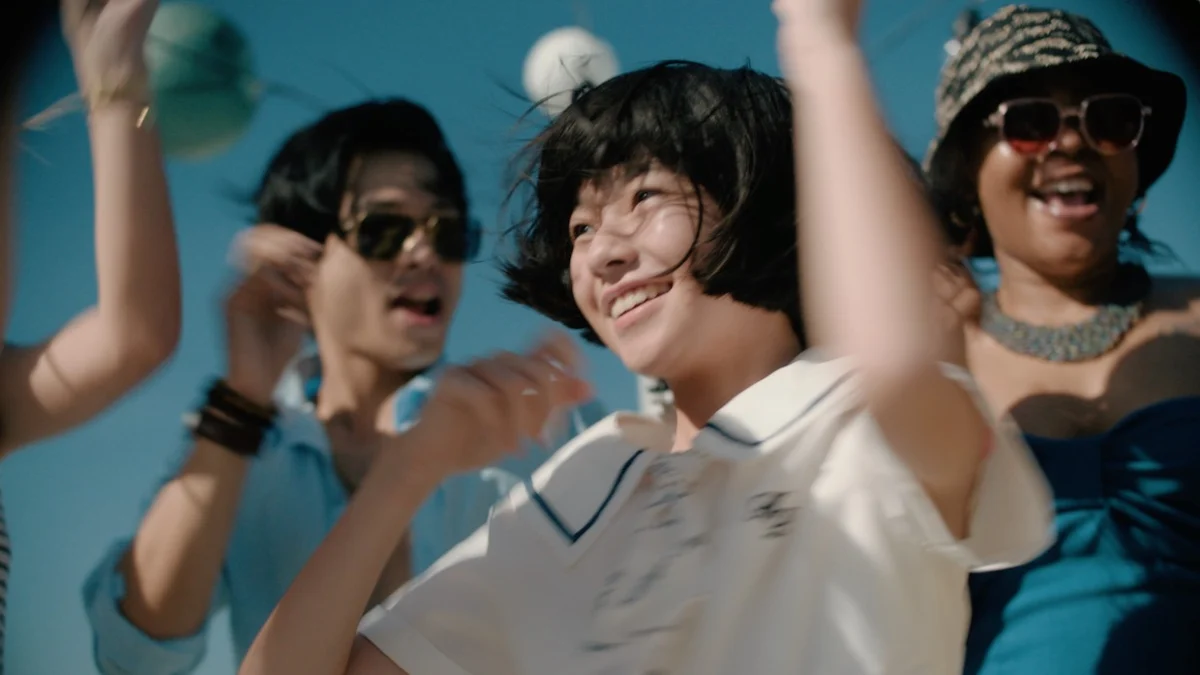
Director Chie Hayakawa’s sophomore feature, Renoir (2026), offers a poignant exploration of childhood innocence confronting profound loss, set against the vibrant yet complex backdrop of Japan’s "bubble period" in 1987. The film centers on Fuki, an 11-year-old girl portrayed with remarkable depth by Yui Suzuki, whose world begins to darken and complicate as her father grapples with a terminal illness. This intimate coming-of-age story subtly weaves personal tragedy with broader societal shifts, creating a narrative that is both deeply personal and historically resonant.
Fuki’s Evolving World: Innocence, Macabre, and Self-Discovery
At the heart of Renoir is Fuki’s evolving perspective. The film meticulously captures her inner life, which, as Hayakawa notes, includes an "unmistakable interest in the macabre," juxtaposed against the mundane rituals and societal expectations typically accorded to a preteen girl. This internal conflict, a child’s grappling with the incomprehensible reality of mortality, forms the emotional core of the film. Hayakawa masterfully uses Fuki’s gaze to highlight the stark contrasts between her personal suffering and the external world’s burgeoning optimism.
A pivotal moment in Fuki’s journey involves a chance encounter with a reproduction of Auguste Renoir’s 1880 oil portrait of the eight-year-old Irène Cahen d’Anvers. This specific painting becomes more than just an aesthetic detail; it provides Fuki with a nascent clue into her own developing taste and, more profoundly, how she wishes to present herself and navigate the complexities of life. This artistic touchstone serves as a quiet metaphor for her burgeoning individuality amidst a period of profound personal and national transition.
The casting of Yui Suzuki as Fuki is a critical element in the film’s success. Hayakawa recounts an extensive audition process, noting that Suzuki, despite being the very first candidate, immediately stood out. "What caught my attention was that she would do everything just slightly different from how I had imagined the character would," Hayakawa explained, praising Suzuki’s unhesitating, natural expressions and her ability to embody both a childlike essence and a mature understanding. Suzuki’s unique talent, including a horse imitation that Hayakawa spontaneously wrote into the script, solidified her as the ideal Fuki, delivering a performance that has been lauded as one of the great child portrayals of contemporary cinema.
The Golden Age: Japan’s "Bubble Period" of the 1980s
The year 1987 places Renoir squarely within Japan’s "bubble economy," a period of unprecedented economic growth driven by rampant financial and real-estate speculation. Following its "miraculous" post-war recovery, Japan experienced a dramatic surge in wealth and confidence from the mid-1980s to the early 1990s. Land prices soared, the stock market boomed, and Japanese corporations acquired iconic global assets, fostering a widespread sense of national pride and optimism about a perpetually brighter future. This era was characterized by extravagant spending, a booming art market, and a general belief in Japan’s technological and economic supremacy.
Hayakawa’s decision to set Renoir during this period is not merely a historical footnote but a deliberate artistic choice. While the film is subtle about its 1980s setting, specific cultural signifiers anchor it firmly in the era: children dancing to Yellow Magic Orchestra songs at camp, a burgeoning phone chat service providing a nerve-wracking subplot for Fuki, and the prevalence of VHS tapes for home entertainment. These details paint a vivid picture of a world on the cusp of significant technological change, yet still deeply rooted in analog experiences.
Hayakawa reflects on the unique quality of her own childhood, which predated the widespread advent of smartphones and the internet. "It’s harder today to get in touch with what’s real, and personal relationships are more complicated and difficult," she observed. The 1980s, in contrast, represented a time when the rest of the world felt distant and mysterious, fostering a "carefree quality to people’s willingness to believe in things" like popular psychic television programs. This blend of admiration for the West, a sense of national optimism, and a simpler mode of interpersonal connection forms the ambient psychological landscape against which Fuki’s complex emotional journey unfolds.
One prominent manifestation of Japan’s admiration for Western culture during this period was the widespread purchase of reproductions of European masterworks. Hayakawa recounts her own experience of begging her parents for a replica of a painting, often sold in "gaudy, Gothic frames" and displayed in typically compact Japanese homes. This trend, she explains, reflected an "innocence" and a collective outlook of many Japanese people at that time – a desire to embrace and emulate the perceived sophistication of the First World. The Renoir portrait in the film, therefore, symbolizes not just Fuki’s personal awakening but also a broader cultural aspiration.
The Loneliness of Adulthood: Fuki’s Mother’s Story
Beyond Fuki’s immediate struggles, Renoir sensitively explores the parallel loneliness experienced by the adults in her life. A compelling subplot focuses on Fuki’s mother, who, while navigating the imminent death of her husband, is obligated to attend a corporate course on how to interact with coworkers and employees. This narrative thread, rooted in Hayakawa’s personal observations of her own mother’s struggles with anger, depicts the profound isolation that can accompany intense emotional distress.
Hayakawa explains that a key motivation for making the film was to depict the "loneliness that these adults feel," including Fuki’s father. Her portrayal of the mother is marked by deep empathy, moving beyond a simplistic judgment of her anger. "If I made Renoir when I was younger, I probably would have depicted the mother as a bad person," Hayakawa admitted. "Now I understand her feelings much better. People who have these types of issues are very lonely." The company-mandated training, though humiliating, serves as a catalyst for her to meet someone who sees past her anger to her inherent good, highlighting the complex paths to human connection.
The inclusion of an anger management course also subtly reflects the cultural trends of the 1980s, particularly the admiration for Western practices. Hayakawa notes that while such courses are popular in Japan today, their origins often lay in the United States, suggesting how "things from the West, or from abroad, were considered superior" during that era, further embedding the personal narrative within its historical context.
A Cinematic Diptych: Renoir and Plan 75
Renoir marks a distinct departure in register from Hayakawa’s acclaimed debut feature, Plan 75 (2022), yet the two films form a "fascinating diptych" in their shared exploration of grief, suffering, and societal implications. Plan 75 presented a chillingly plausible near-future scenario where the Japanese government implements an incentivized euthanasia program for senior citizens to address the country’s burgeoning population crisis. This premise resonated deeply, particularly within Japan, where it was often described as "scarier than a horror movie" due to its perceived proximity to reality.
Japan faces one of the world’s most rapidly aging populations, with projections indicating that by 2050, one-third of all Japanese people will be over 65. The country also grapples with declining birth rates and a shrinking workforce, creating immense societal and economic pressures. Plan 75 tapped into these anxieties, illustrating a dystopian solution born from a society grappling with the perceived "burden" of its elderly. Hayakawa noted that while the idea was dismissed as impossible when she made a short film version years prior, the COVID-19 pandemic significantly shifted public perception, making the film’s premise seem "almost an inevitability."
Internationally, Plan 75 was often framed as a "dystopian sci-fi" film, an interpretation Hayakawa found "fresh and interesting," as she personally viewed it as depicting a "world parallel to our contemporary existing society." Both films, despite their differing scales—one focusing on an individual’s internal world and the other on systemic societal collapse—share a refusal of "pat catharses and cheap sentimentality." They bravely confront the harsh realities of loss and human struggle, acknowledging the role of sentimentality in late childhood (as in Renoir) while maintaining a sober, compassionate lens on suffering.
Japan’s Shifting Outlook: From Optimism to Uncertainty
Hayakawa’s films reflect a keen awareness of Japan’s evolving societal landscape. She observes a profound shift from the optimism of the bubble era to a pervasive sense of concern about the future today. The challenges of an aging, declining population and economic stagnation have fostered a feeling of "helplessness" among many Japanese people. She notes that the older generation, clinging to memories of the bubble period, often resists change, contributing to a broader sentiment of resignation. "They aren’t able to fight or resist the various problems of the country, and there’s a general sense of giving up," she states, encapsulating a national mood that stands in stark contrast to the carefree belief in a brighter future that characterized the 1980s.
This societal anxiety, particularly the discrimination faced by the elderly and the perception of them as a "burden," directly informs the themes of Plan 75. While Japan, like the US, has a powerful class of older individuals, Hayakawa stresses that the broader issues of an aging society disproportionately affect the majority of elderly people who are economically struggling. Her films serve as potent commentaries on these pressing national concerns, urging a compassionate re-evaluation of human worth beyond mere productivity.
The Independent Filmmaker in a Changing Industry
Hayakawa’s path as a filmmaker also sheds light on the contemporary Japanese film industry. She highlights a significant trend: the dominance of films based on existing intellectual property (IP), such as best-selling novels, manga, or anime adaptations. "I would imagine maybe 90% are based on preexisting IP, which is considered the least risky type of investment," she estimates. This landscape makes it challenging for original scripts, especially debut features, to secure domestic funding.
Consequently, Hayakawa has embraced international co-productions, a route she took for both Plan 75 and Renoir. Europe, with its numerous grants and opportunities for debut features and dedicated film festival sections, has been instrumental in supporting her vision. This international approach, she notes, signifies a blurring of national borders in filmmaking, with more foreign directors working in Japan and Japanese directors venturing abroad. This collaborative model has allowed her to pursue original storytelling outside the constraints of Japan’s commercial IP-driven market.
Her collaboration with cinematographer Hideho Urata, a returning partner from Plan 75, is also integral to the distinct visual aesthetics of her films. While Plan 75 utilized handheld shots for its most lively character, Renoir adopts a different visual language, characterized by strong shot composition and a more composed camera. Hayakawa credits Urata’s patience and shared sensitivity to image-making, particularly given her own non-traditional entry into feature filmmaking (without prior assistant director experience). Despite the challenges of pandemic-era production and limited pre-filming interaction for Plan 75, their deep discussions about shared cinematic tastes fostered a trust that translated into seamless on-set collaboration. By the time of Renoir, with many returning crew members, the production environment was notably more relaxed, allowing Hayakawa to lean into her strengths as a director.
The Universal Layer of Grief and Compassion
Ultimately, Renoir delves into the profound and often solitary experience of grief. Hayakawa candidly shares her own childhood memories of her father’s impending death, recalling a complex mix of anticipating sympathy from friends and a tremendous sense of guilt for such thoughts. She also recounts the disorienting experience of her mother’s "performance" of widowhood at the funeral, highlighting the layered and strange nature of loss through a child’s eyes.
These personal reflections infuse the film with an authentic portrayal of how grief can be isolating, even amidst well-intentioned gestures of sympathy. While the film may feel more sober than romantic, its visual beauty and the counterbalance of a wistful summer vibe with the creeping onset of grief create a rich emotional tapestry. Hayakawa admits her overall memories of girlhood are often tinged with worry, stress, and isolation, contributing to the film’s "strong sober element" rather than typical happy childhood nostalgia.
Despite the despairing quality often associated with Plan 75 and the intimate confrontation with death in Renoir, both films are ultimately works of profound compassion. Hayakawa describes herself as an "optimistic pessimist," a philosophy that underpins her nuanced approach to depicting human suffering and societal challenges. Her films do not offer easy answers but invite viewers to grapple with complex emotions and uncomfortable truths, fostering empathy and understanding in a world increasingly burdened by anxiety and division.
Renoir is currently playing at IFC Center in New York, and opens this Friday, June 21, at the NuArt in Los Angeles, before expanding to other cities via Film Movement.