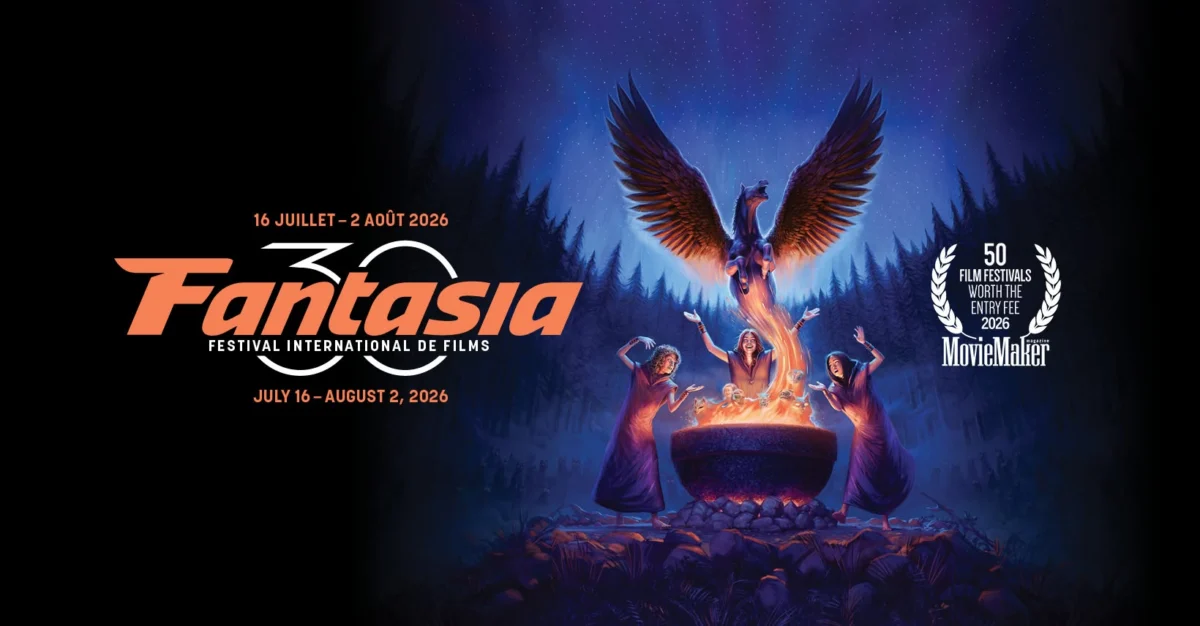
Writer and producer Taiki Sakurai recently made his inaugural visit to the esteemed Fantasia International Film Festival in Montreal, a significant milestone for the veteran of Japanese animation. His presence at the festival, now celebrating its 30th edition, marked a dual occasion: a special 15th-anniversary screening of Takeshi Koike’s critically acclaimed animated feature, "Redline," and the world premiere of his own animated short, "20001 An Earth Odyssey," which he both wrote and produced. While this was Sakurai’s first physical attendance, his work is no stranger to Fantasia’s accolades, with his produced film "Giovanni’s Island" having garnered both the Satoshi Kon Award for Best Animated Feature and an Audience Award back in 2014.
Sakurai’s delight was palpable as he discussed the enduring appeal of "Redline," a film that continues to captivate audiences more than a decade after its initial release. "After all these years, people are still enthusiastic about it," Sakurai stated, conveying a profound satisfaction in witnessing the sustained passion for a project he helped bring to life. His long-held desire to attend the festival, especially after missing the triumphant reception of "Giovanni’s Island" twelve years prior while remaining in Japan, imbued this visit with additional personal significance. Fantasia, known globally for its diverse programming spanning genre cinema, animation, and international independent films, served as a fitting stage for Sakurai to reflect on his multifaceted career and the profound transformations within the anime industry. The festival’s 30th anniversary underscores its longevity and pivotal role in showcasing groundbreaking works, making Sakurai’s visit a symbolic convergence of past achievements and future aspirations.
The Genesis of a Cult Classic: Writing "Redline"
The journey of "Redline" began in approximately 2002, seven years before its theatrical premiere, a testament to the ambitious and intricate nature of its production. Taiki Sakurai joined the project during its nascent stages, then a young talent around 24 or 25 years old, relatively unknown in the sprawling landscape of Japanese animation. The film’s foundational concept and characters were initially conceived by filmmaker Katsuhito Ishii, who envisioned a high-octane, visually spectacular narrative. Takeshi Koike, celebrated for his distinctive kinetic animation style, was brought on board to translate Ishii’s vision into an animated feature. Sakurai’s initial mandate was to contribute to just one of the project’s four principal narrative segments.
The early development phase also saw the involvement of Yoji Enokido, a renowned screenwriter celebrated for his contributions to seminal works like "Neon Genesis Evangelion." However, Enokido’s commitments to another major production meant his availability for "Redline" was limited, leaving Sakurai in a holding pattern, awaiting the guidance of more experienced writers to shape the screenplay. It was Katsuhito Ishii who eventually approached Sakurai, entrusting him with the formidable task of penning the opening section of the film himself. This proved to be a pivotal moment in Sakurai’s early career.
"I wrote the first part, and then I continued," Sakurai recounted, detailing how this initial assignment unexpectedly expanded. "I wrote the second part, the third part and the fourth part. I basically wrote the first draft of the entire movie." This extensive contribution meant Sakurai became the primary architect of the film’s narrative structure and dialogue in its initial form. He was informed that Ishii, Enokido, and Koike would subsequently revise his work, a common practice in collaborative film production. Yet, upon viewing the completed production, Sakurai realized that a substantial portion of his original writing had been retained, forming the backbone of the final script. The most notable omissions, he observed, pertained to the elaborate backstories he had developed for many of the eccentric drivers participating in the titular Redline race. These passages were ultimately removed to streamline the narrative and prevent the screenplay from becoming excessively long, a practical decision driven by pacing and production constraints. "What I see is what I wrote," he explained, acknowledging that while some elements were edited, the core essence of his contribution remained intact, a testament to its strength and the collaborative spirit of the project. "Some of the writing is gone here and there, but it was their project and their decision to remove whatever they thought was unnecessary." "Redline" would go on to achieve cult status, lauded for its stunning hand-drawn animation, blistering pace, and unique visual style, which many critics at the time described as a groundbreaking achievement in anime. Its technical ambition and artistic daring set a new benchmark for what animation could achieve, especially in a genre often dominated by more conventional storytelling.
From Screenwriter to Producer: A Leap of Faith with "Giovanni’s Island"
Sakurai continued to hone his craft primarily as a screenwriter for nearly another decade following "Redline." However, a significant turning point in his professional trajectory emerged during the arduous production of "Giovanni’s Island." This historical drama, set in the aftermath of World War II, required a deeply sensitive and meticulously crafted narrative. Sakurai dedicated approximately a year and a half to developing its screenplay, undergoing an exhaustive process of rewriting it around 24 times before the team felt it had reached its definitive form.
Just as the screenplay was finalized, the project faced a severe crisis: both the original director and producer unexpectedly departed. With the budget already secured and a polished script in hand, Production I.G, the renowned animation studio, found itself in a precarious position, lacking an available producer capable of overseeing the complex production. In an act of bold initiative, Sakurai, despite his lack of prior producing experience, approached the studio’s president and volunteered to take on the role himself. "I think I was crazy, and the CEO was also crazy to let me do it," he candidly remarked, reflecting on the audacious nature of his decision.
Sakurai’s confidence stemmed from years of observing the inner workings of Production I.G from his vantage point as an in-house writer. He believed he had absorbed enough knowledge about the organizational processes of animation production. However, the reality of the role proved starkly different from mere observation. The transition from writing to the multifaceted demands of production management—overseeing budgets, schedules, personnel, and creative direction—presented numerous unforeseen complications. Despite these immense challenges, Sakurai persevered, successfully guiding "Giovanni’s Island" to completion. While the film did not achieve blockbuster financial success, its artistic merit and poignant storytelling garnered extensive international recognition, earning an impressive 17 awards, according to Sakurai. These accolades included the aforementioned Satoshi Kon Award and Audience Award at Fantasia, as well as nominations and wins at other prestigious festivals globally, cementing its reputation as a critically acclaimed work. Following the film’s successful festival run, the president of Production I.G, recognizing Sakurai’s unexpected aptitude for the role, suggested that he might be better suited to producing than writing. From that point forward, production became the central focus of his burgeoning career, marking a definitive shift in his professional identity.
The Unconventional Brilliance: Animators Behind "Redline" and Beyond
Sakurai vividly described Takeshi Koike, the director of "Redline," as an individual of exceptional kindness, immense talent, remarkable speed, and unwavering persistence—qualities he deemed absolutely essential for navigating the complexities of a project as demanding as "Redline." The film stands apart from most animated features due to a groundbreaking production methodology: it contains no conventional background artwork. Typically, backgrounds are rendered separately and then composited with animated characters. In "Redline," however, the backgrounds themselves were meticulously animated by the animators. "All the backgrounds are animated by the animators," Sakurai explained. "That is why everything seems to be moving constantly. It was a crazy idea." This ambitious approach was a primary factor contributing to the film’s extensive seven-year production timeline. Sakurai firmly believes that Koike’s extraordinary speed and relentless determination were the sole reasons the project ultimately saw completion, rather than languishing as an unfinished, overly ambitious endeavor.
His subsequent experiences as a producer on "Giovanni’s Island" introduced him to an equally dedicated, if not obsessive, cadre of artists. He recalled one animator who, consumed by the pursuit of perfection, refused to provide his bank details for payment, expressing uncertainty about whether his assigned sequences would ever meet his exacting standards. This artist maintained that if his work achieved only 99 percent of his internal expectations, he would neither submit it nor accept payment. Even after finally completing the sequences, the same animator declined to have his name included in the credits, remaining dissatisfied with his own output. Sakurai likened this uncompromising attitude to that of a samurai, a deep-seated cultural reverence for mastery and honor. In such instances, Sakurai’s role as producer transcended mere logistical management; it became a delicate act of psychological persuasion, not necessarily to push for greater perfection, but to convince the artist that their existing work was, in fact, already exemplary and worthy of inclusion in the final production.
Another memorable anecdote involved an animator whose dedication led to an unexpected telephone call from the police. The artist had remained submerged at the bottom of a public swimming pool for such an extended period that concerned staff members believed he was drowning. When rescuers pulled him from the water, he vehemently protested, explaining that he had merely been observing the intricate movement of bubbles to accurately animate them for a scene. He further elaborated that his bathtub was simply too shallow for the necessary research, leaving Sakurai to navigate the peculiar task of explaining this unusual situation to the authorities. "These were very crazy, but very talented, pure and genuine creators," Sakurai concluded, encapsulating the unique blend of eccentricity and genius that often characterizes the most dedicated artists in the animation world. These stories not only highlight the immense passion and commitment that underpinned these productions but also offer a glimpse into the creative processes that birthed some of anime’s most distinctive works.
The Shifting Sands of the Anime Industry
Taiki Sakurai firmly believes that the Japanese anime industry has undergone a complete transformation since the days of "Redline" and "Giovanni’s Island." Significant improvements have been made to working conditions, a long-overdue development in an industry historically plagued by demanding hours and low pay. Animators now receive more appropriate compensation, and studios have implemented regulations to control working hours, actively preventing employees from enduring night-long shifts at their desks. Sakurai views these developments as unequivocally positive and necessary advancements, bringing the industry closer to global labor standards.
However, this new production environment, while beneficial in many respects, has simultaneously introduced a different set of challenges. Shorter working days, a welcome change for employee well-being, can inevitably lead to longer production schedules. These extended timelines, in turn, necessitate increasingly larger budgets, straining financial resources and potentially limiting the scope of projects, particularly for smaller studios or independent creators.
Sakurai also posited that the newfound financial stability within the industry has, paradoxically, attracted some employees who may not possess a genuine, deep-seated interest in animation as an art form. He contrasts this with earlier generations of animators who, driven by an unwavering devotion to the medium, often endured notoriously terrible working conditions out of pure passion. While devoted creators undoubtedly persist, Sakurai suggests that a segment of contemporary workers now approach animation as an ordinary job, potentially feeling less personal responsibility for the artistic integrity and quality of the finished production. He emphasized that passionate creators continue to thrive, but acknowledged that the kind of obsessive, all-consuming personalities he previously encountered, those willing to push boundaries regardless of personal cost, have become considerably rarer. This shift reflects a broader professionalization of the industry, balancing artistic drive with sustainable labor practices, a complex evolution with both clear benefits and potential artistic trade-offs.
Streaming and Anime’s Global Ascendance
The international standing of Japanese animation has also experienced a dramatic resurgence and expansion, a phenomenon Sakurai attributes significantly to the advent of streaming platforms. These services played a crucial role in democratizing access to anime, moving it beyond its niche association with "obsessive fans" and introducing it to a much broader, mainstream global audience.
The COVID-19 pandemic further accelerated this development. As viewers worldwide found themselves confined to their homes, they gradually exhausted the live-action content available on their streaming subscriptions. This prompted many to experiment with anime, which was often readily included in their existing plans. To their surprise, many discovered that the medium was far more varied, narratively compelling, and artistically diverse than they had previously imagined, shattering preconceived notions and opening new avenues of consumption.
Sakurai witnessed this global expansion firsthand during his six-year tenure at Netflix in Japan. In his early years with the company, he was actively encouraged to propose new strategies and projects, often receiving swift approval to proceed with convincing ideas. "I felt that this was my moment and also a moment for the Japanese anime industry," he recalled, recognizing the immense potential for growth and influence that streaming offered. As his responsibilities evolved, his role gradually shifted from daily creative production towards executive decision-making. Instead of directly writing scripts or negotiating with animators, he focused on assembling talented teams and greenlighting productions by creators in whom he had profound faith. One of the projects he notably approved and championed was Studio Trigger’s critically acclaimed "Cyberpunk: Edgerunners," a series he continues to regard as one of his proudest achievements. The show’s global success, marrying Japanese animation prowess with a beloved Western video game franchise, epitomized the cross-cultural potential unlocked by streaming platforms. Despite thoroughly enjoying his time there, Sakurai ultimately departed Netflix approximately three and a half years before his Fantasia interview, a decision he stated he has never regretted, signaling his renewed commitment to direct creative involvement.
The Importance of Original Anime: Charting a New Path
Currently, Taiki Sakurai is channeling his energies into original productions through his own company, emphasizing creative autonomy and innovative storytelling. His latest short film, "20001 An Earth Odyssey," which premiered at Fantasia, exemplifies this renewed focus. The narrative follows three alien visitors arriving on Earth long after humanity has mysteriously vanished. These extraterrestrial explorers attempt to deduce the cause of human extinction but consistently misinterpret the objects and evidence they encounter. Their inherent admiration for humanity’s scientific and artistic achievements blinds them to the species’ more destructive characteristics.
In one proposed episode, for instance, the aliens discover a gun but steadfastly refuse to believe that an advanced civilization would invent a device specifically designed to kill members of its own species. "’They couldn’t have been that stupid,’" Sakurai wrote for the aliens, aiming for a moment where viewers would initially laugh at the aliens’ naiveté before experiencing a slight, uncomfortable twinge of guilt over the uncomfortable accuracy of the observation. The short is conceived as a pilot, designed to gauge interest for a potential series. In parallel, Sakurai is also actively developing another original animated feature and an original series, underscoring his commitment to crafting fresh narratives.
While acknowledging the enormous global audience for anime adapted from popular manga, Sakurai firmly believes that original projects are absolutely essential for attracting and fostering exceptional creative talent. He points to "Redline" as a prime example of what can be achieved when artists are granted the freedom to construct something entirely new, unburdened by the inherent restrictions of adapting an established property. "Takeshi Koike spent seven years entirely devoted to it," he highlighted, attributing this profound dedication directly to the fact that "’Redline’ was an original production." This conviction underscores his belief that creative freedom, while potentially riskier financially, is the fertile ground from which truly groundbreaking and artistically significant works emerge, allowing visionary directors and animators to push the boundaries of the medium without external constraints.
Returning to the Cybernetic Soul: The Enduring Legacy of "Ghost in the Shell"
Among the numerous pivotal moments that have shaped Taiki Sakurai’s illustrious career, "Ghost in the Shell: Stand Alone Complex" holds a particularly important and foundational position. It was during his time as a 22-year-old university student that Production I.G offered him the invaluable opportunity to work on the acclaimed science-fiction series. He remains profoundly grateful that the studio was willing to entrust such a significant opportunity to an inexperienced writer, effectively providing him with his initial entry point into the highly competitive anime industry. While projects like "Redline," "Giovanni’s Island," and "Cyberpunk: Edgerunners" each marked major stages in his professional development and growth, it was "Ghost in the Shell: Stand Alone Complex" that truly opened the doors and allowed him to establish his career.
Sakurai also expressed considerable enthusiasm for Science SARU’s new interpretation of "Ghost in the Shell." He noted that Mamoru Oshii’s landmark 1995 movie became so profoundly influential that many subsequent adaptations tended to follow Oshii’s philosophical and aesthetic vision rather than adhering strictly to Masamune Shirow’s original manga. This trend, while producing acclaimed works, often distanced the adaptations from the source material’s distinct tone and themes. The new version by Science SARU, in contrast, appeared to Sakurai to return more directly to Shirow’s original tone and the intricacies of his manga, a development he views as highly significant.
He described Shirow as a remarkably generous and polite creator who has consistently permitted other artists to reinterpret his seminal work, allowing for a diverse range of artistic expressions within the franchise. For this reason, Sakurai was particularly pleased to witness an adaptation that might finally offer the original author a version closer to the manga he meticulously crafted. This approach honors the creator’s initial intent while still allowing for contemporary artistic interpretation, a delicate balance in the world of adaptations.
From the intensely hand-drawn, visionary animation of "Redline" and the unique challenges of producing "Giovanni’s Island" to his strategic role in anime’s international expansion through streaming platforms, Taiki Sakurai’s career serves as a compelling microcosm of the profound transformations experienced by the Japanese animation industry over the last two decades. His current, unwavering emphasis on fostering original storytelling through his own company not only reflects a personal artistic imperative but also reveals a deep-seated determination to preserve and champion the creative freedom that was instrumental in enabling groundbreaking productions like "Redline" to exist in the first place. His journey exemplifies the delicate balance between commercial imperatives, global reach, and the unyielding pursuit of artistic integrity in a rapidly evolving global entertainment landscape.