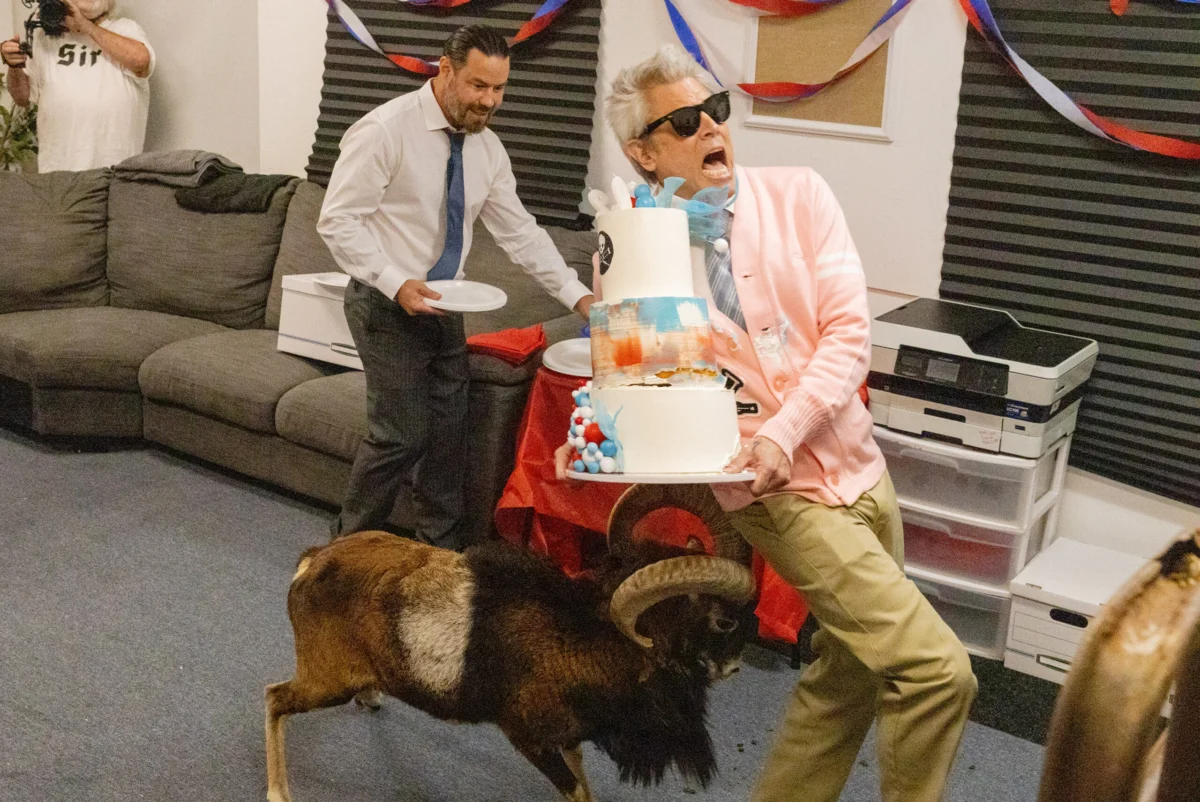
As the release of Jackass: Best and Last (2026) approaches, marking what some cast members believe could be the final installment of the groundbreakingly sophomoric series, director Jeff Tremaine finds himself in an unexpectedly wistful state. The man who has meticulously orchestrated the franchise’s signature blend of chaos and camaraderie from behind the camera since its inception has acknowledged a profound emotional connection to its potential conclusion. This sentiment emerged powerfully during the editing process, as Tremaine revisited decades of footage, witnessing the transformation of his cast from nascent, reckless youths to seasoned, if still impish, performers. The journey of Jackass, from a seemingly fleeting television experiment to a global cultural phenomenon, stands as a testament to its creators’ unique vision and enduring appeal, a narrative Tremaine admits he never anticipated.
From Skate Zine to Global Phenomenon: A Journey Through Jackass’s Origins
The genesis of Jackass is rooted in the gritty, irreverent counter-culture of 1990s skateboarding. Jeff Tremaine’s career began at Big Brother magazine, a publication renowned for its provocative content and satirical edge within the skateboarding community. For Tremaine, then the magazine’s editor, this role represented the pinnacle of his professional aspirations, allowing him to curate its aesthetic and editorial direction. It was within this environment that the seeds of Jackass were sown, largely through the contributions of Johnny Knoxville. Knoxville, initially a writer for Big Brother, began pitching increasingly dangerous and outlandish stunts for video segments, famously shooting himself with a handgun for an early piece. Tremaine recognized an undeniable charisma and a unique ability to engage audiences in Knoxville’s performances, a quality he also observed in nascent talents like Steve-O, Wee Man, and Chris Pontius. These personalities, more than their skateboarding prowess, were "outrageous" and inherently comedic, leading Tremaine to the realization that their antics transcended the scope of a mere skateboard video and held the potential for a television series.
The concept found a home at MTV, premiering in October 2000. Despite Tremaine’s initial expectation that the show would be quickly canceled due to its controversial nature, Jackass exploded into a pop culture sensation. Its raw, unscripted format, showcasing real-life stunts and pranks, resonated with a generation eager for authentic, boundary-pushing entertainment. The series, however, was also met with considerable controversy, facing criticism for inspiring dangerous imitative behavior. This led to its eventual transition from television to the silver screen, a move that would solidify its legacy.
Jackass: The Movie debuted in 2002, proving the franchise’s cinematic viability by grossing over $79 million worldwide on a modest $5 million budget. This success paved the way for a series of increasingly ambitious sequels: Jackass Number Two (2006), Jackass 3D (2010), and Jackass Forever (2022). Each film pushed the boundaries of physical comedy and production scale, consistently outperforming expectations and cementing Jackass as one of the most unlikely, yet enduring, franchises in modern cinematic history. The films have collectively grossed over $500 million globally, a remarkable feat for a series built on slapstick and crude humor, demonstrating its widespread and sustained appeal.
The Accidental Auteur: Jeff Tremaine’s Unconventional Path to Directing
Despite his pivotal role in shaping a multi-million-dollar franchise, Jeff Tremaine presents a figure far removed from the conventional image of an auteur director. Sporting a vintage Smiths T-shirt and maintaining a boyish, impish demeanor even with his graying hair, Tremaine eschews pretension, likely scoffing at any such descriptor. Yet, his artistic fingerprints are undeniably embedded in the Jackass aesthetic. Unbeknownst to many, Tremaine holds an undergraduate degree in fine arts, having cultivated a deep love for painting and drawing from an early age. This background, however, is rarely highlighted in journalistic portrayals, which often depict him merely as another "knucklehead" in the ensemble of jokers.
Tremaine himself confesses that he "never aspired to be a director." His passion lay in visual design and curation, a talent he honed at Big Brother magazine, where he delighted in controlling the layout and visual presentation. His entry into filmmaking was less a deliberate career choice and more an organic evolution driven by circumstance and a keen eye for compelling personalities. He possessed a natural knack for identifying individuals with extraordinary comedic potential and for creating situations that elicited their most outrageous and authentic responses. This curatorial instinct, combined with his fine arts sensibility, allowed him to craft something unexpectedly touching and endearing from seemingly coarse moments, spearheading a comedic series that, beneath its layers of gross-out gags, celebrates healthy male friendships and implicitly condemns homophobia.
Navigating Mayhem: Directorial Challenges and Creative Evolution
The journey of Jackass from its grassroots beginnings to a major studio franchise presented Tremaine with a unique set of directorial challenges. The early days were characterized by guerrilla filmmaking: the entire crew, including cameramen, sound engineers, and cast, would fit into a single van, with Tremaine often at the wheel, even for a Paramount Pictures production. He recalls driving a gravely injured Ryan Dunn for X-rays after a particularly painful stunt, a far cry from the unionized, highly structured sets of later films. This spontaneous, unpermitted approach allowed for legendary stunts like the impromptu "kidnapping" of Brad Pitt, conceived and executed within minutes.
However, as the franchise grew in scale and financial investment, this spontaneous approach became increasingly difficult to maintain. The necessity of obtaining permits, ensuring safety protocols, and navigating studio bureaucracy transformed Jackass into a "slow-moving, deliberate machine." While Tremaine laments the loss of unbridled spontaneity, he also acknowledges that "operating with some restrictions" forces greater creativity. This adaptive mindset became crucial in maintaining the series’ distinct voice amidst increasing logistical complexities.
One of the most notable examples of these creative negotiations involved battles with the Motion Picture Association of America (MPAA) over film ratings. Tremaine vividly recounts the struggle to retain a prolonged shot of Chris Pontius’s penis hitting a ping-pong ball in Jackass 3D. The MPAA’s stringent rules, which once required justification for "any frame of full-frontal male nudity," forced Tremaine to compromise. After negotiations, Paramount communicated a strict "ten seconds of penis exposed" limit. Tremaine’s ingenious solution involved using a sliding black bar to cover and uncover the nudity, allowing the comedic impact of the "dick hitting the ping-pong ball" to remain, a testament to his creative problem-solving under pressure.
Tremaine’s collaborative dynamic with Johnny Knoxville also played a significant role in shaping the franchise’s content. As the "judge and jury of all the ideas," their creative conflicts often pushed the boundaries of what was thought possible. Tremaine recalls his initial skepticism about Knoxville’s concepts for "The High Five" and "The Bear" (in Jackass Forever, involving Ehren McGhehey and an actual bear). Despite his doubts, Knoxville’s persistence compelled Tremaine to "figure out how to make it work," resulting in some of the series’ most memorable and audacious stunts. This willingness to push through creative friction underscored their shared commitment to the franchise’s unique brand of outrageousness. The physical stakes were often incredibly high, as exemplified by the bull stunt in Jackass Forever. After Knoxville sustained two broken ribs on the first take, Tremaine faced the difficult task of asking him to go again, knowing the risks involved but understanding the comedic necessity of getting "the right shot," which often meant "getting it wrong."
The Art of Controlled Chaos: Crafting the Jackass Aesthetic
Tremaine’s directing style for Jackass is less about traditional performance guidance and more about orchestrating authentic reactions within meticulously planned, yet unpredictable, scenarios. He doesn’t script dialogue, preferring to capture the cast’s genuine personalities. However, he remains acutely attuned to "hamminess," often asking for retakes to ensure authenticity. His true genius lies in his ability to cast and situationally direct. He positions specific cast members, like the quick-witted Chris Pontius, near the action, knowing their unscripted reactions can elevate a "C" bit to an "A." This strategic placement, combined with his "360-degree" shooting approach – where cameras capture everything, even a cameraman throwing up – ensures no comedic gold is missed. As productions grew, maintaining this fluidity became a challenge, requiring him to "shrink this big world" around the cast, guarding the spontaneity that Jackass thrives on.
Music, too, plays a foreground role in Tremaine’s creative process and the Jackass aesthetic. Influenced by his early discovery of punk rock, music is not mere background but a vital element, often serving as an homage or reflecting the creators’ personal tastes. The carefully selected soundtracks amplify the comedic and emotional beats of the stunts, solidifying Jackass‘s identity.
Critical Reevaluation: From Lowbrow Stunts to MoMA Recognition
Perhaps one of the most remarkable aspects of the Jackass phenomenon is the dramatic shift in its critical reception. Initially dismissed with "terrible reviews" by critics who saw it as nothing more than crude, lowbrow entertainment, the franchise began to garner serious critical attention around the time of Jackass 3D‘s premiere at the Museum of Modern Art (MoMA) in 2010. This event marked a significant turning point, prompting a reevaluation of the series as a unique form of performance art, a blend of slapstick, documentary, and sociological commentary.
Tremaine, however, approaches this newfound intellectualization with a degree of skepticism and humor. He finds the MoMA gala "hilarious" and admits to struggling with "intellectualizing what we do," preferring to see it as "surface-level" and "stupid." While he enjoys reading insightful breakdowns of the series, he often feels critics "are just pulling shit out," even if occasionally they are "dead-on." This ambivalence highlights his punk rock ethos, which prioritizes raw expression over academic validation. The critical acclaim for Jackass Forever (2022) even led him to question, "Maybe we’re just not fucking punk anymore. Maybe we’ve lost it."
Adding to the franchise’s unexpected artistic credibility was the Academy Award nomination for Jackass Presents: Bad Grandpa (2013) in the Best Makeup and Hairstyling category. This spin-off, featuring Johnny Knoxville as an elderly prankster, showcased a different facet of the Jackass sensibility, proving its capacity for narrative and character-driven comedy, and further confounding critics who had long dismissed the series as mere spectacle.
Beyond the Pranks: The Enduring Legacy and Cultural Resonance
Beyond the broken bones and gross-out gags, Jackass has carved out a unique and enduring legacy. It became a cultural touchstone, influencing a generation of viral videos and reality television, and sparking discussions about risk-taking, pain tolerance, and the limits of comedy. More profoundly, the series has been lauded for its unexpected celebration of healthy male friendships and its implicit condemnation of homophobia. The cast’s deep camaraderie and genuine affection for one another, despite the often-painful pranks, underscore a positive portrayal of masculinity rarely seen in mainstream media.
Perhaps the most surprising testament to Tremaine’s versatility as a filmmaker came in the form of an American Airlines safety PSA. The irony of the "Jackass guy" being entrusted with a "Safety First!" message for the world’s largest airline was not lost on Tremaine, who had built a career on a "Safety Third" mantra. This elegant, stylish, and almost musical video, which he believes has been seen by more people than anything else he’s done, showcased a refined aesthetic often overshadowed by the boisterous nature of Jackass. It demonstrated his ability to craft visually compelling narratives even within the most unexpected corporate contexts, hinting at a broader range of artistic capabilities.
The Future of Stunt Comedy and Tremaine’s Unfinished Canvas
As Jackass: Best and Last looms, the question of finality weighs heavily. Two decades of stunts have taken a significant physical toll on the cast, raising questions about the sustainability of such a high-impact franchise. While Tremaine and his team prepare for what could be the definitive conclusion, the impact of Jackass will undoubtedly reverberate. It represents a rare cultural phenomenon that evolved from niche counter-culture to mainstream success, all while retaining a rebellious spirit.
For Tremaine himself, the creative journey continues, even if his artistic "voice" remains stubbornly consistent. Approaching 60, he finds it "weird" that he still enjoys drawing crude images and engaging in "stupid" humor, admitting he’s "waiting to grow up." Yet, this unwavering commitment to his authentic creative impulse is precisely what has defined his career. He sees his painting and directing as drawing from the same well, a singular creative drive. The potential end of Jackass may simply open a new canvas for Tremaine, allowing him to explore different expressions of his distinctive, perpetually youthful artistic sensibility, even if he would scoff at such a lofty description.
The legacy of Jackass is multifaceted: a testament to improbable longevity, a case study in the evolution of media consumption, and a celebration of a unique brand of humor that defied critical expectations to become genuinely iconic. As fans anticipate Jackass: Best and Last, they do so with a bittersweet understanding that they are witnessing a pivotal moment in the history of a franchise that dared to be defiantly, hilariously, and unexpectedly profound.