As the Toronto International Film Festival (TIFF) approaches each September, the typical filmmaker’s experience is defined by a frantic, high-stakes sprint to finalize color grading, sound mixing, and final cuts. Yet, for Roshan Sethi, the director of one of the festival’s most anticipated sales titles, The Surgeon, the weeks preceding the premiere involved a vastly different type of high-stakes pressure: hospital rounds. While his peers were navigating the final hurdles of independent distribution, Sethi was practicing radiation oncology at Mass General Brigham in Boston. This dual existence—shuttling between the surgical suite and the director’s chair—has positioned Sethi as an outlier in the modern independent film landscape, bridging the divide between clinical precision and cinematic visceralism.
A Career Defined by Duality
Sethi’s professional journey is characterized by a rare synthesis of creative storytelling and medical science. Beyond his burgeoning filmography—which includes the Duplass brothers-produced comedy 7 Days and the romantic drama A Nice Indian Boy—he remains a board-certified physician. His entry into television as a co-creator of the Fox medical drama The Resident provided him with an early education in translating medical jargon into compelling narratives. However, The Surgeon marks a departure from his previous comedic work, leaning into the high-octane, clinical intensity that defines the medical thriller genre.
The production of The Surgeon itself serves as a testament to Sethi’s disciplined workflow. He drafted the screenplay in early 2025, adhering to a rigorous schedule that saw him writing in the early morning hours before starting his 8 a.m. hospital shift. While he once managed to balance creative writing with the grueling demands of his residency, Sethi notes that he has refined his process. "I’m too old for that now," he jokes, opting to separate his medical and cinematic work into distinct temporal blocks. The screenplay, which he completed in a remarkably brief 10-day period, centers on a retired surgeon who is kidnapped and forced to perform a high-stakes, involuntary operation.
The Evolution of the Action Heroine
The film’s central casting reflects a deliberate attempt to subvert traditional action-movie tropes. Academy Award winner Michelle Yeoh, who has spent decades defining the martial arts genre through iconic performances in Crouching Tiger, Hidden Dragon and the Bond franchise entry Tomorrow Never Dies, sought a role that offered a departure from conventional combat. Following her global acclaim in Everything Everywhere All at Once and the Wicked franchise, Yeoh expressed a desire for a project that prioritized tactical intelligence and professional skill over traditional choreography.

In discussions with producer Basil Iwanyk—the architect behind the John Wick franchise—Yeoh emphasized her frustration with the status quo of action scripts. "I said to him, ‘Come on, Basil. You’ve done this! I’ve done this!’" she recalled. The script for The Surgeon arrived as an antidote to this creative fatigue. For Yeoh, the film represented an opportunity to explore the "badass" potential of a character whose primary weapon is not a firearm, but a scalpel. Sethi, who cast Yeoh specifically for her disciplined demeanor and physical command, suggests that the role of a surgeon is inherently performative. "A surgeon is a lot like a military commander," Sethi notes. "They have to be crisp and decisive people."
Clinical Authenticity and Technical Precision
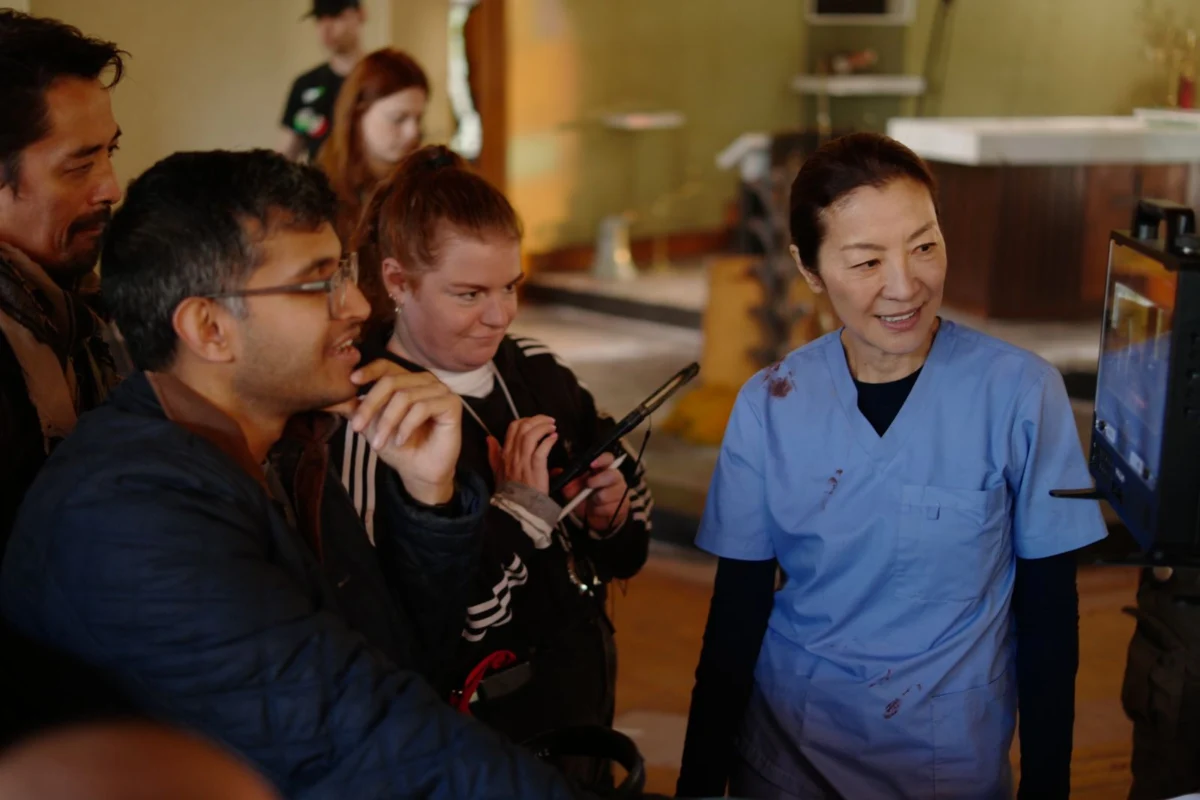
To ensure the film’s medical procedures remained grounded in reality, the production team prioritized scientific accuracy. This pursuit of authenticity went beyond basic set dressing; it involved deep technical training for the lead actress. In the lead-up to filming in Dublin, Yeoh participated in specialized instruction at the Royal College of Surgeons. Sethi recounts that the presence of an Oscar-winning actress in a dissection lab drew curious stares, but Yeoh approached the anatomical training with the same focus she applied to her martial arts choreography.
Consultation was provided by Dr. Dara O’Keefe, an on-set medical advisor who meticulously vetted the physical positioning of the actors. Furthermore, Dr. Rosh Sethi, the director’s twin brother and a practicing surgeon, provided video tutorials on surgical instrument handling. This attention to detail serves a functional narrative purpose: in The Surgeon, anatomy is not merely a backdrop for gore but a vital component of the tension. By explaining the science behind the procedures, the film demands a higher level of engagement from the audience, grounding the horror of the kidnapping in the reality of human biology.
Independent Production and Market Strategy
The choice to produce The Surgeon independently, rather than through a traditional studio, was a calculated decision by the creative team. By bypassing the studio development pipeline, Sethi sought to preserve the film’s "unusual approach to action" and its unflinching commitment to anatomical detail. The production schedule was exceptionally lean, with the entire feature filmed in just 26 days. This efficiency was enabled by the director’s ability to minimize the need for multiple takes, a habit born from the high-pressure environment of the medical field.
The financial and creative risks of this strategy are significant, yet the film’s presence at TIFF serves as a validation of this model. In an era where mid-budget adult dramas and thrillers are increasingly rare in the theatrical market, the combination of a high-profile lead like Yeoh and a unique "doctor-as-director" perspective creates a distinct marketing proposition. Industry analysts suggest that the success of such projects relies on their ability to offer something visceral and authentic, differentiating themselves from the highly stylized, CGI-heavy action blockbusters that currently dominate the multiplex.

The Legacy of Michael Crichton
Sethi’s approach to the genre is heavily influenced by the work of Michael Crichton, the late author and filmmaker who famously leveraged his background as a Harvard Medical School graduate to create hits like Jurassic Park and ER. Like Crichton, Sethi is interested in the intersection of cutting-edge science and speculative fiction. His ambition to include the "M.D." title in his credits—a move that required informal lobbying with the Directors Guild of America—is more than a vanity project; it is an assertion of the film’s credibility.
The inclusion of specific, clinically accurate scenes—such as a depiction of a prolapsed anus, which Sethi has described as a long-standing creative goal since his first days in medical school—underscores the film’s commitment to a specific brand of medical realism. It is this willingness to lean into the "gross" realities of human anatomy that sets The Surgeon apart. As audiences at the Royal Alexandra Theatre prepare for the September 12 premiere, they are entering a space where the boundaries between professional expertise and cinematic entertainment are intentionally blurred.
Broader Implications for the Industry
The success or failure of The Surgeon at the Toronto International Film Festival will likely offer insights into the viability of the "specialist-director" model. As the entertainment industry continues to grapple with the saturation of formulaic content, creators who can bring authentic, real-world professional expertise to their narratives are finding unique niches. For Roshan Sethi, the challenge remains to successfully navigate these two worlds without compromising the integrity of either.
While the medical field remains his primary vocation for two months of every year, the reception of The Surgeon will inevitably dictate the trajectory of his future projects. If the film resonates as anticipated, it could signal a shift toward more grounded, technically precise thrillers. For now, however, Sethi remains focused on the immediate task: presenting a work that refuses to be boring, and perhaps, offering the audience a glimpse into the clinical, high-stakes world that he occupies when the cameras stop rolling. The synthesis of scalpel and screenplay, practiced in the shadows of Boston’s hospitals and the spotlight of Dublin’s sets, is a testament to the idea that the most compelling stories are often those rooted in the most rigorous of realities.