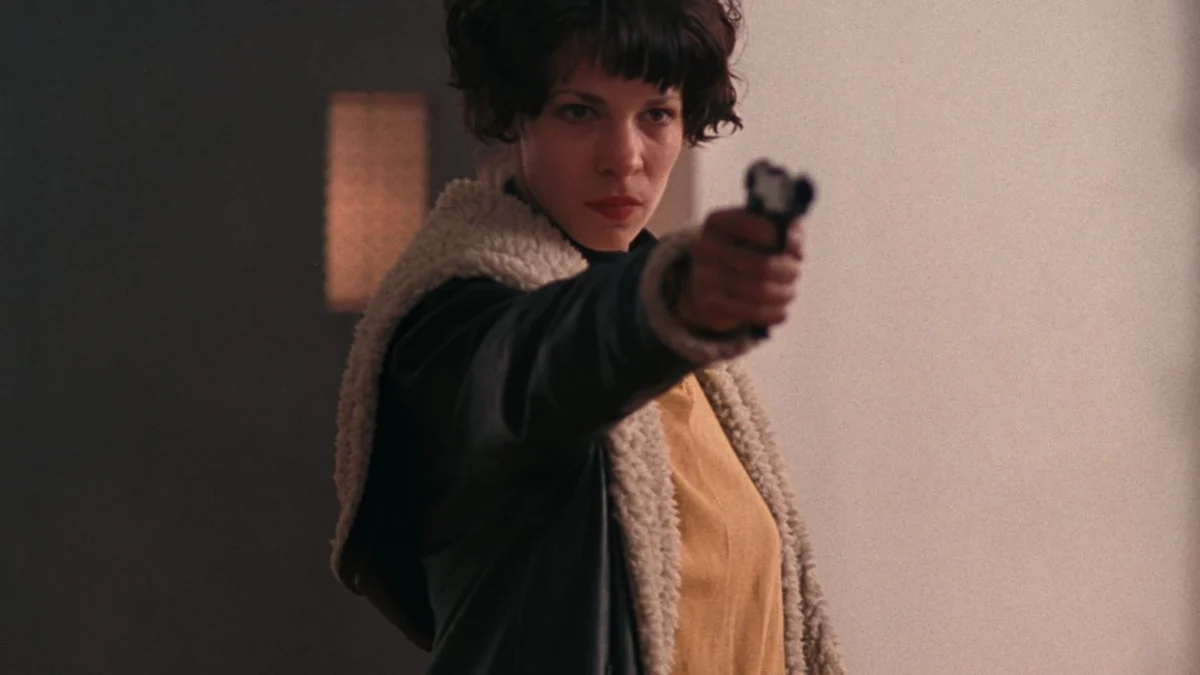
Thirty years after its initial theatrical run, Mary Harron’s seminal feature debut, I Shot Andy Warhol, is returning to cinemas in a meticulous new 4K restoration. Long before Harron directed Christian Bale in her pitch-black 2000 adaptation of American Psycho, she carved out a distinct niche in independent cinema by examining cultural pathology, alienation, and notoriety in late-20th-century New York City. The film stars Lili Taylor in a career-defining, deadpan performance as Valerie Solanas, the radical feminist writer who shot and nearly killed pop art icon Andy Warhol on June 3, 1967.
As the film enjoys a contemporary revival, its intersections with radical politics, the mythology of the New York downtown art scene, and the evolving discourse surrounding gender and media representation remain fiercely relevant. Through a comprehensive look at the production’s history, archival insights, and a recent discussion between filmmaker Mary Harron and cultural critic Elissa Suh, the 4K release offers both cinephiles and cultural historians an opportunity to re-engage with a vital artifact of 1990s independent filmmaking.
Main Facts and Production Background
Released in 1996 during a golden era of American independent cinema, I Shot Andy Warhol charted the tragic trajectory of Valerie Solanas, an indigent intellectual and self-proclaimed radical feminist who hawked copies of her self-published SCUM Manifesto on the streets of Greenwich Village. Operating under a pricing strategy of "two dollars for men, one dollar for women," Solanas drifted through the countercultural margins while attempting to secure backing for her misogyny-critique play, Up Your Ass.
The film’s production captured the aesthetic and sonic ethos of the decade’s independent arts scene. Alongside Taylor’s commanding central performance, the movie featured a stellar supporting cast including Martha Plimpton, Michael Imperioli, and Stephen Dorff as Warhol superstar Candy Darling. Musically, the film bypassed traditional major-label contributions when original Velvet Underground tracks were denied by Lou Reed. Instead, Harron enlisted John Cale to compose an evocative score, which, paired with indie-rock staples from bands like Yo La Tengo and Pavement, established a gritty, lived-in texture rather than a sterile period reconstruction.
Chronology and Historical Context
The historical events underpinning the narrative trace back to the turbulent cultural landscape of the late 1960s New York avant-garde.
- 1967: Valerie Solanas self-publishes the SCUM Manifesto, outlining a satirical yet violently misanthropic critique of patriarchal structures, and subsequently founds the Society for Cutting Up Men (SCUM), an organization for which she was the sole member.
- June 3, 1967: Frustrated by perceived slights, stolen intellectual property, and a lack of control over her creative output—specifically directed at Warhol and publisher Maurice Girodias—Solanas enters Warhol’s studio, "The Factory," and shoots the artist multiple times, critically wounding him.
- 1996: Mary Harron releases her debut feature film I Shot Andy Warhol, produced during a burgeoning era of American indie cinema championed by producers like Christine Vachon and Tom Kalin.
- Present Day: The film receives a comprehensive 4K visual restoration overseen by cinematographer Ellen Kuras, prompting renewed critical and cultural analysis regarding its place in feminist film history.
Supporting Data and Cinematographic Analysis
The newly minted 4K restoration brings renewed attention to the visual achievements of the film, particularly the cinematography of Ellen Kuras. Working with modest independent budgets, Kuras employed naturalistic lighting strategies that avoided the overly polished look of traditional Hollywood biopics. By drawing inspiration from documentary photography of the era—including the stark, negative-space compositions of Diane Arbus and Magnum photo archives—the production successfully mirrored the grimy, poetic realism found in contemporaneous 1990s indie landmarks like Larry Clark’s Kids.
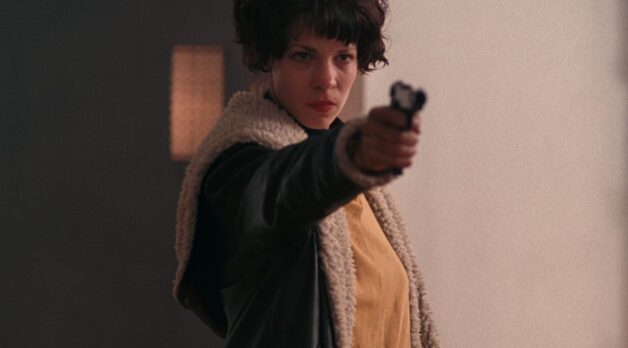
In reflecting on the restoration, Harron noted the delicate balance struck between realism and expressionism within the Factory sequences. Rather than painting the 1960s art scene as a monolithic paradise or a pure nightmare, the filmmakers depicted it as a volatile ecosystem. The Factory functioned similarly to a classical Hollywood studio system: talent was cultivated, extracted for social and artistic capital, and summarily discarded when individuals became too difficult to manage—a fate that befell both Warhol mainstays like Edie Sedgwick and outsiders like Solanas.
Official Responses and Creative Intentions
Upon its initial release, I Shot Andy Warhol polarized critics who expected a clear moral binary. Reviewers frequently challenged Harron for failing to provide a definitive stance on who was right or wrong between Solanas and Warhol. However, this narrative ambiguity was entirely intentional.
Jared Harris’s portrayal of Warhol introduced a nuanced vulnerability to an icon frequently flattened into cold passivity. Harron, who met Warhol briefly twice during her time in New York, sought to capture his elusiveness and fragility rather than positioning him as a flat villain. Similarly, the film refuses to sanitize Solanas, presenting her as brilliant, deeply troubled, and intensely alienated.
Regarding the SCUM Manifesto itself, Harron has consistently resisted efforts to neatly categorize the text as purely satirical or straightforward political doctrine. "Leaving it open was always my instinct, because I don’t think you can categorize it," Harron explained. "It shares elements with Jonathan Swift’s A Modest Proposal, but it’s not a completely self-contained work of satire… It’s both brilliant and fantastically well-written, but also disturbing and awful at moments."
Broader Impact and Implications
The timing of the 4K re-release intersects with contemporary cultural debates regarding the nature of public rage, the internet-era acceleration of personal notoriety, and the shifting definitions of radical politics. In an era where micro-celebrity, algorithmic outrage, and extreme rhetoric are easily monetized, commentators have observed that Solanas might have navigated modern digital platforms with far greater institutional visibility than was possible in the analog environment of the 1960s.
Furthermore, academic and cultural discussions surrounding the SCUM Manifesto continue to evolve. While Solanas operated from an essentialist, biological framework rooted in 1960s scientific assumptions—views that complicate her relationship with modern gender theory—contemporary critics and audiences continue to mine the text for its razor-sharp deconstructions of institutional power dynamics.
Ultimately, the preservation and return of I Shot Andy Warhol to the big screen validates Mary Harron’s early instincts as an auteur. By championing social outcasts and refusing easy moralizing, the film has outlived the fleeting controversy of its premiere, securing its status as an enduring milestone of American independent cinema that speaks just as powerfully to contemporary audiences as it did in 1996.