The 15th edition of the Taiwan International Documentary Festival (TIDF) concluded its multi-day run this May, reaffirming its position as one of Asia’s premier showcases for politically engaged nonfiction cinema. Since its founding in 1998—a decade after the official lifting of martial law on the island—the festival has served as a vital institutional anchor for regional independent video activism and alternative models of cultural distribution. Operating alongside historic institutions like Japan’s Yamagata International Documentary Film Festival, founded in 1989, the TIDF has consistently maintained distinct competitive strands, including the Asian Visions Competition and the Taiwan Competition, fostering a robust cross-border dialogue on historical memory, state power, and marginalized communities.
This year’s program brought together a diverse curation of contemporary releases and newly restored archival works. By casting a wide geographical and thematic net, the 15th TIDF addressed the lingering fractures of 20th-century colonialism, the devastating human cost of rapid urban development, and the contemporary exhaustion of post-pandemic public life across East Asia and beyond.
Archival Revelations and the Shifting Geographies of Colonial Memory
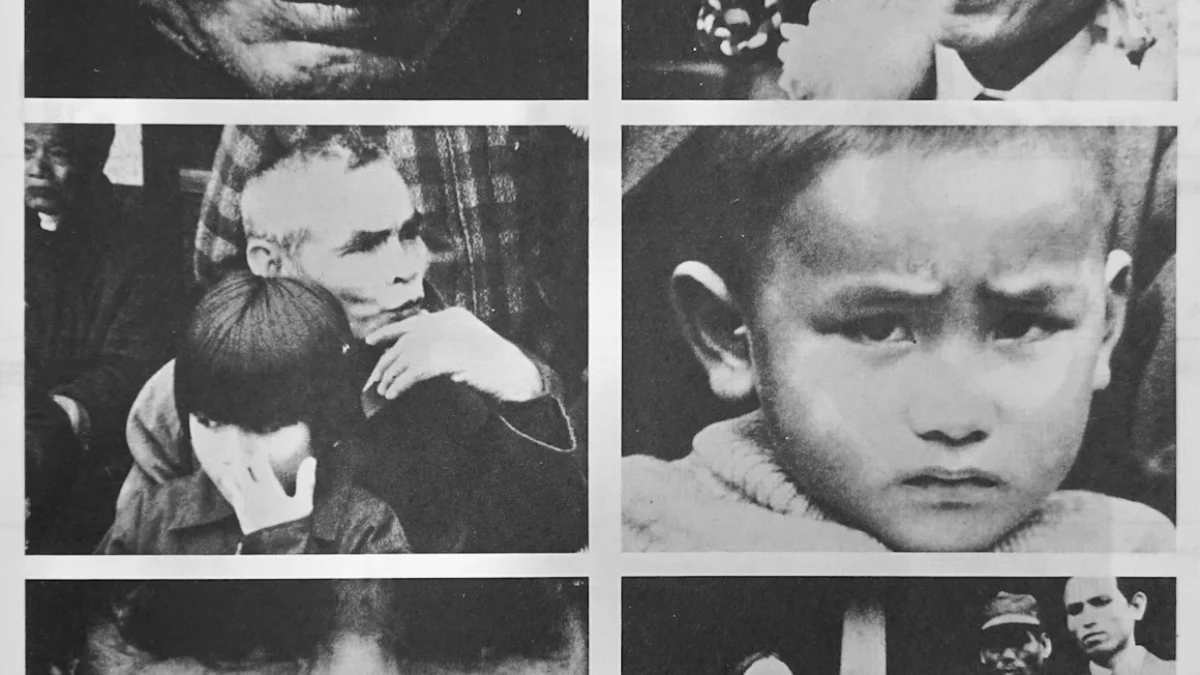
Among the most critically anticipated screenings at the festival was the 30-minute archival compilation Archive: Li Guang-hui (1979/2024), directed by the late, renowned Taiwanese photographer Chang Chao-tang. Compiled from television newsreel outtakes shot while Chang worked as a photojournalist for the China Television Company (CTV) between 1975 and 1979, the film documents a complex historical event that reverberates through modern Taiwanese identity.
The subject of the footage is Suniuo—also known by his Japanese name Teruo Nakamura, and his assigned Mandarin name, Li Guang-hui. An Indigenous Amis soldier from Taiwan who was drafted into the Japanese Imperial Army during World War II, Suniuo was dispatched to the Indonesian island of Morotai. He was discovered living in complete isolation in the jungle 30 years later, entirely unaware that the global conflict had concluded.
Upon his repatriation, Suniuo’s return was rapidly integrated into the Kuomintang’s (KMT) nationalist narrative of the Republic of China’s victory over the Japanese empire. Rebranded as a national hero who had ostensibly resisted and escaped imperial forces—though historical accounts indicate he may simply have deserted as imperial lines collapsed—Suniuo became a heavily mediated public symbol.
Chang’s chronological assembly of the outtakes traces the trajectory from family press interviews prior to the reunion to the heavily orchestrated spectacle of homecoming, concluding with Suniuo’s battle with the lung cancer that resulted in his death in 1979. Notably, Chang restricts the audio entirely to the original reports and narrations, withholding Suniuo’s own voice from the audience. In a central sequence, famed Taiwanese folk singer Chen Da performs a ballad framing Suniuo’s life as a classical epic of return to family and nation. Close-ups of Suniuo’s face, however, register not profound emotional recognition, but stark incomprehension as he listens to a tradition and language entirely alien to his upbringing.
Chang never publicly exhibited the film during his lifetime. The reels remained in his private collection until his passing in 2024, after which his son donated the archives to the Taiwan Film and Audiovisual Institute (TFAI). Festival programmers noted that the rediscovery of Archive: Li Guang-hui—alongside historical programs such as "Reel Taiwan," which examines 1980s social movements, and "War Memories, Shifting Identities," focusing on Taiwanese soldiers conscripted during the Japanese colonial era—challenges long-held historiographical claims that independent Taiwanese documentary production only commenced following the formal termination of martial law in 1987.
The thematic exploration of colonial legacies extended outward to the broader archipelagic connections of the Pacific. Screenings included the 1973 leftist collective work Asia Is One by NDU, which stitches together testimonies from postwar Taiwanese fishermen in Okinawa, Zainichi Okinawan miners in mainland Japan, and rural villagers from Tayal communities. The film highlights the heterogeneity of East Asian labor migrations and the ways local populations navigated competing territorializing nationalisms.
The Human Cost of Urban Development: Spatial Violence and Resilience
Moving from historical retrospectives to contemporary realities, the 15th TIDF featured several works examining the immediate, physical conflicts arising from predatory urban development across the region.
In Hu Sanshou’s 150-minute documentary Xiangzidian Village: The Stage (2026), the filmmaker documents the gradual erasure of a rural community over a six-year production window. Rather than relying on traditional direct-interview formats utilized in his earlier 2025 film Resurrection, Hu adopts a distanced, observational perspective. Accompanied by his own voiceover tracking individual villagers through precise familial relations—referencing subjects as aunts, uncles, cousins, and spouses—Hu captures the transformation of earth and grass into crushed stone, dust, and ultimately the gray expanse of a newly constructed highway.
The visual composition emphasizes wide framing where human subjects appear physically dwarfed by towering hills, mounds of construction debris, and massive bulldozers. Despite the formal distance, the emotional core of the film derives from Hu’s personal history with the community; the villagers who witnessed his childhood are now those he observes growing old, with several passing away over the multi-year shoot. The documentary culminates in a coda featuring a rare close-up panning across the faces of surviving villagers as they watch one of Hu’s previous works during his father’s funeral.
Festival critics noted that Xiangzidian Village stands apart from a broader trend of independent Chinese documentaries that cater to international festival circuits by packaging marginalized communities within conventional cinéma vérité tropes. Instead, Hu’s patient methodology registers the endurance of rural populations facing systemic displacement without offering simplistic redemptive arcs.
Similar themes of post-revolt disillusionment and survival emerged in programs addressing the aftermath of Hong Kong’s political restructuring, such as Compact Disc (2026) and Maps of Traces (2025). Rather than depicting passive victimization, these films document older generations attempting to maintain daily routines and secure stability within constrained socio-political realities.
Trauma, Testimony, and State Accountability
Questions regarding the codification of political trauma and the legal frameworks governing historical restitution were central to Anocha Suwichakornpong’s Narrative (2026). The film observes a structured theatrical workshop involving family members of Red Shirt pro-democracy activists killed during the 2010 military crackdown in Bangkok.
Structured across three exercises mimicking an abstract three-act narrative, the workshop requires participants to articulate primal emotions without naming them, engage with a mediator regarding ongoing legal strategies, and recount experiences of gratitude. The formal exercise exposes the structural pressures placed on victims of state violence to conform to neat narrative arcs—suffering followed by resolution—which serve to alleviate spectator guilt.
During the second act, participants discuss their 15-year pursuit of legal accountability. The legal system’s handling of the 2010 events treats individual deaths as isolated legal infractions rather than components of a systemic, collective tragedy. Families are consequently subjected to fragmented inquiries across various military units, an administrative mechanism that obstructs any comprehensive reckoning with the military apparatus as a whole.
Suwichakornpong contrasts the sterile environment of the workshop space with intimate, everyday scenes of mourning, such as a mother reviewing dream journals filled with memories of her deceased son. By incorporating these workshop sessions—which function as research for her forthcoming courtroom drama Fiction—the filmmaker interrogates the operational utility of testimony within therapeutic, legal, and cinematic frameworks, questioning whether individual healing can occur in the absence of collective institutional restitution.
Exhaustion and Public Life in Post-Pandemic Wuhan
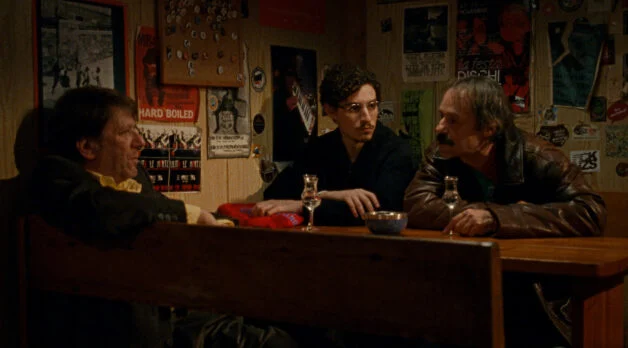
Offering a distinct perspective on contemporary urban existence, Canada-based Chinese filmmaker Luo Li presented Air Base (2025), set in Wuhan in 2023 as the city navigated the post-pandemic return to public life.
Frequently categorized as a city symphony, the film operates as a series of deadpan, staged encounters involving citizens performing absurd, repetitive tasks. Sequences feature a man posing as a traffic operator from an overpass, a young woman collecting recorded sighs from pedestrians, two men persistently fishing in a manmade pond without catching anything, and a man attempting to align fallen autumn leaves into symmetrical patterns on public bicycles or straighten the curtains of municipal buses.
Unscripted public reactions captured within these vignettes reveal the psychological climate of contemporary urban centers: pedestrians largely comply with arbitrary traffic commands, while passersby react with suspicion to requests for sighs, associating the expression with pessimism. Recurring motifs, such as a stray broom repeatedly falling down an ascending escalator while commuters step around it without intervening, emphasize a collective inertia and systemic apathy.
Despite the pervasive atmosphere of exhaustion, the accumulation of these interactions generates an unexpected camaraderie among participants. By registering the persistence of individuals who continue to perform routine actions despite structural futility, the film captures the complex textures of modern social endurance.
Broader Implications and Institutional Impact
The 15th Taiwan International Documentary Festival demonstrated the ongoing capacity of nonfiction cinema to engage with contested geopolitical narratives. By juxtaposing local historical reckonings—such as the indigenous experiences of Japanese conscription and the land struggles of rural communities—with international solidarity movements, including the festival’s dedicated programming on Palestine ("Palestine and Its Archiveless Archive"), the TIDF situated Taiwan’s precarious self-governance within a global continuum of anti-imperial and post-colonial struggle.
As regional tensions surrounding sovereignty and historical memory persist, the festival’s institutional commitment to preserving, restoring, and exhibiting politically engaged nonfiction ensures that these archival and contemporary testimonies remain central to public discourse.