The life and tragic death of Gilles Villeneuve remain etched into the collective memory of motorsport enthusiasts more than four decades after the Ferrari icon perished at the 1982 Belgian Grand Prix. On September 19, the Toronto International Film Festival (TIFF) will honor this enduring legacy by presenting the world premiere of the turbo-charged biopic, Villeneuve: The Rise of a Legend, as its official closing night selection. Directed by Yan Lanouette Turgeon, the film promises to provide a comprehensive look at the man who fundamentally altered the landscape of Formula One during the 1970s.
For Jacques Villeneuve, the 1997 Formula One World Champion and son of the racing legend, the film represents the culmination of a long-gestating project by Montreal-based production house Christal Films. According to the younger Villeneuve, the passage of forty-two years has provided the necessary historical distance to accurately frame his father’s complex persona—a figure who was simultaneously a hero to millions and a remote, absent presence to his own family.
A Chronology of a Racing Icon
To understand the weight of the upcoming biopic, one must look at the meteoric trajectory of Gilles Villeneuve. Born in Richelieu, Quebec, in 1950, Villeneuve’s initial foray into competitive speed was not on asphalt, but on ice. His dominance in professional snowmobile racing during the early 1970s earned him a reputation for unparalleled car control and fearlessness.
His transition to single-seater racing was rapid. By 1977, his raw talent caught the attention of McLaren, which offered him a one-off drive at the British Grand Prix. That performance was sufficient to catch the eye of Enzo Ferrari, who signed the young Canadian to lead the Scuderia. Between 1978 and 1982, Villeneuve became synonymous with the "Prancing Horse," despite winning only six Grand Prix races. His legacy, however, was not built on statistics, but on a series of breathtaking displays of bravery—most notably his duel with René Arnoux at the 1979 French Grand Prix, often cited as one of the greatest battles in the history of the sport.
The tragedy in Zolder, Belgium, on May 8, 1982, during the final qualifying session, brought a premature end to a career that was poised to reach even greater heights. His death sent shockwaves through the sporting world, cementing his status as a martyr of the high-speed era of F1.
Cinematic Portrayal and Historical Authenticity
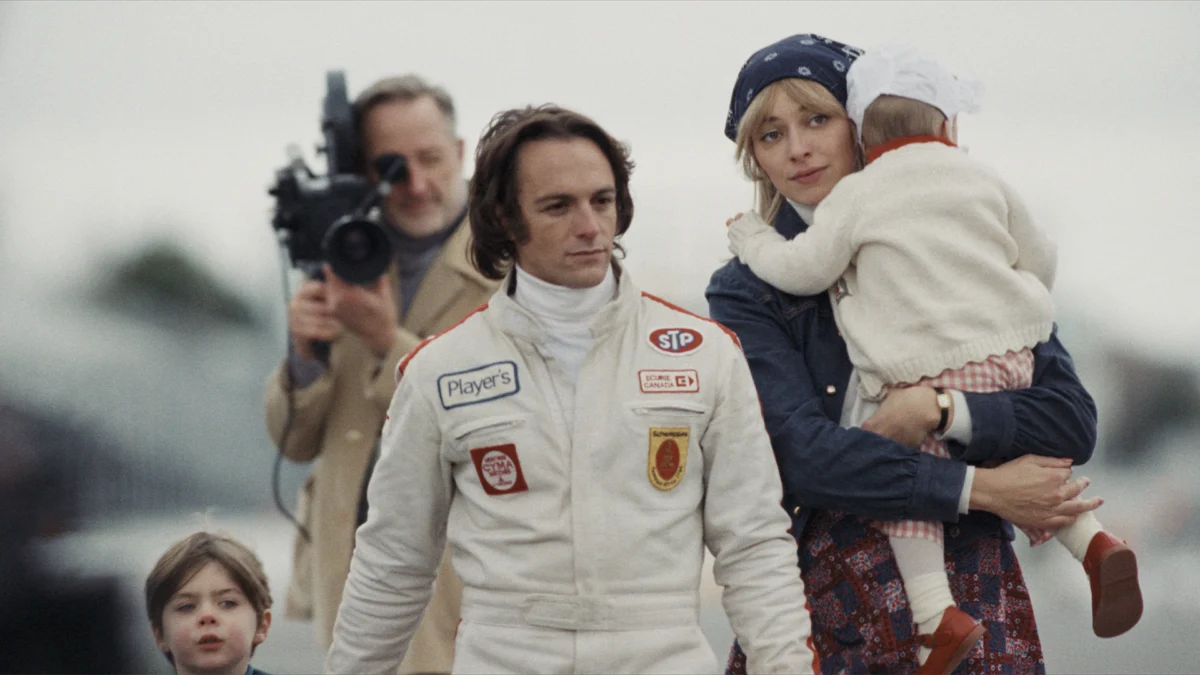
Director Yan Lanouette Turgeon has tapped Rémi Goulet to portray the elder Villeneuve, with Rosalie Bonenfant taking on the role of his wife, Joann. Early previews have drawn significant praise for their attention to period detail. Jacques Villeneuve, who reviewed an early clip of the film, noted that the emotional resonance was immediate.
"I was in tears; it was so poignant," Jacques told The Hollywood Reporter. "From those two minutes, it looks like the job has been really well done. I found the accents to be amazing—it felt like it was the 1970s."
The film navigates the difficult balance of depicting Gilles as both a global superstar and a man consumed by his craft. Jacques Villeneuve, now a seasoned F1 pundit, acknowledges that the film does not sanitize the reality of his father’s lifestyle. "Well, he wasn’t there at all," Jacques reflects on his father’s domestic presence. "That’s how it was back then, that was the norm. Now we judge it differently. So we have to keep that in context."
The Evolution of Formula One and Media Consumption
The decision to spotlight this film at TIFF, one of the world’s most prestigious cinematic gatherings, is indicative of a broader cultural shift. In recent years, Formula One has experienced a surge in global popularity, driven in part by digital media and the increased accessibility of the sport’s history.
Data from the FIA and commercial rights holder Liberty Media suggests that the sport’s viewership in North America has grown significantly, particularly among younger demographics. This "Netflix effect," largely attributed to the documentary series Drive to Survive, has fostered a new generation of fans interested in the history of the sport.
"Racing at F1 has been building up over the last five years, where everybody wants a piece of it," Jacques Villeneuve observes. The timing of the film’s release aligns with this heightened appetite for sports storytelling. By placing the film at the end of the festival, TIFF is signaling that Villeneuve: The Rise of a Legend is more than just a sports movie; it is a character study that transcends the paddock.
Production and Creative Stewardship
The production of the film has been a massive undertaking involving a team of seasoned Canadian filmmakers. Written by Daniel Roby and Guillaume Lonergan, the screenplay aims to bridge the gap between the humble, rural beginnings of the Villeneuve family and the glamour of the international racing circuit.
Christian Larouche, the film’s lead producer, has overseen a project that required extensive archival research to ensure the technical aspects of the racing sequences mirror the intensity of the era. The production team also includes associated producer Tim Ringuette, co-producer Marc Côté, and executive producers Christian Simoneau, Mélanie Villeneuve, and Fabrice Barrilliet.
The film’s focus on the human cost of fame serves as a counterpoint to the technical prowess often associated with motorsport biopics. By exploring the impact of Gilles’ obsession on his family life, the writers ensure that the narrative remains grounded, preventing it from becoming merely a highlight reel of crashes and podium finishes.
The Missing Presence at the Premiere
While the world premiere in Toronto will be a landmark event for Canadian cinema, the subject’s son will be conspicuously absent. Jacques Villeneuve, whose own career as an F1 champion in 1997 remains a defining moment in Canadian sporting history, has professional commitments that will keep him in the paddock.
As an analyst for Sky Sports and other international broadcasters, Jacques will be reporting from the Azerbaijan Grand Prix 2026. This irony is not lost on him—he will be working in the same high-pressure environment that defined his father’s life. His continued presence in the sport acts as a living bridge between the analog era of the 1970s and the data-driven, hyper-connected world of modern Formula One.
Broader Impact and Industry Analysis
The success of Villeneuve: The Rise of a Legend will likely set a benchmark for future sports biopics. In an era where audiences are increasingly skeptical of dramatized accounts, the reliance on historical accuracy and the endorsement of family members—who, in this case, have been instrumental in ensuring the narrative remains authentic—is a critical success factor.
The film serves as a poignant reminder that while the technology of racing has changed, the psychological profile of the elite driver remains constant. The obsession, the singular focus, and the willingness to risk everything for a tenth of a second are themes that resonate as strongly in 2026 as they did in 1982.
Furthermore, the film’s placement at TIFF underscores the festival’s commitment to spotlighting stories of national significance. Gilles Villeneuve remains a cultural icon in Quebec and throughout Canada, and his story is viewed as a vital component of the nation’s sporting heritage. By documenting his journey from snowmobile tracks to the pinnacle of Ferrari’s racing team, the filmmakers provide a testament to the idea that greatness often emerges from the most modest of circumstances.
Conclusion: A Legacy Re-examined
As the industry prepares for the September 19 premiere, the anticipation suggests that Villeneuve: The Rise of a Legend will be more than a nostalgic look back. It is expected to be a nuanced examination of how a man’s pursuit of individual glory influences the lives of those left in his wake.
"Time needs to pass," Jacques Villeneuve noted regarding the long journey to the screen. "With most movies, there’s always a couple of generations that need to have passed, I imagine, for the grandparents to have told stories to their grandkids and then they can view the film together."
That multi-generational appeal is perhaps the most significant achievement of this production. By bringing the story of Gilles Villeneuve to a modern audience, the film ensures that the legend does not fade, but instead continues to evolve, inspiring future generations to consider the cost and the beauty of a life lived at full speed. As the checkered flag falls on the Toronto International Film Festival, the narrative of the "Canadian Legend" will reach a new, wider audience, forever linking the history of the sport with the man who helped make it an art form.