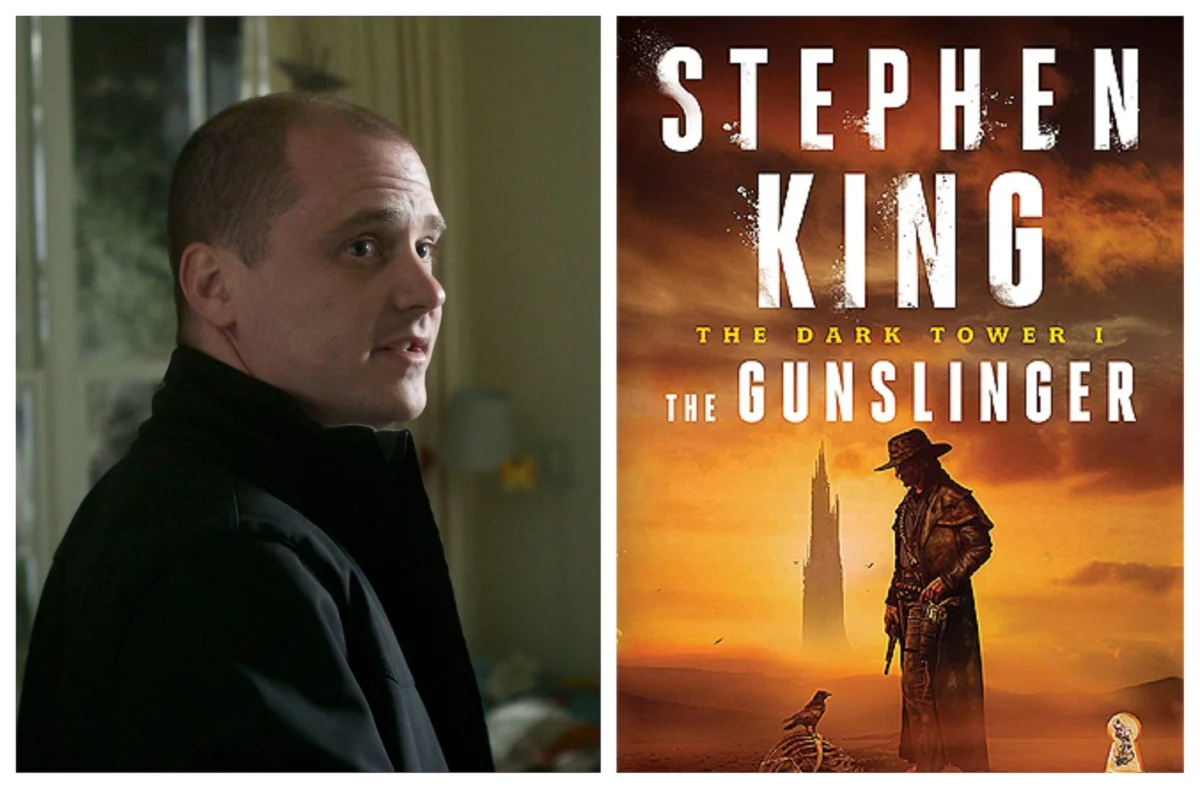
Nearly four years have passed since acclaimed horror and sci-fi creator Mike Flanagan officially secured the rights to develop a television adaptation of Stephen King’s monumental fantasy-western epic, The Dark Tower. While the project has occasionally appeared to languish on the back burner as Flanagan has juggled several high-profile commitments—including penning a Clayface script for DC Studios and helming a brand-new series adaptation of Stephen King’s Carrie for Amazon MGM Studios—the filmmaker has confirmed that development on Roland Deschain’s quest never truly halted.
Speaking in a recent interview with Entertainment Weekly ahead of the October 7, 2026 premiere of Carrie, Flanagan offered a comprehensive update on the complex, labyrinthine process required to bring The Dark Tower to the small screen. According to the director, navigating the legal, structural, and creative hurdles of Stephen King’s interconnected literary universe has proven to be an uphill battle, but one he remains entirely dedicated to winning.
The Complex Road to the Tower: Navigating Rights and Studio Fragmentation
To fully understand why Mike Flanagan’s vision for The Dark Tower has moved at what he describes as an "oil-tanker pace," one must examine the notoriously fragmented nature of Stephen King’s intellectual property rights. Unlike standalone novels where adaptation rights typically rest cleanly with a single publishing house or studio, The Dark Tower functions as the structural nexus of King’s entire bibliography. Characters, locations, and lore elements from iconic works such as ‘Salem’s Lot, The Stand, Insomnia, Hearts in Atlantis, and It regularly bleed into Roland Deschain’s journey toward the eponymous Tower.
This sprawling connectivity creates a massive legal maze. During his interview with Entertainment Weekly, Flanagan elaborated on the structural roadblocks inherent to the property.
"To do it the way I wanna do it requires an enormous commitment from a studio," Flanagan explained. He noted that because the overarching Dark Tower universe features characters and plot threads currently tied up across various studio ownership umbrellas, the development process has been nothing short of epic. While acknowledging that the timeline has stretched far beyond his initial desires, Flanagan emphasized his daily dedication to the property, asserting that it has "never stopped moving."
Industry analysts and entertainment insiders point out that multi-studio fragmentation is one of the most significant deterrents for prestige television development. Securing cross-studio clearance for minor characters or easter eggs—let alone major crossover figures—frequently triggers years of complex negotiations. For a creator of Flanagan’s caliber, compromising on the expansive lore to bypass legal red tape is evidently a non-starter, explaining the protracted timeline.
A Strategic Pivot: Prioritizing Carrie at Amazon MGM Studios
The timeline of The Dark Tower adaptation has also been influenced by strategic shifts within Amazon MGM Studios. Following Flanagan’s acquisition of the rights, executives at Amazon encouraged the filmmaker to prioritize other immediate projects, most notably the upcoming television series adaptation of Carrie.
This decision was not arbitrary. Amazon holds a cautious history with Stephen King’s magnum opus. In 2020, the studio attempted to launch a Dark Tower television series helmed by The Walking Dead veteran Glen Mazzara. That iteration made it as far as a pilot order before Amazon ultimately opted to pass on the series, leaving the property dormant for several years until Flanagan entered the fold.
By steering Flanagan toward Carrie—slated to premiere on October 7, 2026—Amazon allowed the filmmaker to establish a robust, reliable working relationship with the studio before tackling their shared, bruised history with The Dark Tower. This phased approach provides Flanagan with the necessary creative capital and infrastructural trust from studio executives to eventually secure the massive budget and multi-season commitment required for a faithful adaptation of King’s masterwork.
Chronology of the Adaptation Journey
To contextualize the steady, albeit slow, progression of Mike Flanagan’s Dark Tower series, it is helpful to review the timeline of major milestones leading up to the present day:
- December 2022: News breaks that Mike Flanagan has secured the television and streaming rights to Stephen King’s The Dark Tower series, intending to craft a multi-season epic spanning five seasons, followed by two standalone feature films.
- 2023–2024: Flanagan pivots focus to various concurrent writing assignments, including a standalone feature script centered on DC Comics character Clayface, alongside negotiating the production parameters for a new adaptation of Stephen King’s Carrie with Amazon MGM Studios.
- Late 2024–2025: Pre-production and principal photography ramp up for the Carrie series, cementing Flanagan’s creative partnership with Amazon MGM Studios and keeping him heavily occupied with post-production oversight.
- Fall 2026: In promotional interviews for the October 7 release of Carrie, Flanagan explicitly addresses lingering fan concerns regarding The Dark Tower, reassuring audiences that development continues behind closed doors at an "oil-tanker pace."
Financial and Logistical Implications for Prestige Television
The ambition behind Flanagan’s planned adaptation dwarfs standard television metrics. Upon initially announcing his acquisition of the rights, Flanagan outlined a sprawling roadmap: a five-season television run complemented by two feature films designed to bridge narrative gaps. This hybrid model of storytelling requires an unprecedented level of financial investment and cross-medium coordination—a risk few modern studios are willing to undertake lightly.
In the current economic climate of streaming media, where companies are increasingly risk-averse and laser-focused on immediate return on investment, securing a multi-year, multi-platform commitment for a dark, metaphysical fantasy-western is exceptionally difficult. Previous attempts to adapt the material—most notably Sony Pictures’ widely criticized 2017 feature film starring Idris Elba and Matthew McConaughey—failed both critically and commercially, grossing approximately $113 million worldwide against a production budget of $60 million, leaving studios wary of the property’s mainstream viability.
However, Flanagan’s proven track record with horror and literary adaptations—exemplified by acclaimed Netflix miniseries such as The Haunting of Hill House, Midnight Mass, and The Fall of the House of Usher—gives studio executives a level of confidence that previous adaptation teams lacked. His deep reverence for Stephen King’s source material, coupled with a demonstrated ability to deliver prestige television on schedule, positions him as arguably the ideal steward to finally break the "Dark Tower curse."
Broader Industry Impact and What Lies Ahead for the Gunslinger
As the entertainment industry looks toward the late 2026 premiere of Carrie, anticipation for news regarding Roland Deschain, Jake Chambers, and the Man in Black remains exceptionally high among the literary and fan communities. While "oil-tanker pace" is rarely a comforting idiom for fans eager to see their favorite stories realized on screen, it accurately reflects the deliberate, methodical engineering required for a project of this magnitude.
The implications of Flanagan’s ongoing development process extend beyond a single television show. Should Amazon MGM Studios fully commit to the multi-season, multi-film infrastructure Flanagan demands, it could establish a new blueprint for adapting dense, cross-media literary universes in an era dominated by intellectual property fatigue.
For now, the gunslinger’s journey remains on the horizon. The path of the beam is long, and while the development cycle has tested the patience of Constant Readers worldwide, Mike Flanagan’s unwavering personal commitment ensures that the journey to the Dark Tower has never stopped moving forward.