The trajectory of the Sheffield-born alternative rock group Pulp stands as one of the most eccentric, enduring, and ultimately triumphant narratives in modern British music history. Now, that decades-long journey has been comprehensively chronicled in a new 99-minute documentary directed by longtime collaborator Garth Jennings. Entitled after the band’s storied ethos, the film seamlessly fuses high-definition footage from Pulp’s monumental arena performance at London’s O2 Arena—a highlight of their global tour supporting "More," their first studio album in 24 years—with four decades of rare, previously unseen archival material. Featuring core members Jarvis Cocker, Candida Doyle, Nick Banks, and Mark Webber, the documentary bypasses conventional rock-doc tropes to offer an intimate, idiosyncratic portrait of a band that consistently operated on its own terms.
Main Facts and Production Overview
At its core, Jennings’ film captures the culmination of an improbable renaissance for a group that spent much of the 1990s on the periphery of commercial dominance despite critical adoration. The primary focal point of the feature is a sold-out, career-spanning concert recorded during the summer of 2025 at London’s O2 Arena. This performance followed a critically acclaimed triumphant return at the Glastonbury Festival earlier that same year, marking a high-water mark for the group’s global comeback tour in support of "More."
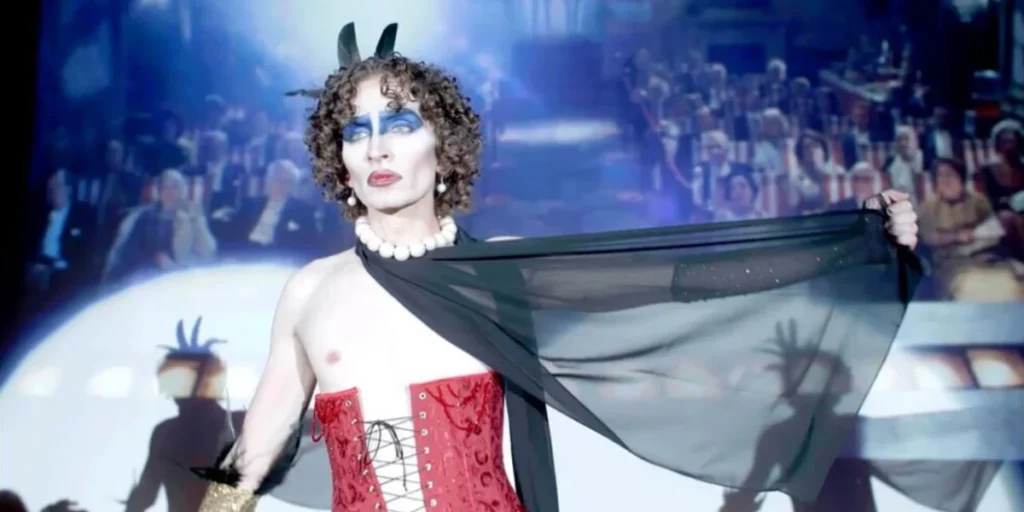
Director Garth Jennings employs a cinematic approach that balances the grandeur of a massive arena production with the raw intimacy of a retrospective. Rather than utilizing quick-cut editing that often plagues modern concert films, Jennings allows a dozen of the setlist’s 20 tracks to be performed in their entirety. Through judicious framing, tight close-ups capture the theatrical expressiveness and magnetic stage presence of frontman Jarvis Cocker, while sweeping wide shots emphasize the imaginative and distinct staging of the event. Yet, the film transcends the boundaries of a traditional concert recording by weaving rich, contextual storytelling between the musical numbers.
Chronology of a Fragmented Legacy
To understand the magnitude of Pulp’s 2025 resurgence, one must examine the sporadic and turbulent chronology that defined their career. During the height of the 1990s Britpop movement, the British music press frequently categorized Pulp alongside Oasis, Blur, and Suede as "the big four." However, while their contemporaries largely focused on national identity, jingoism, and laddish bravado, Pulp carved out a distinct niche. They focused their lyrical lens on societal outcasts, the disenfranchised, and the eccentric individuals who inhabited the fringes of British life.
Despite a rabidly devoted fanbase and critical consensus, Pulp never quite matched the astronomical chart heights achieved by a commercial juggernaut like Oasis. Music historians and industry analysts frequently attribute this gap to two primary factors: the inherently provocative and advocacy-driven nature of their socially conscious lyricism, and the chronic instability of the band’s internal lineup and operational schedule.
Unlike bands with relentless touring cycles, Pulp was plagued by prolonged hiatuses. The band’s first major split occurred in 2002, initially framed as a planned pause to allow members to experience conventional lives away from the relentless glare of the spotlight. That temporary hiatus ultimately stretched into a full nine-year absence. A brief reunion tour followed in 2011, running through 2013 before the group entered another decade-long dormancy.
It wasn’t until the announcement of "More" that the members reformed once again. The subsequent live circuit proved that the band’s cultural footprint had only deepened with time, culminating in the watershed Glastonbury appearance and the subsequent O2 Arena triumph captured by Jennings.
Supporting Data and Visual Methodology
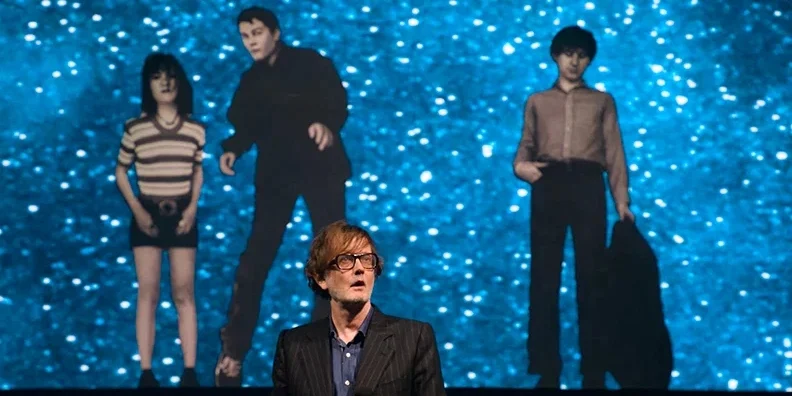
Rather than relying on a conventional, encyclopedic narration to document this stop-and-start timeline, Jennings shifts the perspective entirely to that of Jarvis Cocker. Serving as the film’s principal narrator, Cocker recounts his formative years in Sheffield through a deeply personal lens. He describes a youth defined by a pervasive sense of alienation and a reliance on a rich fantasy life—the only space where he found genuine solace. When the time arrived to manifest those creative impulses into reality, Cocker deliberately sought out the most pronounced nonconformists and misfits within his Sheffield school system to form the band. That foundational ethos of championing the outsider became the defining DNA of Pulp’s entire discography.
The documentary’s visual language mirrors this spontaneous, anti-establishment philosophy. Jennings abandons sterile historical recitations in favor of a vibrant, heterogeneous collage of home movies, deteriorating VHS cassettes, raw camcorder footage, and behind-the-scenes backstage recordings. This aesthetic creates a tactile sense of memory and progression, allowing viewers to witness the evolution of the band from regional obscurity to cultural touchstones through the very media formats that documented their lives in real-time.
Official Responses and Artistic Implications
While the production team and the band have largely allowed the work to speak for itself, the thematic implications of the documentary offer a sharp commentary on the mechanics of fame, class, and aging in the music industry. As Cocker’s narration unpacks his lifelong disdain for rigid class structures and his unwavering solidarity with the working class, the musical performances in the film’s second half acquire an elevated resonance.
Songs such as "This is Hardcore" take on a darker, more analytical weight, addressing the psychological tolls of voyeurism, premature aging, and the commodification of private lives. Similarly, the band’s 1995 breakthrough smash, "Common People," is reframed not merely as a Britpop anthem, but as a scathing, highly articulate critique of socioeconomic tourism—specifically targeting privileged individuals who romanticize and appropriate working-class struggles for their own aesthetic amusement. By juxtaposing these lyric-heavy performances with Cocker’s retrospective commentary, the documentary deepens the audience’s comprehension of the songs’ original political and social contexts.
Broader Impact and Critical Reception
In evaluating the broader cinematic landscape of music documentaries, industry critics have noted that Jennings’ film avoids the polished perfectionism of contemporary streaming concert features. Comparisons to legendary projects like Jonathan Demme’s "Stop Making Sense" are inevitable given the loose, performance-driven energy of the project, though critics hasten to point out that Jennings’ work possesses a distinctly British, melancholic irony that is entirely its own.
For dedicated followers of the band, the decision to present songs in their entirety represents a significant delivery of fan service, satisfying decades of demand for unobstructed live footage. Conversely, cultural analysts note that for casual viewers or those unfamiliar with Pulp’s specific brand of theatrical art-rock, the 99-minute runtime—particularly the exposition-heavy early segments before the broader context of the music is fully established—may present a challenging viewing experience.
Nevertheless, the documentary succeeds in its primary objective: preserving a pivotal moment in contemporary music history while deconstructing the mythos of one of Britain’s most singular rock bands. By anchoring the narrative in Cocker’s unique worldview and anchoring the visuals in decades of authentic ephemera, the film ensures that Pulp’s legacy is understood not as a nostalgic relic of 1990s Britpop, but as a living, breathing artistic statement that continues to resonate on its own uncompromising terms.